Teaching Preschoolers About Wildlife Conservation
Affiliate Disclosure: “This post contains affiliate links, which means I receive a small commission, at no extra cost to you, if you make a purchase using those links.”
World Wildlife Day will be celebrated on March 3rd. The theme for this year is “Partnerships for Wildlife Conservation“, seeking to unite governments, institutions, and people in general across the globe to work and cooperate to preserve the wildlife on our planet, and I think this is an excellent excuse to teach preschoolers about wildlife conservation.
Since young children might have a hard time understanding the concept, the better way to teach it, in my opinion, is to use examples they can experience with their senses and break it down into different types of activities.
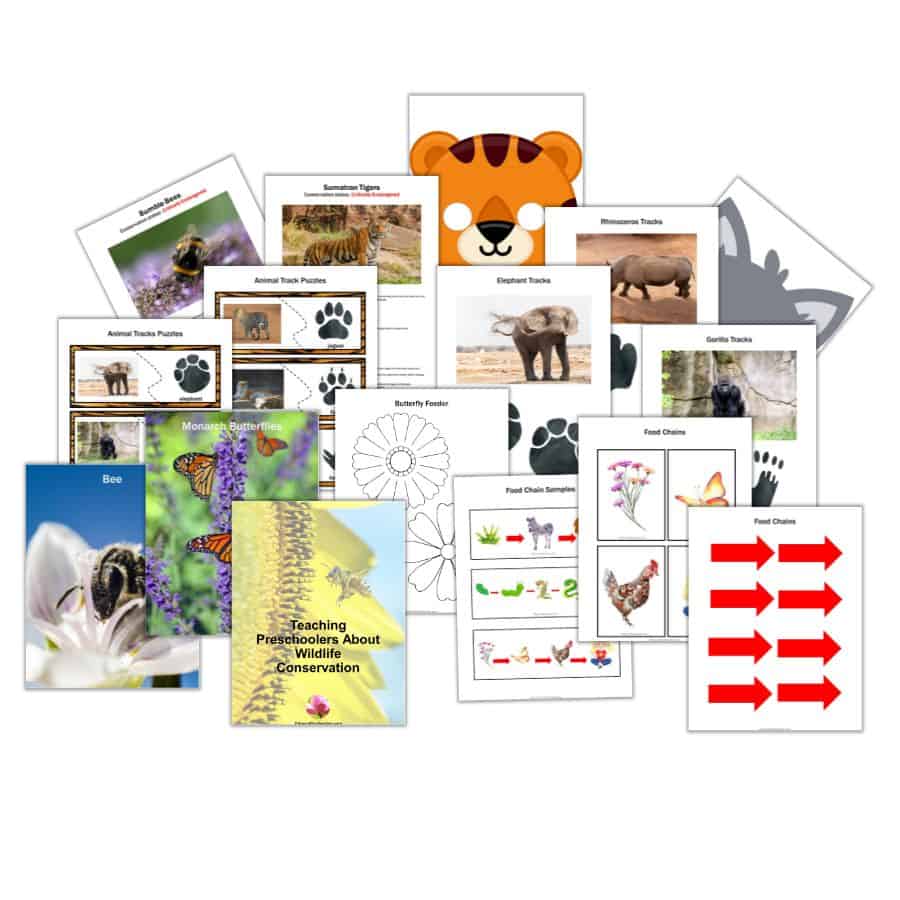
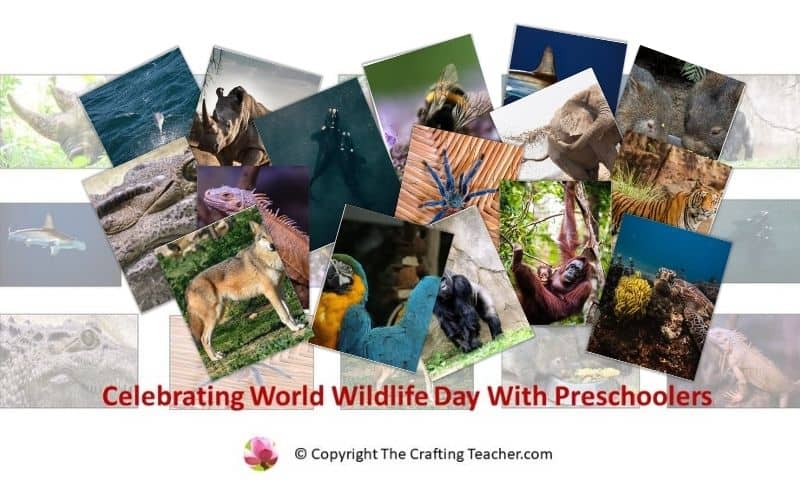
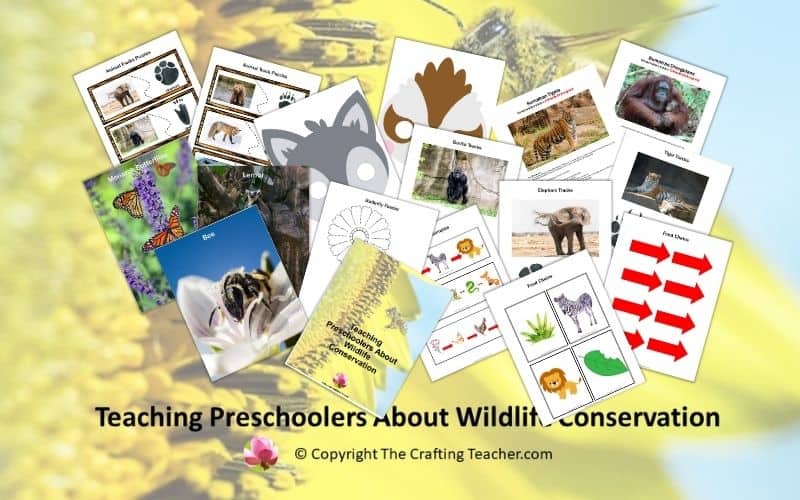
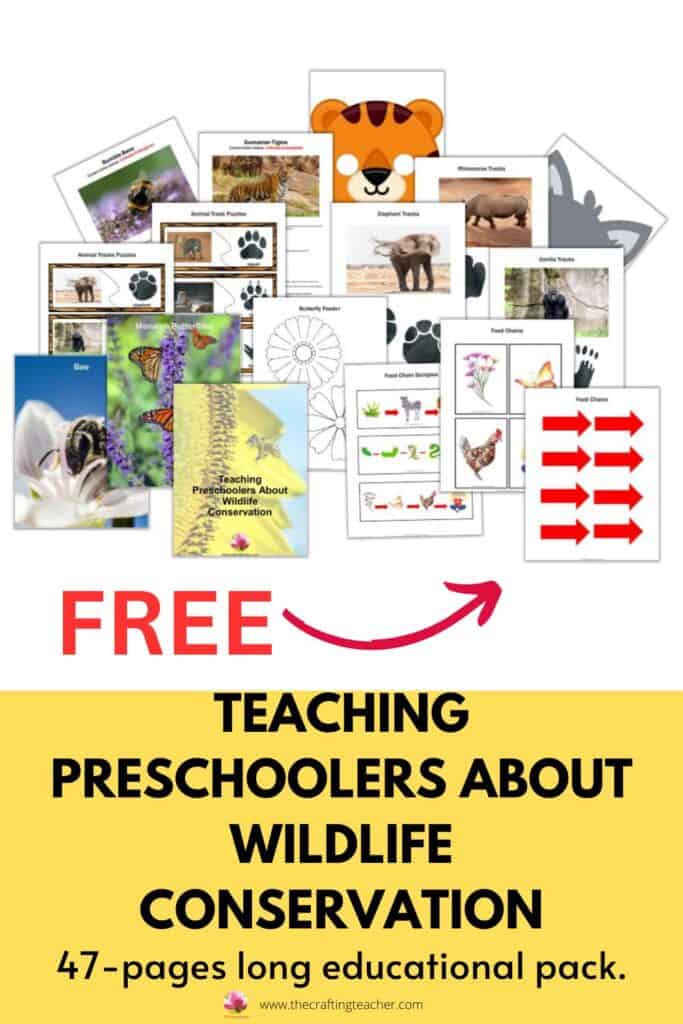
This post offers you a FREE 47-page-long pack with several activities and beautiful pictures, which you can download at the end of this post.
Why is it Important for Children to Know about Wildlife Conservation
Our preschoolers will grow up and may see firsthand the devastation caused by the lack of care and responsibility humans show in preserving important ecosystems, and they can make a difference by helping create positive change, especially as they become adults.
One way our kids can make a difference right now is by learning about wildlife conservation and then telling family and friends. They can help by being careful about what they use and buy, and by encouraging their families to do the same.
Another way they can help is by protecting the wildlife they see around them. When you teach them the important role that each of them plays in a healthy ecosystem, because when one of them disappears, it affects the rest of every life that coexists there, not just on land, but in water too.
Teaching About Wildlife Conservation
We should teach our preschoolers about wildlife conservation because if we and future generations don’t act, the consequences of our inaction will be devastating for our planet and all its inhabitants.
These are some activities you can do to accomplish this:
Explain What Wildlife and Conservation Mean
First, preschoolers need to know what wildlife means. You can teach them by explaining that wildlife means all living animals that are not pets, including mammals, birds, bugs, and aquatic life.
Then tell your preschoolers that conservation means caring for and protecting nature, wildlife, and the environment, especially endangered species, to prevent them from becoming extinct.
Teach About Pollinators
Explain that pollinators are animals responsible for helping plants produce oxygen, seeds, fruits, and vegetables, and without them, these plants will cease to exist. About 80% of flowering plants and more than three-quarters of crop plants that produce food for humans rely on pollinators to produce their products. That is why it is essential to teach our children about the important role these pollinators play, so they protect them for life.
Now, what are pollinators? Pollinators are the animals that keep plants alive and help them produce fruits, seeds, and oxygen, which humans and animals breathe.
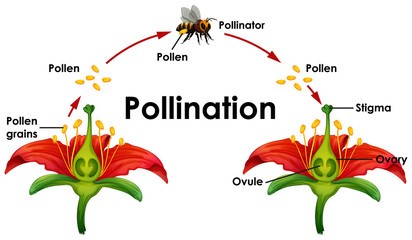
Pollinators visit flowers looking for food, shelter, or materials to build their nests. When they do, pollen grains get stuck on their bodies, and when they visit another flower, that pollen goes into the stigma, fertilizing the flower and producing a fruit or vegetable.
Another important fact is that pollinators and flowers depend on each other. They cannot survive without the other.
There are many pollinators. Among the most important ones we can mention:
- Beneficial insects such as bees, butterflies, moths, certain types of beetles, wasps, ants, mosquitoes, and flies.
- Birds like hummingbirds and doves.
- Mammals such as bats, lemurs, and honey possums.
- Reptiles like lizards, geckos, and skinks.
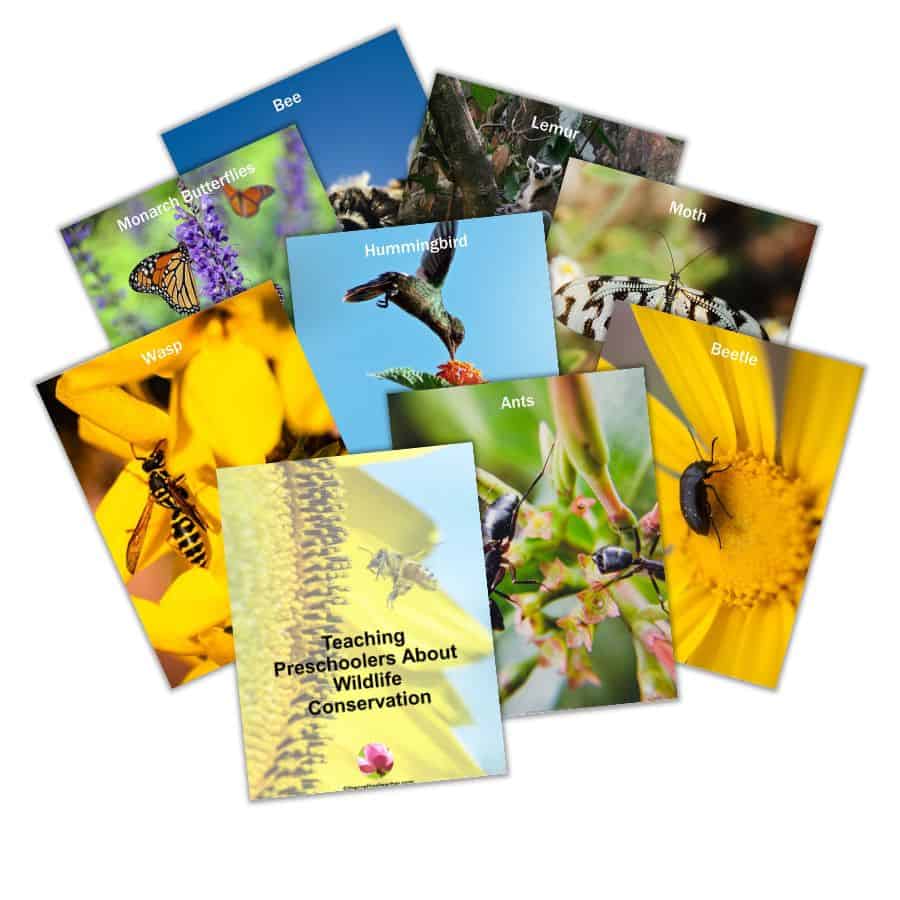
You can find real pictures of pollinators in the pack, including bees, Monarch butterflies, moths, beetles, wasps, ants, hummingbirds, and lemurs. I suggest printing them on white cardstock and laminating them for durability.
Some Activities You Can Do Are:
- Introduce the pollinator process. This video can help you explain the process to your kiddos.
You can also find very nice diagrams like the one below at the iStockphoto.com website.
- Start a pollinator garden at home or in the community. Select an area or garden bed away from foot traffic, with good sunlight exposure. Add good soil, then plant native plants from your area that produce lots of nectar and bloom from spring to autumn.
- Organize a field trip to your local botanical garden, apiary, or bird sanctuary to observe the habitat and have a pollinator hunt. If that’s not possible, take them to the playground or backyard.
- Help your preschoolers make a pinecone bird feeder. You will need: pinecones, paper plates, lard or peanut butter, birdseed, string. Give each child a paper plate with lard or peanut butter. Have children roll their pinecones in it until it is completely covered. Give them another paper plate with birdseed on it, and have them roll their covered pinecones in the seeds until the pinecone is covered. Tie a string on one end of the pinecone, and hang it from a tree branch.
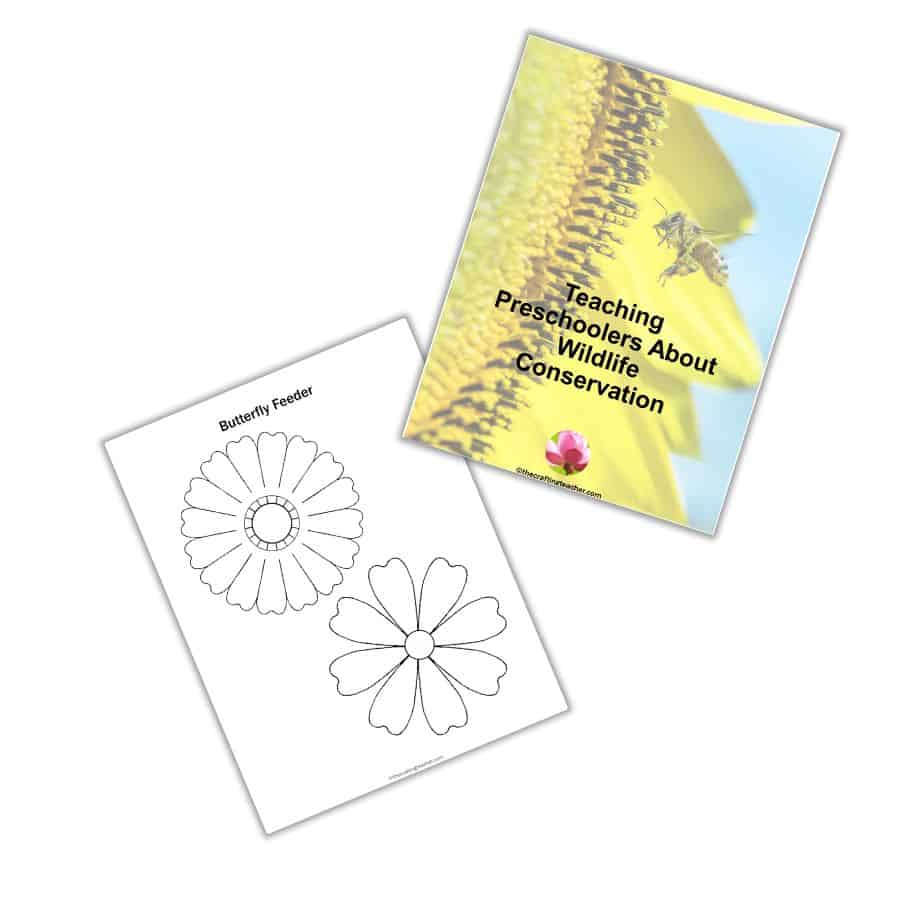
- Invite your children to make a butterfly feeder. Butterflies love flowers, but you can also invite your kids to make this simple craft. To do it, give each child a flower shape printed in white cardstock. Have them color it with crayons or markers, and laminate it. Make a small cut in the center, and pass a straw through it. Glue a bottle cap onto the straw, and place a cotton ball soaked in sugar water inside. Instruct them to stick the flower in the soil inside a pot or a garden bed. This pack includes two flower templates for your convenience.
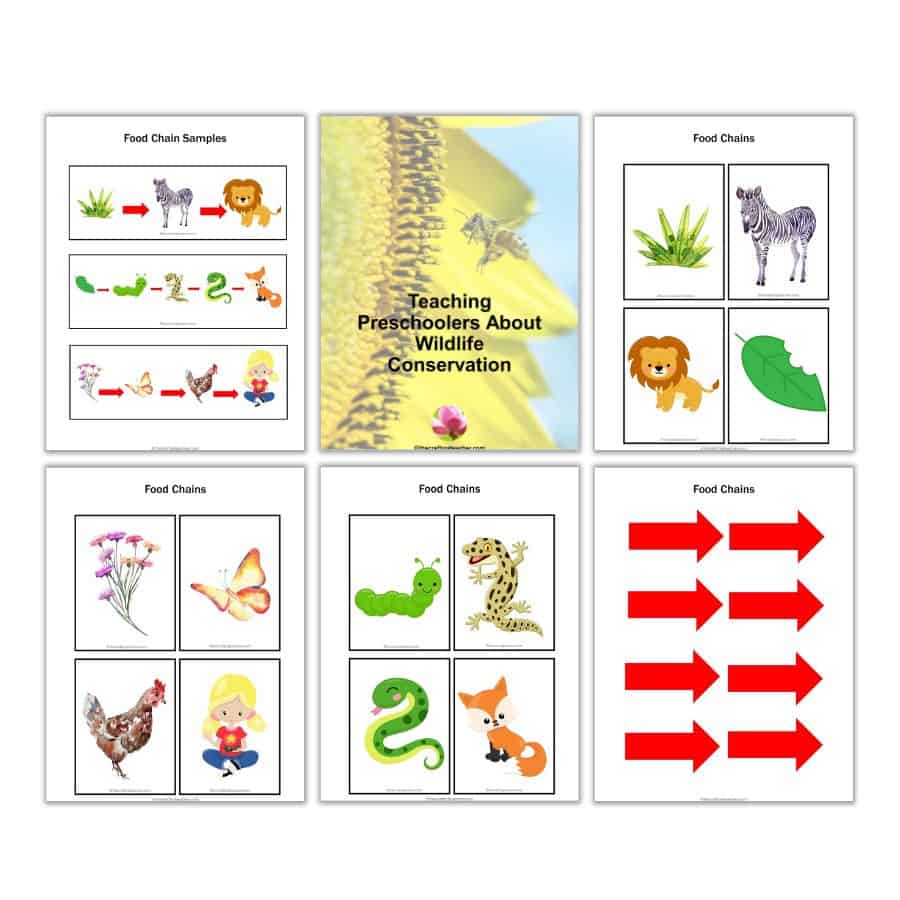
- Explain food chains. Discuss that animals and plants rely on each other to survive. For example, plants need soil, water, and sun for energy. Animals need water, shelter, and food to survive, and depending on the animal, food could be plants or other animals. Because plants and animals use what their habitat offers, a food chain shows how each gets its food.
Explain that when a part of a food chain becomes extinct, the food chain is broken, and the rest of the animals in that chain might not be able to survive.
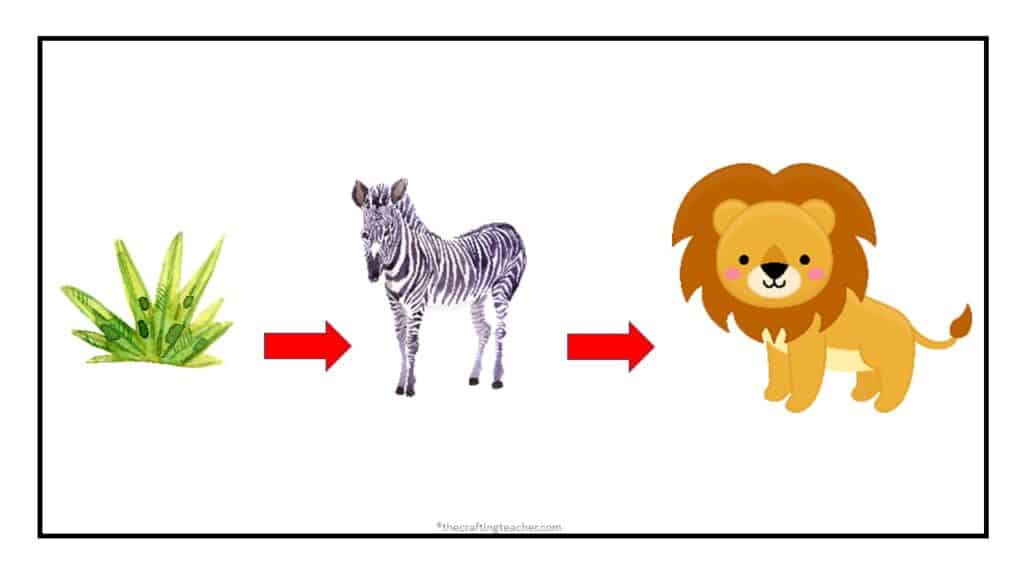
Here is another example in picture form:
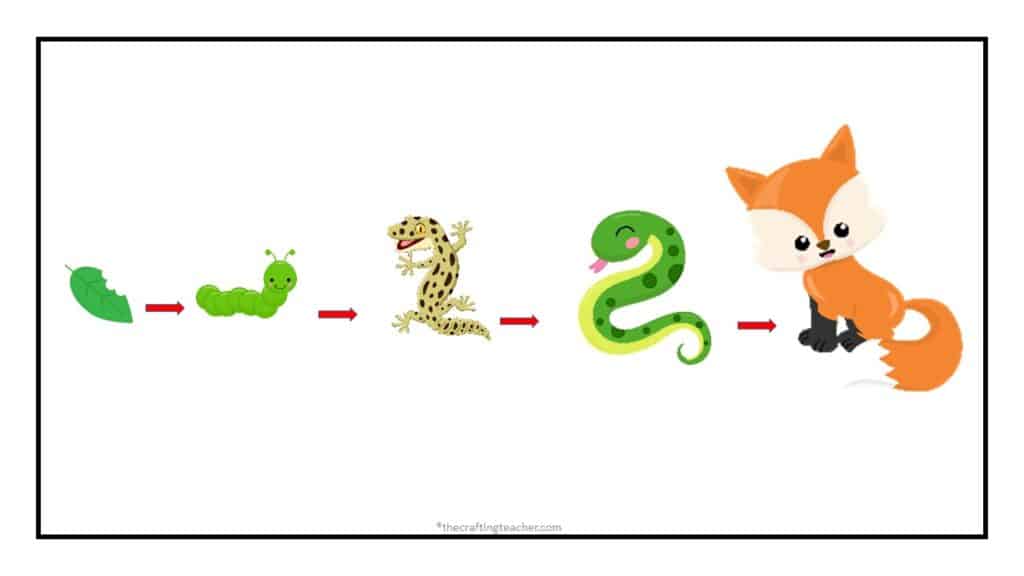
I’ve included three different types of food chains in the pack. You can use the provided cards to show examples and have them create food chains. Just print them on white cardstock, cut them out, and laminate them for durability. Then let the children create their own food chains.
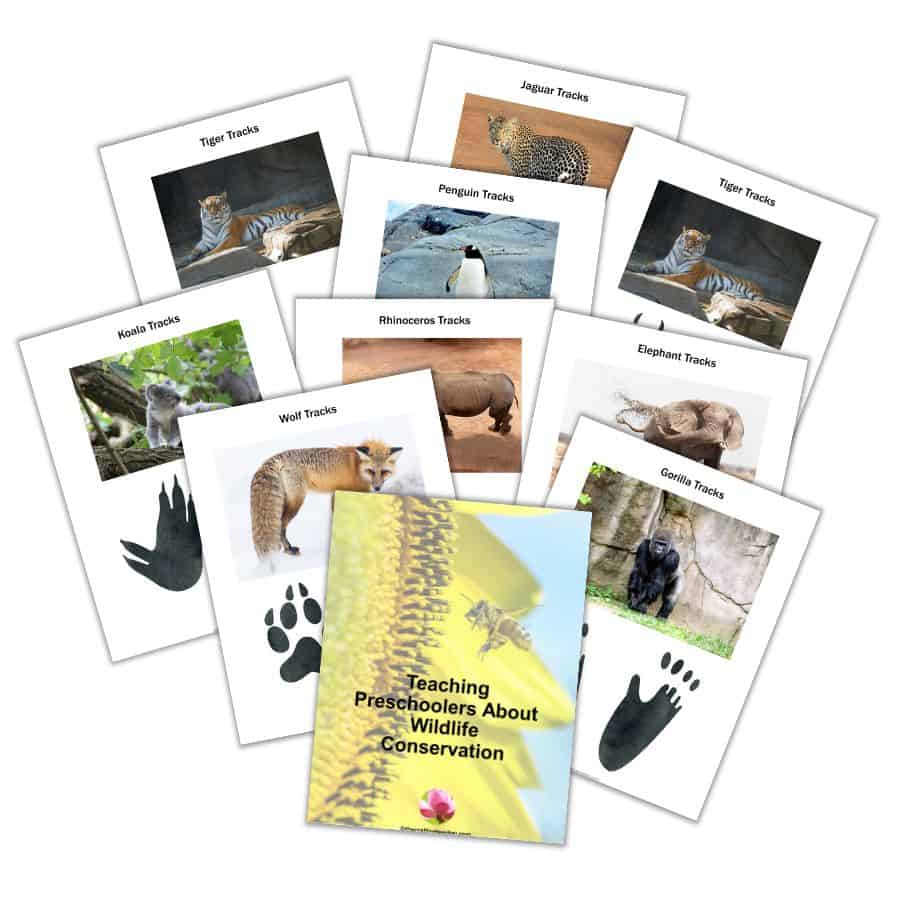
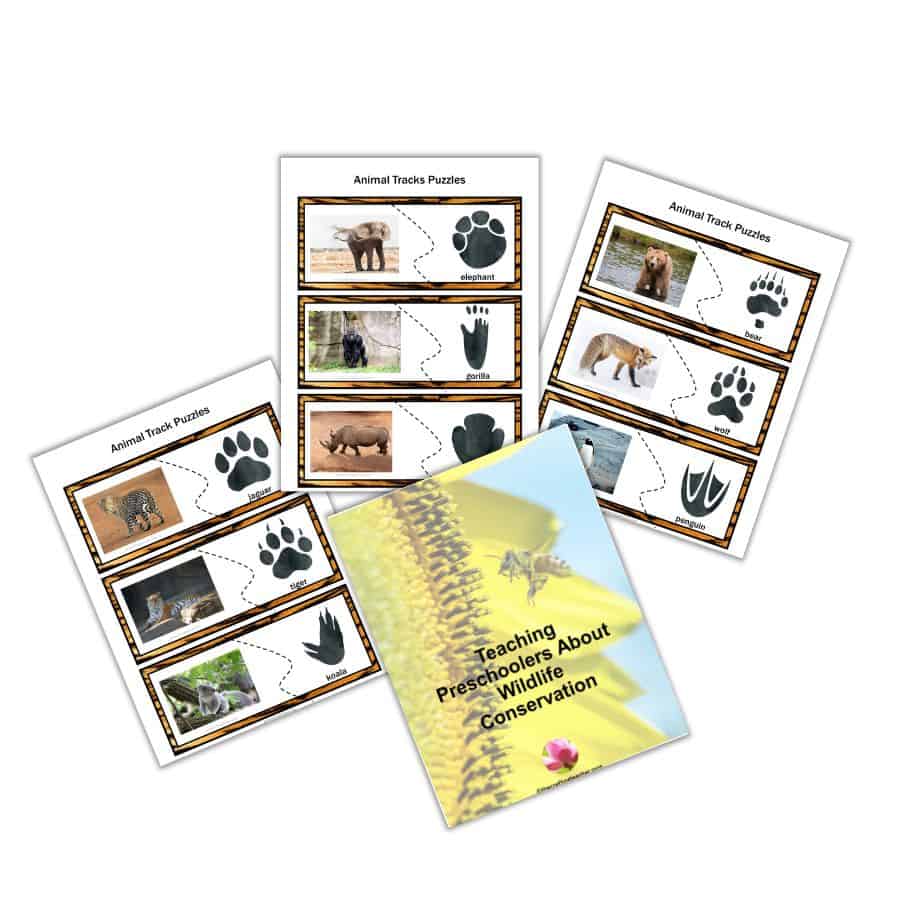
- Have them match wildlife with their tracks. Print the animal footprints posters provided in the pack on white cardstock, and laminate them for durability. Show each one to the children, then ask the class to talk about the footprints, describing them using adjectives. Then present the tracks puzzles and invite them to match each animal with its tracks.
Introduce Your Children to Endangered Species.
According to the Wild Animal Foundation, scientists gathered together to investigate 150,000 different species. Of those, 40,085 are threatened with extinction, including rhinoceroses, red pandas, penguins, lions, bees, elephants, polar bears, turtles, and so many others. This is a super worrisome situation because every one of these species plays an essential role in keeping the balance and health of its ecosystem. Because of this reality, it is essential that our children understand the importance of wildlife conservation.
Explain that when animals become extinct, it’s mostly because people have caused it by:
The first thing you need to do is explain what it means to be an endangered animal. Explain that endangered animals are at risk of no longer existing on Earth. It might help to have them think about their favorite toy. Tell them to imagine that the toy they have is the last one in the entire world. They will probably take good care of it, so they can keep it forever, but everybody, including their dog, wants to play with it, throwing it to the air and against the wall. Their toy is endangered. One day, a big dog or a car rips the toy to pieces. If that happens, the toy will become extinct.
- Destroying their habitat through deforestation, agriculture, road construction, and other activities.
- Poaching them or placing traps that harm them.
- Introducing invasive species that take over the habitat.
- Transmitting human diseases for which they don’t have immunity.
This way, you can help your kids better understand how these human actions harm wildlife, and how humans can also make a positive impact by taking action to protect the environment and the wildlife that lives in it.
Activities Ideas:
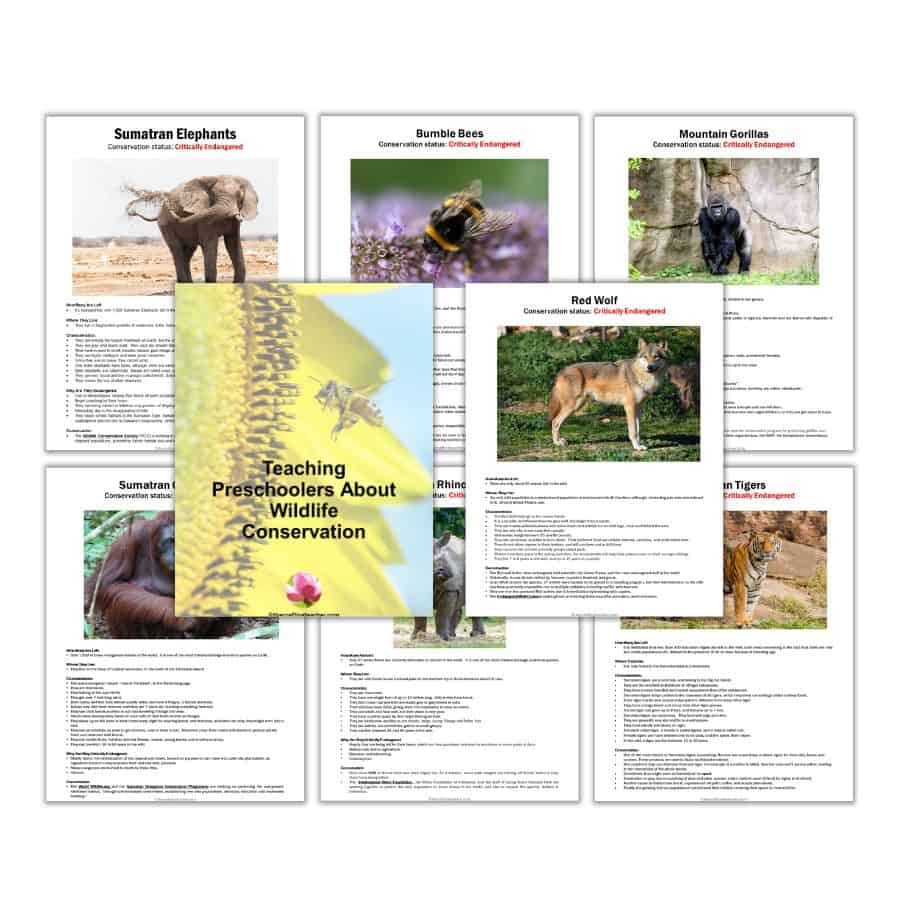
- Introduce the children to some critically endangered species, explaining the reason why they are endangered. Present the provided critically endangered animal posters printed on white cardstock and laminated for durability. Talk to the children about key facts about each one. To make a point about why they are critically endangered, you could also mention how many of each animal are left in the wild, and what we can do to help.
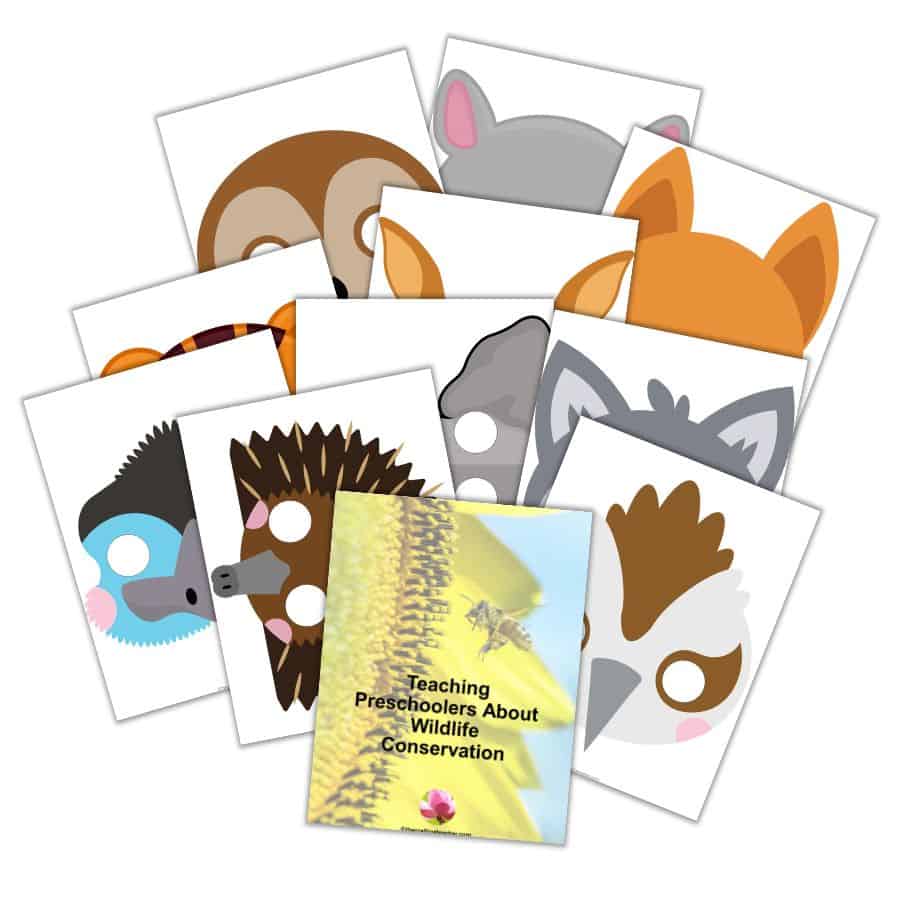
- Have them pretend to be wildlife using masks. Print out the provided masks on white cardstock and laminate them for durability. Have each child select a mask, tell what he/she knows about the animal, and put it on. Then ask children to act out how the animal on their masks moves.
- Do an Oil Spill Experiment. Remind them how wildlife is threatened by human activities like deforestation, poaching, and pollution. Explain that many industries spill oil in the waters, causing serious damage to wildlife.
Get Parents Involved
Parents can do many activities at home to support their children’s learning about wildlife conservation, and sharing this information may encourage them to participate if they aren’t already. Prepare a letter with the activities suggested below and send it home with your children so parents receive the information.
The activities mentioned are:
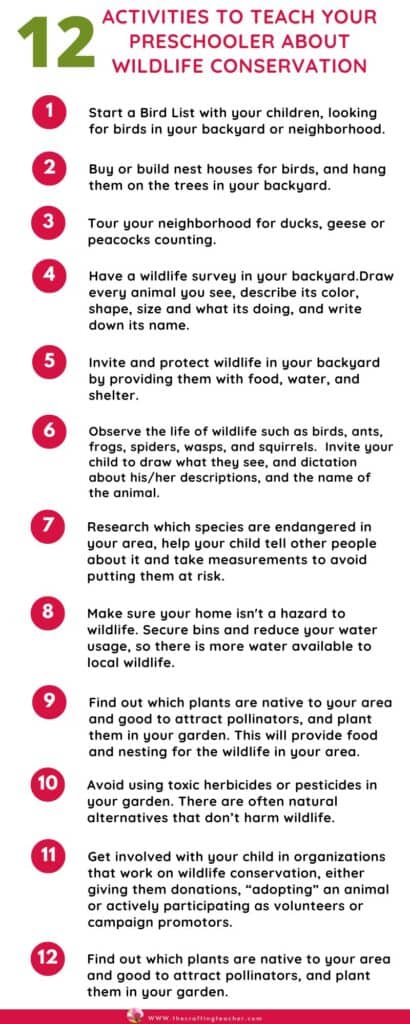
- Start a bird list with your children, looking for birds in your backyard or neighborhood. Observe their behavior. Are they carrying nesting materials or insects to feed their babies? Write down their color, size, sound, and shape, and try to identify the species by visiting The Cornell Lab’s All About Birds website.
- Buy or build nest houses for birds, and hang them on the trees in your backyard. You can find unfinished bird houses at JoAnn or Michaels. The children can decorate them, making it an excellent craft and fine motor activity.
- Tour your neighborhood for ducks, geese, or peacocks, and count them. It is best not to feed them, even with bread, because wildlife can get sick from human food.
- Have a wildlife survey in your backyard. Draw every animal you see, describe its color, shape, size, and what it’s doing, and write down its name. You can use the BugGuide or iNaturalist websites to help with identification.
- Invite and protect wildlife in your backyard by providing them with food, water, and shelter. There are many projects you can do with your child listed on this Department of Energy and Environmental Protection website.
- Observe wildlife such as birds, ants, frogs, spiders, wasps, and squirrels. How are they moving, what are they using to make their nests, what happens when they have babies, do you see any tadpoles? Invite your child to draw what they see, and dictate their descriptions and the animal’s name.
- Research which species are endangered in your area. Help your child tell others about it, and take steps to avoid putting them at risk. Knowledge is power, and the first step to protect wildlife is awareness.
- Make sure your home isn’t a hazard to wildlife. Secure bins and reduce your water usage so more water is available to local wildlife.
- Find out which plants are native to your area and attract pollinators, then plant them in your garden. This will provide food and nesting for the wildlife in your area.
- Avoid using toxic herbicides or pesticides in your garden. Natural alternatives often exist that don’t harm wildlife.
- Get involved with your child in wildlife conservation organizations, whether by donating, “adopting” an animal, volunteering, or promoting campaigns. A couple of places to start are your local zoo and wildlife park.
- Find out which plants are native to your area and good to attract pollinators, and plant them in your garden. This will provide food and nesting sites for local wildlife.
I’ve included an infographic you can share with your parents to keep these ideas handy.
Related Storybooks
Reading to your children about endangered species and wildlife conservation is one of the best educational activities you can do to teach your kiddos about this and plant in them the love and desire to help their environment and its inhabitants as they get older.
There are many books that you can use, both fictional and nonfictional. You can find some at your local library and used bookstore. I personally love Amazon because you can get anything fast, and I love to constantly add books to my collection. These are some I like. I added my affiliate Amazon links to make it easier for you; just click the titles.
- Many Biomes, One Earth by Sneed B. Collard III. From mountains to prairies, this book’s rich, exquisite illustrations highlight the smallest details in each habitat, complemented by fascinating, fact-filled text about Earth’s splendid ecosystems.
- Who Lives Here? Polar Animals by Deborah Hodge explores the polar region and the amazing animals whose bodies are built to live in extreme cold, find food, and raise their young in a habitat of thick ice and snow.
- Who Lives Here? Desert Animals by Deborah Hodge explains how each animal’s body is suited to live in this arid place, using realistic illustrations, playful language, and intriguing facts.
- Who Lives Here? Rainforest Animals by Deborah Hodge describes animals whose bodies are built to live among tall trees and lush green plants. They all have unique ways of finding food, staying safe, and raising their young in a warm, wet tropical forest.
- Who Lives Here? Forest Animals by Deborah Hodge describes how the forest is home to incredible animals whose bodies are built for living among the trees in cold weather. Black bears, wolverines, loons, and other animals have particular ways of keeping warm, finding food, and raising their young in a forest habitat with lakes and rivers, short summers, and long winters.
- Who Lives Here? Savanna Animals by Deborah Hodge describes the savanna, home to exciting animals whose bodies are suited to living on the warm, grassy plain. Elephants, giraffes, lions, meerkats, zebras, and other animals have special ways of finding food, raising families, and protecting themselves in this habitat with long dry seasons and shorter rainy seasons.
- Who Lives Here? Wetland Animals by Deborah Hodge. Wetlands are home to amazing animals whose bodies are built for living in or near water. Hippos, crocodiles, and anacondas have special ways to find food, stay safe, and raise their young in a watery habitat.
- A Home Can Be…. by Stephanie Seidler. From a floating house on the water to a tree house built high in the branches, each page showcases a new and unique dwelling, celebrating the diversity of habitats and the creativity of those who make them.
- About Habitats: Oceans by Cathryn Sin uses simple, easy-to-understand language and beautifully detailed paintings to teach children about oceans, the kinds of animals and plants that live there, and why oceans are essential.
- Tall, Tall Tree by Anthony D. Fredericks discusses the magnificent California coast redwood, the animals that live there, and its surrounding environment, using a counting format and rhyming text.
- Animal Homes by Shira Evans is a National Geographic book that uses brilliant photos to introduce children to vocabulary in concept groups, help them connect words, and expand their understanding of the world.
- Animal Habitats by Lundgren teaches children about different animal species and the habitats they use for food and protection.
- Fun in the Mud: A Wetland Tale by Sally Bolger is a luxuriously paced tale of the wetlands’ most secretive inhabitants that weaves rich fantasy with fun wetlands facts.
- About Habitats: Wetlands by Cathryn Sill explores the major attributes of wetlands and demonstrates their remarkable diversity using examples from around the globe, using simple, easy-to-understand language to teach children what wetlands are, what kinds of animals and plants live there, and how wetlands help maintain the delicate balance of Earth’s environments.
- America’s Wetlands by Marianne Wallace uses full-color illustrations and lively descriptions to help in identifying wetland types (swamp, marsh, or pond), plants, and animals.
- Song of the Redwing: Voice of the Wetlands by Tish McFadden helps children explore a marsh through the eyes of the red-winged blackbird.
- In the Pond by Aubre Andrus teaches children all about ponds around the world and the animals that call them home, introducing new words and concepts while helping them expand their understanding of the world.
Pin It For Later
If you are in a rush and don’t have time to read the post and download the printable but want to save it for later, pin it to one of your Pinterest boards.
It is important that children better understand what wildlife conservation means, and you, as teachers and parents of preschoolers, can encourage them to love, support, and protect it. Together, we can stop the decline and extinction of so many species so future generations can enjoy them and we can all have balanced ecosystems where all species thrive.
I hope you enjoy these ideas and that they help you have fun explaining wildlife conservation and the meaning and purpose of World Wildlife Day to your kiddos. To get the FREE pack, just click the link below and enter your information for an immediate download.
Be happy, safe, and creative. I wish you well.
Love,

P.S. Please let me know if any of these ideas worked for you, and if you have others, I would love to hear them as well. There’s no such thing as doing too much to save our planet and all its inhabitants.
Other Posts You Might Like: