Celebrating Earth Day with Preschoolers
Affiliate Disclosure: “This post contains affiliate links, which means I receive a small commission, at no extra cost to you, if you make a purchase using those links.”
This Earth Day Activities Pack is perfect to celebrate Earth Day with your preschoolers. Earth Day is celebrated each year on April 22 around the world with special events. As an Earth advocate, I consider that it is a perfect opportunity to teach our children about the importance of our Planet Earth, the many environmental concerns that exist, how we can help this planet stay clean and healthy, and introduce important concepts such as recycling, reusing, reducing, planting, pollution, and protecting endangered species.
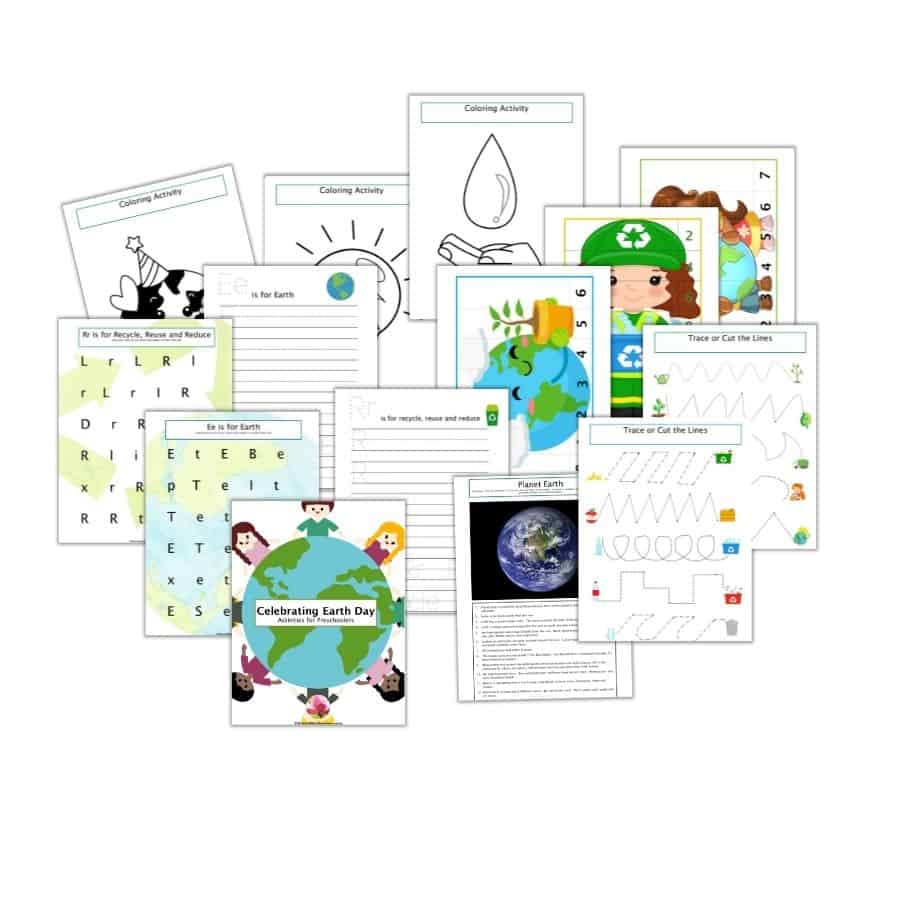
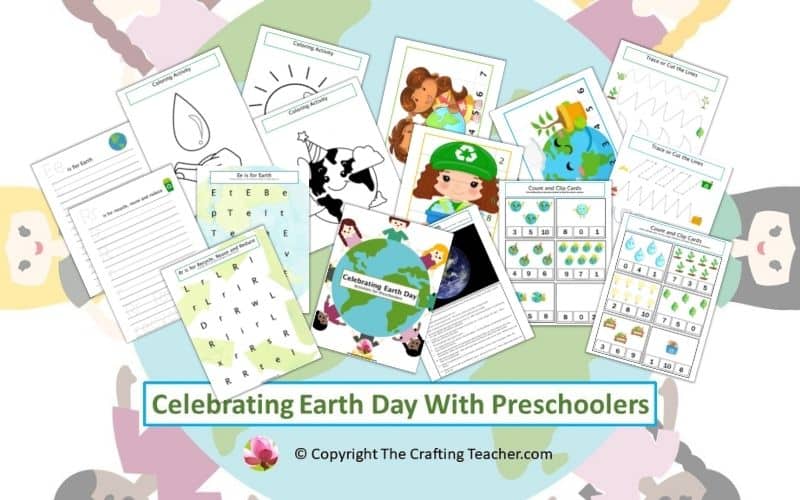
This FREE 15-page Earth Day pack includes literacy, math, science, and fine motor activities. You can download it at the end of this post.
Why Is It Important To Teach Our Children About Earth Day?
Children are the future, and they may be the only ones who will make a difference in protecting the Earth and everything on it. If we can teach them now how to protect the Earth and its resources, and what things they can do to keep it healthy and clean, it might make a difference for generations to come. They need to know that if we don’t do something about it now, Earth might not survive, and everything in it might die, including us.
How Can You Teach Your Preschoolers About Earth Day?
First, I believe you should do this every day, not just on Earth Day, but there are special activities you can do to celebrate this important day. These are just some ideas:
Create Recycled Art
Every year, we invite parents to take something considered garbage and turn it into art with their children. The projects that come back to us are incredible! Families can use plastic bottles, tin cans, sticks, cardboard containers, stones, etc. The possibilities are endless, and it’s a powerful way to teach our children about recycling and reusing.
Write a Group Story About Earth
After talking about Earth, recycling, endangered species, or reading a related story, invite your preschoolers to write their own story, helping them decide what it’s about and which characters to include. When it’s finished, type and print it, separate the paragraphs onto different sheets, and invite the authors to illustrate it. Then, make a copy for each author to take home. You can laminate the original and place it in the library for the entire class to enjoy.
Plant a Wildflower Garden
Another activity we like to do on Earth Day is inviting the families to bring a small plant and plant it in our garden with their children and teachers. Teachers use the opportunity to talk about how wildflowers provide food and shelter for bees, butterflies, and other insects, and how these animals support our food systems through pollination.
We finish the activity with a family picnic, and when the parents leave, the children go back to their classroom and make artwork with their teachers using recycled materials. It is super fun and educational. As a follow-up activity, the children water their plants every day and learn about how plants grow, conservation, responsibility, and loving what Earth gives us.
Plant a Tree Campaign
I love this one! I did this activity several times with my high schoolers (like a century ago), but there’s no reason why you cannot do it with your preschoolers. Start by choosing a neighborhood, park, or other local place that needs trees. Request the necessary permits and create a campaign inviting your families to participate in a planting day. Each family donates a small tree to plant with the children in the selected space. If you don’t want to do all this planning, you can find out whether your area has a tree-planting event and invite your families to participate.
Inform Your Families About Local Events for Earth Day
Since Earth Day is celebrated across the globe, many cities host special events, such as beach and park cleanups, fairs and marathons, children’s events, and fundraisers for conservation funds. Find out what is going to be happening in your city, and make a campaign to promote your family’s participation.
Talk About How People Around The World Celebrate Earth Day
These are some examples of activities done across the globe. You can use this information to do a social studies lesson and teach your preschoolers about some of these events. It might not be a good idea to talk about all of them at this young age, but you will have information to choose from based on your children’s developmental stage.
- USA – Children plant a butterfly garden at the Graham Creek Nature Preserve (Alabama), many civic organizations have rallies, teach-ins, marches, and pop-up shops, Scientists provide training sessions, and many other local events.
- Canada – celebrates Earth Day using educational talks, activities, and parades.
- Budapest, Hungary – Bicyclists ride the Elisabeth Bridge across the River Danube to celebrate the Critical Mass Earth Day bicycle ride.
- Granada, Spain – celebrates Earth Day by holding the Global Unity and Regeneration Gathering, a 24-hour event that includes workshops and presentations about helping the environment.
- Copenhagen, Denmark – they have a drum-playing celebration at the Christiansborg Castle Square, which points to the four corners of the world. They also hold the March for Science, which seeks to hold elected officials accountable for conservation initiatives.
- London, Great Britain – activists and musicians have an event to raise funds for British groups that fight climate change.
- Switzerland – The International School of Geneva is a private, non-profit international school that hosts a green sale during Earth Day to raise funds to plant trees on school grounds throughout the area.
- Tokyo, Japan – They hold a two-day celebration in Yoyogi Park, where thousands participate in family activities and learn about companies that encourage sustainability.
- Philippines – They hold expensive marathons as part of Earth Day Celebrations, with options ranging from $5,000.00 to $42,000.00.
- Thailand – Buddhist monks gather to give alms at the Wat Phra Dhammakaya temple, lighting up 3,030,000 candles.
- Dubai – Students make smoothies using a pedal-powered machine, demonstrating that there’s no need to rely on electricity for everything.
- India – encourages people to dress in green and puts on events to protect the Asian elephant, an endangered species.
- Sydney, Australia – hosts four different nature walks with experts, bike giveaways, and storytelling.
- South Africa – hosts the Earth Expo, presenting educational forums on sustainable nutrition and other topics.
Teaching About Reducing Resources
Do an experiment to show children how much water we waste in simple activities. Place a container under the faucet and have a child brush his/her teeth with the water running constantly. Then place another container and do the same, but this time the child will only open the faucet when needed. After the activity, help the children measure the water collected in both containers and discuss which container has more wasted water and what we can do to conserve water. You can also introduce ways to conserve energy and natural resources.
Demonstrate Pollution
This is another powerful, illustrative experiment. Talk to the children about pollution and the impact garbage has on our water sources and the world’s fauna, then take a clear container and place it in a corner where children can see it clearly without it being dangerous to them. After that, have each child take a piece of garbage from their snack or lunch and place it inside the water. Leave the garbage in the water for several days. As the water changes, use the opportunity to talk with your children about how garbage affects our environment and how to change it.
Have an Earth-Inspired Sensory Bin
This sensory bin is very easy to put together because you just need a few meaningful materials. Fill a container with water tinted with blue food coloring or tempera paint. Include green plastic mini trees, different species of animals (birds, mammals, reptiles, and amphibians from land and water), mini rocks, seashells, and any other natural items you can think of. As your children play, encourage their curiosity, wonder, and conversation by talking about nature, Planet Earth, and how we all live together and need each other to survive.
Teach Them About Sustainability
As I said at the beginning, children are the future conservationists (hopefully!), but to accomplish this, we have to teach them about sustainability, climate change, pollution, deforestation, and other important issues, so they can understand real problems that are happening in the world right now and be inspired to be part of the solutions in the future.
Some of the things you can do to teach them about sustainability are:
The best way to do this is through hands-on experiences with real-world problems, where they can come up with solutions to implement in their day-to-day lives. I think the only way we can make a difference in their minds is by helping them learn responsibility, compassion, and how to love and protect nature and everything in it, and by encouraging them to talk to everybody about what they learned. This way, their knowledge can have a real impact on their community and be an integral part of their brain’s blueprint.
- Invite them to use a reusable water bottle instead of plastic, and cups with spouts instead of straws.
- Remind them to brush their teeth without running water and turn off lights when they are not necessary.
- Include hands-on activities, small- and large-group activities, audio, and videos to reach all types of learners.
- Incorporate environmental issues and all types of lessons (literacy, math, social studies, art, etc.), not just science.
- Teach them to use the trash and recycling bins and not waste materials.
Other Activities You Can Do
I’m sure you can come up with multiple activities appropriate for this celebration, but I want to share a few ideas I have used successfully in the past. These are:
- Invite an arborist, gardener, veterinarian, conservationist, and any other related expert to come to your classroom and talk about his/her expertise and what children can do to support his/her efforts in the future.
- Have them decorate a box or plastic container to use as a recycling bin in the classroom.
- Have an exhibition of art made at home or in the classroom using recycled materials, and invite families to come and see it. If you want to push it, you can even have prizes.
- Do art projects using recycled materials.
Earth-related Books
Reading to your children is an excellent way to teach your kiddos about anything, and Earth Day is no different. Many books fit this theme. Books about environmental topics, recycling, protecting the Earth, endangered species, energy, and water conservation are ideal for teaching your children about Earth and how to protect it. Below are some examples. You can find them at your local library, used bookstore, and on Amazon. Following my affiliate links embedded in the titles will take you to the right page in seconds.
- The Giving Tree by Shel Silverstein. This beautifully written and illustrated book offers a touching interpretation of the gift of giving and a serene acceptance of another’s capacity to love in return, much of what Earth does to us all.
- I Am Earth by James McDonald. This book introduces kids to basic Earth science concepts while also encouraging them to care for our special planet through environmental awareness and sustainability.
- Making a Difference by Stacey C. Bauer. It uses beautiful illustrations, color photos, and interesting facts to tell stories about kids making the world a better place by doing amazing things such as planting a billion trees, bringing joy to others through music, fundraising for sick children, or starting an inclusive dance team.
- How Holly Celebrates Earth Day by Kimberly Kendall-Drucker. This book talks about how Holly explores flora and fauna around the globe. Then Holly and her family find ways to replenish, reduce, reuse, and recycle – to make every day Earth Day!
- Eyewitness: Endangered Animals by Ben Hoare. A wonderful resource that teaches about creatures around the world that are currently threatened with extinction, along with ways we can help them survive.
- Earth Ninja by Mary Nhin. This book was developed to help children learn valuable life skills, talking about recycling, reducing, and reusing.
- What a Waste by Jess French. It is a lively kids’ educational book with fabulous illustrations and fun facts about plans to save our seas, how countries are implementing green projects worldwide, and how to turn waste into something useful.
- The Lorax by Dr. Seuss. This story teaches kids to treat the planet with kindness, stand up, and speak up for others, and how one small seed, or one small child, can make a difference.
Pin It For Later
If you are in a rush and don’t have time to read the post and download the printable but want to save it for later, pin it to one of your Pinterest boards.
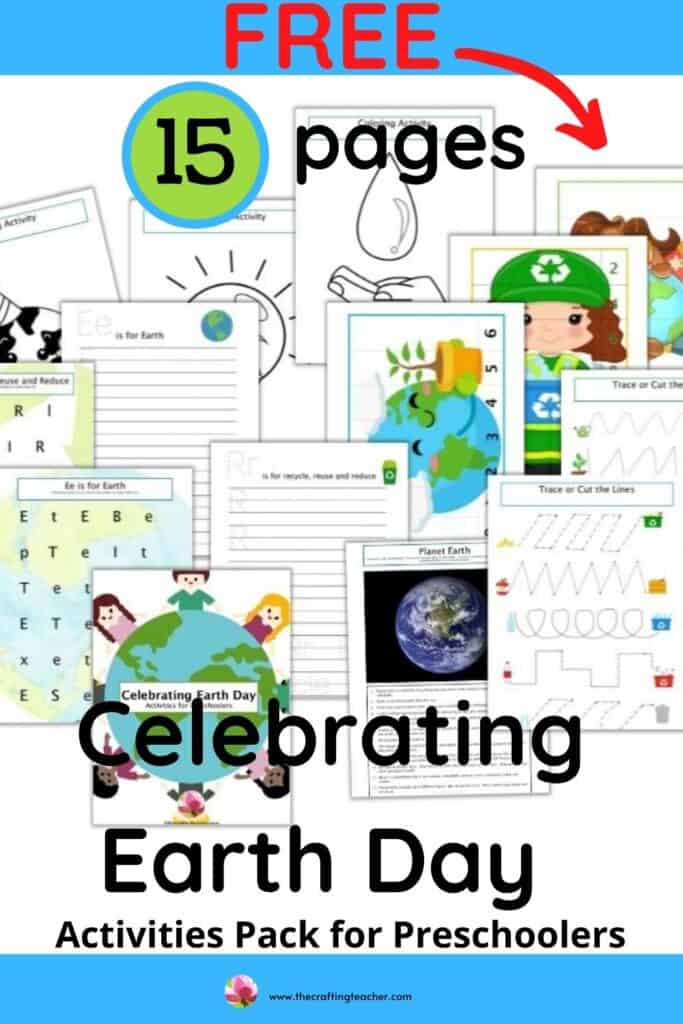
I hope you enjoy these ideas and have fun celebrating Earth Day with your preschoolers. To get the FREE pack, click the link below and enter your information for an immediate download.
Be happy, safe, and creative. I wish you well.
Love,

P.S. Please let me know if any of these ideas work for you, or if you think I should add or replace something. My goal is to help you however I can, and I don’t like anything better than sharing something you might find helpful. Also, if you have different ideas and want to share them, I would love to post them too.
Other Posts You Might Like: