Spring Insects and Bugs for Preschoolers
Affiliate Disclosure: “This post contains affiliate links, which means I receive a small commission, at no extra cost to you, if you make a purchase using those links.”
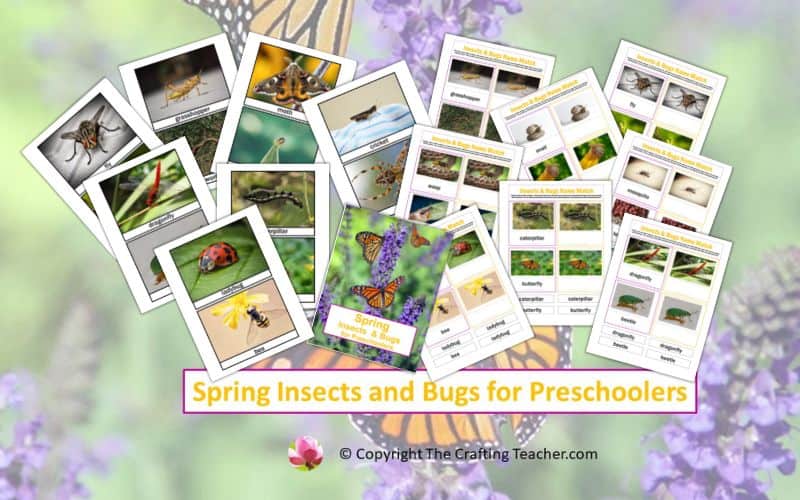
Spring gives you a wonderful opportunity to introduce your children to the incredible world of insects and bugs. I have loved teaching my preschoolers things like the difference between a bug and an insect, what a cocoon is, and what a chrysalis is, and these FREE Spring Insects and Bugs cards with real pictures are perfect for that.
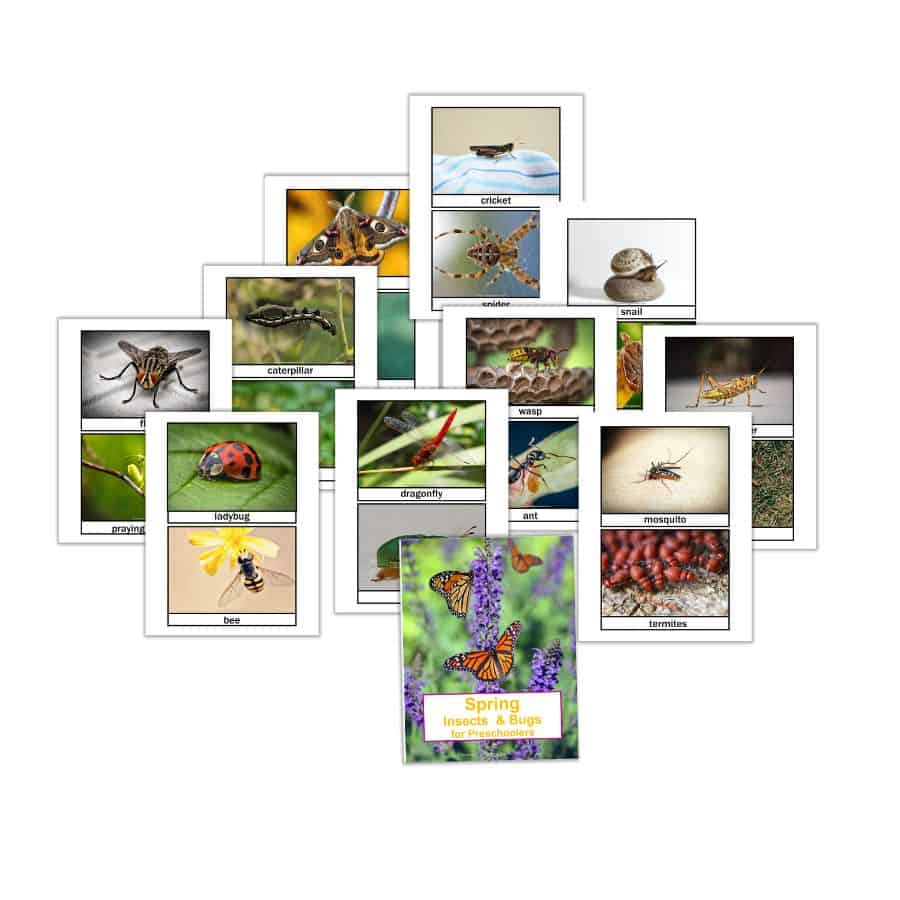
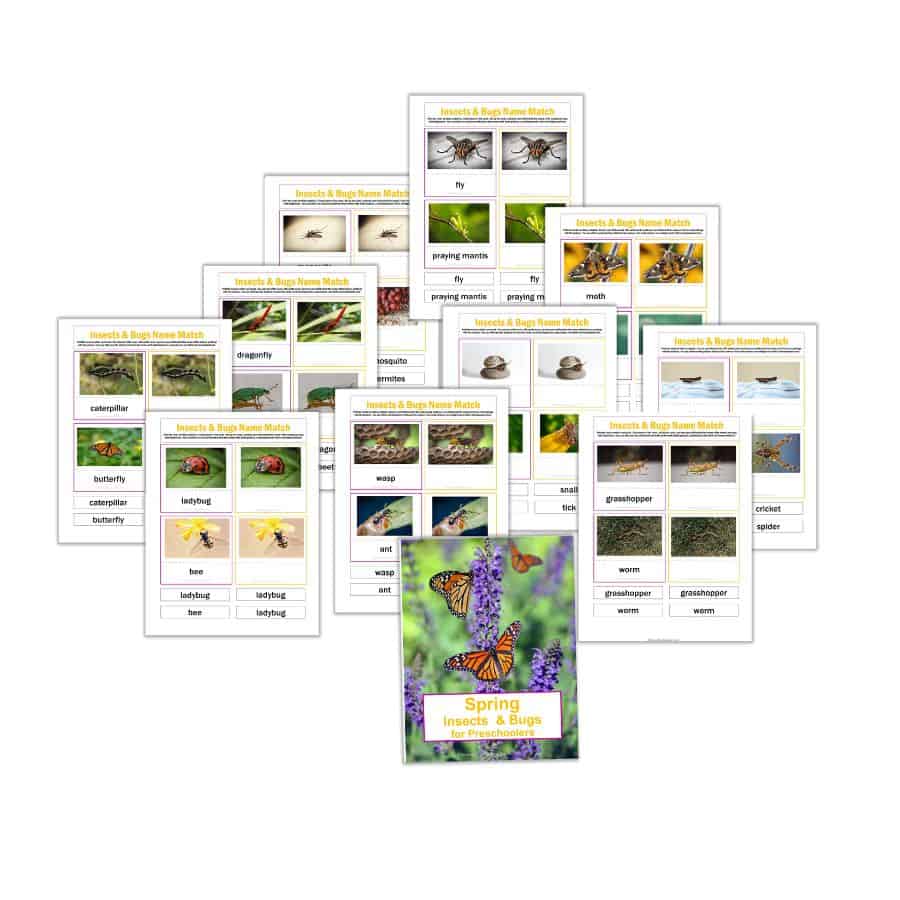
This set includes 10 pages with two cards each, for a total of 20 cards with different insects and bugs, and 10 pages with two matching name cards each. You can get it at the end of this post.
The insects and bugs included are a ladybug, bee, caterpillar, butterfly, dragonfly, beetle, wasp, ant, mosquito, termites, fly, praying mantis, grasshopper, worm, snail, tick, cricket, and spider.
Spring Insects and Bugs
To get these low-prep Spring Insects and Bugs cards ready, you only need the following materials:
Print each page on white Cardstock. Finally, cut out and laminate the cards to make them last longer.
When to Use The Spring Insects and Bugs Pictures
You can use these Spring Insects and Bugs pictures throughout the season in many ways. Some of the ideas I can give you are:
Circle Time
- Introduce the animals and talk about some of their characteristics.
- Make a graph with the children’s favorite animals.
- Explain which are insects and which are simple bugs.
- Clap the animals’ name syllables.
- Find animals’ names that are compound words.
Math Area
- To divide the pictures into insect and bug categories.
- To categorize the animals into the ones that have no legs, six legs, or eight legs.
- To divide them into the ones with wings and without wings.
Science Area
- To observe the pictures with magnifying glasses.
- To compare the pictures with plastic animals.
- To compare the pictures with the ones in books.
Writing and Literacy Areas
- Copy the names with pencils, crayons, or markers.
- Trace the words with dry-erase markers.
- Match the words using magnetic, wooden, or foam letters.
- Spell the animals’ names.
- Match the pictures with the written words.
- Choose an animal to create a story about it.
Art Area
- Draw a picture of an insect or bug.
Informational YouTube Videos
You can show your students many YouTube videos so they can observe animals that would otherwise be difficult for them to see, like the metamorphosis of a butterfly, a ladybug, or how ants build their anthills. These are some of my favorites:
Metamorphosis: How a Caterpillar Becomes a Butterfly by Free School. It shows how, after hatching from a tiny egg, caterpillars eat almost constantly for a week or two, until they have enough stored energy to begin their metamorphosis. Then, they hang upside down from a branch or stem, develop into a chrysalis, and shed their caterpillar skin. After a few more weeks, the adult butterfly emerges from the chrysalis to begin the cycle all over again.
Building a New Home by BBC Earth. This video shows how an ant colony goes into full-on construction mode as it builds a new home at the base of a fallen tree.
Bee / Animals for Kids by All Things Animal TV. This video talks about different types of bees, where they live, their social structure, how they collect pollen, and their importance in pollination.
Related Books
Don’t forget to read to your children every day. This is one of the most beneficial activities for children because books help them feel connected, understand better what you are talking about, and learn vocabulary, among many other important benefits.
Many books cover insects and bugs, both fiction and nonfiction. You can find books about these interesting animals at your local library, used bookstore, and on Amazon. You can get to this website and the book you want to add to your collection in a flash by clicking the titles with my direct link. These are some of my favorite insect and bug books for preschoolers.
- I Am a Bee: A Book About Bees for Kids by Rebecca McDonald. This book explores the life of a honey bee, the different roles bees fill, the work that needs to be done, the steps to accomplish it, and how that work benefits the bees as a whole, along with the rest of the creatures in the environment.
- Amazing Bugs A to Z: An ABC Book for Curious Kids with Interesting Facts About Insects by Dylanna Press. This fun and educational book is packed with interesting facts about insects, accompanied by beautiful color photographs and engaging descriptions.
- The Nature Kid’s Guide to Bugs by David Anderson. This incredible book will take children on a wild tour through the most bizarre and brilliant creatures on Earth, with short, punchy sentences and jaw-dropping surprises in every chapter.
- Let’s Learn About Bugs by Lee Zander. Designed for preschoolers, this book offers a gentle, engaging introduction to the diverse insects and arachnids that share our environment, using simple, rhythmic text and charming illustrations.
- On Beyond Bugs! All About Insects by Tish Rabe. This book will teach children how insects see, smell, communicate, and pollinate, as well as how they sometimes pester, amaze, and generally make life better for us humans.
Pin It For Later
If you are in a rush and don’t have time to read the post and download the printable but want to save it for later, pin it to your Spring or Science Pinterest board so it’s available when you’re ready.
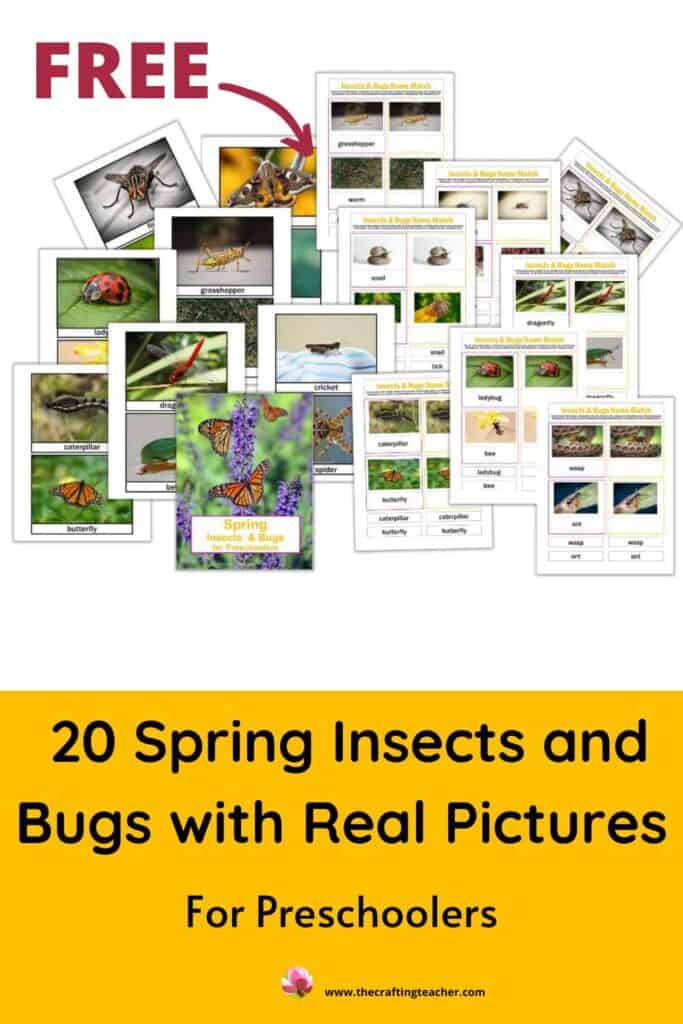
I hope you and your preschoolers enjoy this freebie. I love science, and I’m always happy to create and use anything related to it. To get it, click the link below and enter your information for an immediate download.
Be happy, safe, and creative. I wish you well.
Love,

P.S. Please let me know if this printable worked for you, or if you think I need to add or replace something. My goal is to help you in any way I can, and I don’t like anything better than posting something you might find useful. Also, if you come up with other ideas and want to share them, I would love to post them too.
Other Posts You Might Like: