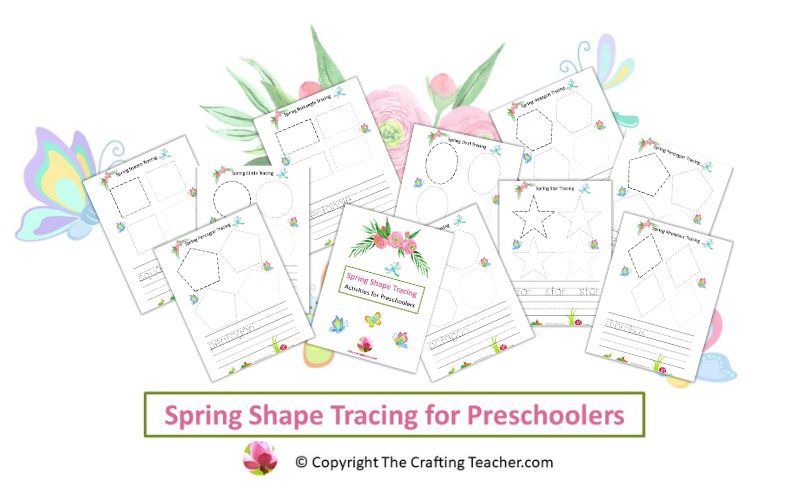
Spring Shape Tracing for Preschoolers
Affiliate Disclosure: “This post contains affiliate links, which means I receive a small commission, at no extra cost to you, if you make a purchase using those links”.
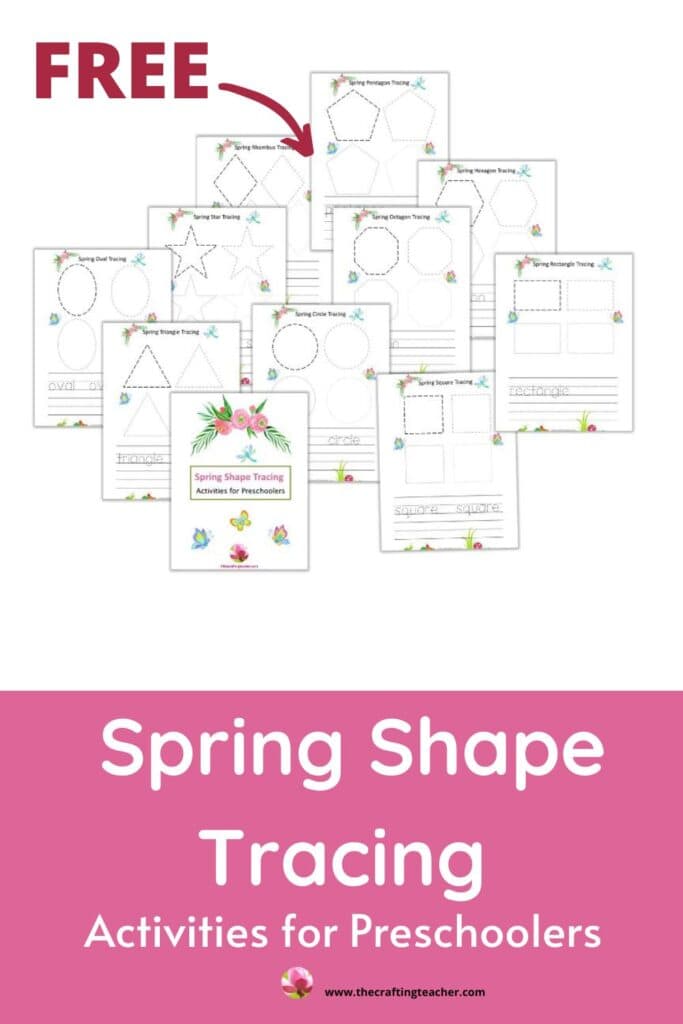
These FREE Spring Shape Tracing activities will bring something different to your preschool classroom this season, helping your kiddos develop the small muscles in their hands, build pre-writing skills, reinforce shape recognition and discrimination, and strengthen fine motor skills, concentration, and focus.
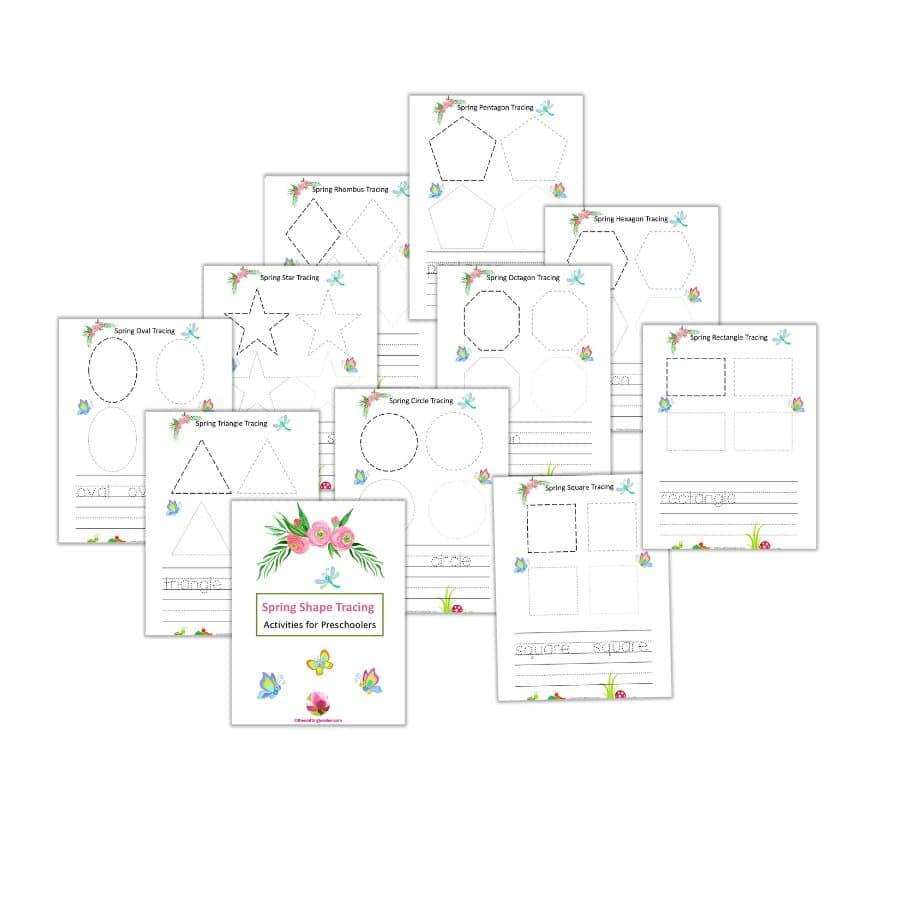
The pack includes ten shapes: circle, triangle, square, rectangle, oval, star, rhombus, pentagon, octagon, and hexagon. You can get it at the end of this post.
Spring Shape Tracing
- Fine Motor and Pencil Control Skills: Holding crayons or pencils to follow a line builds strength in the small muscles of the hands and fingers. It also improves children’s pencil control as they move along curved and straight lines to form shapes. All these skills are necessary for writing.
- Shape Recognition and Spatial Awareness: The process of moving their hands and eyes to form the different shapes helps the children’s brain remember what these shapes look like and how they fit the page they are using, which helps them better understand the space they are working on and how the lines and corners are formed.
- Focus and Concentration: Children need to focus on following the lines to form a shape, which takes concentration and patience to complete the task.
This low-prep Spring Shape Tracing activity pack will only require:
- Free Spring Shape Tracing activities pack (find at the end of this post).
- Printer.
- White paper or cardstock.
- Laminator or dry-erase pockets.
- Pencils, crayons, or markers, or dry-erase markers.
If you want to use these activities individually, print them on white paper and have the children use a pencil, crayon, or marker to trace the shapes and words. If you want to use them multiple times, I suggest printing them on white cardstock and laminating them, or placing them in a dry-erase sleeve and having the children use a dry-erase marker to trace them.
Give the child one worksheet at a time, and have him/her name the shape, trace the different versions of the shape on the page, trace the name of the shape, and finally freehand the name of the shape.
These activities can be used as a small-group activity, a Writing and Math centers option, a take-home game, or a quiet-area option.
To make it more fun and give your children more variety and choices, add Spring writing materials and manipulatives, and combine them with my other Spring activities. They all come with free printables, and you can get them by just clicking on the links below:
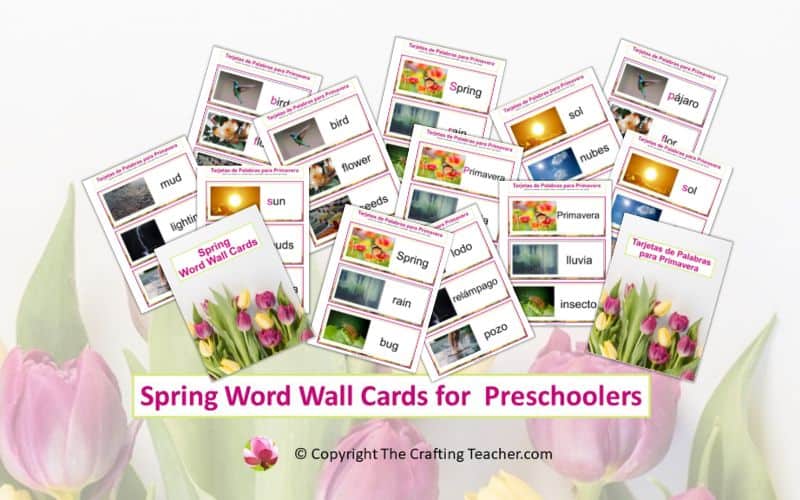
- Spring Word Wall Cards.
- Cactus Letter Tracing and Matching.
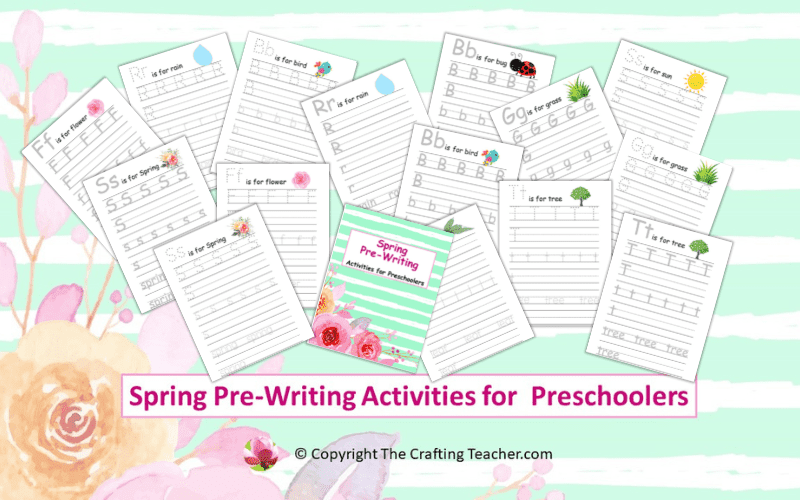
- Spring Pre-Writing Activities.
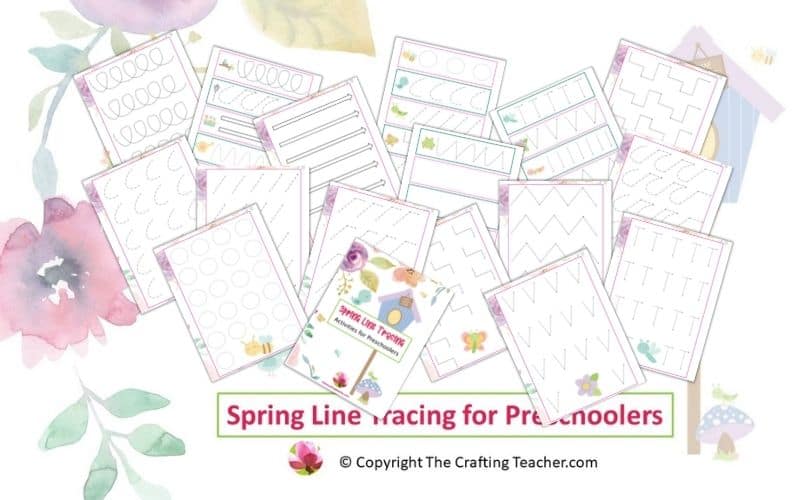
- Spring Line Tracing.
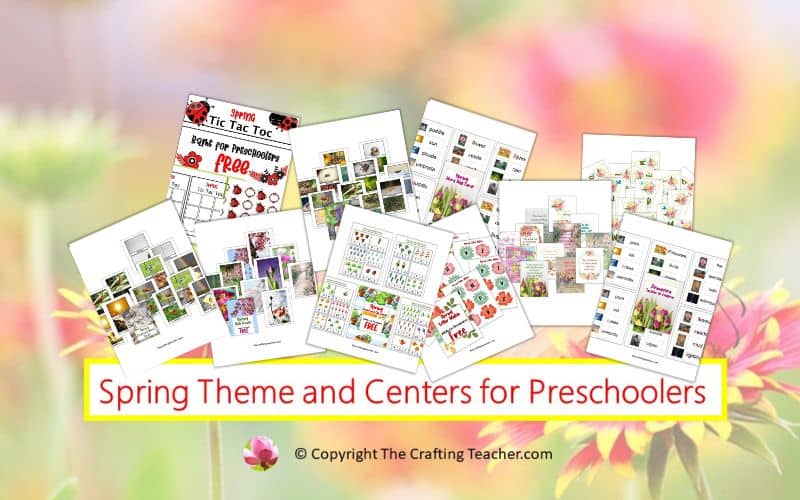
- Spring Theme and Centers.
- Spring Insects and Bugs.
- Spring Alphabet Cards.
- Animal ABC Book.
Extension Activities:
To extend the activity, you can use it to:
- Spell the name of the shapes.
- Match each shape with magnetic or wooden shapes.
- Use play dough to sculpt the shapes.
Don’t Forget Your Stories
I always recommend including storybooks related to each theme, and adding new ones to your library, book baskets, and centers. These are some of my favorite Spring stories. You can find them at your local library, used bookstore, or Amazon. For your convenience, I added affiliate links to each title, which will take you to Amazon in seconds.
- Spring is Here: A Bear and Mole Story by Will Hillenbrand. Full of simple sound words and lots of repetition, this book engages preschoolers in celebrating the season with mixed-media illustrations, details, and humor.
- Lola Plants a Garden by Lola McQuinn. This story follows a little girl who wants to plant flowers and, with her mom’s help, buys seeds, makes the garden, marks the rows, and watches the flowers bloom.
- When Spring Comes by Kevin Henkes. In this beautiful book for young children, the author uses striking imagery, repetition, and alliteration to introduce basic language concepts and the changing seasons.
- I Am Spring by Rebecca McDonald. This sweet story takes young children on a journey through the many important events that occur uniquely in the beautiful growing season of Spring.
- What Can You See in Spring? by Sian Smith. Using beautiful photos, simple repeated text, high-frequency and decodable words, and strong photo-to-text matching, this book shows children things they can see in spring, including typical spring activities and new life and growth in the natural world.
- Goodbye Winter Hello Spring by Kenard Pak. This story is about a boy and his dog exploring nature and how they say goodbye to winter and hello to spring.
- I See Spring by Charles Ghigna. This story celebrates spring with a rhyming, easy-to-read text about raindrops, robins, bluebells, and butterflies!
- It Just Blooms by Deanna Chesley. This story will help children of all ages understand that they are perfect just the way they are, and that they can bloom in their special way and in their own perfect time!
- Planting a Rainbow by Lois Ehlert. This book teaches young children about colors and flowers.
- The Tiny Seed by Eric Carle. A classic story that follows the life cycle of a flower through the adventures of a tiny seed, perfect for children to act out and use as inspiration for their wildflower garden.
- Up in the Garden and Down in the Dirt by Kate Messner. This sweet story talks about things you see in the garden like leaves and sprouts, growing vegetables, and ripening fruit; the world of earthworms digging, snakes hunting, skunks burrowing, and all the other animals that make a garden their home.
Pin It for Later
If you are in a rush and don’t have time to read the post and download the printable but want to save it for later, pin it to your Spring or math boards on Pinterest.
Your free Spring Shape Tracing activities pack is below. I hope you find it useful. Enter your email address in the box to confirm your subscription, and the PDF will open instantly for you to print and save. If you are already a subscriber, you won’t be subscribed twice.
Be happy, safe, and creative. I wish you well.
Love,

P.S. I would love to hear whether you find this pack useful and whether your preschoolers like it. My goal is to help you however I can.
Other Posts You Might Like: