Penguin Graphing Game for Preschoolers
Affiliate Disclosure: “This post contains affiliate links, which means I receive a small commission, at no extra cost, if you make a purchase using those links.”
This cute Penguin Graphing Game will help preschoolers practice graphing skills and complement your lesson plans this season.
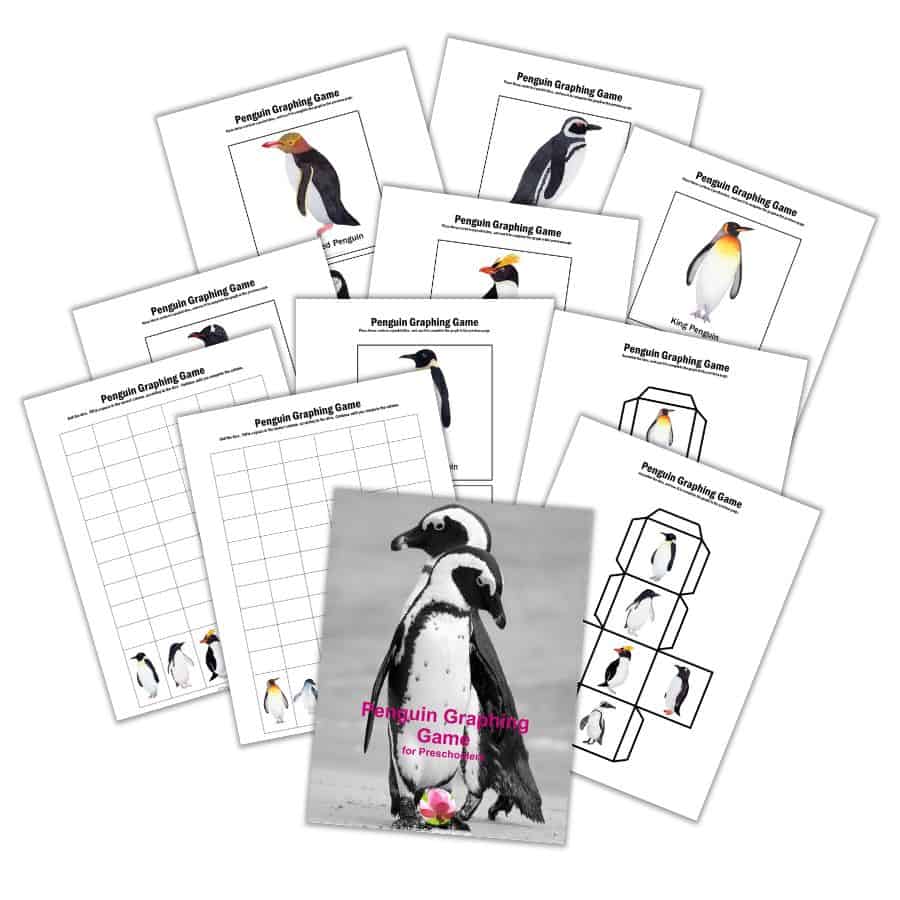
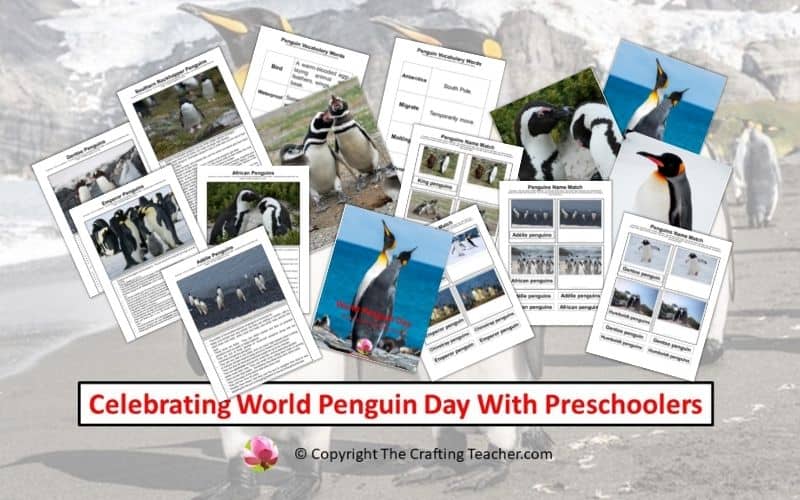
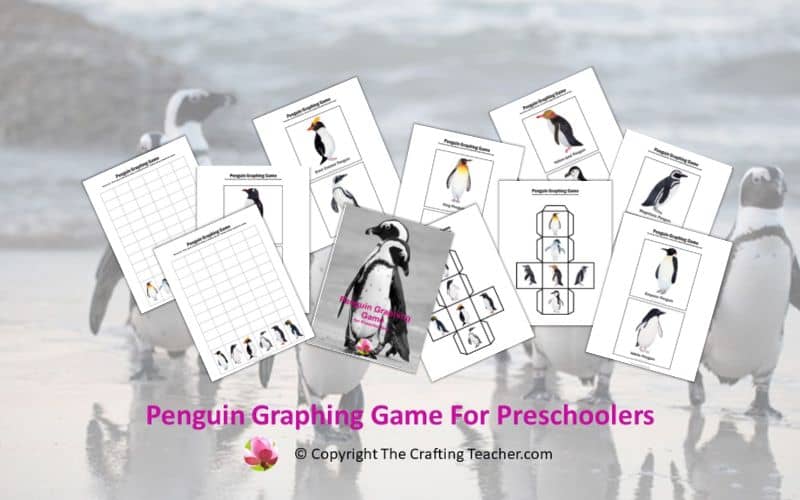
The Penguin Graphing Game includes two graphing recording sheets, two different cubes, and six pages with two penguin cards each (twelve cards total). The types of penguins included are Emperor Penguin, Adélie Penguin, Erect Crested Penguin, African Penguin, Gentoo Penguin, Northern Rockhopper Penguin, King Penguin, Blue Penguin, Yellow-eyed Penguin, Chinstrap Penguin, Magellanic Penguin, and Galapagos Penguin. You can get it at the end of this post.
Importance of Graphing for Preschoolers
Sometimes, we forget how vital graphing activities are for preschoolers because they are not part of the three major math focus areas: counting, number identification, and sorting.
However, graphing shows data collected using images or pictures, giving preschoolers visual guidance to predict, measure, and analyze data and laying the foundation for more advanced mathematical operations later.
Even before children are born, their brains gather information to connect them with the world, and they sort it to use in many different ways, even when they still don’t understand it.
They perceive all this information through observation, experiences, and play. For example, they learn to identify their parents’ voices, push a toy car to make it run, move the puzzle pieces around to make them fit, and press playdough in a certain way to make a snake.
Teachers should help preschoolers learn how to recognize and use all this information or data, remembering how important data gathering is for their development and learning. Graphs help children see numbers in different ways, use the data they collect, understand the questions they are trying to answer, and interpret the results.
In other words, graphs help children understand math concepts such as more, less, and equal. They build counting skills and one-to-one correspondence as they place results on the graph box. Graphs also help them see groups of items. Finally, when used appropriately, graphs also help teachers and parents teach children math vocabulary, creating the mathematical foundation they need to understand more complex operations in the future.
Appropriate Types of Graphs for Preschoolers
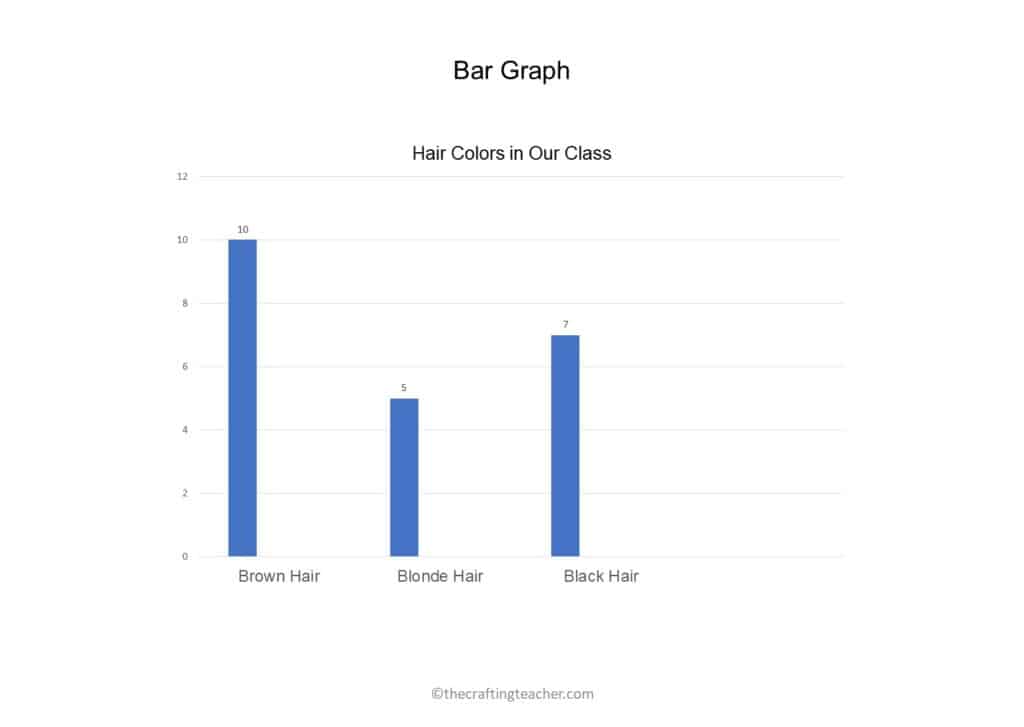
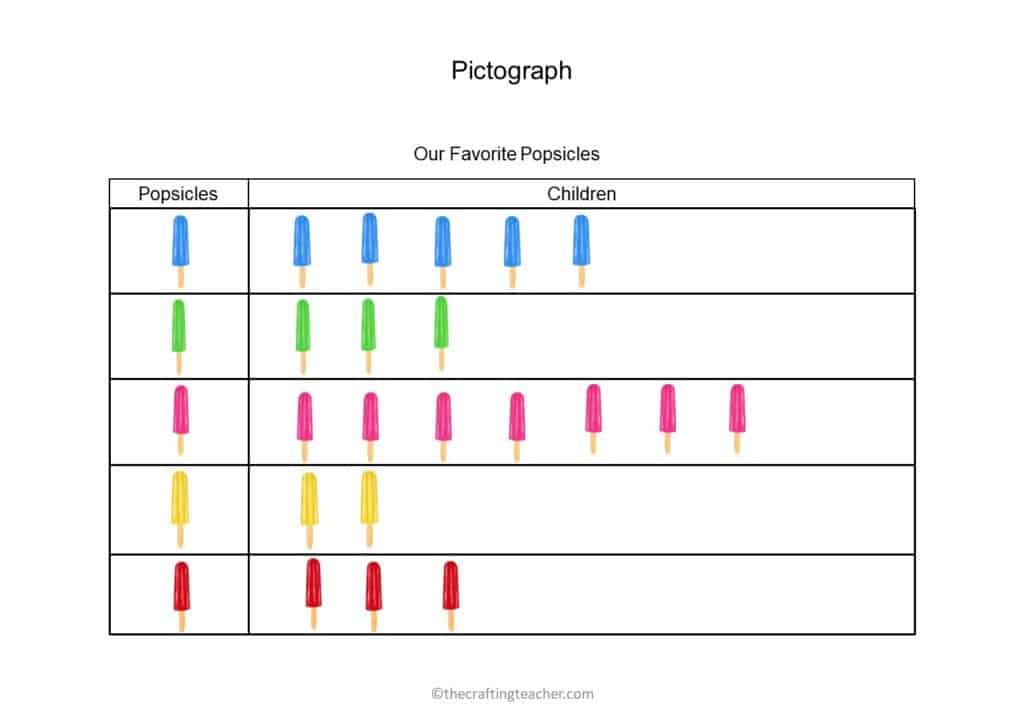
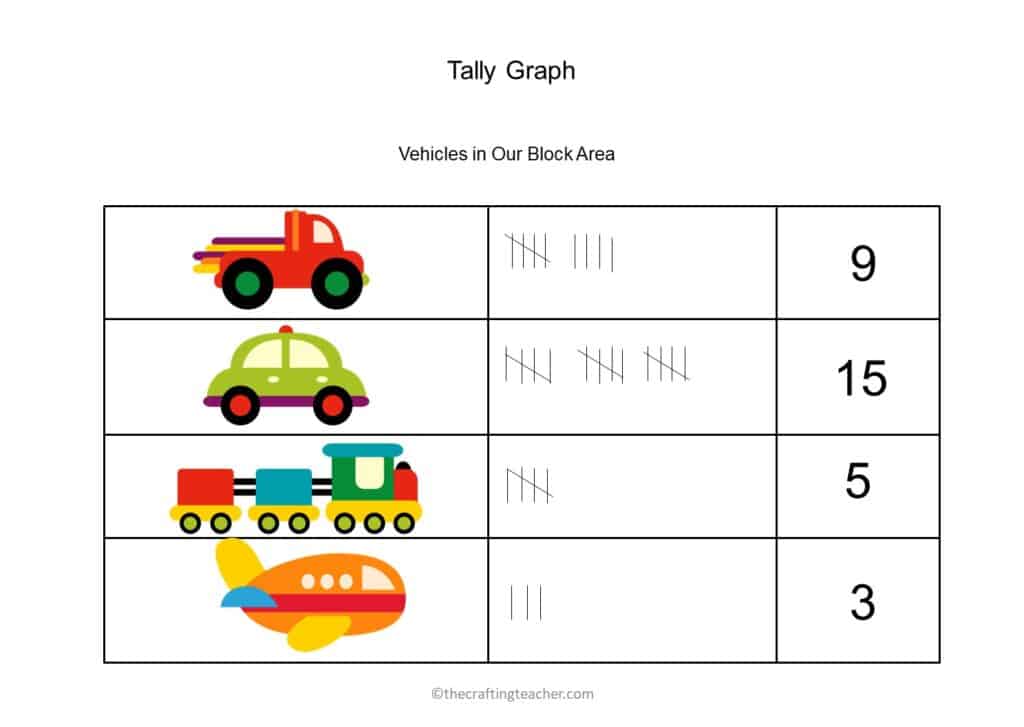
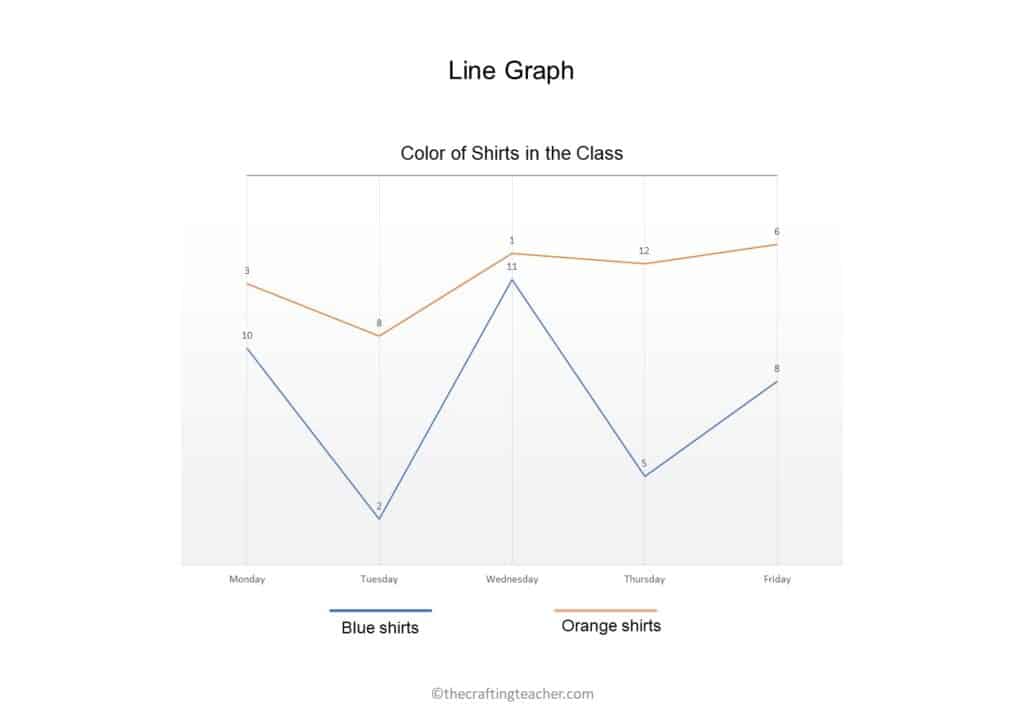
There are many types of graphs, some complicated and some uncomplicated, and not all are appropriate for preschoolers. The ones that preschoolers get to understand better are:
- Bar graphs: These graphs help children see more clearly and compare numbers of items. They can be horizontal or vertical.
- Pictographs: The data collected in this type of graph is easier to read because it uses pictures to represent numbers.
- Tally charts: Children can collect data quickly and efficiently with this type of graph because they only need to trace marks or lines to represent what they are counting (data collected).
- Line charts: These graphs show information that is connected in some way as it changes over time.
- Pie charts: This type shows children how something is divided into parts.
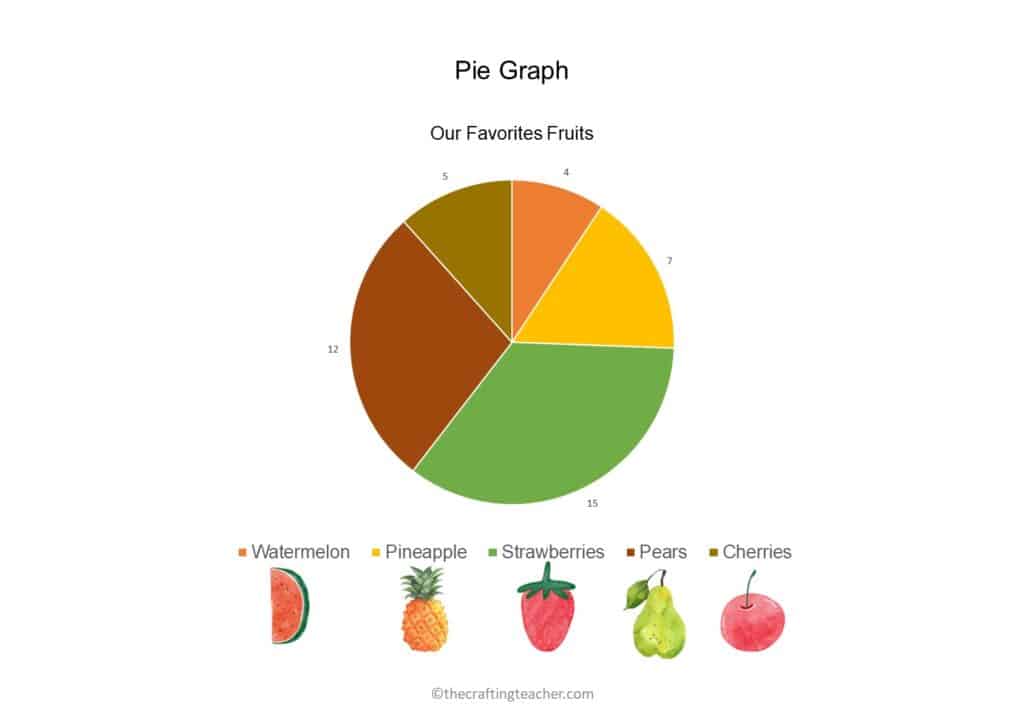
Penguin Graph Game
To get it ready, you only need a handful of materials, which are:
- Penguin Graph game (found at the end of this post).
- Printer.
- Laminator.
- Laminator pouches.
- Scissors.
Optional:
You only have to print the pages, cut out the cards and the dice, and laminate everything for durability. If you don’t want to laminate the recording pages and cards, you can always place them inside dry-erase pouches. If you don’t want to use the dice provided in the printable, you can put the penguin cards in a pocket cube. Children can play the game by themselves or with a friend. The idea is to roll the dice and color or mark the square that shows the same penguin on the recording sheet using crayons, colored pencils, markers, dry-erase markers, or mini penguin toys. If children play in pairs, the first child who fills one column wins.
Additional Activity:
You can use the cards in this game to connect this math activity to science by talking with the children about the importance and characteristics of these penguins.
Why? Because, like many other species around the world, penguins are in danger. Of the 18 species of penguins that exist today, ten are considered endangered or vulnerable by the International Union for Conservation of Nature (IUCN), and three are considered near threatened.
Penguins, especially around Antarctica and on the Southern Ocean islands, are essential players in the balance of the ecosystem for different reasons:
- They control the populations of small fish and crustaceans in the hunting grounds, which could otherwise overgraze on algae and plankton, two crucial food sources for other species.
- Penguins are also an important food source for several animals, both on land and in the water. Adults, young, and even eggs feed leopard seals, Orcas, seabirds, foxes, cats, mongooses, and other animals.
- Another significant contribution is fertilizing the landscape with their guano (feces), providing essential plant nutrients such as organic carbon, nitrogen, and phosphorus.
Facts About Penguins
These incredible birds are similar in some ways but different in others. These are some of the general facts about penguins:
- Penguins are birds, but they cannot fly in the air.
- They have waterproof feathers.
- Their eyes have a unique lens that protects them underwater.
- Penguins can recognize each other’s calls among a large group. They make different sounds, often described as honks.
- Their unique tongue is covered with spines that help them catch and hold onto prey.
- Penguins are carnivores and mainly eat krill, fish, shellfish, and squid.
- Penguins can live on land and in the water.
- They use their wings like flippers and fly through the water very fast.
- Penguins are very sociable birds, and they live in large groups.
- On land, a group of penguins is called a colony. In the water, a group of penguins is called a raft.
- All are black-and-white penguins, which helps them camouflage and protects them against predators.
- All penguins live in the Southern Hemisphere, but depending on the species, they live in Antarctica, rocky coastlines, or desert regions.
- Most penguins have the same partner all their adult lives.
- Penguins raise their babies together. They take turns incubating the eggs and feeding them. When the chicks hatch, they also take turns keeping them warm and feeding them by regurgitating food.
- Penguins usually lay two eggs, called a clutch. Some only lay one egg.
- They build their nests from guano, or penguin poop. It maintains a good temperature and protects their eggs and babies from predators.
- Their main predators in water are seals and Orcas. On land, other aquatic birds, felines, and carnivores hunt them.
If you want more information about the different types of penguins and to get another free pack, you can go HERE.
Books About Math Operations
I love the books written by Stuart J. Murphy because he uses a unique combination of engaging, relatable stories around practical applications of math concepts, plus beautiful illustrations, charts, and other visuals to help children understand how math works and build deeper comprehension, giving them the opportunity to succeed.
You can find these books at your local library, in a used bookstore, and on Amazon by clicking the story titles. My direct affiliate links will take you to the correct Amazon page in seconds.
- A Pair of Socks—In this book, a lonely striped sock searches the house for its mate, making it perfect for teaching matching.
- Just Enough Carrots – This story teaches kids to compare quantities (fewer, more, and the same), which they must master before learning to add or subtract.
- Beep Beep, Vroom Vroom! – Molly will teach children to see and recognize patterns as she plays with her big brother’s toy cars.
- Jack the Builder – Jack teaches counting by stacking up blocks high. Two make a robot, five make a boat, and fifteen make . . . whatever you can imagine!
- Every Buddy Counts is perfect for teaching counting. It starts with one little hamster and continues past six slinky fish, eight favorite playmates, and more—all the way up to ten cuddly teddy bears.
- Henry the Fourth uses a dog show to teach ordinals. First, Maxie speaks. Second, Baxter begs. Third, Daisy rolls over, and Henry is the fourth.
- The Best Bug Parade – this fun book introduces size comparison in its simplest form, using a bug parade, where you can find bugs in every size and length.
- 3 Little Firefighters is perfect for teaching sorting. Three firefighters scramble to find three sets of matching buttons before the big parade starts.
- Seaweed Soup. This book is about a turtle serving lunch to guests while teaching children about matching sets and one-to-one correspondence by tracking all the different bowls, cups, spoons, and napkins on the table.
- Monster Musical Chairs is the perfect story for teaching subtraction effortlessly using the well-known game. Every time the music stops, one more monster is out!
- It’s About Time! introduces children to hours and telling time, using activities kids do every day.
- Circus Shapes. This story introduces basic shapes (circles, squares, rectangles, and triangles) using circus animals under the big top.
Pin It For Later
If you are in a rush and don’t have time to read the post and download the printable but want to save it later, pin it to one of your Pinterest boards.
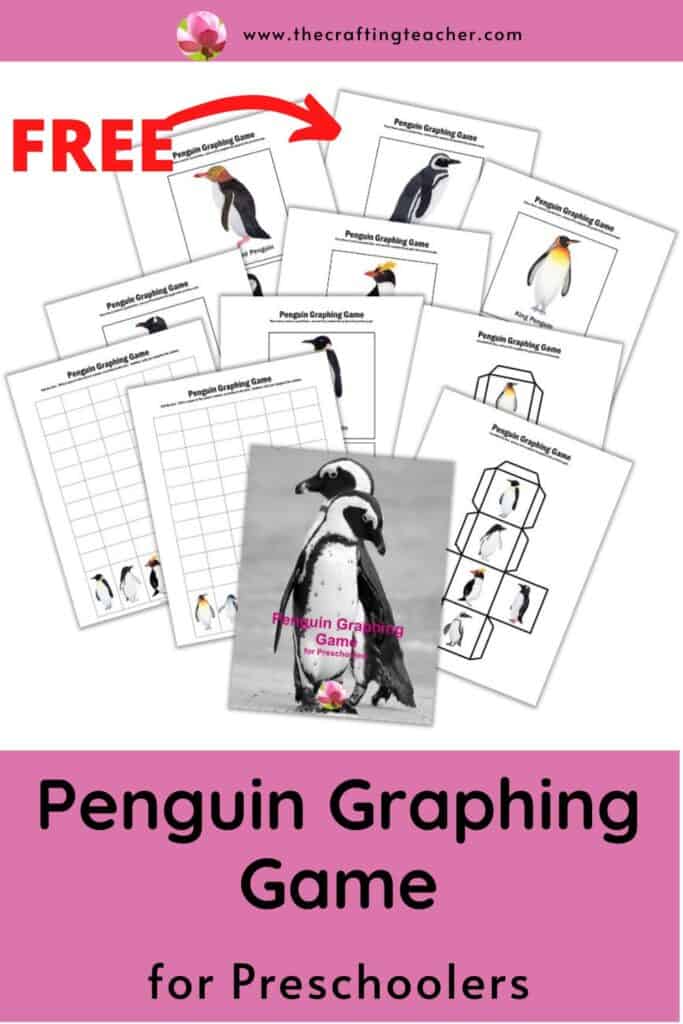
I hope your preschoolers enjoy this game and that it helps you with your lesson planning. To get the FREE pack, click on the link below and enter your information for an immediate download.
Be happy, safe, and creative. I wish you well.
Love,

P.S. Please let me know if you find this game useful or if you think I should add or replace something. My goal is to help you however I can.
Other Posts You Might Like: