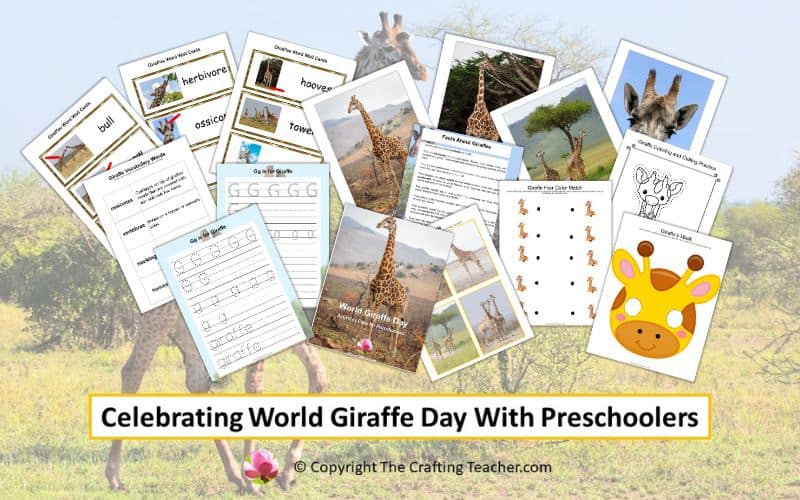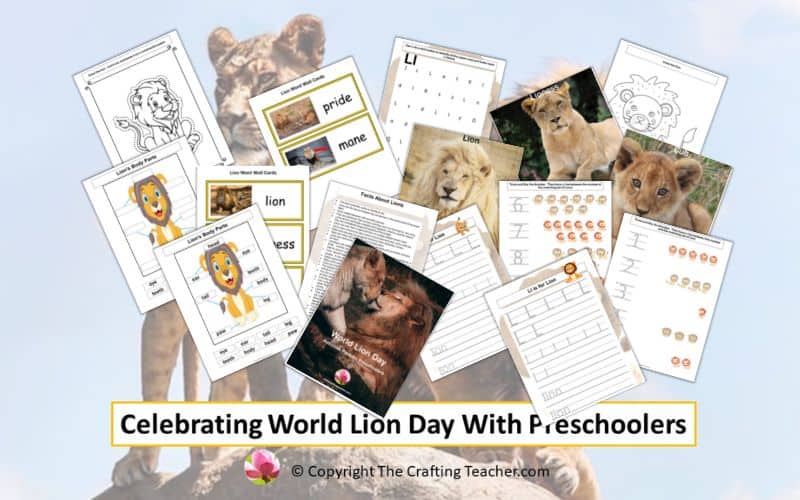
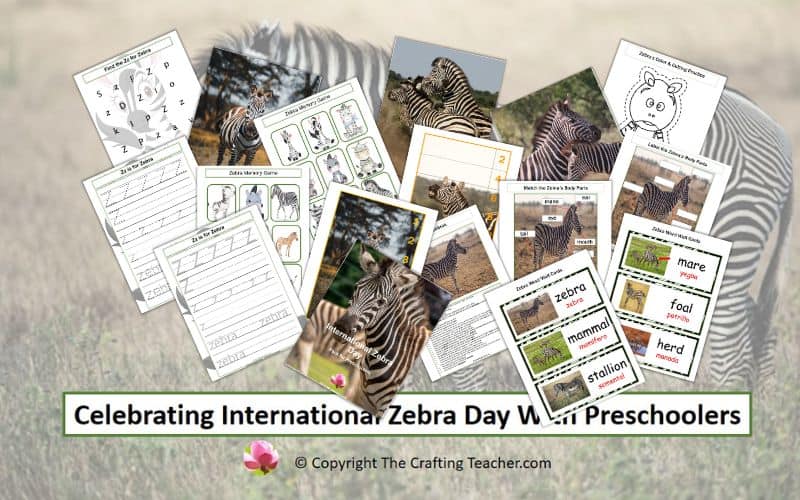
Celebrating International Zebra Day with Preschoolers
Affiliate Disclosure: “This post contains affiliate links, which means I receive a small commission, at no extra cost to you, if you make a purchase using those links.”
International Zebra Day is celebrated every year on January 31 to raise awareness of the precarious situation zebras face, which puts them at risk of extinction, and to encourage people and governments to participate in conservation efforts to protect these mammals and ensure their long-term survival.
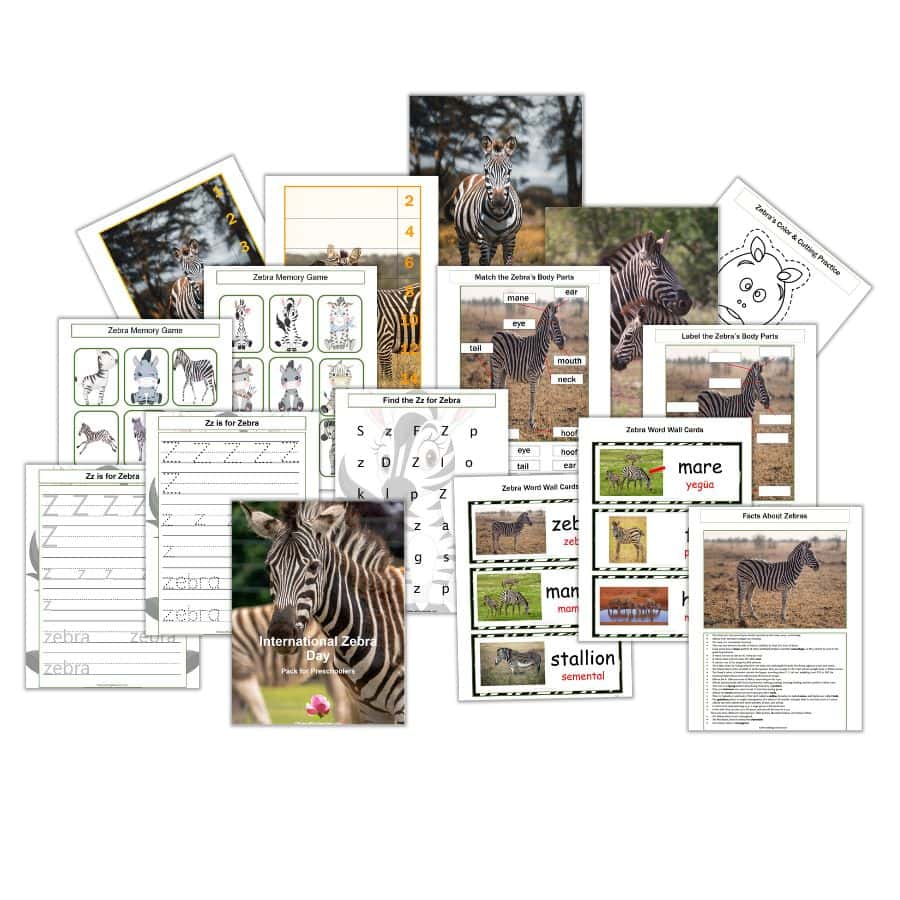
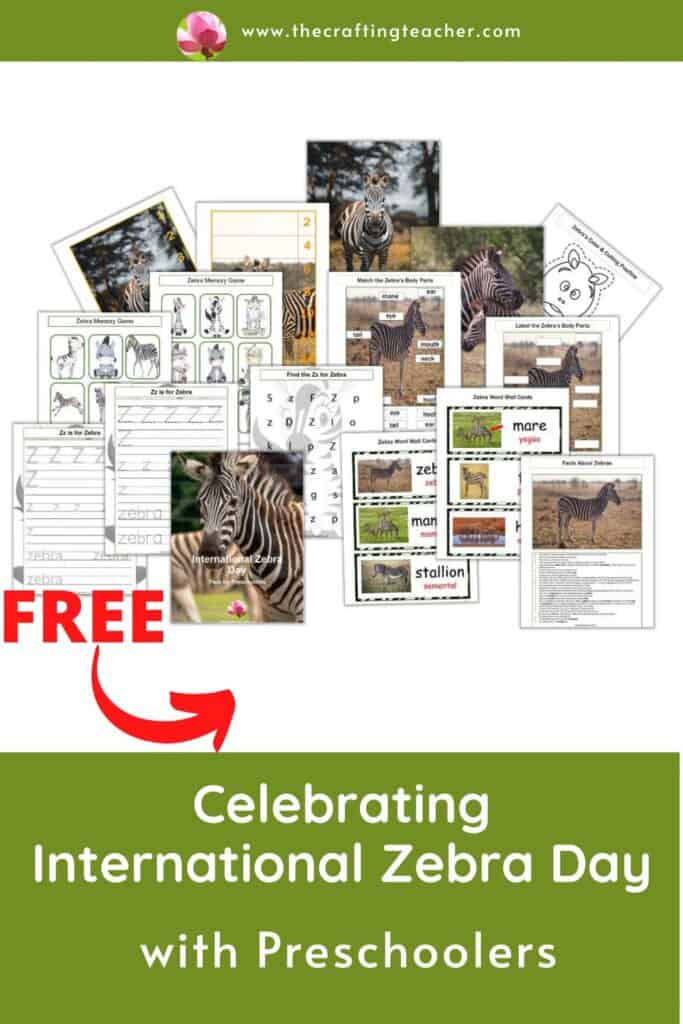
I have included a FREE 21-page International Zebra Day Pack for your preschoolers. The pack provides literacy, science, math, and fine motor activities. You can download it at the end of this post.
Importance of International Zebra Day
This day was created by the Conservation Biology Institute, the Smithsonian’s National Zoo, and other conservation organizations to prevent further declines in zebra populations and increase their numbers.
The importance of International Zebra Day is that it makes people think about these animals, with positive consequences such as:
- Encourage more people to participate in the conservation efforts that different organizations are doing to preserve and increase the zebra population and ensure their well-being.
- It allows people to take action through awareness programs and donations that might otherwise be impossible.
- Increase the possibility of a peaceful coexistence with zebras, other wild species, and humans without fighting for resources.
- Restore ecological balance worldwide to ensure this planet and its inhabitants survive.
Some of the organizations protecting zebras are:
- Grevy’s Zebra Trust – a Kenya-based organization that works with local communities to protect the endangered Grevy’s zebra.
- International Fund for Animal Welfare (IFAW) – helps protect endangered species worldwide, including zebras.
- World Wildlife Fund – offers symbolic zebra adoptions to help save this endangered species, protect their ecosystems, and create harmony between people and nature.
- African Wildlife Foundation (AWF) – works to protect Africa’s species, including the Grevy’s zebra.
- Wildlife Conservation Society (WCS) – works to save wildlife worldwide.
General Facts About Zebras
- Zebras are mammals and belong to the Equus family, the same equine family as horses and donkeys.
- They have a distinctive coat of black-and-white stripes unique to each zebra, like fingerprints, which helps them camouflage.
- Depending on the species, zebras have from 25 to 80 stripes on their bodies.
- Their black stripes contain melanin, which protects them from the sun’s UV rays and warms them up in the morning. The white stripes reflect light, helping them cool down.
- Zebras’ skin is black or dark brown.
- They have perfect wide-field eyesight and can spot movement at great distances.
- They have long faces and necks and barrel-shaped chests.
- Their legs are long and slender, with hoofed feet, and they can deliver powerful kicks and bites.
- They communicate with each other, moving their bodies and ears and using facial expressions.
- Zebras are herbivores and eat different grasses, leaves, and stems.
- Since they are always grinding their food, zebras’ back teeth constantly grow throughout their entire lives.
- They are fast runners and can reach up to 40 miles per hour.
- They are found in Kenya, Ethiopia, Namibia, Angola, and South Africa.
- They travel great distances to find food and water during the dry season.
- They are very social and live in groups called herds or dazzles.
- A male zebra is called a stallion and leads and protects the herd.
- A female zebra is called a mare, and a baby is called a foal.
- A foal can stand up six minutes after being born.
- They can sleep standing up by locking their knee joints or lying down.
- Foals are born with brown and white stripes or spots in some cases. The black-and-white stripes pattern appears as they grow.
- They live up to 25 years in the wild and 30 years in captivity.
- There are three species: the Plain Zebra, the Mountain Zebra, and the Grévy Zebra.
- Zebra populations are threatened due to the introduction of livestock competing for grazing land, poaching for their coats, and being killed for food and medicinal uses in some regions.
- Plain zebras are classified by the IUCN Red List as threatened.
- The mountain zebra is classified as vulnerable by the IUCN Red List.
- The Grévyzebra is considered endangered on the IUCN Red List of Threatened Species.
Facts About the Plain Zebras
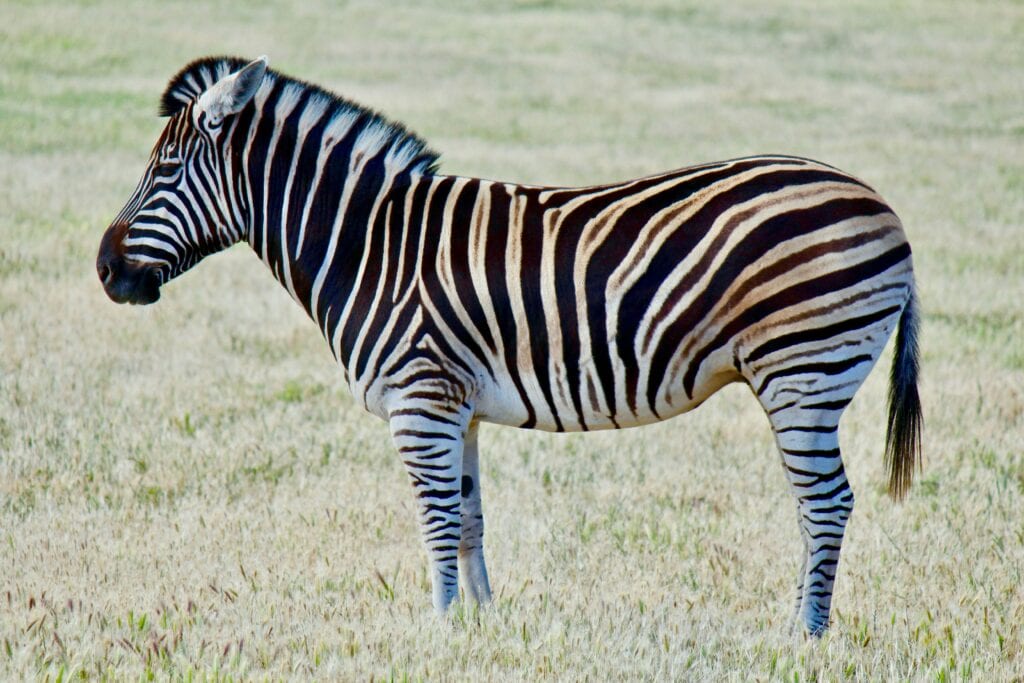
- The Plains zebras, the common zebras, are the most abundant of the three zebra species.
- They have a different stripe pattern than the other species, which includes their underbelly.
- They have broad stripes that run horizontally towards the back and vertically towards the front. They also have a stripe that runs down the center of their backs and onto their tails.
- Their coat reflects more than 70% of the African sun’s heat.
- Plains zebras can run at around 63 kilometers per hour.
- They are smaller than the other two zebra species. They measure 3.5 to 5 feet tall and weigh up to 850 pounds.
- They are found in the grasslands of more than a dozen countries in eastern and southern Africa, including Botswana, Ethiopia, Zimbabwe, and South Sudan.
- They usually have one foal each year.
- According to the IUCN’s Red List of Threatened Species, the plains zebra is threatened.
Facts About Mountain Zebras
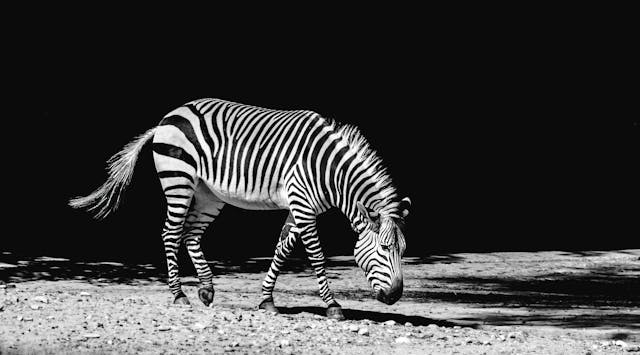
- Mountain zebras have white or off-white bodies with closely spaced black or dark brown stripes.
- Their heads, torsos, and rumps are usually not striped, and the stripes on their bodies are thinner than those on their bellies.
- Hartmann’s mountain zebra is a subspecies with black-and-white vertical stripes on its neck and torso and horizontal stripes on its backside. They also have white, non-striped bellies.
- They are crepuscular and rest and graze during the day.
- Mountain zebras are found in a few dry, rocky slopes and semi-wooded grasslands of Angola and Namibia.
- The IUCN classifies the mountain zebra as vulnerable, with an increasing population trend.
Facts About the Grévy Zebra
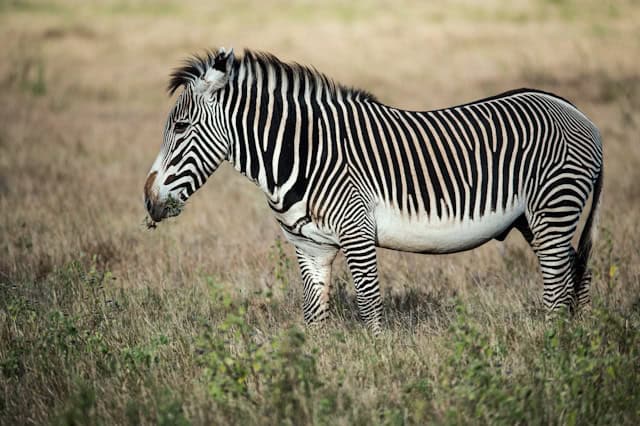
- The Grévy zebra is the largest of the three zebra species.
- They have 80 or more thinner stripes than the other two species and run down their white belly and rump.
- Their manes are tall and erect, and their ears are more prominent than in any other zebra species, with thick fur inside.
- Their necks are long, and their heads are narrow.
- They can grow up to 5 feet and weigh between 780 and 950 pounds.
- They can run up to 40 miles per hour.
- They are found only in semi-arid scrub and grasslands in southern Ethiopia and northern Kenya.
- They often share their grazing lands with wildebeest, ostriches, antelopes, and other grazing animals.
- They spend over half their day eating grasses, bark, fruit, and leaves.
- They depend on water and won’t travel far from a water source.
- They are temperamental, aggressive, and stubborn, making them almost impossible to tame.
- They don’t form long-lasting bonds between adults. Mares and foals can work in small groups without hierarchies or long-lasting structures.
- Two to six stallions can also get together without a leader.
- Their main predators are lions, cheetahs, hyenas, hunting dogs, leopards, and people.
- Their population has suffered one of the most substantial reductions of any African mammal. The IUCN considers these zebras endangered because only about 2800 remain in the world.
How to Celebrate the International Zebra Day
- One great way for parents and teachers to celebrate International Zebra Day is to learn fascinating facts about these amazing mammals and share what they learned.
- Dress in black-and-white stripes to attend school or work, and invite your preschoolers to do the same.
- Organize fundraising to collect and donate funds to organizations that protect zebras, such as the World Wildlife Fund (WWF), the Wildlife Conservation Society (WCS), the Grevy’s Zebra Trust, and the African Wildlife Foundation.
- Talk about International Zebra Day on your social media accounts to spread the word about protecting zebras, and maybe include a selfie in that zebra outfit.
- Read books about zebras to your preschoolers, and invite your families to do the same.
Additional Activities:
If you want additional activities related to zebras and the letter Zz, my Z is for Zebra Unit Pack is the perfect solution. It includes 154 pages of printable activities and teaching ideas spanning multiple domains. This pack is perfect for engaging your children in hands-on learning that incorporates literacy, math, science, fine motor skills, and more, making it an excellent addition to any preschool or homeschool curriculum. You can check it out HERE.
Books About Zebras
These are some of my favorite books about zebras. If you don’t have any available, you can go to your local library or a used bookstore or use my links on the titles to get them from Amazon quickly. Get as many as possible, read them to your preschoolers, and fill your library and centers.
- A Zebra’s Day by Aubrey Andrus teaches children where zebras live, what they eat, and how they survive in the herd, using simple text and engaging photos.
- Zebras! by Hope Aicher celebrates the beauty and wonder of the zebra world with collections of full-color photos and fun, interesting facts.
- Zed the Zebra: First Day Nerves by Ryan Scott uses rhyme, fun and relatable characters, clever coping tools like deep breathing and positive thinking, and encouraging messages about friendship, bravery, and trying new things.
- Zebras and Their Secrets by Joanna Slodownik is an engaging and beautifully illustrated book that explores the lives of zebras, from their unique stripe patterns to their social behaviors and habitats, in vivid detail.
- Zebra and Horse by This engaging story follows a proud horse and a playful zebra as they learn the importance of friendship, kindness, and acceptance.
- Zoe Zebra Loses Her Z by Christina McDonald will introduce your child to the alphabet through repetition and rhymes, using vibrant pictures and funny poems.
- The Zebra Says Shhh by M.R. Nelson tells the story of an exhausted zebra that wants to sleep while the other animals at the zoo still want to play.
- How the Zebra Got Its Stripes by Justine Fontes is a colorful, informative book that includes fun facts explaining why zebras have stripes.
Pin It For Later
If you are in a rush and don’t have time to read the post and download the printable but want to save it, pin it to one of your Pinterest boards for later.
Thanks to our actions, zebras and many other species are in danger of extinction. It’s our responsibility to do something to protect the vast diversity of our planet, including ourselves.
Now is the time to act, teach future generations to love nature, encourage them to protect life in general, and become conservationists for life.
I hope you enjoy these ideas and that they help you have fun with your preschoolers during the International Zebra Day celebration. To get the FREE pack, click on the link below and enter your information for an immediate download.
Be happy, safe, and creative. I wish you well.
Love,

P.S. Please let me know if any of these ideas worked for you, or if you think I should add or replace something. My goal is to help you in any way I can, and I wouldn’t say I like anything better than posting something you might find helpful.
Other Posts You Might Like: