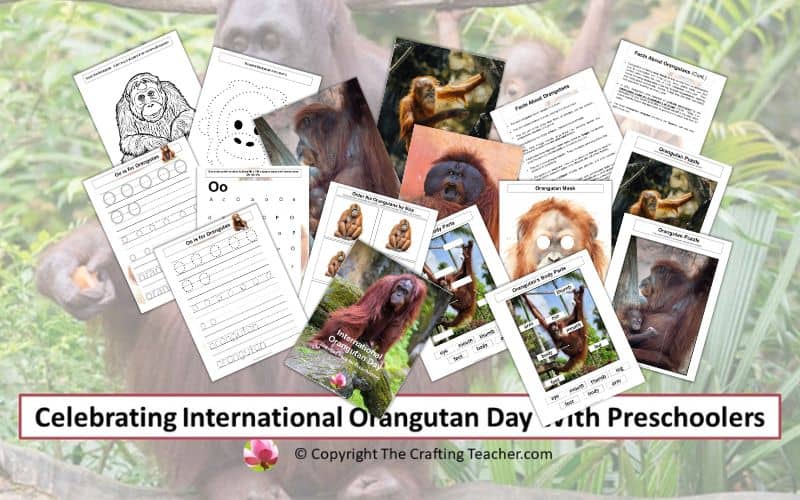
Celebrating International Orangutan Day with Preschoolers
Affiliate Disclosure: “This post contains affiliate links, which means I receive a small commission, at no extra cost to you, if you make a purchase using those links.”
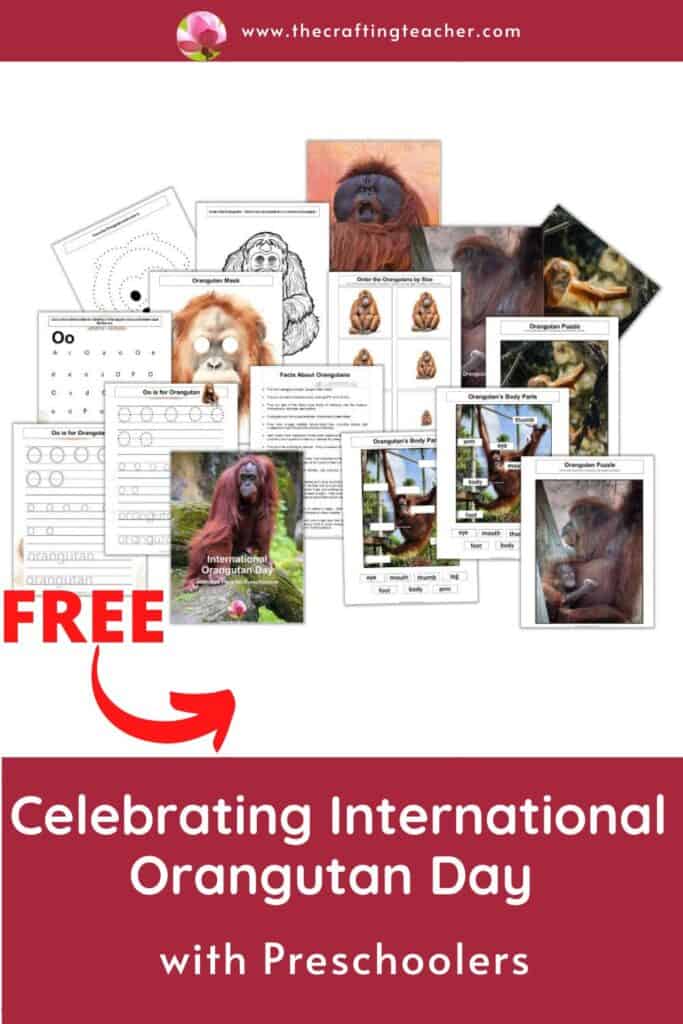
International Orangutan Day is celebrated worldwide on August 19 every year. It hopes to inspire people to take action to preserve these amazing animals and their natural habitat. This FREE International Orangutan Day pack will help you plan activities to teach your preschoolers about orangutans.
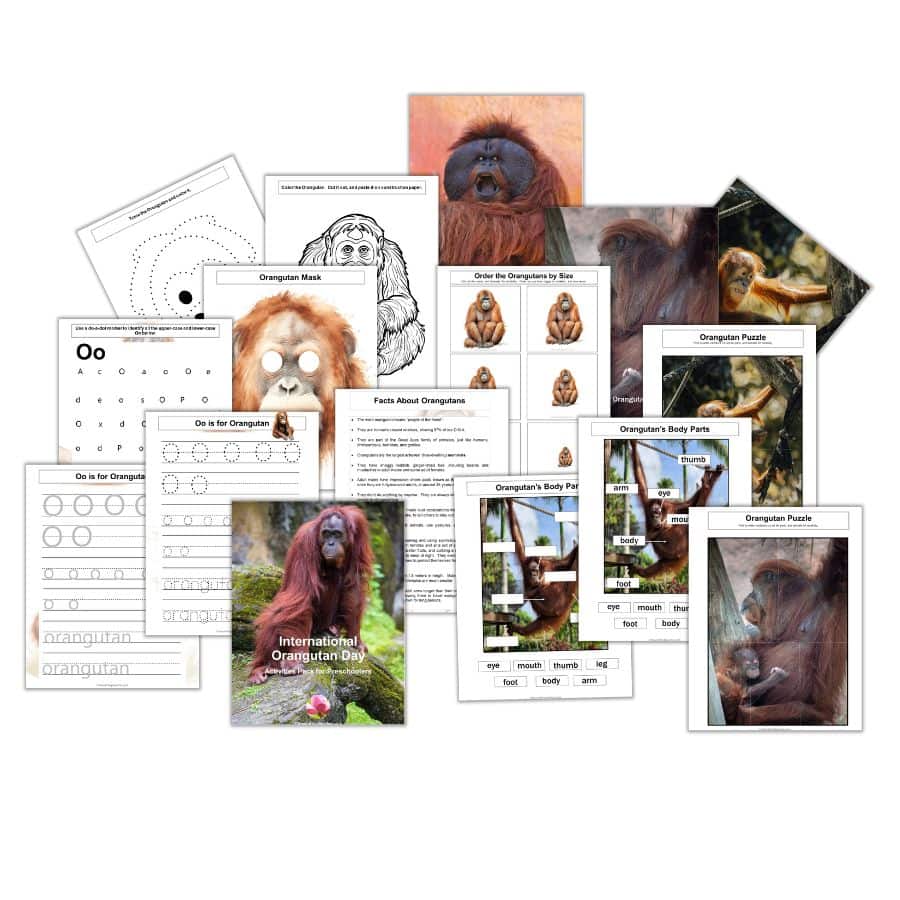
The FREE 20-page International Orangutan Day activities pack includes Literacy, Science, Math, and Fine Motor activities for your preschoolers. You can download it at the end of this post.
History of International Orangutan Day
The exact year International Orangutan Day was established is unknown; however, we know this day resulted from partnerships among several global organizations working hard to ensure these animals’ survival. The Orangutan Foundation International, World Orangutan Events, Orangutan Outreach, The Centre for Orangutan Protection, the Sumatran Orangutan Society, The Orangutan Project, and the Humane Society are among these organizations.
These fantastic animals are on the edge of extinction mainly due to poaching, deforestation, and habitat destruction caused by the rapid growth of palm oil plantations, the illegal wildlife trade, and logging activities.
International Orangutan Day includes a global commitment to raise awareness of sustainable palm oil consumption, encourage people to support these apes through educational campaigns, fundraising, and social media posts, and urge corporations to adopt orangutan-friendly practices to protect their habitats.
How to Celebrate International Orangutan Day
International Orangutan Day is an excellent opportunity to educate yourself and others about these magnificent mammals and the challenges they face. Here are some suggestions to make the day memorable while helping protect this species:
- Get informed – learn everything you can about orangutans, and teach your preschoolers, family, and friends, so they can also become their protectors.
- Do an Art Exhibit – Invite your children and their families to create orangutan-inspired artwork and prepare an exhibition for family, friends, and the community.
- Orangutan Communication Challenge – After explaining to your children that orangutans use vocalizations to communicate, challenge them to do the same by communicating with their friends using orangutan-like sounds.
- Play Songs – preschoolers love to sing and dance. Find songs that celebrate the wild, forests, and orangutans, and share them with your children, friends, and family to promote conservation. I found some fun ones from The Jungle Book and The Lion King on YouTube that you can use: I Want to Be Like You, The Bare Necessities, Hakuna Matata, and I Just Can’t Wait to Be a King.
- Orangutan Race – invite your preschoolers to race on all fours on the ground like orangutans.
- Prepare and Eat an Orangutan Snack – since orangutans eat mainly fruit, select a variety of colorful fruit and invite your children to help you prepare a fruit cocktail for them to eat. After distributing the fruit cocktails in individual cups, children can eat them with their hands, as orangutans do.
- Organize a field trip to your local zoo to see and observe orangutans, or invite your families to go if you can’t.
- Promote Fundraising – even a small donation can go a long way toward helping the organizations that protect orangutans.
- Plan an Orangutan Craft – I found this cute Paper Plate Orangutan Craft Activity on Twinkl’s website that you can plan to do with your preschoolers.
- Read Books About Orangutans – preschoolers love to hear stories and look at pictures in books. This helps them create a clearer picture of what’s being read and understand it better. Two good ones are Walking with the Great Apes by Sy Montgomery, which shows how the scientists Jane Goodall, Diane Fossey, and Biruté Galdikas penetrated the jungles of Africa and Borneo to observe, nurture, and defend humanity’s closest cousins, and Curious About Orangutans by Gina Shaw, which is filled with full-color photos and lively text about how orangutans live and how the Smithsonian’s National Zoo is actively working to help save this endangered primate and provides for their enrichment and survival.
- Show Orangutan Films and Documentaries – The best way for children to observe orangutans outside a zoo is to watch films and documentaries about them and their rainforest home. Good options include A Rare Look at the Secret Life of Orangutans by National Geographic, Baby Orangutan Needs a Hand by BBC Earth, and Our Planet—Jungles by Netflix.
- Switch to and Promote Non-palm Oil Products. Look for the RSPO label, signaling sustainably sourced palm oil, and share your findings online.
- Use Your Social Media – we all know how powerful this tool is. Use it to create awareness, share ideas and information, and even initiate petitions.
- Visit the Topeka Zoo and Conservation Center (in Kansas) or the Center for Great Apes(in Florida). Both have planned special activities for International Orangutan Day that you and your families can join. If that’s not possible, find out if the zoo and any conservation organization in your area are doing something similar.
- Join an Organization – the more people advocate for these mammals, the stronger the cause will become.
- Adopt an Orangutan – The World Wide Fund for Nature (WWF) and the Red Apes Organization offer “adoption” programs to support the preservation of these apes and their habitats. You can do it personally and invite your children, families, friends, etc., to do the same. These “adoptions” cost less than US$20.00 per month but go a long way toward supporting these programs.
- Join and Promote the Cause –Take action to preserve this fantastic species and advocate for the organizations fighting for orangutans. You can do it HERE. You can also join their official Facebook and Twitter pages.
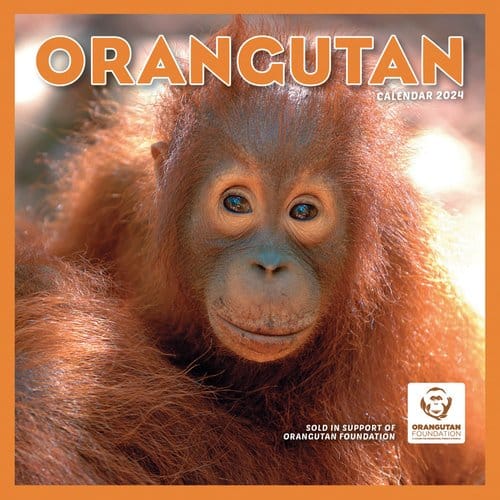
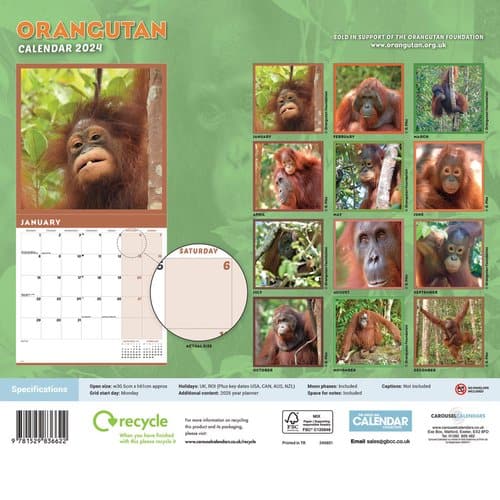
- Buy the Orangutan Foundation Calendar – This beautiful calendar contains images taken by their team in the field and some of the world’s top wildlife photographers.

Ideas from the Orangutan Project Website
The Orangutan Project Website offers several exciting activities you can do with your preschoolers to celebrate International Orangutan Day. These are:
- Seed Bombs – These fascinating apes play a crucial role as seed dispersers, making them vital to the health and regeneration of their rainforest homes. Create your seed bombs. Click here to download the PDF.
- Orangutan Feeding Game – Orangutans feast on various fruits while traveling through the forest. Check out this interactive game designed to educate and inspire. Learn more about orangutans, their role in the rainforest, and how you can contribute to conservation efforts. Click here to download the PDF.
- Find the Food Maze – Great for younger children, this printable maze shows the trouble orangutans can have finding food when their habitat is destroyed or disturbed. Click Here to Download the PDF.
- Word Search – This printable search shows words commonly related to orangutans. It encourages people to think about the issues orangutans face and the actions being taken to protect them. Click here to download the PDF.
- Male Orangutan Mask – You need recycled cardboard and household items to create an orangutan mask. Click here to download the PDF.
- Durian Fruit Craft – Requires recycled cardboard and magazine paper to create a spiky durian fruit that can be held up for selfies. The instructions also include an at-home game about the senses. Click Here to Download the PDF.
- Orangutans Feeding Game – This fun game helps people understand how habitat fragmentation and deforestation affect orangutans and their ability to find food and survive. Click here to download the PDF.
- Orangutan “Not a Pet” Game – This game helps participants learn how their influence and choices on social media can help orangutans in the wild. Click here to download the PDF.
Facts About Orangutans
- The word orangutan means “people of the forest.”
- They are humans’ closest relatives, sharing 97% of our D.N.A.
- They are part of the Great Apes family of primates, just like humans, chimpanzees, bonobos, and gorillas.
- Orangutans are the largest arboreal (tree-dwelling) mammals.
- They have shaggy reddish, ginger-tinted hair, including beards and mustaches in adult males and some adult females.
- Adult males have impressive cheek pads, known as flanges, that develop once they are fully mature, around age 35.
- They don’t do anything on impulse. They constantly observe before deciding to do something.
- Orangutans, especially males, can laugh and make loud vocalizations that can be heard for miles around to tell others to stay out of their territory.
- They are brilliant animals that use gestures and show complex social behaviors.
- They can also make and use sophisticated tools, such as sticks and branches, to reach termites and ants in small spaces; use leaves as gloves to grab pricklier fruits; and build nests with branches and leaves in the trees to sleep at night. They even add a roof to their nests. They also use branches to protect themselves from the rain and the sun.
- Orangutans average 1.5 meters in height. Males weigh about 300 pounds, but females are much smaller.
- They are powerful, with arms longer than their bodies, reaching up to seven feet in males. This lets them travel by swinging from branch to branch and hang upside down for long periods.
- They spend most of their time in the trees, but sometimes they go down to the ground, walking on all fours.
- Orangutans’ feet and hands are similar. They have four long curved fingers and dramatically opposite short thumbs, which help them grip branches well as they travel, collect food, and eat. About a third do not have nails on their big toes.
- They are considered forest gardeners because seeds fall to the ground when they eat fruit, helping the forest expand.
- They are omnivores, and their diet mainly consists of fruit. However, they also eat nuts, leaves, flowers, bark, bird eggs, termites, ants, and other insects, and occasionally soil to gain minerals that neutralize the acids and tannins they consume.
- Their favorite food is durian, which contains many vitamins and nutrients. It has spiky skin; even when it is delicious, it also has a horrible smell similar to raw sewage.
- They are only found in the rainforests of the Asian islands of Borneo and Sumatra.
- Three species of orangutan exist: Bornean, Sumatran, and Tapanuli.
- Unlike other great apes, orangutans are solitary. However, mothers stay with their young until they are seven, teaching them the skills they need to survive independently. Female orangutans will occasionally visit their mothers until they are about 18 years old.
- A female usually has a baby or two every seven to eight years, the most prolonged birth interval of any land mammal.
- They are charismatic, calm, and collected by nature but can look intimidating because of their size.
- They can live for 50 to 60 years in captivity and 30 to 40 years in the wild.
- Orangutans face many threats to their survival, such as deforestation due to urbanization and infrastructure, illegal wildlife trade, and illicit hunting, which kills 3,000 orangutans every year. Their homes are being destroyed to make way for palm oil plantations, dramatically reducing their living space. On top of that, their slow birth rate makes their population recovery extremely slow.
- In 2016, the International Union for Conservation of Nature (IUCN) classified orangutans as critically endangered. Today, only an estimated 50,000 to 65,000 individuals remain in the wild, leading experts to believe they could become extinct in less than 50 years.
- The most endangered orangutan species is the Tapanuli, with fewer than 800 of them left.
Pin It For Later
If you are in a rush and don’t have time to read the post and download the printable but want to save it, pin it to one of your Pinterest boards for later.
Suppose we all unite and do everything in our power to spread the word and raise awareness about the terrible situation orangutans and other species face, and inspire our preschoolers’ desire to become defenders of the planet and its inhabitants for life. That way, future generations will have the opportunity to get to know and enjoy orangutans and other species in danger of extinction.
I hope you enjoy these ideas and that they help you have fun during the International Orangutan Day celebration with your preschoolers. To get the FREE pack, click on the link below and enter your information for an immediate download.
Be happy, safe, and creative. I wish you well.
Love,

P.S. Please let me know if any of these ideas worked for you, or if you think I should add or replace something. My goal is to help you in any way I can.
Other Posts You Might Like: