Groundhog Day Pack for Preschoolers
Affiliate Disclosure: “This post contains affiliate links, which means I receive a small commission, at no extra cost to you, if you make a purchase using those links.”
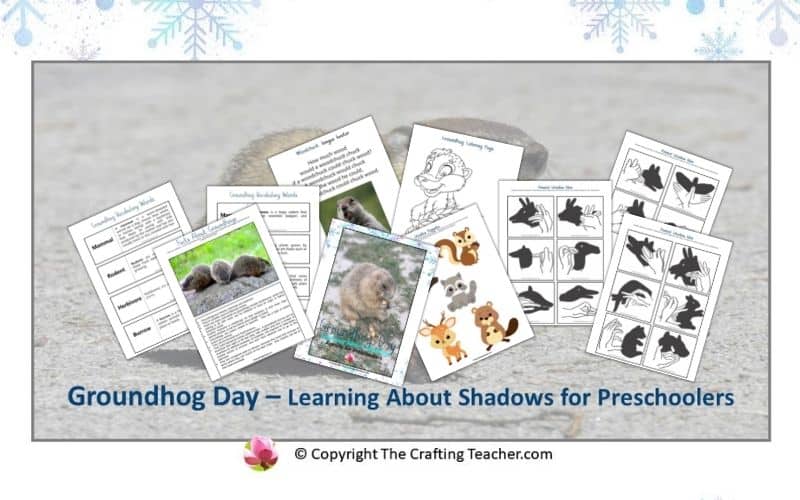
Groundhog Day is celebrated on February 2nd when people look at the groundhog. Folklore says that if the sun is shining when the groundhog comes out of its burrow and it sees its shadow, it will go back into its burrow, and we will have winter for six more weeks. However, if it is cloudy, spring will come early that year.
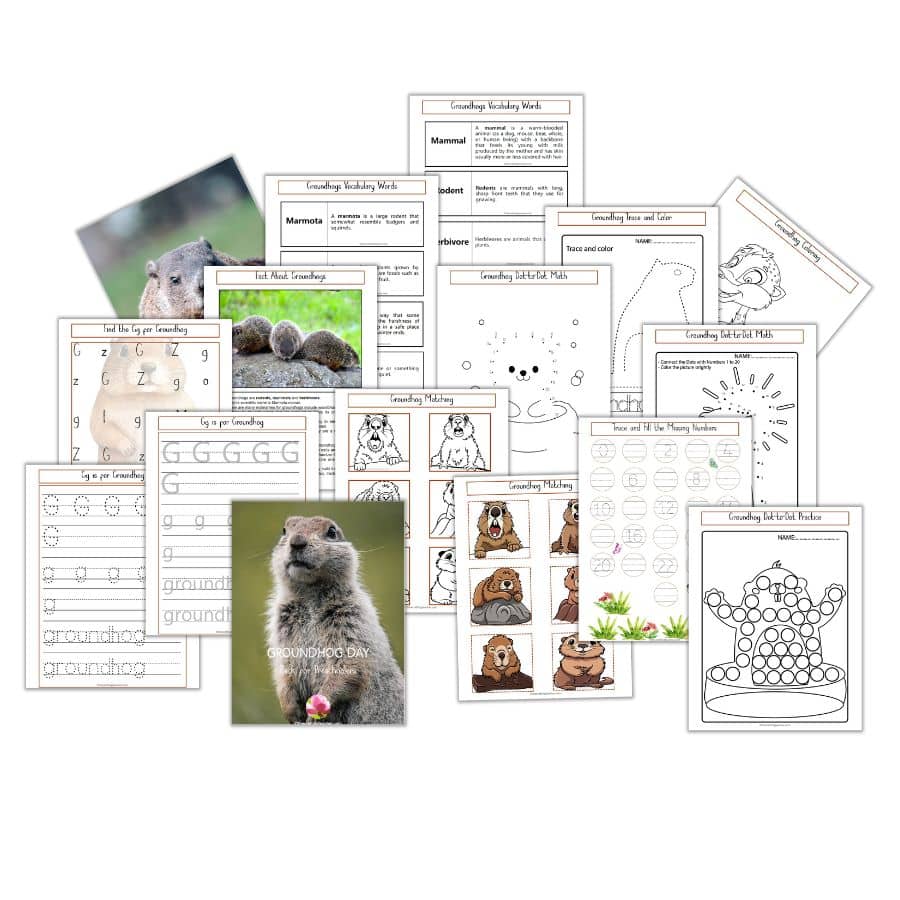
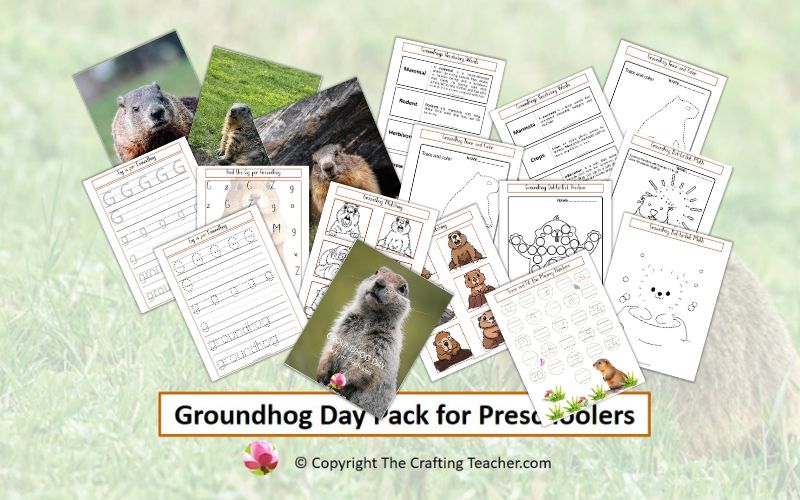
I’ve included a FREE 23-page Groundhog Day pack with literacy, math, science, and fine motor activities that you can download at the end of this post.
History of Groundhog Day
The origins of Groundhog Day trace back to German settlers in Pennsylvania. These settlers celebrated February 2nd as Candlemas Day. If the sun came out on this day, there would be six more weeks of wintry weather.
At some point, people began to look to the groundhog to make this prediction. The earliest reference to the groundhog is in an 1841 journal entry. In 1886, the Punxsutawney newspaper declared February 2nd Groundhog Day and named the local groundhog Punxsutawney Phil. Since then, the day and tradition have spread throughout the United States. Celebrations take place throughout the United States. The largest celebration occurs in Punxsutawney, Pennsylvania, where the famous groundhog Punxsutawney Phil has predicted the weather yearly since 1886. Large crowds of more than 10,000 people gather to see Phil come out of his burrow around 7:30 am.
Other celebrations occur in towns such as Lilburn, Georgia, with their groundhog, General Beauregard Lee; Staten Island, New York, with Staten Island Chuck; and Marion, Ohio, with Buckeye Chuck. There are even celebrations in Canada.
Groundhog Day Pack
Groundhog Day Pack
The best way to teach preschoolers is through fun, hands-on activities that keep them engaged and interested. These easy-to-prep activities just require a handful of materials and can be used in many ways, such as:
- Small group activity.
- Literacy center option.
- Writing center activity.
- Take-home activity.
- Quiet area option.
Materials Needed:
- Groundhog Day Pack (FREE at the end of this post).
- Printer.
- White cardstock.
- White paper.
- Laminator.
- Laminator pouches.
- Scissors.
- Dot-to-Dot, dry-erase, and regular markers.
- Pencils and crayons.
Groundhog Tracing
Tracing activities give preschoolers the opportunity to improve their physical and cognitive abilities and lay the foundation for early literacy and mathematical development. Some of these skills are:
- Fine Motor, developing muscle control.
- Hand-eye Coordination, familiarizing children with the strokes of shapes and forms.
- Spatial Awareness, by understanding the relationships between objects and space.
- Cognitive Development, by encouraging concentration and focus.
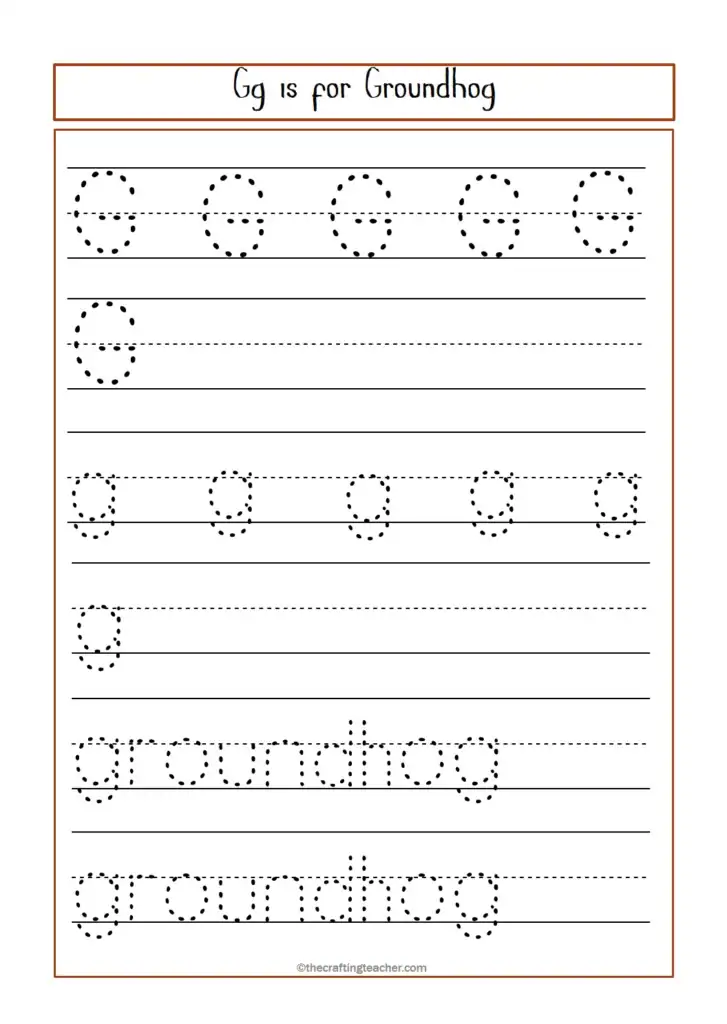
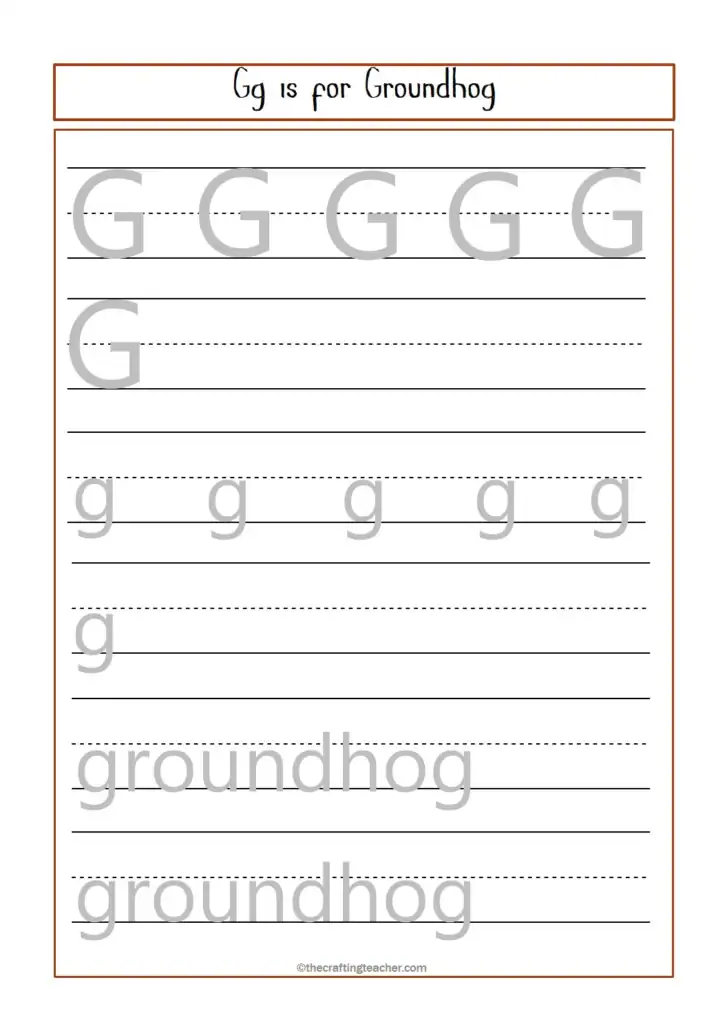
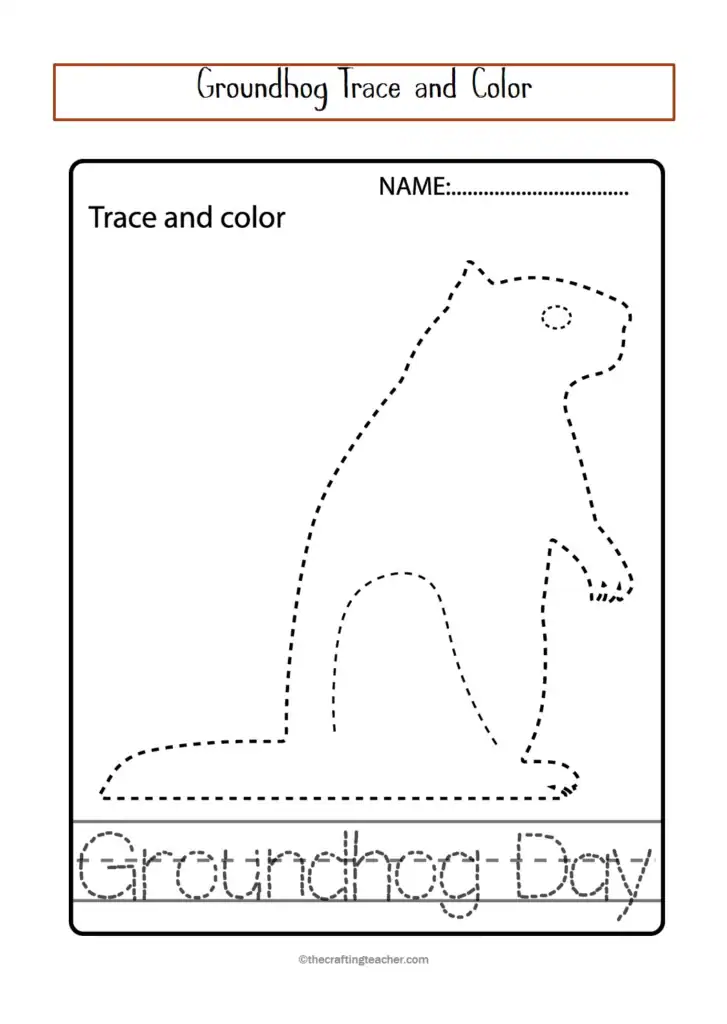
Children will practice tracing the dotted and shadow letter Gg and the phrase Groundhog Day with a marker, crayon, or pencil. Ask them what sound this letter makes and to name other words that start with this letter or sound.
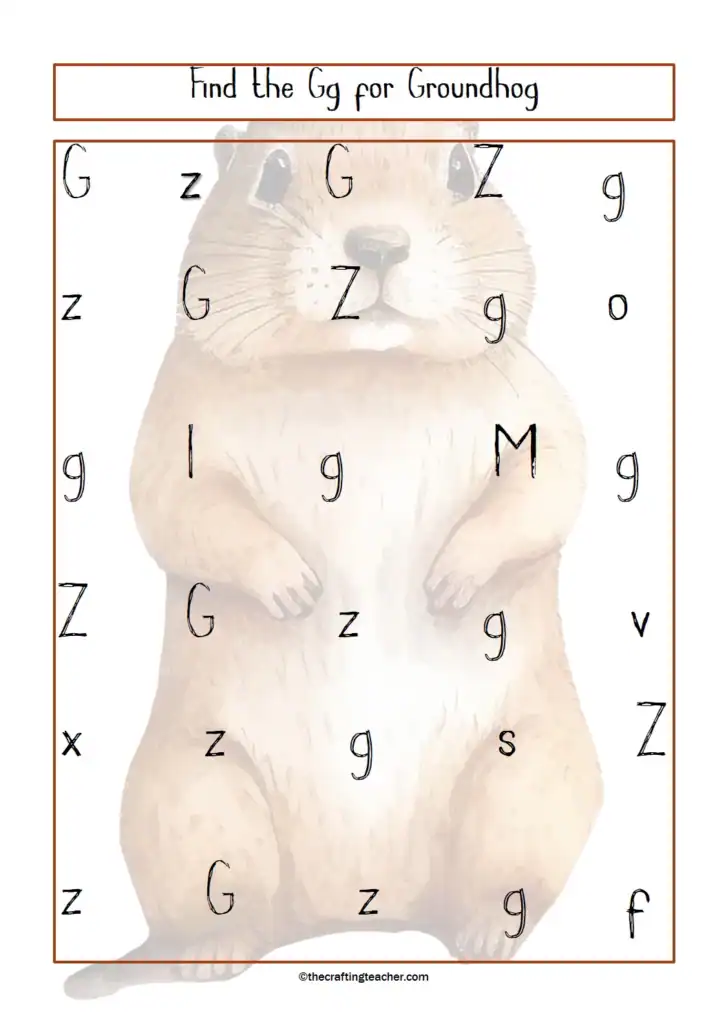
Find the G for Groundhog
Finding and recognizing letters help preschoolers build reading readiness, develop early writing skills, and strengthen brain function. Interactive letter-hunting activities like this make abstract shapes concrete through active play.
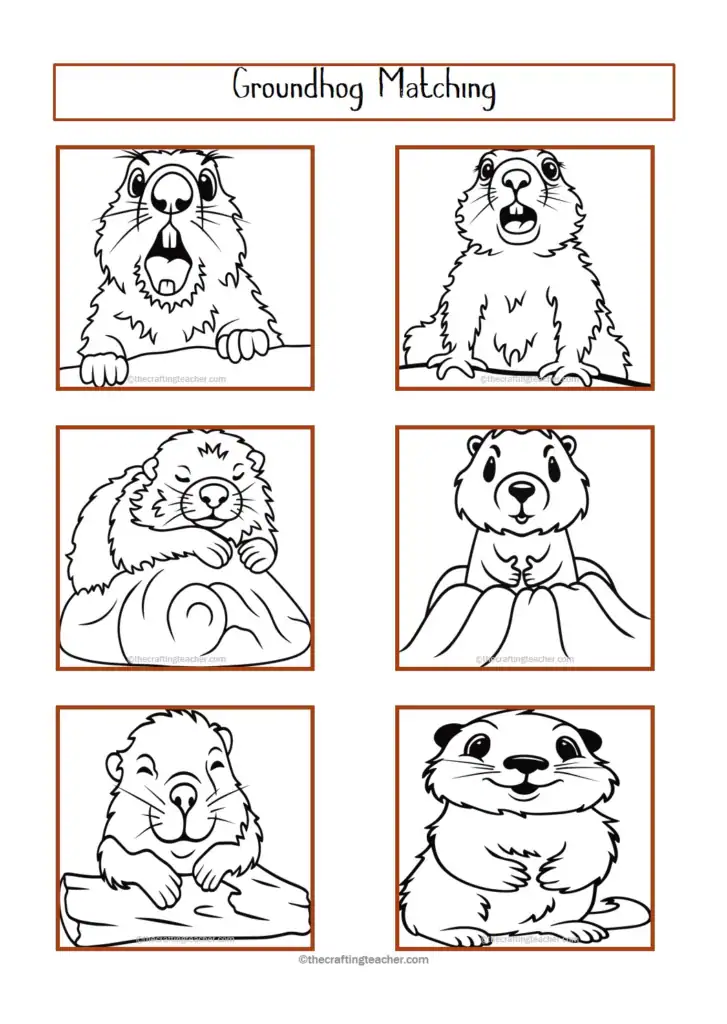
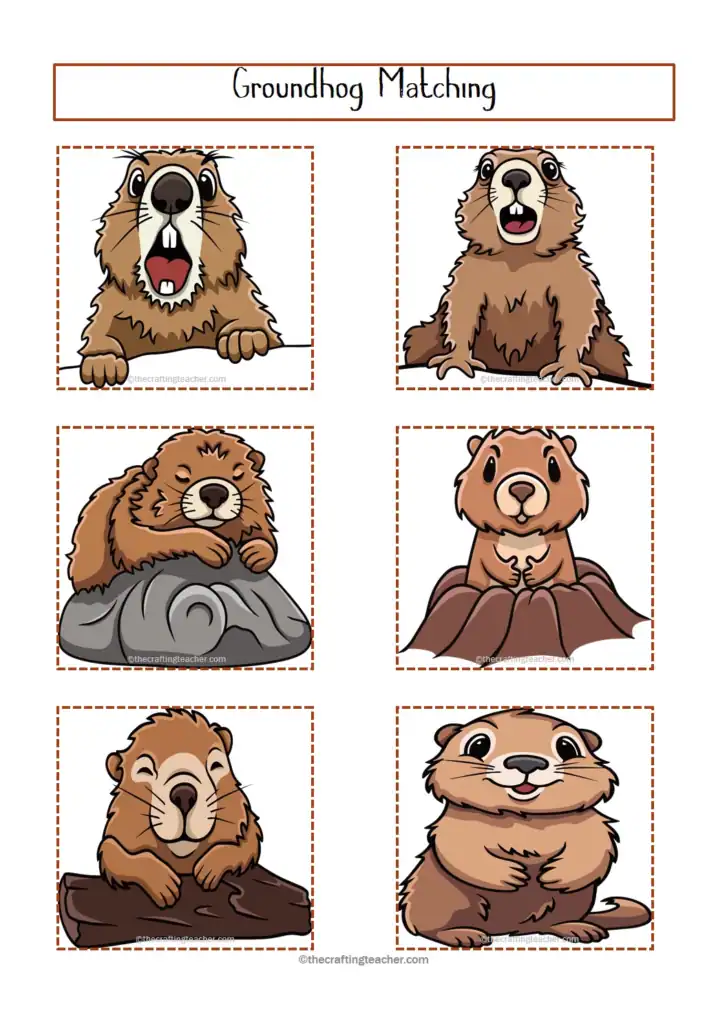
Groundhog Matching
This activity will help preschoolers develop visual discrimination, spatial awareness, and fine motor control, turning a simple task into a powerful learning tool.
Trace and Fill the Missing Numbers
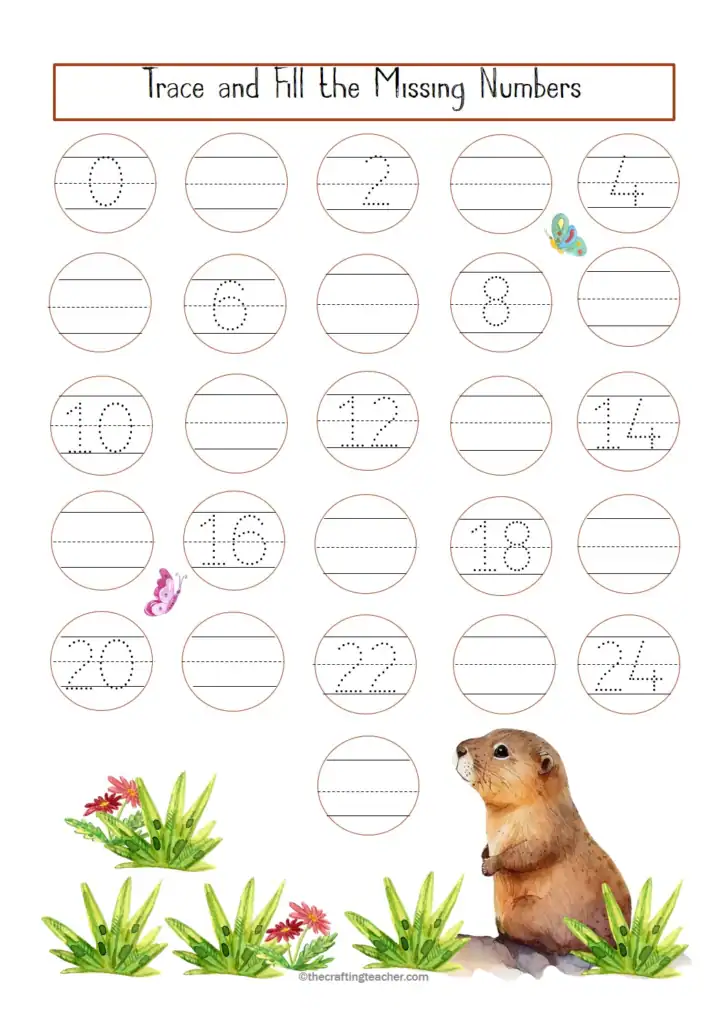
Tracing activities give preschoolers the opportunity to improve their physical and cognitive abilities and lay the foundation for early literacy and mathematical development. Some of these skills are:
- Number Recognition and Counting: By identifying what number they are tracing and which comes next.
- Fine Motor: Developing muscle control.
- Hand-eye Coordination: Familiarizing children with the strokes of shapes and forms.
- Spatial Awareness: Understanding the relationships between objects and space.
- Cognitive Development: Encouraging concentration and focus.
Children will practice number knowledge and pre-writing skills by writing numbers with a marker, crayon, or pencil, starting with 0 and writing the next one on the bubble, following the correct numerical order. Ask them to name each number as they go.
Dot-to-Dot Practice
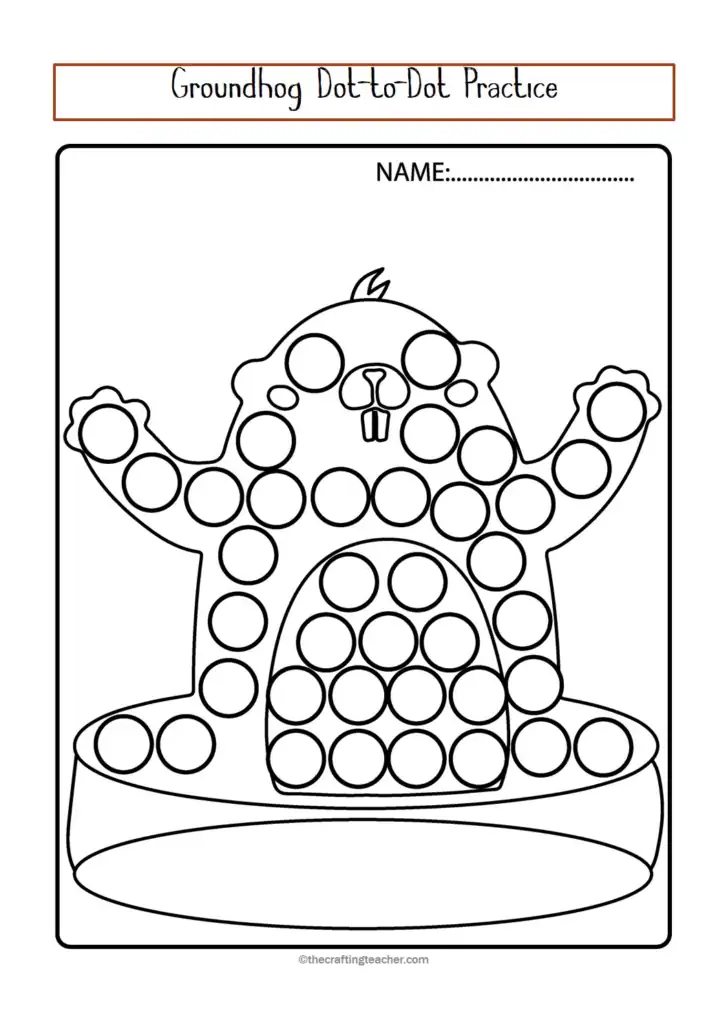
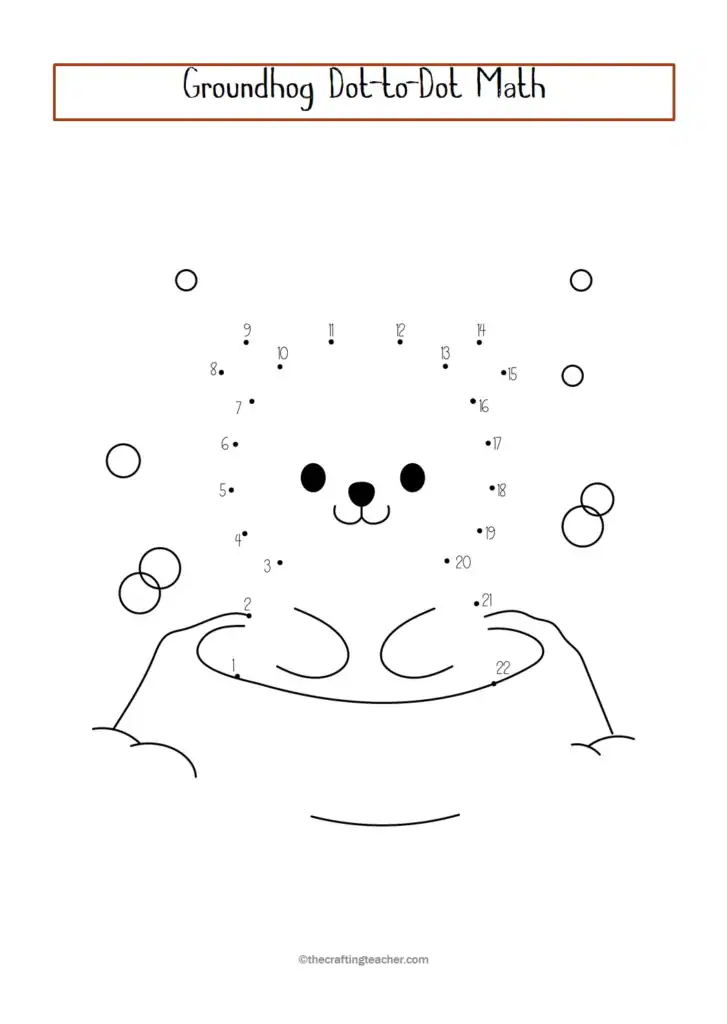
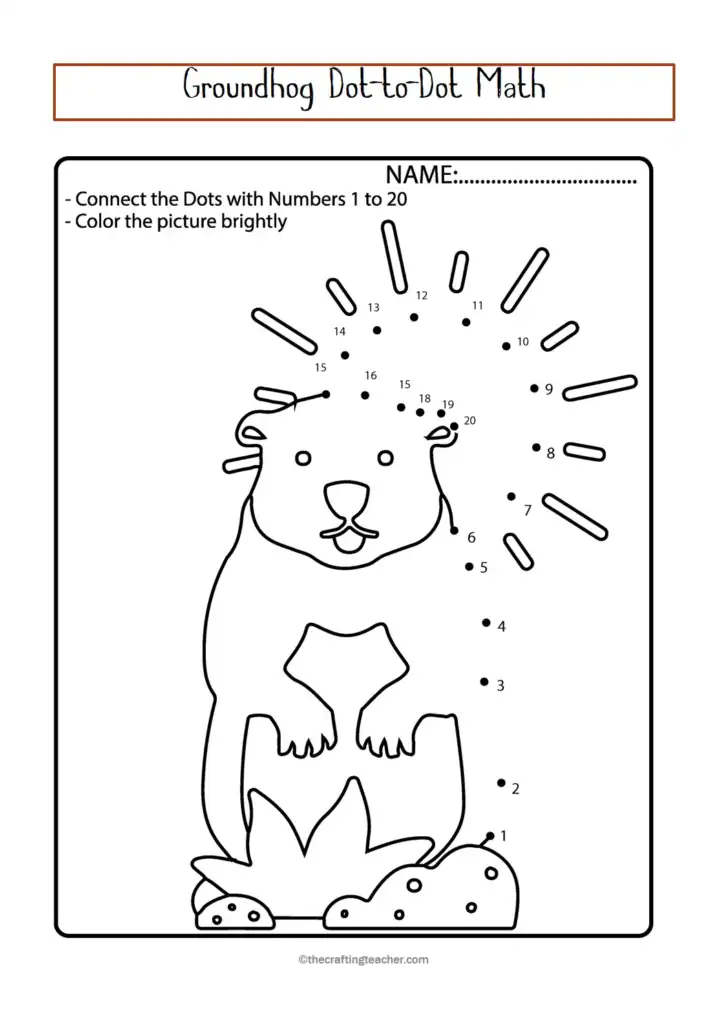
This pack includes three dot-to-dot pages to help preschoolers develop counting and fine motor skills.
Coloring
These activities help preschoolers develop critical physical and cognitive abilities, including fine motor skills, hand-eye coordination, and spatial awareness.
Facts About Groundhogs
This pack offers you a good opportunity to bring science into the mix by teaching your children some important facts about groundhogs, which are:
- Groundhogs are rodents, mammals, and herbivores.
- Their scientific name is Marmota monax.
- Groundhogs have many nicknames, including woodchucks, which has nothing to do with wood, but is believed to come from Native American words.
- Another nickname is “whistle-pig” for their tendency to emit short, high-pitched whistles to tell their friends when danger is close.
- Groundhogs are closely related to squirrels. They are a type of rodent known as a marmot.
- You can find them all over North America.
- They build impressive homes called burrows. A groundhog’s burrow can be anywhere from eight to 66 feet long, with multiple exits and a number of chambers for different purposes; for example, one chamber for hibernation, another section for summer, and even a separate one to go to the bathroom.
- Farmers consider them pests because they build their burrows on farms where they can munch on the best crops. Tractors can also fall into their holes and break.
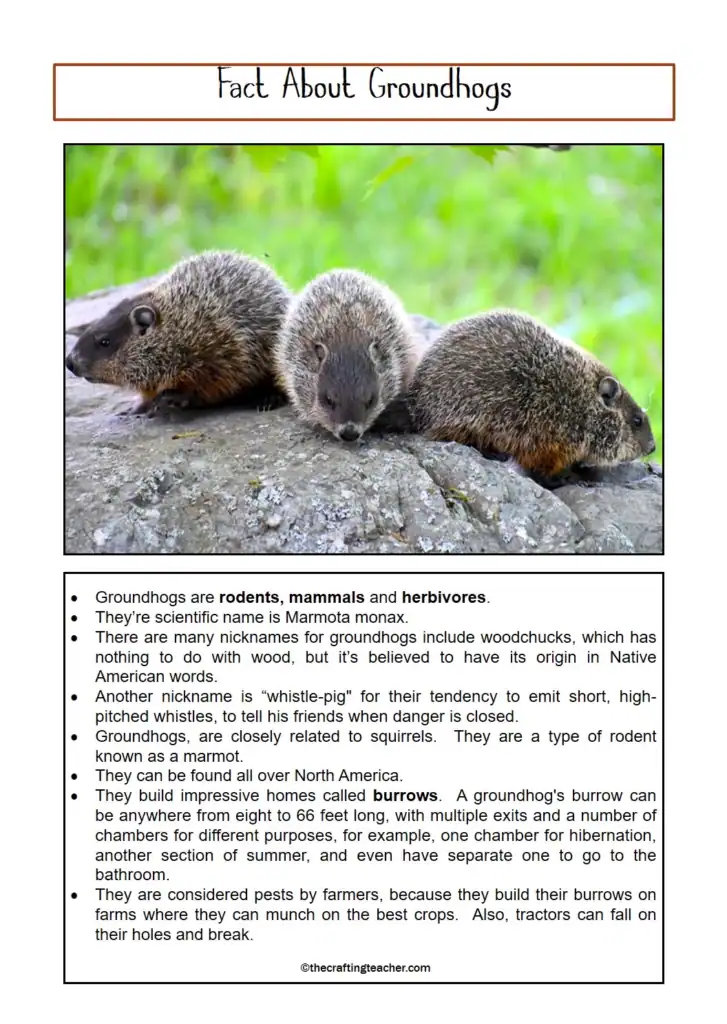
To make it more relevant, show them videos about groundhogs. Two good ones are All About Groundhogs: Facts, Species And Habitat Raveled by Wildlife Pedia English, and 25 Surprising Facts About Groundhogs by Assorted Animals.
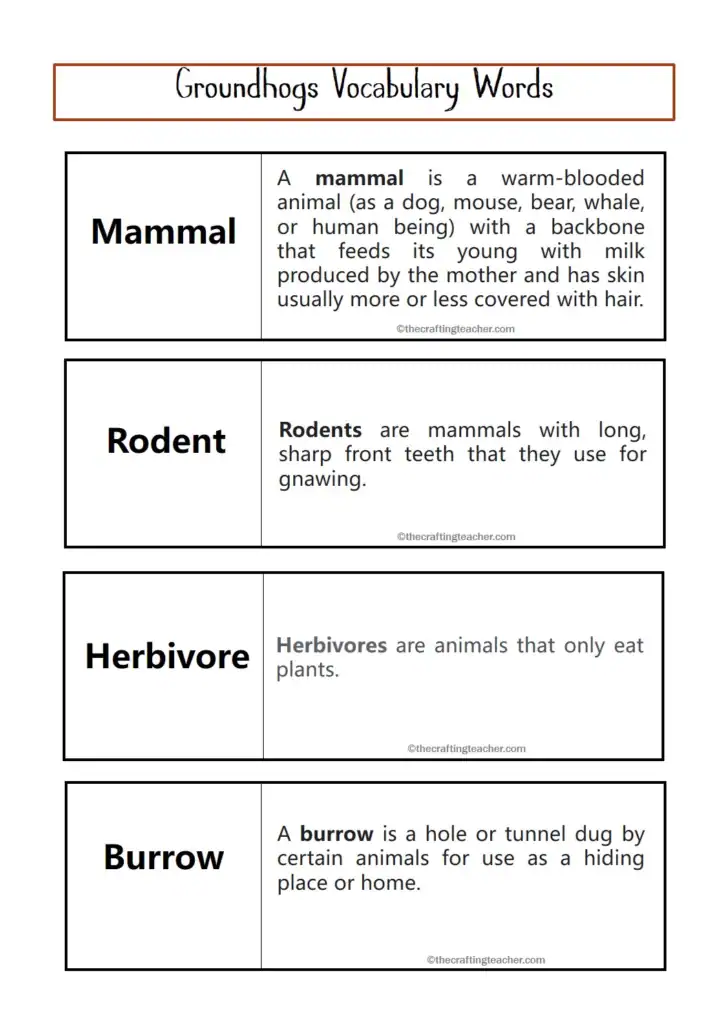
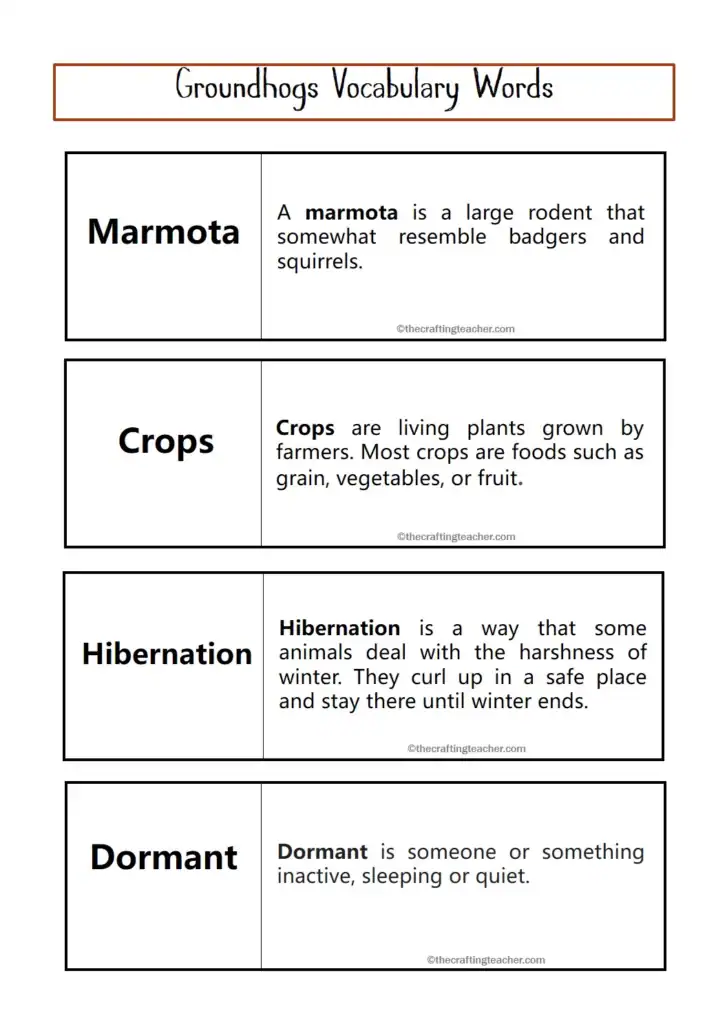
Vocabulary Words
Introduce new words to enrich children’s vocabulary and encourage them to develop their language skills by discussing the meaning of these words. I’ve included the groundhog-related words mammal, rodent, herbivore, burrow, marmota, crops, hibernation, and dormant.
Groundhog-related Book
Use this theme to bring different types of books to your library, centers, and book baskets. Include books about groundhogs, shadows, winter, and hibernation. These are some examples of books you can use. You can find them at your local library, used bookstores, and on Amazon. I’ve included my affiliate link in each title for a faster checkout.
- Light: Shadows, Mirrors, and Rainbows by Natalie Myra Rosinsky. Learn why light matters in our everyday lives. Discover how to make reflections, shadows, and rainbows. This is an outstanding nonfiction read-aloud book with places to stop and do activities together. This is a perfect start if you are looking for clear, concise science books for kids!
- Winter Sleep: A Hibernation Story by Sean Taylor. In this cozy bedtime story, follow a child and his grandma through a winter landscape to explore how the Earth goes to sleep for winter. Spot the sleeping animals as the tale unfolds, then learn about their hibernation habits from the information pages at the end.
- Groundhog’s Runway Shadow by David Biedrzycki. Phil and his shadow do everything together. But where Phil is steady, predictable, and a little boring, Shadow is adventurous, freewheeling—even rude. So they don’t get along so well anymore. Fed up, the two have a falling out, and Shadow runs off to see the world.
- Groundhog’s Day Off by Rob Pearlman. This hilarious story is about a groundhog who goes on strike that year and decides to leave without telling the town if Spring is coming, so the city tries to convince other animals to take the job.
- Groundhog Day! by Gail Gibbons. This is a nonfiction book in which the author discusses the traditions and history of Groundhog Day, as well as the habits and activities of groundhogs.
- The Night Before Groundhog Day by Natasha Wing. The anticipation is building: Will the groundhog see his shadow? Will there be six more weeks of winter? Get ready for this festive occasion with the countdown to Groundhog Day in this fun, rhyming story.
- Groundhog Day by Lisa M. Herrington. This fact-filled book gives young readers an in-depth look at this uniquely American holiday and the history of Groundhog Day.
- My Shadow by Robert Louis Stevenson. Your shadow may follow you inside, outside, climbing up the stairs, or jumping into bed! He may even be one step ahead as you run down the street! Kids will learn new ways to play with their shadows with this book.
- Shadows and Reflections by Daniel Nunn. This book looks at shadows and reflections, introducing young readers to the concept of light and explaining key scientific concepts through a combination of simple, leveled text and stunning photographs.
Pin It For Later
If you are in a rush and don’t have time to read the post and download the printable but want to save it, pin this to your Groundhog Day or Science Pinterest board for later.
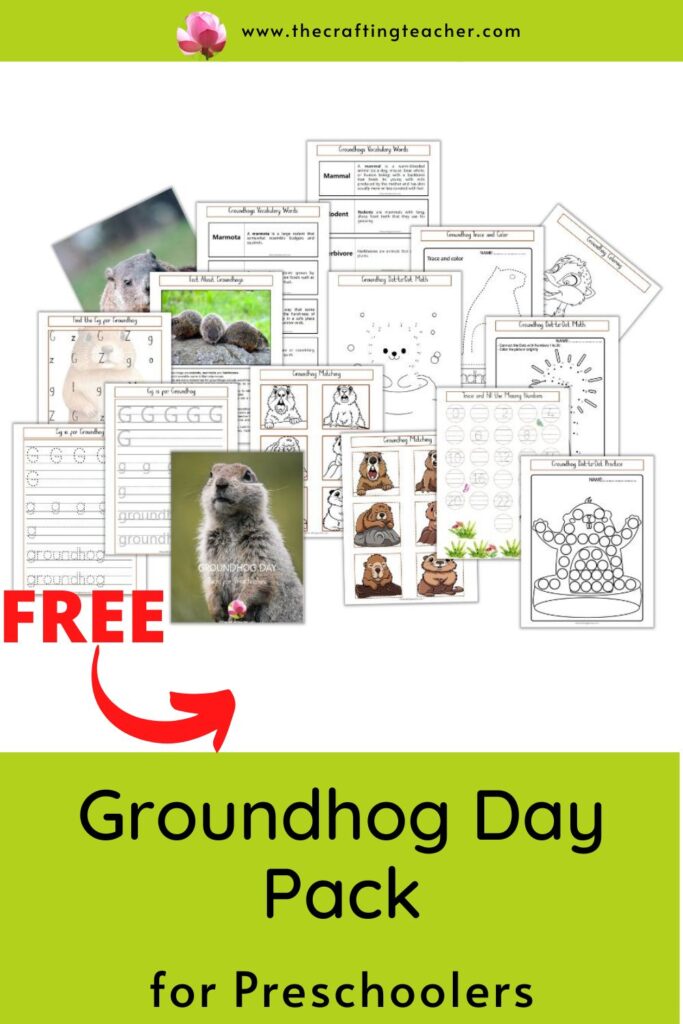
I hope your kids enjoy these activities and have fun learning during Groundhog Day. Don’t forget to grab your FREE pack. Just click the link below and enter your information for an immediate download.
Be happy, safe, and creative. I wish you well.
Love,

P.S. Please let me know if you like this game or if it worked for you. My goal is to help you in any way I can, and I don’t like anything better than posting something you might find useful.
Other Posts You Might Like: