Alphabet Posters – English & Spanish
Affiliate Disclosure: “This post contains affiliate links, which means I receive a small commission, at no extra cost to you, if you make a purchase using those links.”
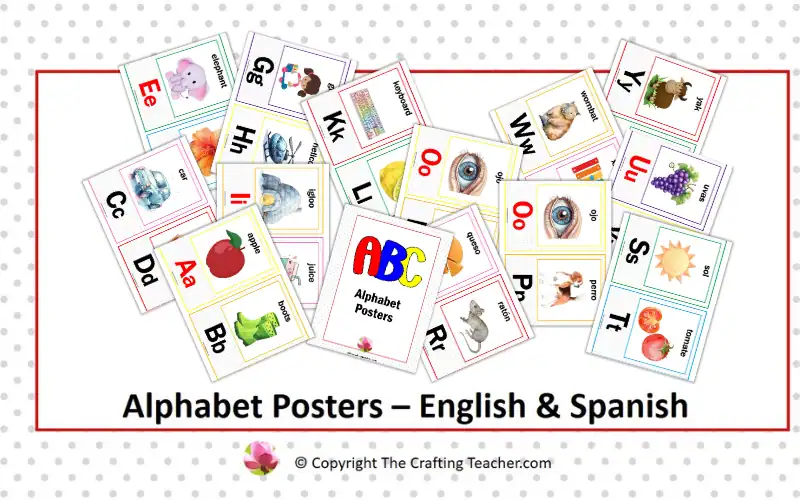
This FREE Alphabet Posters pack is designed for young learners, offering a simple, educational, visual way to introduce children to letters, letter recognition, beginning sounds, and early literacy skills.
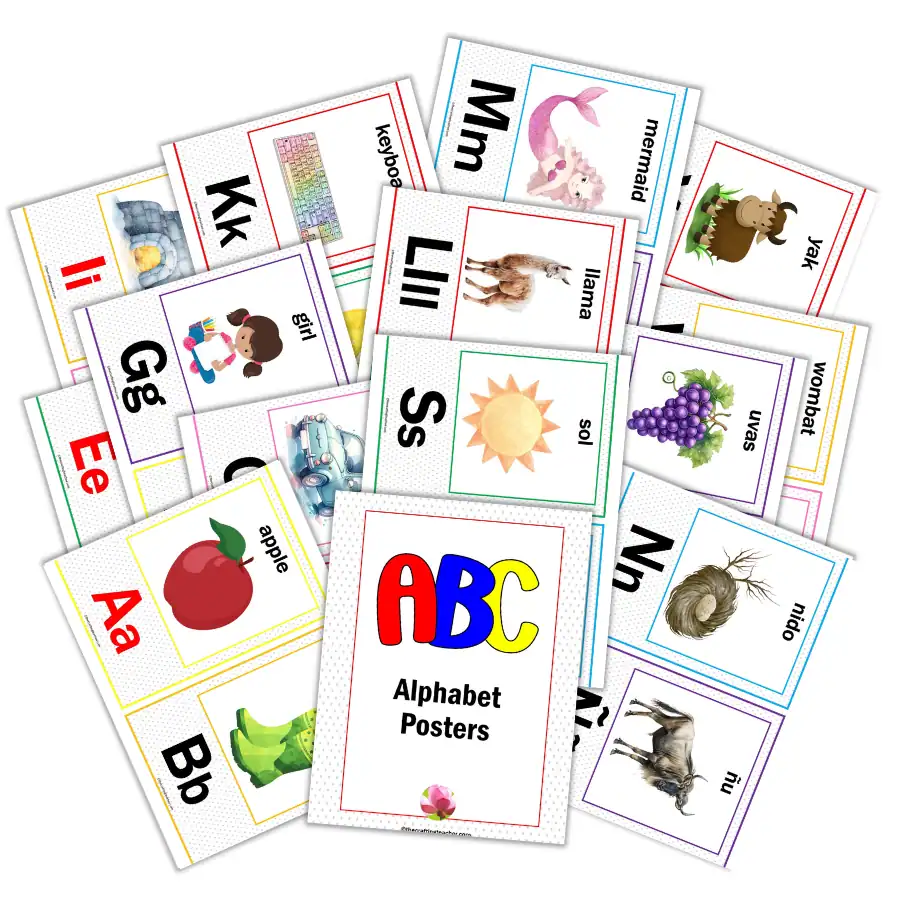
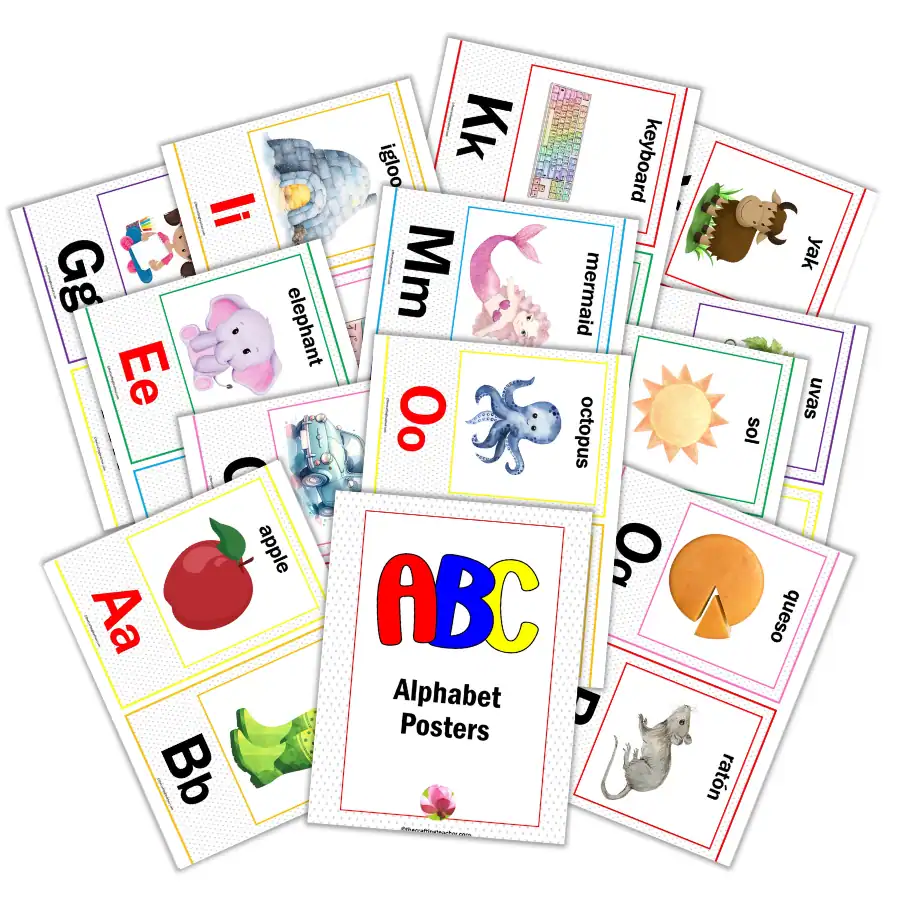
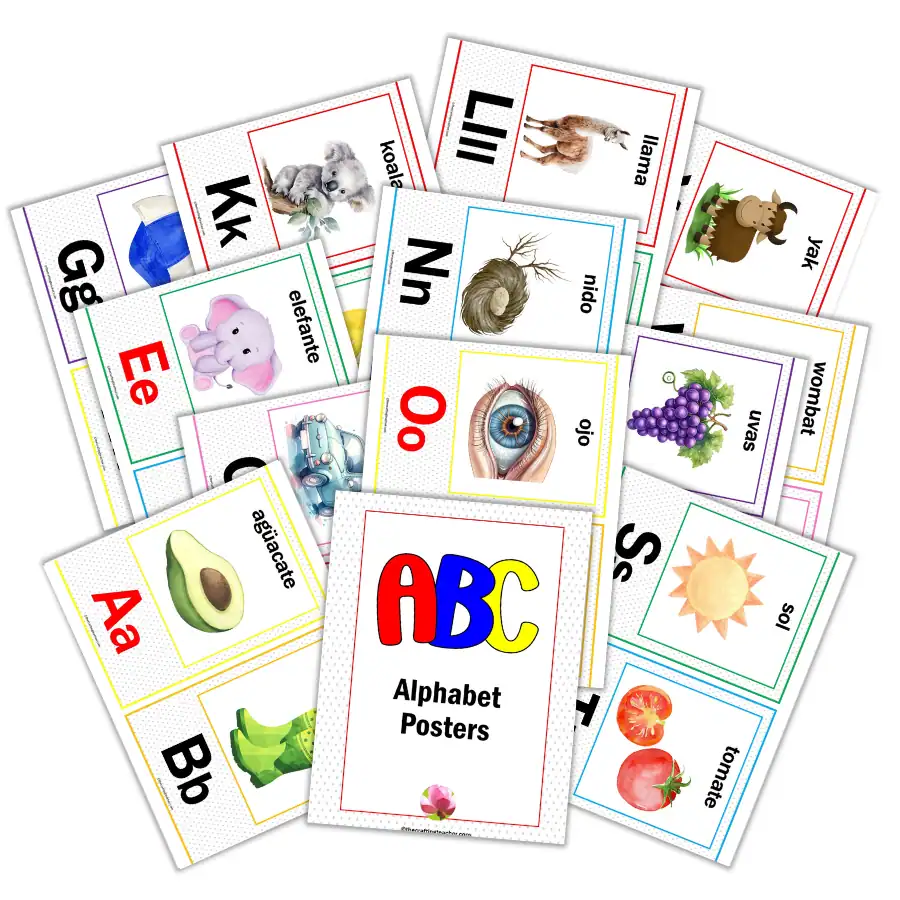
The Alphabet Posters pack includes 28 posters, divided into two per page, with all the letters of the alphabet in English and Spanish. You can get your own set at the bottom of this post.
Alphabet Posters
These Alphabet Posters are perfect for preschool, pre-K, daycare, daycare and childcare centers, homeschool learning spaces, literacy centers, alphabet and letter recognition activities, beginning sounds practice, early literacy learning, bulletin boards, reading areas, and classroom décor.
They give children an easy visual reference as they explore the alphabet and build early reading skills, combining learning and colorful classroom décor to create a welcoming space where preschoolers can learn, explore, and grow.
These Alphabet Posters offer a fun, visual way to introduce young children to letters and early literacy skills. Displaying the alphabet in the classroom gives preschoolers frequent opportunities to see, recognize, and practice letters throughout the day and develop important skills such as:
- Letter Recognition and Connectivity – Helps children become familiar with uppercase and lowercase letters, and pairing them with pictures makes learning more meaningful.
- Literacy and Vocabulary Development – Provides an ongoing literacy reference that children can use independently and encourages them to name and talk about letters.
- Phonemic Awareness – Teachers can connect letters with their corresponding sounds.
- Pre-Reading and Pre-Writing Skills – Provides a foundation for recognizing letters before children begin reading and become familiar with letter shapes and formation, encouraging writing readiness.
- Strengthen memory – Repeated exposure helps children remember letters and their sounds.
- Visual Discrimination – Colorful alphabet posters can capture children’s attention, helping them notice differences between letters such as B and D or P and R, and encouraging participation.
- Self-esteem and Confidence – Recognizing familiar letters gives preschoolers a sense of accomplishment and encourages continued learning.
How to Prepare the Alphabet Posters
Since this is a simple printable, you really don’t need much to get it ready. These are the materials you need:
- Free Alphabet Posters pack (found it at the end of this post).
- Printer.
- White cardstock.
- Scissors.
- Laminator and laminator pouches.
First, print all the pages on white cardstock and cut out each poster. Then laminate the posters for durability and introduce them to your preschoolers.
How to Use the Alphabet Posters
Preschool teachers can use these alphabet posters as a fun visual tool during circle time, letter-of-the-day activities, name recognition, storytelling, and transition times to help English- and Spanish-speaking children recognize letters, learn letter sounds, build vocabulary, encourage children to point to letters, say their names and sounds, and find those letters around the classroom, to help them develop early literacy skills.
Display alphabet posters at children’s eye level so they can look at the letters independently throughout the day.
Make alphabet learning interactive and repetitive. Combine the posters with songs, letter games, books, name activities, and hands-on writing practice. This gives preschoolers multiple opportunities to recognize letters and connect letters, sounds, pictures, and words.
Some ways you can use the Alphabet Posters are:
- Introduce and Review Letters: Introduce one letter at a time, and talk about its name, shape, and sound. Encourage children to find that letter on the alphabet poster. Review each introduced letter every day, before adding a new one.
- Letter Recognition: Point to different letters and ask children to identify them. Start with familiar letters, such as those in their names, and invite them to find the letters in different printed materials and around the room.
- Learn and Practice Letter Sounds: Say the letter sound together and connect it to a familiar word.
- Name Recognition: Help children find the letters in their names on the alphabet poster.
- Alphabet Songs: Sing the ABC song while pointing to each letter on the poster.
- Matching Activities: Give children letter cards, magnetic, wooden, or foam letters, and ask them to match each card to the corresponding letter on the poster.
- Vocabulary Building: Use the pictures on the posters to introduce new words and encourage children to describe what they see.
- Writing Practice: Have children trace letters with their fingers first, then practice forming them with crayons, markers, or other writing materials.
- Alphabet Games: Play games such as “Find the Letter,” “What Comes Next?” or “Missing Letter” using the poster as a visual guide.
- Pair Them with Classroom Décor: Combine the alphabet posters with number posters, color posters, weather charts, and other learning displays to create an engaging preschool learning environment.
You can see different types of learning display packs you may need HERE, and classroom décor bundles HERE.
Related Books
One of the best ways to teach preschoolers about anything is through books. Alphabet books let young learners focus on one letter at a time, identify the letters, and learn the sounds they make (phonemic awareness).
Below are some books you can use. You can find these books at your local library, used bookstore, and on Amazon. If you want to add them to your collection, you can use my affiliate link embedded in the titles for immediate access.
- Dr. Seuss’ ABC by Dr. Seuss. Arguably the most entertaining alphabet book ever written, this classic book is perfect for children learning their ABCs.
- Chicka Chicka Boom Boom by Bill Martin Jr. With bold, high-contrast art and joyful rhyming text, this classic book introduces letter recognition and phonics in a fun, memorable way.
- The Alphabet Book by P. D. Eastman encourages beginning readers to pair words that start with the same letter in funny ways.
- The Alphabet Tree by Leo Lionni. When a fierce wind threatens to blow all the little letters out of the alphabet tree, they must band together in words—and then sentences—to create a message that’s even stronger than the wind: peace on earth.
- Eating the Alphabet by Lois Ehlert. This book introduces fruits and vegetables from around the world while teaching uppercase and lowercase letters.
- I Spy Letters by Jean Marzollo. Children can search classic photos to help them learn the alphabet. Simple picture clues and rhyming riddles guide them through 14 interactive, fun-filled spreads.
- B is for Bear by Hannah Viano features flora, fauna, and landscape elements found throughout North America to teach the alphabet.
- ABC Adventures by Kathy Magnani is an engaging workbook for children ages 4–6, with more than 100 age-appropriate activities that explore every letter of the alphabet while building essential early literacy and fine motor skills.
- My Alphabet Book: Learn the ABC with Cute Pictures by Ninano. With bold outlines, large coloring spaces, and adorable letter-inspired designs, this book helps children connect letters with animals, fruits, foods, and other familiar things they love.
Pin It For Later
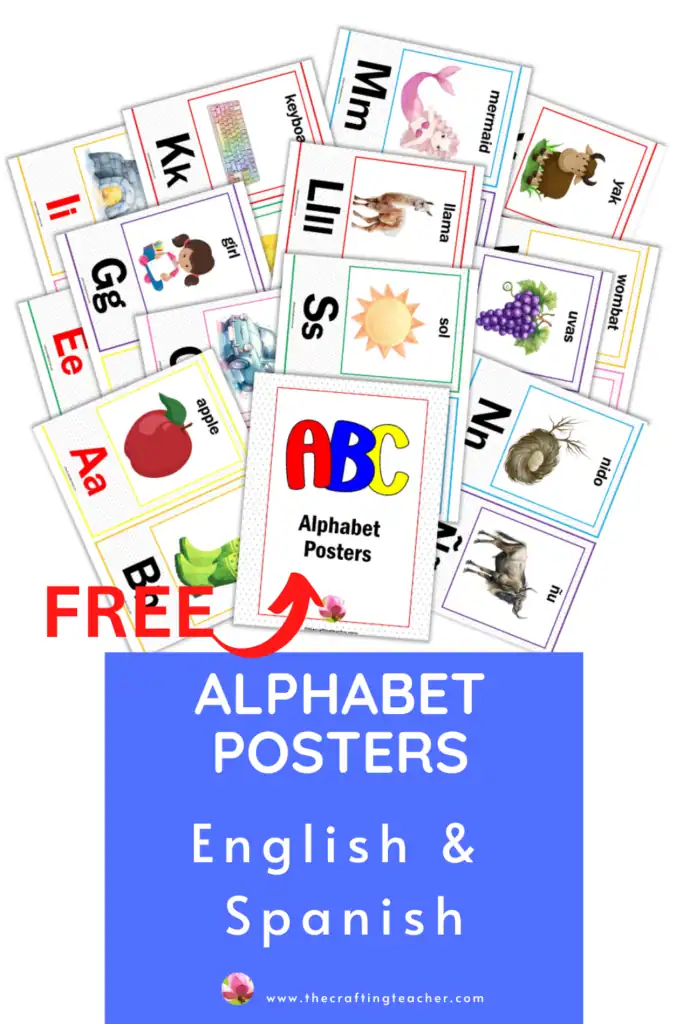
If you’re in a rush and don’t have time to read the post and download the printable, pin it to your Math and/or Fall board on Pinterest for later.
You can download these FREE Fall Calendar Numbers immediately by entering your information below. If you’re already a friend, you will not be added twice.
I hope you enjoy this free activity and that it helps your preschoolers have educational fun this season.
Be happy, safe, and creative. I wish you well.
Love,

P.S. Please let me know if these ideas worked for you or if you think I should add or replace anything. My goal is to help however I can.
Other Posts You Might Like: