Importance of Reading Aloud to Children
Affiliate Disclosure: “This post contains affiliate links, which means I receive a small commission, at no extra cost to you, if you make a purchase using those links.”
One of the most important things parents can do is read aloud, read often, and have meaningful conversations with their children, because reading stimulates language development even before a child can talk.
Research shows that the more words parents use when speaking to an infant, the larger their child’s vocabulary will be at 3 years old. Read often, for as long as your children can pay attention. As they grow, their attention spans will grow as well, and you will need to read longer books.
Reading aloud not only shows young children the sounds of words, but also stimulates language and cognitive skills that later translate into reading success, while building motivation, curiosity, memory, and prediction skills.
Reading aloud also builds one-on-one attention from parents to children, which can form a positive association with books, create fun memories of being read to and surrounded by a loving parent while snuggling up to enjoy a story, and help children cope during times of stress or tragedy.
How to Read to Children
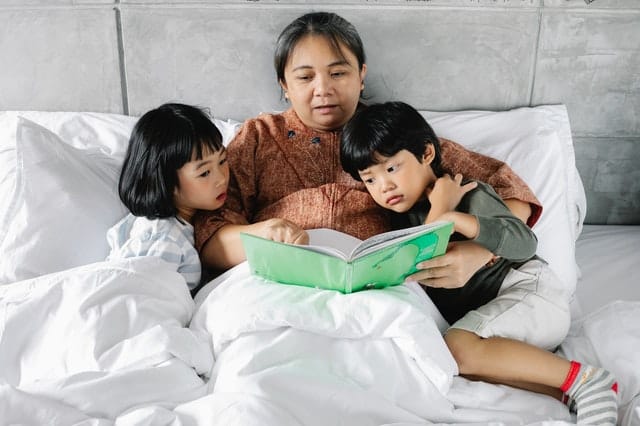
To make reading activities effective, you have to bring the book to life to keep your children interested. To do that, you have to use facial expressions and even change the sound of your voice or your accent. It is equally important to pause sometimes to build drama and suspense, giving your children the chance to use their imagination to picture the story in their minds. To help older children make predictions about the story, parents should also pause and ask open-ended questions, such as: “What might happen next?” or “Why did they do that?”
I also suggest encouraging older children to read to their younger siblings and explain how wonderful it is to read. This activity will not only help them practice their reading skills but also build their self-esteem, making them feel important and helpful.
Remember that the experiences a child has during the first few years of his or her life will affect positively or negatively his or her brain’s development; therefore, a nurturing and loving parent who gives quality time to his or her child will support the development of a healthy brain.
The foundation for later success at school and in life, and one of the best and most positive ways to engage with children, is looking at books together and reading aloud.
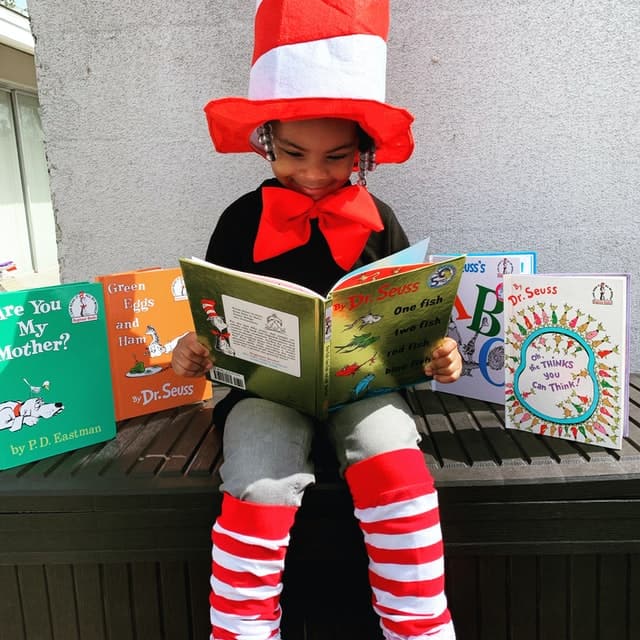
How to Choose the Right Book for Your Child
Tip #1. Know Your Child – Every child is different, even siblings; therefore, pay attention to your child’s attention span. Start reading shorter books to see how much time your child is capable of paying attention, and build your way up to longer stories.
Tip #2. Use books that Match Your Child’s Interests – If your child loves animals, you will have greater chances of capturing his or her attention using this type of book. Kids love learning more about things they love or are passionate about. Take advantage of this and grab a good number of books about it.
Tip #3. Choose Books That Will Keep Your Child Engaged – The books that are more likely to engage your child and draw him or her right into the story are those that have great characters and dialogue.
Great Book Suggestions
I have used the following books during my many years in the classroom, and we still use them at my center because they have proven to be loved by all preschool children. These books also have great illustrations and dialogue and will keep your preschooler truly engaged.
You can find thousands of books at your local library or a used bookstore. I recommend buying your favorites on Amazon to add to your child’s library. That way, you can find them handy when you want to read them again (which is recommended), and your child can browse through them and expand his or her imagination and pre-reading abilities.
To read more about the ones that look more interesting to you, click a title to go directly to Amazon, where you can find the information and price.
- Chicka Chicka Boom Boom by Bill Martin Jr. is a classic book that uses a lively alphabet rhyme.
- Who’s the Beast? by Keith Baker. This cute story talks about a friendly tiger who is confused by jungle animals fleeing from a beast until he discovers he is the beast.
- The Very Hungry Caterpillar by Eric Carle. This classic book uses repetitive language, pretty illustrations, and cut-out pages with different types of food that children love.
- Polar Bear, Polar Bear, What Do You Hear? by Bill Martin Jr. In this book, children will chant the rhythmic words, make the animals’ sounds, and pretend to be the zoo animals featured in the book.
- Green Eggs and Ham by Dr. Seuss. With unforgettable characters and signature rhymes, kids will love the terrific tongue twisters as the list of places to enjoy green eggs and ham gets longer and longer.
- The Very Busy Spider by Eric Carle. This multi-sensory board book lets children feel the pictures as well as see them, and its rhythmic text makes it an experience to touch, see, and hear.
- The Baby Beebee Bird by Diane Redfield Massie. This is a fun story about a baby beebee bird, new to the zoo, who sings all night long, and the animals cannot sleep until they come up with a plan to teach the baby beebee bird that nighttime is best for sleeping.
- Dr. Seuss’s Book of Colors by Dr. Seuss. This simple rhymed riff about color is illustrated with art from some of the most beloved books by this author.
- Panda Bear, Panda Bear, What Do You See? by Bill Martin Jr. and Eric Carle. Using repetitive text, the authors address the important topic of animal conservation, using different types of wild animals, rhythmic text, and vibrant images.
- Chicka Chicka 123 by Bill Martin Jr. Children will have fun learning numbers and counting with this joyous book.
Use of Pointers
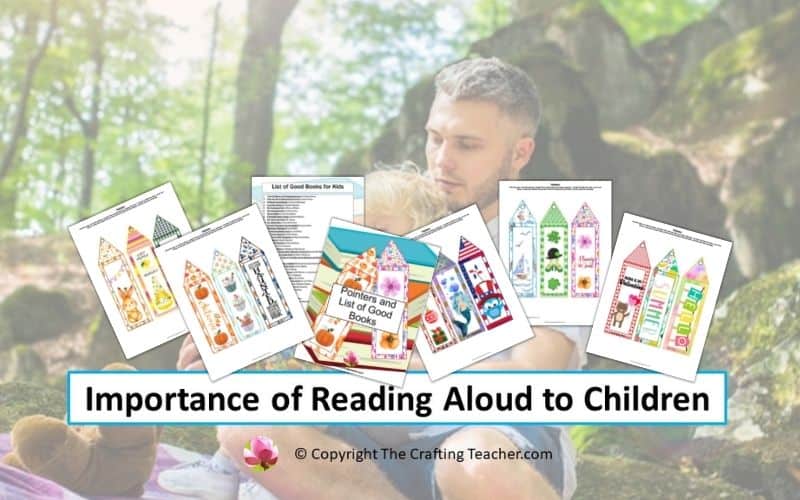
When you read aloud to your children, it is a good practice to use pointers to mark the words as you read. It is a great way to show your children not only that words have meaning but also that you read from top to bottom and left to right. This will help them develop a skill they’ll need later when they start reading and writing on their own.
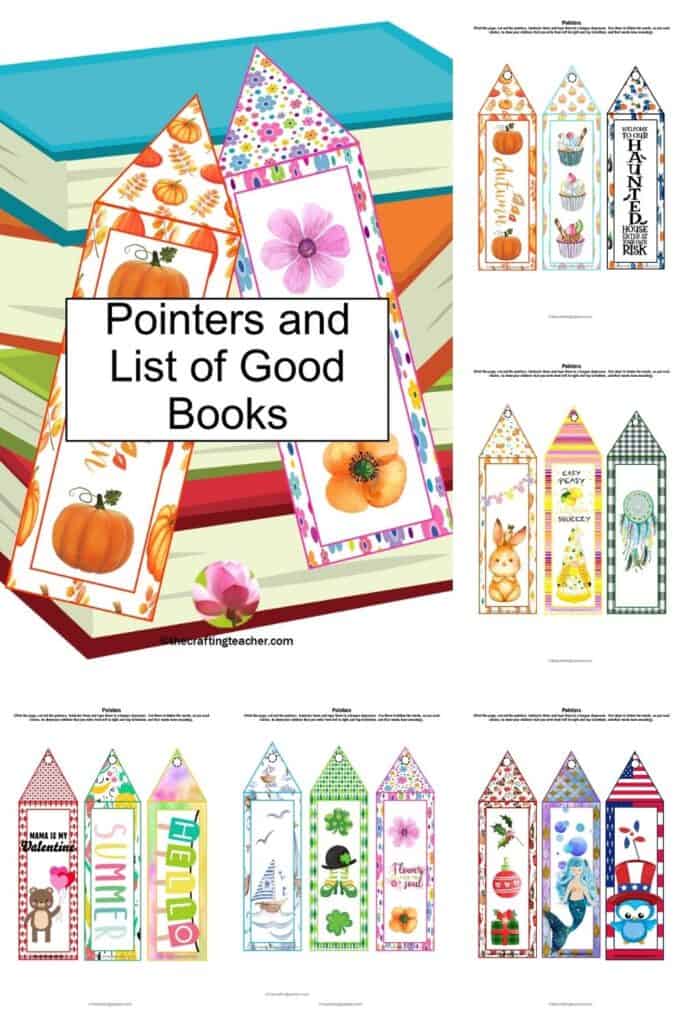
I’ve created a set of FREE pointers, a handy list with 40 of my favorite books for you to have, to show you my appreciation for taking your time and reading this post. I also included a handy list of these books in the printable. Please find them below.
To get these pointers ready, print them on white cardstock and laminate them for durability. To enhance them a little, you can use ready-made tassels if you want.
Pin It for Later
If you are in a rush and don’t have time to read the post and download the printable but want to save it for later, pin this to one of your Pinterest boards.
Don’t forget to grab your FREE book list and pointers. Just click the button below for an immediate download.
I hope you start making a habit of reading to your child and enjoy that beautiful bonding experience, which will benefit your child for the rest of his or her life.
Be happy, safe, and creative. I wish you well.
Love,

P.S. If you would like to see an article on how to make something specific, please let me know, and I will do my best to write it for you. My goal is to help you in any way I can, and I don’t like anything better than posting something you might find useful.
Other Posts You Might Like: