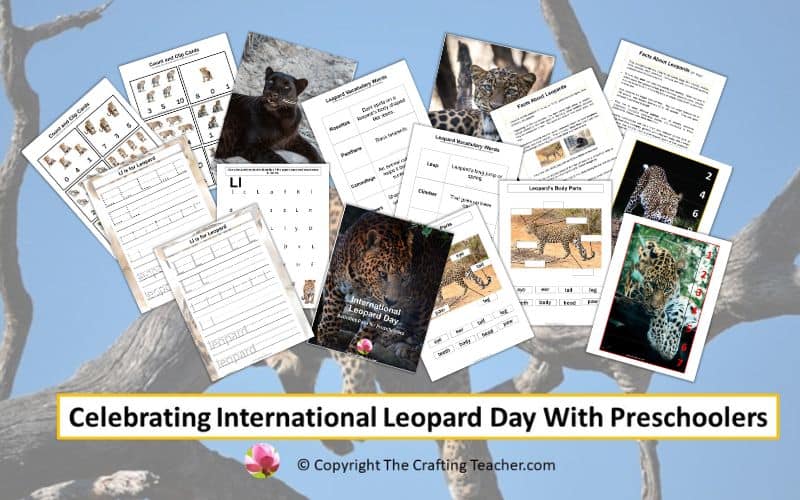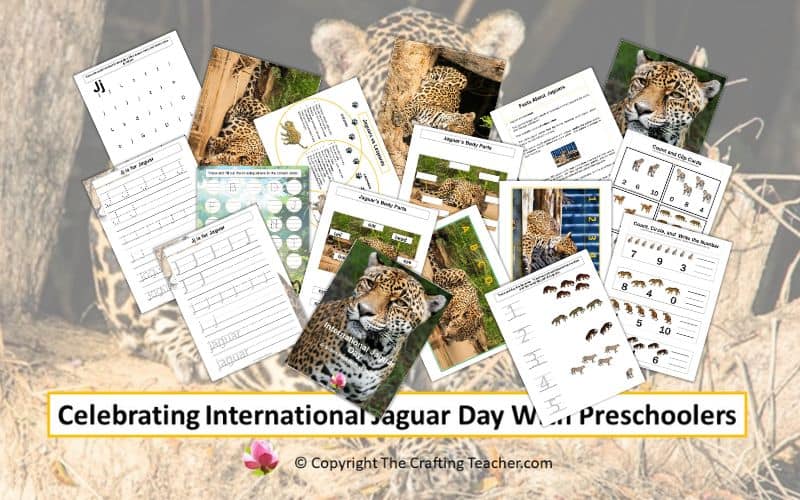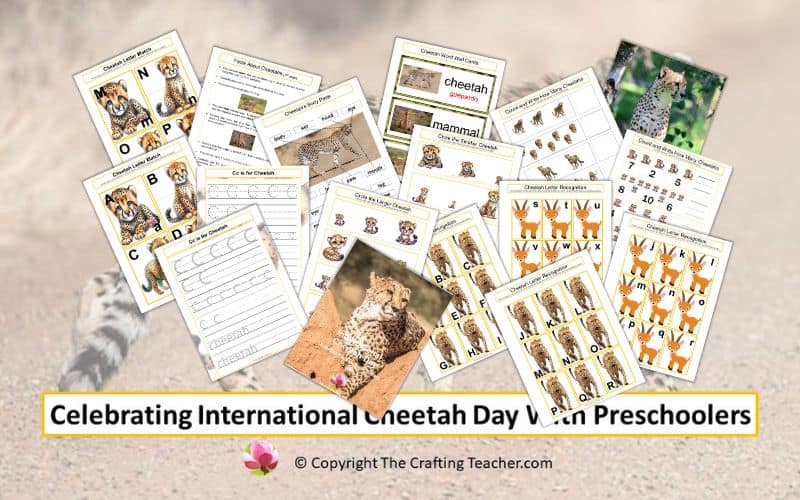

Celebrating International Tiger Day With Preschoolers
Affiliate Disclosure: “This post contains affiliate links, which means I receive a small commission, at no extra cost to you, if you make a purchase using those links.”
International Tiger Day is celebrated on July 29th to raise global awareness of the danger of extinction these fantastic cats face and to encourage people to support conservation efforts to protect them and their natural habitat and ensure their survival.
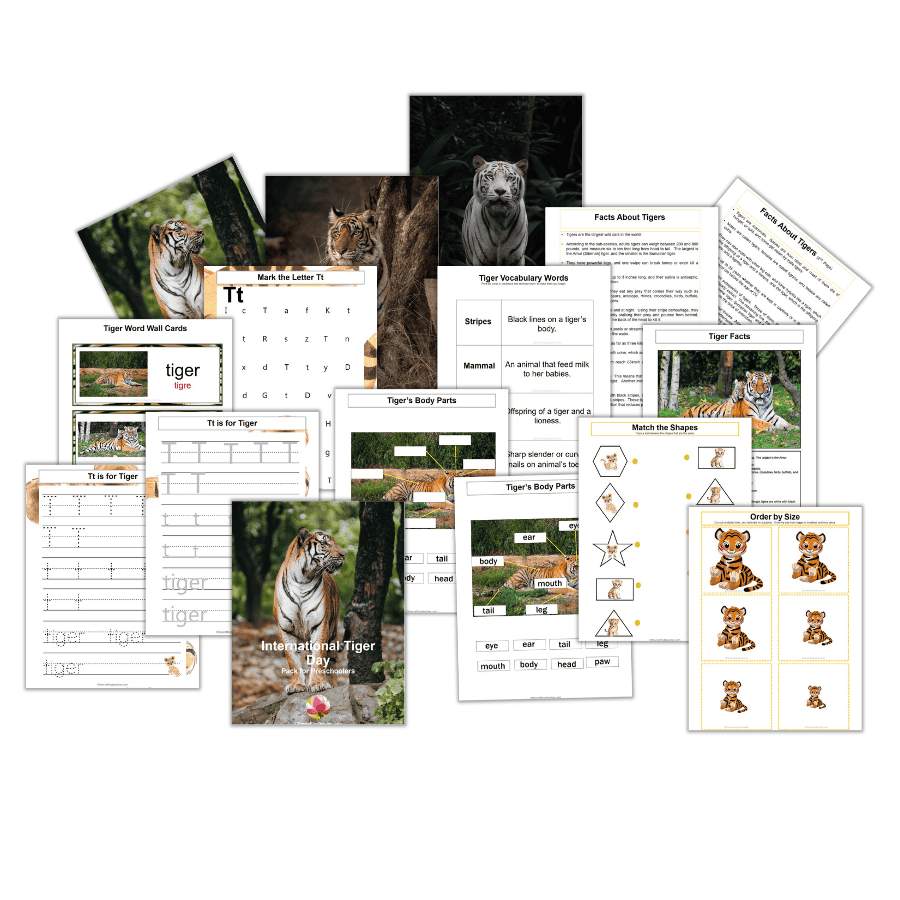
You will find the free 21-page International Tiger Day pack at the end of this post to help you celebrate this day with your preschoolers, teach them about these incredible cats, and instill in them a love for these animals and a desire to be their protectors.
History of International Tiger Day
This special day was established in 2010 at the Saint Petersburg Tiger Summit, hosted by Vladimir Putin, which gathered leaders from thirteen countries where tigers live. The leaders were concerned about the alarming rate at which tiger populations were declining and aimed to double their population by 2022.
Vladimir Putin, president of Russia, made it his mission to save the Amur tiger, which is on the brink of extinction, and signed laws to severely punish every person who gets involved in poaching, illegal trade, transportation, or keeping tigers in captivity in Russia, with long prison sentences.
International Tiger Day and the conservation efforts of organizations, conservation groups, and countries are crucial in informing people about the situation these cats face and promoting international collaboration to save tigers from extinction. This is mainly because, despite years of conservation efforts, tigers remain endangered.
Organizations Protecting the Tigers
Numerous organizations, governments, conservation groups, and international agreements work to protect tigers and other endangered species. Some of them are:
- National Tiger Conservation Authority (NTCA): This statutory body in India was established in December 2005 and is responsible for the “Tiger Project” initiative, which aims to strengthen tiger conservation in the country.
- Project Tiger: An ongoing initiative in India, focused on protecting tiger habitats, monitoring populations, and addressing human-wildlife conflict.
- World Wildlife Fund (WWF): This organization works globally to protect tigers and their habitats, focusing on anti-poaching efforts, habitat connectivity, and community engagement.
- Wildlife Conservation Society (WCS): This organization provides technical support for tiger conservation, including protected area creation and law enforcement support. Their goal is to “multiply thriving populations of tigers across their range and in all the habitats in which they are found.”
- Convention on International Trade in Endangered Species (CITES): The focus of this international agreement is to globally prohibit the trade of live tigers or their parts.
- David Shepherd Wildlife Foundation (DSWF): This organization protects wild tigers in Asia by funding conservation projects and combating wildlife crime.
- Association of Zoos and Aquariums (AZA): This association is part of the Wildlife Trafficking Alliance, a coalition of more than 80 nonprofit organizations, leading companies, zoos, and aquariums united to reduce the purchase and sale of illegal tiger products.
- International Tiger Project (ITP): Established in 2010 by Wildlife Conservation International, a multinational non-profit organization, to raise funds for conservation projects across Indonesia and Southeast Asia.
- International Fund for Animal Welfare (IFAW): One of the world’s largest animal welfare and conservation charities. It rescues tigers, safeguards their populations, preserves their habitat, and advocates for their protection.**
- Smithsonian’s National Zoo & Conservation Biology Institute: This organization supports efforts to combat poaching and illegal trade, reduce human-wildlife conflict, improve habitat management, and enhance breeding programs for tigers.
- Global Tiger Initiative (GTI): Is a global alliance founded by the World Bank, the Global Environment Facility (GEF), the Smithsonian Institution, Save the Tiger Fund, and the International Tiger Coalition (representing more than 40 non-government organizations), launched in 2008, to save wild tigers from extinction.
Facts About Tigers
- Tigers are the world’s largest wild cats.
- According to the subspecies, adult tigers can weigh between 200 and 800 pounds and measure six to ten feet long from head to tail. The largest is the Amur (Siberian) tiger, and the smallest is the Sumatran tiger.
- They have powerful legs, and one swipe can break bones or even kill a person or an animal.
- Tigers’ canines can grow up to 3 inches long, and their saliva is antiseptic, which can help prevent infections.
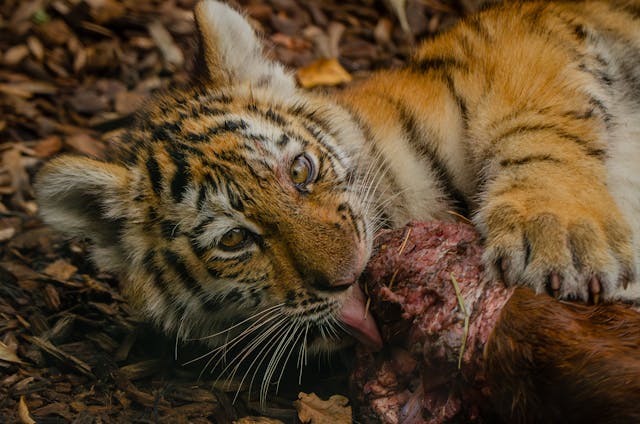
- Tigers are carnivores. They eat any prey that comes their way, such as deer, wild pigs, rodents, bears, antelope, rhinos, crocodiles, birds, buffalo, fish, and other tigers.
- Tigers prefer to hunt alone and at night. Using their striped camouflage, they hide behind bushes, quietly stalk their prey, and pounce from behind, biting the neck or back of the head to kill it.
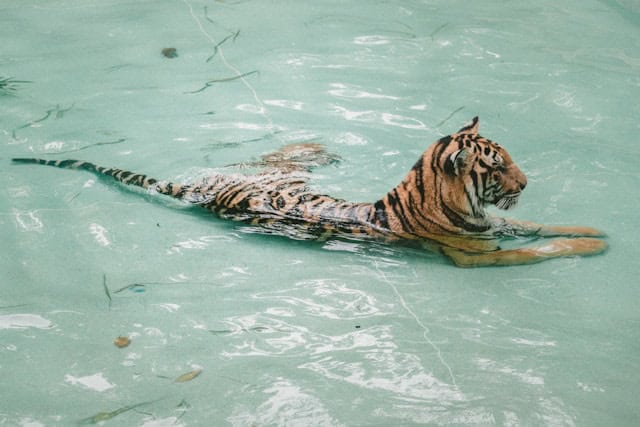
- Tigers love to lie down in pools or streams to cool off, and they can swim for hours, even kill prey in the water.
- Tigers’ roar can be heard as far as three kilometers away.
- They mark their territory with urine, which smells like buttered popcorn.
- Their strong legs let them reach speeds of up to 65km/h, but only for short distances.
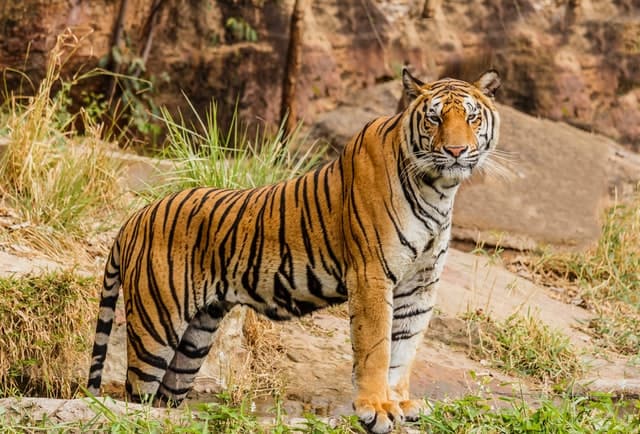
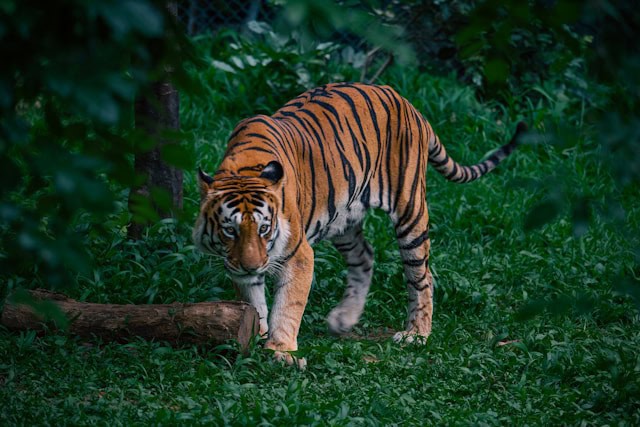
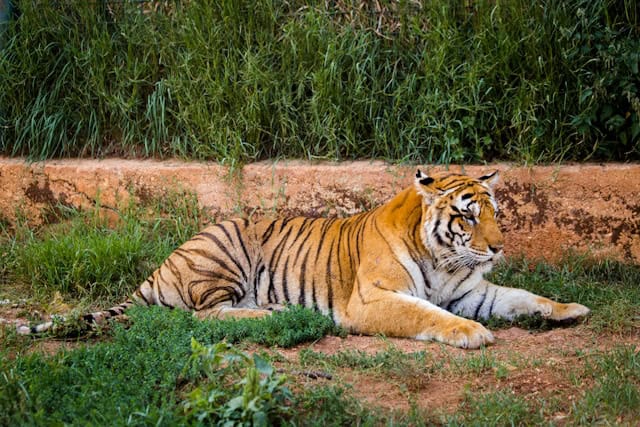
- Tigers’ stripes are unique. This means that each tiger has a unique pattern different from any other tiger. Another interesting fact is that they also have stripes on their skin.
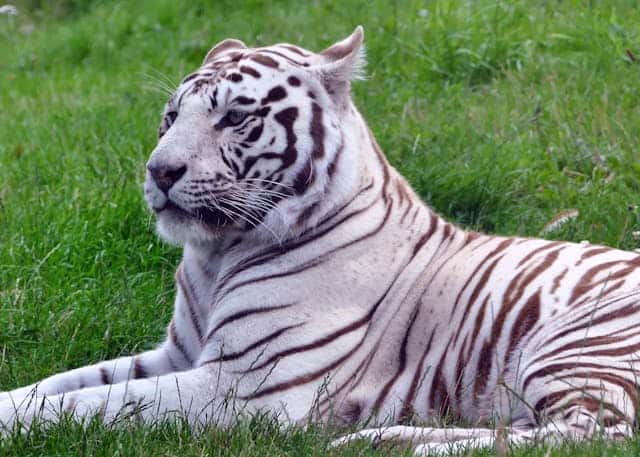
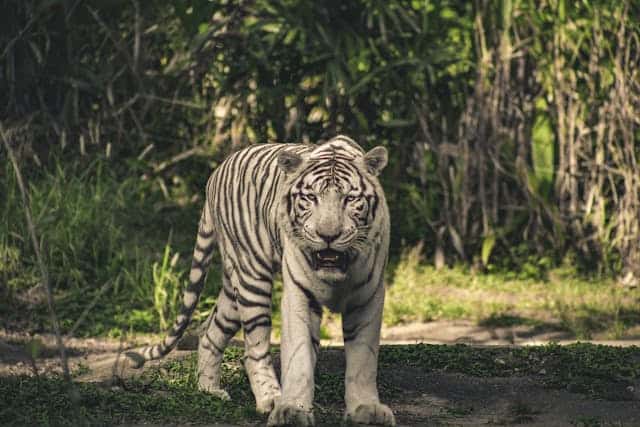
- Most tigers are orange with black stripes, but some rare Bengal tigers are white with black stripes. These tigers are not albinos. They have a recessive gene that reduces pigmentation.
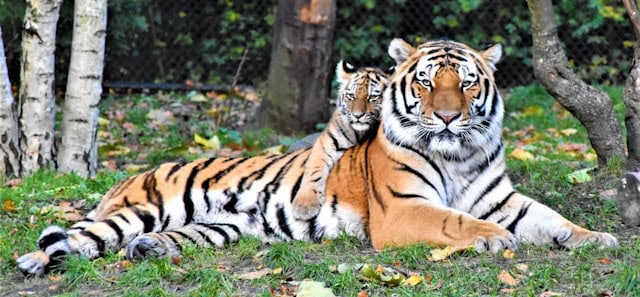
- Tigers are mammals. Babies are born blind, and most of them die of hunger or cold, and male tigers eat some.
- Males are called tigers, females are called tigresses, and babies are called cubs.
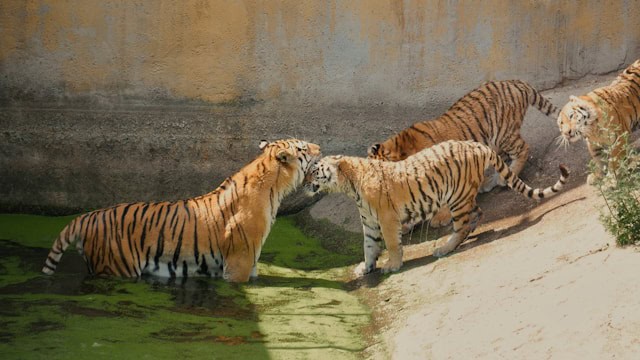
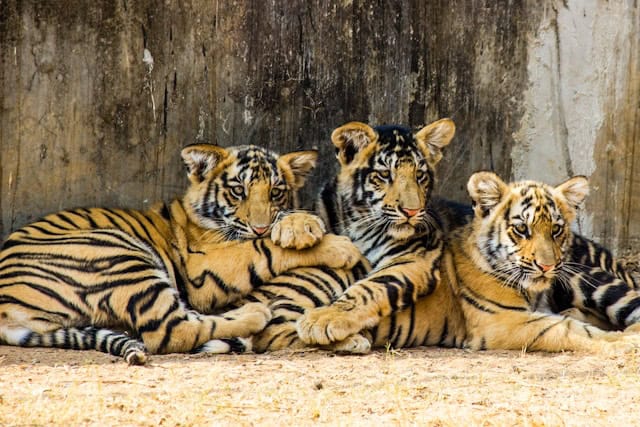
- A group of a tigress and her cubs is called a streak of tigers, and a group of adult tigers is called an ambush of tigers.
- They can also mate with other big cats and have hybrids like a tigon, the offspring of a tiger and a lioness, and a liger, the offspring of a lion and a tigress.
- They live up to 25 years, whether in captivity or in the wild. However, most die before the age of 20.
- There were eight subspecies of tigers. Three of them, the Caspian, Bali, and Javan, are already extinct. The remaining five, the Bengal tiger, South China tiger, Indochinese tiger, Sumatran tiger, and Amur tiger (also known as Siberian tiger), are on the brink of extinction.
- Tigers are facing many major threats. These include habitat loss, habitat fragmentation, human settlements, plantations, agriculture, climate change, inbreeding, hunting, and human-wildlife conflict. However, the biggest threats are poaching and the illegal trade, due to the demand for their bones, skin, and other body parts, which have caused a monumental impact on their population, resulting in localized extinctions.
How to Celebrate International Tiger Day
There are many ways you, your family, your preschoolers, and their families can celebrate International Tiger Day and get involved in the efforts organizations and conservationists are making to protect these animals. These are some ideas:
- Learn about tigers and teach your preschoolers and everyone you know. The more you learn, the better informed you will become and the more capable you will be of spreading the word.
- Show videos and documentaries about tigers to your preschoolers, family, and friends so they can learn about these beautiful creatures and become advocates for them. You can find some good ones on YouTube, like Tiger Facts for Kids, Tigers for Little Ones, and Tigers for Kids.
- Invite your children, and maybe their families, to do an art project about tigers and prepare an exhibition for people to see.
- Invite your preschoolers to dress as tigers or wear tiger-inspired clothes on International Tiger Day, and have a parade around the school or your neighborhood.
- Share facts about tigers, their habitats, the importance of sustaining healthy ecosystems, the danger of extinction they are facing, and how to help on your social media channels, and invite your followers to symbolically adopt a tiger to help its conservation. Organizations that support these adoptions are the World Wildlife Fund (WWF), the David Shepherd Wildlife Foundation (DSWF), and the International Tiger Project (ITP).
- Create a community outreach or fundraising project to raise funds for an organization protecting these big cats, such as the World Wildlife Fund (WWF), the Wildlife Conservation Society (WCS), the Association of Zoos and Aquariums (AZA), and the International Tiger Project (ITP).
- Support programs that are fighting against the illegal trade and poaching of leopards and other endangered species by volunteering, signing petitions to create or modify laws, or getting information and becoming a voice on their behalf.
Tiger-related Books
Many books, both fictional and nonfiction, address tigers. Below are some of my favorites. You can find books about these great cats at your local library, used bookstore, and Amazon. I added Amazon links by clicking the titles to make it easier to get to the right page.
- All Things Tigers for Kids by Animal Reads is a colorful nonfiction book filled with amazing real-life images and plenty of incredible facts, covering tigers’ history, evolution, characteristics, diet, and life cycle.
- Explore My World: Tigers combines unforgettable photography and easy-to-understand language to teach little kids all about tigers, including their social behavior, communication, diet, and playtime.
- The Secret Life of a Tiger by Przemyslaw Wechterowicz is a funny, warm-hearted picture book about a tiger’s unexpected, secret nighttime hobby, reminding us that animals (and people) sometimes behave in unexpected ways.
- Who’s the Beast by Keith Baker talks about a friendly tiger who is confused by jungle animals fleeing from a beast, until he discovers he is the beast.
- Daniel Goes to School by Becky Friedman is a sweet story about a little tiger who is excited to go to school, but he’s not happy that his dad can’t stay with him. Daniel learns that “grown-ups come back” and has lots of fun with his teacher and classmates.
- Moving to the Neighborhood by Alexandra Cassel is a perfect story for anyone moving to a new city or who wants to be a good neighbor, using Daniel Tiger to help a new neighbor feel right at home.
- It’s a Tiger by David LaRochelle is a lively read-aloud picture book, perfect for acting out while reading, and offers just the right amount of excitement without being too scary, with a sweet ending and a bit of a twist.
- Daniel Goes to the Dentist by Alexandra Cassel helps children be a little more comfortable going to the dentist, using the sweet little character, Daniel Tiger.
Pin It for Later
If you are in a rush and don’t have time to read the post and download the printable but want to save it for later, pin it to one of your Pinterest boards.

This International Tiger Day, make a vow to teach your children everything you can about these amazing mammals so they can become their protectors and advocates. This way, future generations can enjoy them, and we all can have balanced ecosystems where all species thrive.
I hope you enjoy these ideas and that they help you have fun celebrating International Tiger Day with your preschoolers. To get the FREE pack, click the link below and enter your information to download it immediately.
Be happy, safe, and creative. I wish you well.
Love,

P.S. Please let me know how this celebration went, what ideas you used, and which ones you came up with. I would like to know how I can help you better.
Other Posts You Might Like: