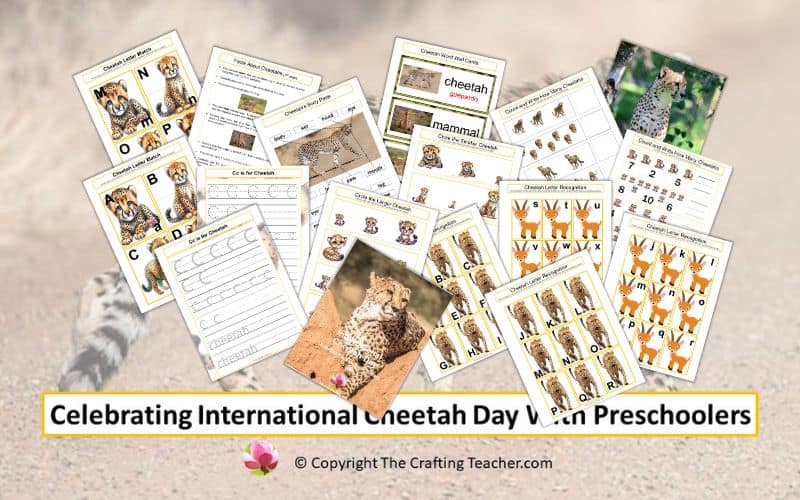
Celebrating International Cheetah Day With Preschoolers
Affiliate Disclosure: “This post contains affiliate links, which means I receive a small commission, at no extra cost to you, if you make a purchase using those links.”
International Cheetah Day is celebrated on December 4th each year to raise awareness of the fastest land animals on the planet, the cheetahs, and encourage people to participate in their conservation to avoid extinction.
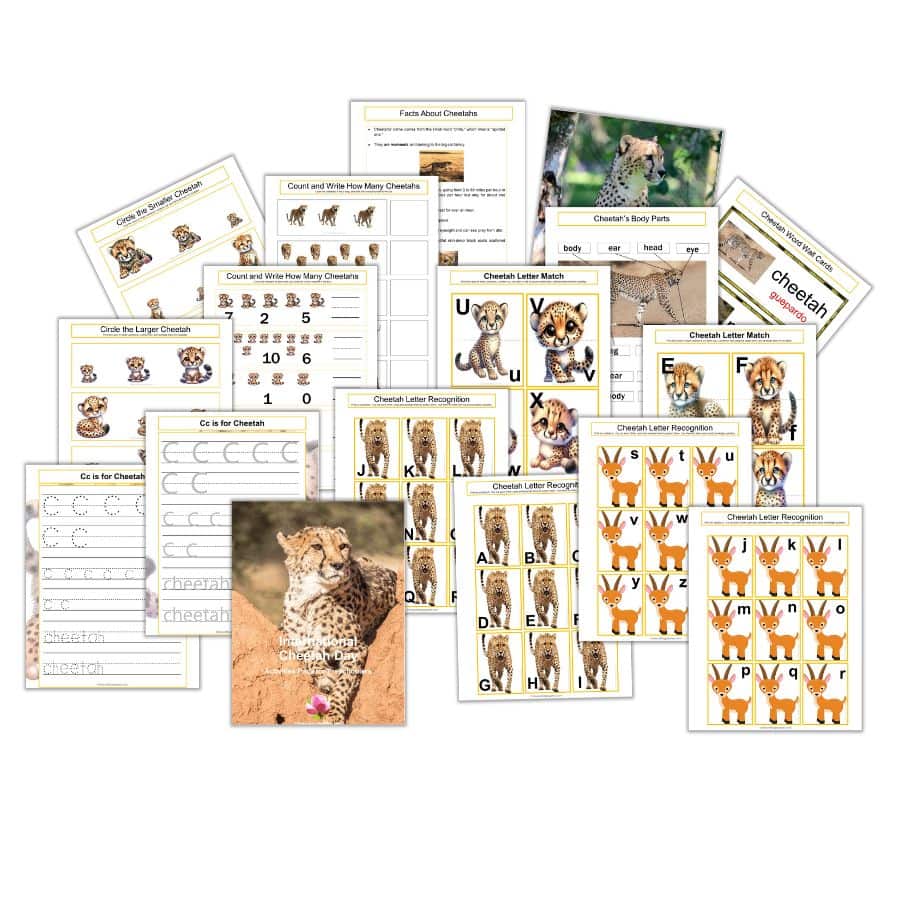
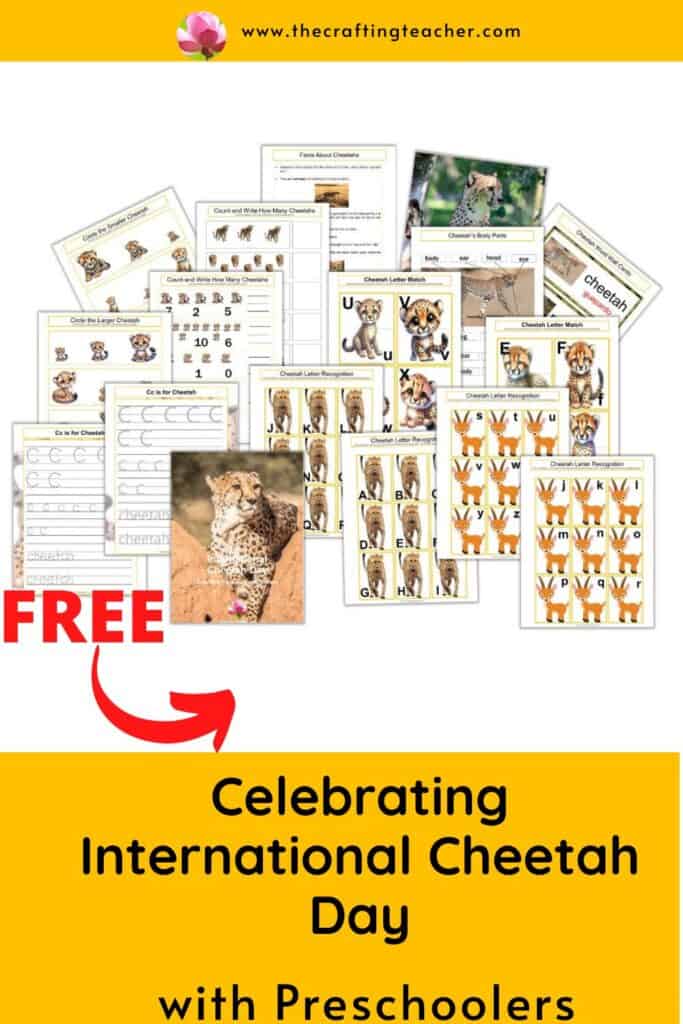
I have included a FREE 37-page International Cheetah Day Pack for your preschoolers. The pack provides literacy, science, math, and fine motor activities. You can download it at the end of this post.
History of International Cheetah Day
International Cheetah Day began in 1977, when American Zoologist Dr. Laurie Marker took a cheetah named Khayam, which she had raised from a cub at Wildlife Safari in Oregon, back home to Namibia as part of an experiment to see whether cheetahs raised by humans could be reintroduced to the wild and survive.
During her stay in Namibia, Dr. Marker noticed that Namibian farmers were killing cheetahs indiscriminately to protect their livestock, putting the species’ survival at risk. Determined to solve the problem, she founded the Cheetah Conservation Fund (CCF) in 1991 to educate them about wildlife conservation and find ways to preserve the cheetah.
International Cheetah Day was established in 2010 and is celebrated on December 4th. Dr. Marker selected this day, which was Khayam’s birthday, to honor her.
Organizations Working to Protect Cheetahs
Many organizations and conservationists worldwide work hard to protect cheetahs and their habitats through research, education, awareness campaigns, and dog supplies to protect livestock and minimize human-wildlife conflict.
Some of these are:
- Cheetah Conservation Fund (CCF) – An international non-profit organization focusing on research, education, and conservation.
- Conservation Centers for Species Survival (C2S2) uses global goals to develop strategies for linking and managing populations to protect cheetahs.
- African Wildlife Foundation – working to preserve African wildlife and lands and promote anti-trafficking campaigns.
- Big Cat Conservation – working with registered wildlife rescue shelters and donors in the UK and other parts of the world to protect big cats.
- Carnivore Conservation Malawi – working to conserve and restore the balance between the wildlife of Malawi, its ecology, and its environment.
- Cat Action Treasury (CAT) has been working since 1995 to conserve all species of wild cats.
- Cheetah and Wild Dog – a conservation project for cheetahs and African wild dogs.
- Cheetah Conservation Botswana – Wildlife Conservation Network – works with rural communities to preserve the cheetah population through research and education.
- Cheetah Conservation in Namibia – Earthwatch Institute – runs research, education, and conservation programs.
- Cheetah Kids – a program that offers conservation education and activities related to cheetahs for kids.
- Cheetah Outreach – a program involving education for Southern African communities to raise awareness about cheetahs’ situation and promote campaigns for their protection.
- Conservation of the Asiatic Cheetah Project – a partnership between the Iranian Department of Environment and the United Nations Development Programme to protect the last Asiatic cheetahs.
- Felidae Conservation Fund – working to preserve all the cat species and their habitats using research, education, and technology.
- Iranian Cheetah Society is a private, non-profit organization that safeguards Iran’s biodiversity. Its flagship species is the Asiatic cheetah.
- Panthera – focuses its conservation efforts on at-risk cats, including tigers, lions, jaguars, snow leopards, pumas, and cheetahs.
- Running Wild Conservation runs a cheetah breeding program and teaches cubs the survival skills they need to return to the wild.
- Tanzania Carnivore Conservation Project: The Cheetah Watch Campaign manages the longest study of a wild cheetah population and monitors cheetahs across Tanzania.
- The Ann van Dyk Cheetah Centre is an African breeding program that aims to save the cheetah, African wild dog, and other endangered species from extinction.
- White Oak Conservation Center – runs breeding programs for different species and provides training and research related to veterinary science and conservation.
- Wildlife Conservation Network – a worldwide organization that works with local communities worldwide to protect endangered species and their habitats.
- World Association of Zoos and Aquariums: North African Cheetah Research and Conservation (OGRAN)- is a network of veterinarians, conservationists, and other experts.
- Action for Cheetahs in Kenya (CCF)–working with different governments and communities to develop best practices to benefit all species and people.
- AZA SAFE: Saving Animals From Extinction –working with AZA-accredited zoos and aquariums to save different species.
- Cheetah Conservation Botswana (CCB) – working to preserve the cheetah population using research, education, and assistance to rural communities to promote a peaceful coexistence between humans and Botswana’s wildlife population.
- Smithsonian Institute – Smithsonian Conservation Biology Institute (SCBI) – leaders in global efforts to save wildlife species from extinction and train future generations of conservationists.
- Traffic – The Wildlife Trade Monitoring Network – working globally to reduce illegal wild animal trade and increase biodiversity conservation and legal benefits to people.
- Wildlife Conservation Network (WCN) – working to get funds and resources to protect wildlife, provide education, and help people coexist with wildlife.
- Mara Meru Cheetah Project – a project directed by Dr.Elena Chelysheva, PhD, to promote the conservation of cheetahs in the Masai Mara.
- Cheetah Conservation Initiative (CCI) – working to improve the status of cheetahs and reverse declines in their populations.
- International Fund for Animal Welfare (IFAW) is a global non-profit organization helping animals and people thrive together.
- Tanganyika Wildlife Park – running a successful breeding program for cheetahs in the park and working with other organizations to preserve the cheetahs and educate people about the importance of conservation.
Facts About Cheetahs
- Cheetah’s name comes from the Hindi word “chita,” which means “spotted one.”
- They are mammals and belong to the big cat family.
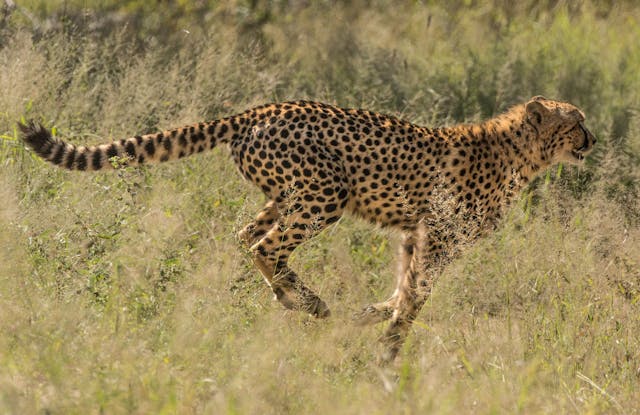
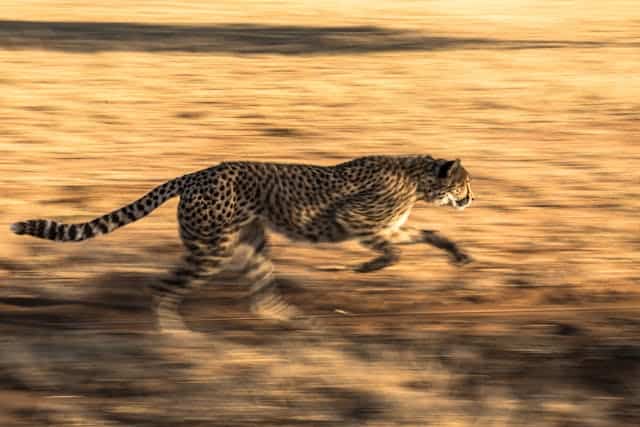
- They are the fastest animals on Earth, going from 0 to 60 miles per hour in three seconds. They can run 75 miles per hour but only for about one minute before overheating.
- After a high-speed chase, they must rest for over an hour.
- They have a slim body designed for speed.
- They have amber eyes with excellent eyesight and can see prey from afar.
- They have a golden coat with beautiful skin-deep black spots scattered across it, which helps to camouflage.
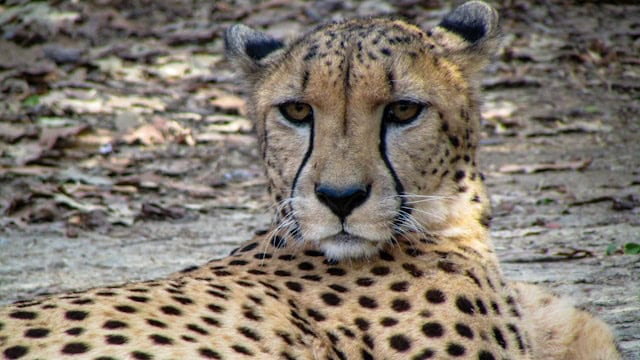
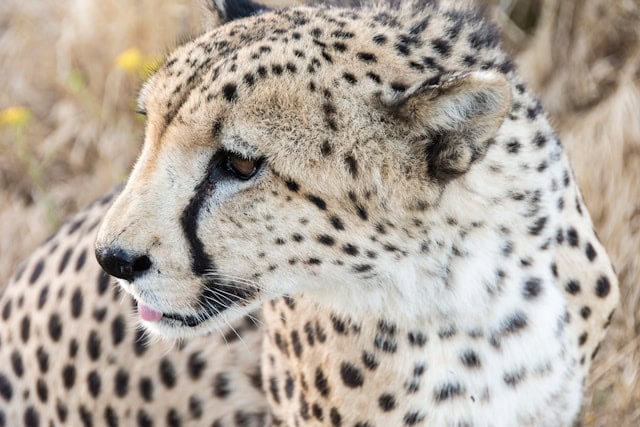
- The black tear stripes on their faces help reduce the sun’s glare and help them focus on prey while chasing.
- Their claws are non-retractable, which helps them have better traction while running.
- They also have a specialized respiratory system that allows them to take in more oxygen while running.
- Their legs are muscular and long, with special pads on their paws for traction.
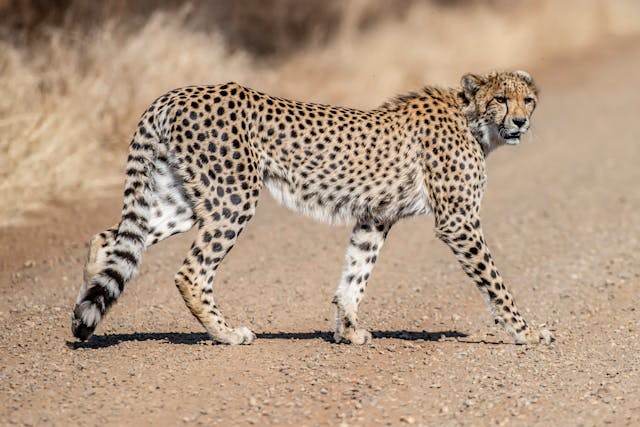
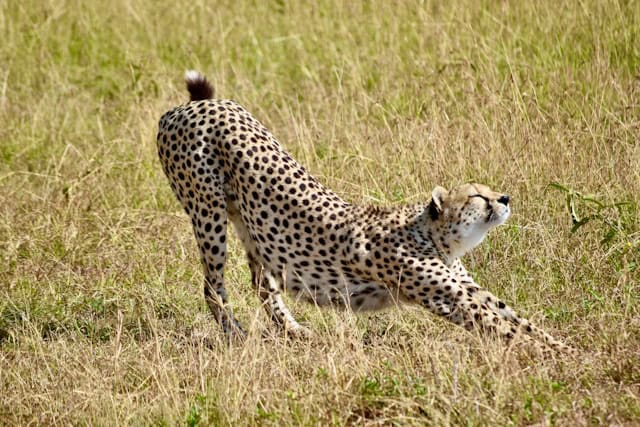
- They have a small, rounded head, a long neck, a flexible spine, and a deep chest.
- Their long tail helps them balance and turn suddenly while chasing prey.
- They can grow up to 60 inches in length and weigh between 46 and 158 pounds.
- They use different vocalizations, including growls, chirps, and purrs, but they don’t growl.
- Cheetahs can live in different habitats, including forests, grasslands, savannahs, and deserts in Africa (Ethiopia, southern Sudan, Uganda, Kenya, and Tanzania). Some individuals can also be found in Iran.
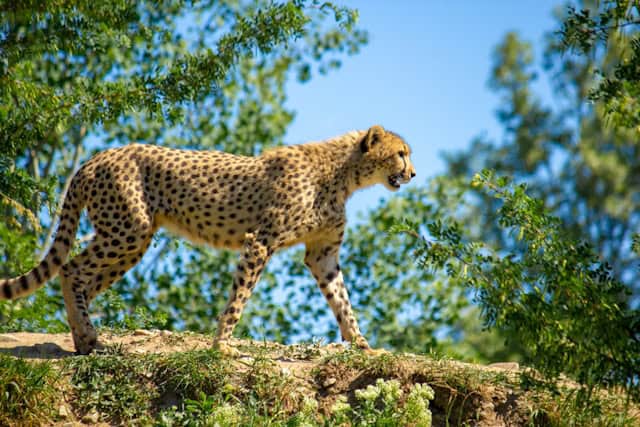
- They like to stay on the ground but sometimes climb trees.
- They are primarily diurnal and hunt during the day.
- They are carnivores that hunt antelopes, gazelles, impalas, and wildebeest calves, but they also eat smaller animals, such as rabbits and birds.
- Once they reach their prey, they knock it to the ground and suffocate it with a bite to the neck.
- They eat quickly and can consume prey in 20 to 30 minutes to avoid losing their catch to other predators.
- Cheetahs only need to drink water every three or four days.
- They never stay in one place for long.
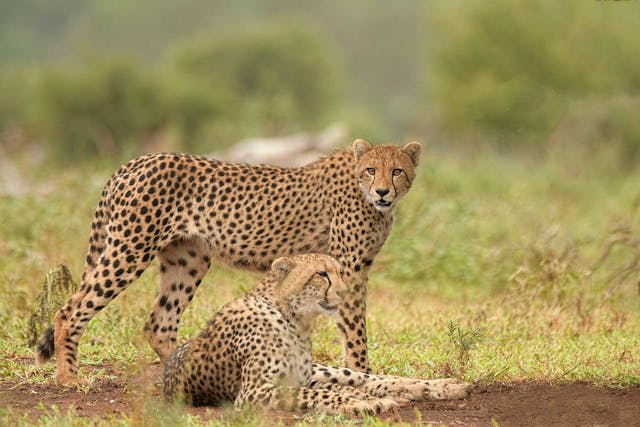
- They are timid and solitary. However, sometimes brothers of the same litter stay together in family coalitions.
- Females stay alone, but when they have cubs, they stay with them for about 18 months to teach them how to hunt before they leave to establish their territories.
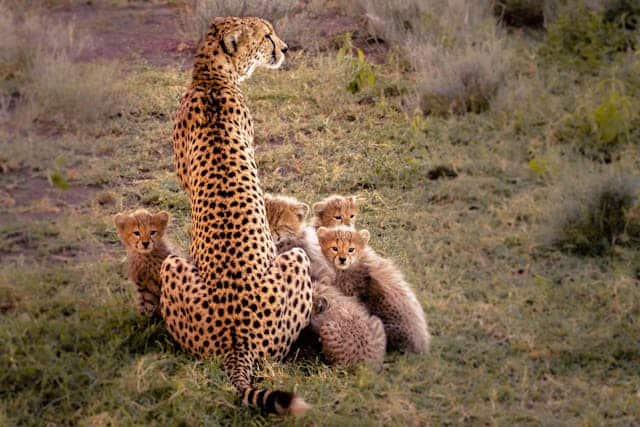
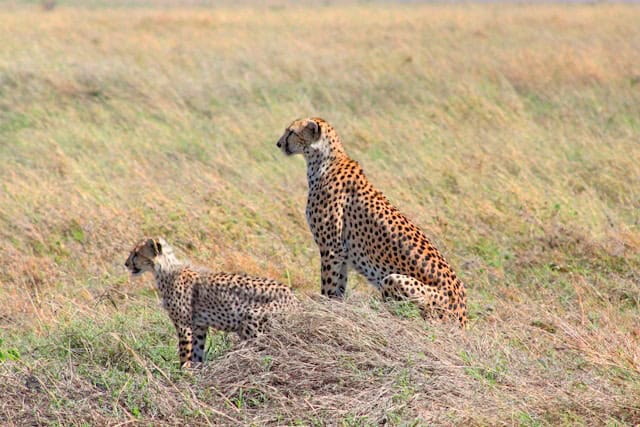
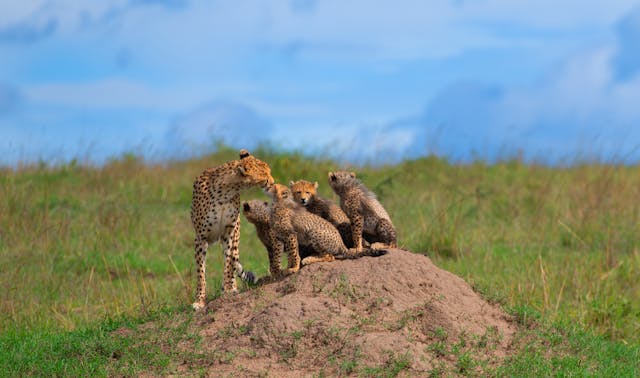
- Mothers hide their cubs to protect them from predators, but the mortality rate is still high.
- They can live up to 10 years in the wild and 14 years in captivity.
- Cheetahs are the most endangered big cats in Africa. They are vulnerable on the International Union for Conservation of Nature (IUCN) Red List due to poor reproduction rates, habitat loss, illegal trade, poaching, and human-wildlife conflict.
How to Celebrate International Cheetah Day
- Learn about cheetahs and the need for conservation, then share what you learn with your preschoolers, family, and friends.
- Organize a field trip to your local zoo with your preschoolers and their families so they can observe the cheetahs.
- Download the Cheetah Conservation Fund coloring sheets or a great new cheetah mask for your preschoolers.
- Show videos and documentaries about cheetahs to your preschoolers, family, and friends so they can learn about these beautiful creatures and become their advocates. You can find some good ones on YouTube.
- Use your social media to educate people about cheetahs, their risk of extinction, and conservation efforts. You can also download a shareable social media graphic for Instagram, Facebook, Pinterest, and Twitter. Visit the Tweet Sheet for easy-to-share cheetah tweets, and use the hashtags #SaveTheCheetah and #IntlCheetahDay to post your favorite photo or video of a cheetah.
- Organize a fundraiser for the Cheetah Conservation Fund to support their work.
- Find out if your local zoo has a cheetah exhibition and organize a field trip with your preschoolers, or ask their families to take the children if you can’t.
- Visit the Tanganyika Wildlife Park in Kansas, USA, to see cheetahs up close.
- Check out children’s books about cheetahs and read them with your kids.
Books About Cheetahs
These are some of my favorite books about cheetahs. If you don’t have any available, go to your local library or a used bookstore, or use my links to get them from Amazon quickly. Get as many as possible, read them to your preschoolers, and fill your library and centers.
- Cheetahs: Fascinating Animal Facts for Kids by Tyler Grady provides exciting information about the cheetah’s habitat, diet, breeding, lifespan, behavior, threats, and more, and it includes beautiful color photographs.
- Cheetahs by Tristan Walter is packed with facts about cheetahs, stunning photography, and engaging puzzles.
- Cheetahs by Laura Marsh is a National Geographic Reader with beautiful photographs and mind-boggling facts about this majestic and mysterious cat.
- Cheetah Cubs by Ginger L. Clarke shows cheetah cubs playing and purring like kittens, then follows them as they leap and grow.
- I Love Being a Cheetah by Merrie Mim is a picture book with rhymes and facts about cheetahs.
- Milo’s Safari Adventure by John Kimberly Peralta tells the story of Milo, a cheetah cub who ventures through the savannah and learns that each animal is exceptional in its own way, and that every creature possesses remarkable traits that help it thrive, forming incredible friendships.
- To Be a Cheetah by Joanne Hillhouse is a loving story that transports you back and forth between the savannas of Africa. Rich illustrations capture the natural world and the warmth of a mother-son relationship.
Pin It For Later
If you are in a rush and don’t have time to read the post and download the printable but want to save it, pin it to one of your Pinterest boards for later.
We must understand that we must change our actions to restore balance to Earth. Cheetahs and many other species in danger of extinction depend on what we do now and our ability to live, respect nature, and protect the vast diversity of our planet. Without a balanced planet, we will not be able to survive either.
Now is the time to act, teach our future generations to love nature, and encourage them to protect life in general, no matter how small or insignificant it may seem. Let’s vow to speak for those who can’t defend themselves.
I hope you enjoy these ideas and that they help you have fun with your preschoolers during the International Cheetah Day celebration. To get the FREE pack, click on the link below and enter your information for an immediate download.
Be happy, safe, and creative. I wish you well.
Love,

P.S. Please let me know if any of these ideas work for you, or if you think I should add or replace something. My goal is to help you in any way I can, and I wouldn’t say I like anything better than posting something you might find helpful.
Other Posts You Might Like: