Importance of Lesson Plans in Education
Affiliate Disclosure: “This post contains affiliate links, which means I receive a small commission, at no extra cost to you, if you make a purchase using those links.”
Using a lesson plan is vital in any classroom because it serves as a daily guide to what your students will learn, how you will implement those lessons, and how you will evaluate their learning, regardless of your children’s age. This means you should create and implement lesson plans for infants, all the way to post-graduate students.
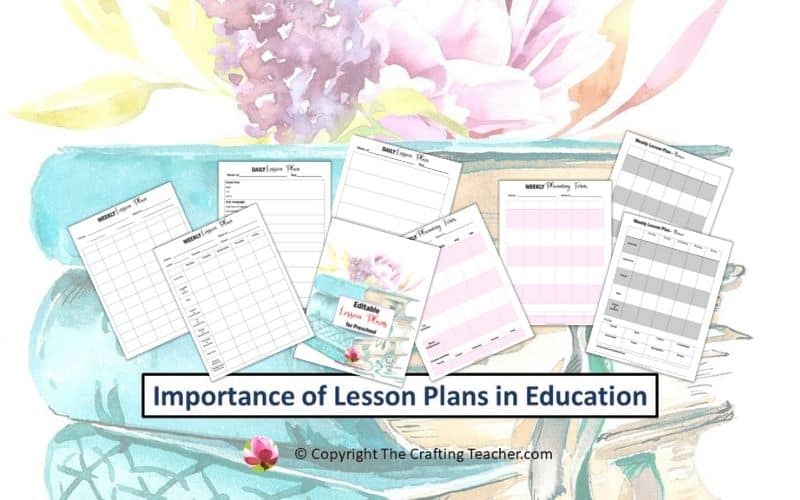
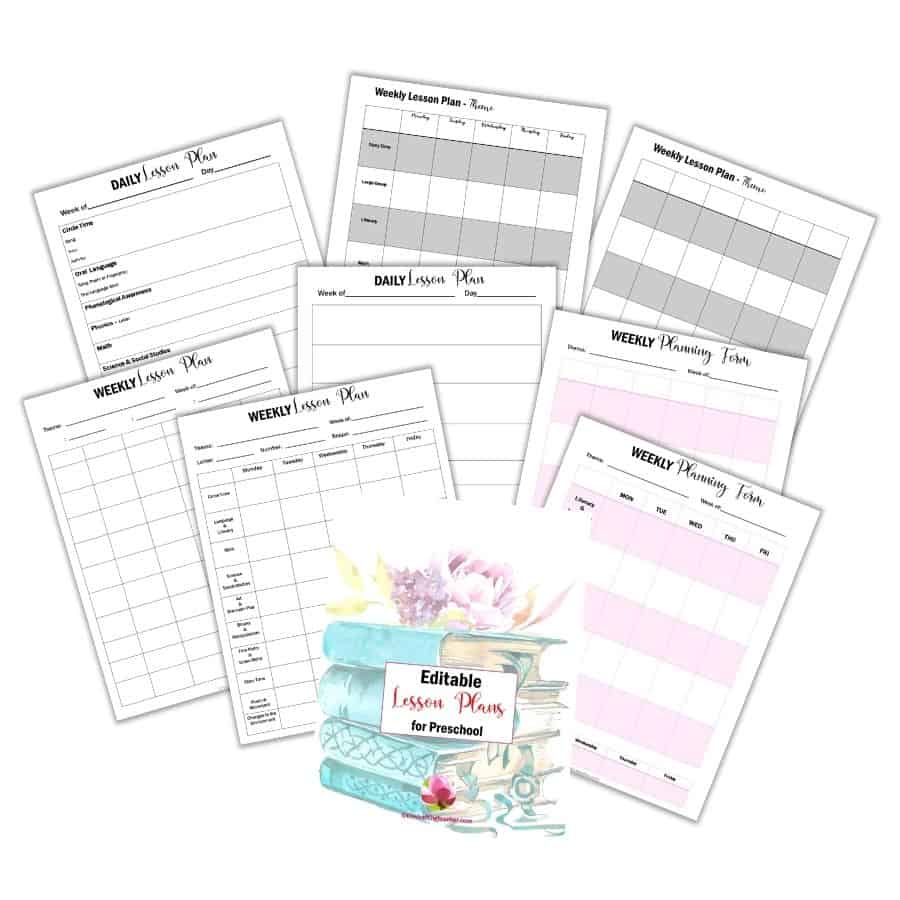
This post includes a FREE set of editable lesson plans, available at the end.
Importance of Lesson Planning
Lesson plans help teachers work effectively by giving them a detailed framework for what they will do in their classrooms, what meaningful activities they will address, and, overall, how to come to class fully prepared instead of wondering what to do next.
This means lesson plans create a well-organized guideline for following a curriculum effectively, supporting a learning environment where children can learn while also making the teacher’s job easier.
Components of a Lesson Plan
For a lesson plan to be effective, it must be properly planned, prepared, and executed to ensure the desired learning goals are reached. To do that, you must address certain components when preparing lesson plans. These components are:
1. Objectives
This component focuses on the children’s most essential learning needs. They should be SMART, meaning they’re specific, measurable, attainable, relevant, and time-based.
- Specific, naming the skill or subject area that is being addressed, and the targeted result.
- Measurable, in order for the teacher to be able to record her students’ progress and make sure that children learned the new concepts before teaching something else.
- Attainable, ensuring the desired goal is reachable for the children.
- Results-oriented, making clear what the children will do to reach the established goal.
- Time-based, making clear what the time frame is that the children will need to achieve the established goals, and how often their progress will be measured.
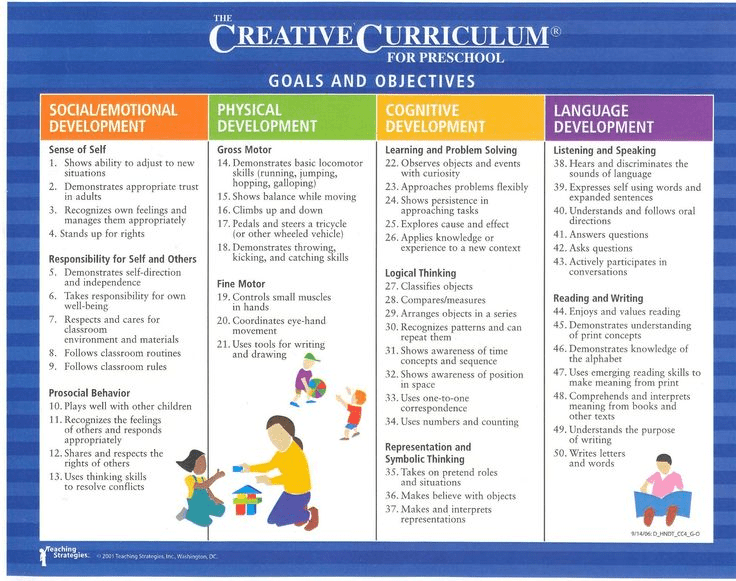
Objectives should also align with state or school standards that indicate what students need to learn in each grade level and subject. When a teacher considers those standards, they ensure their children reach the expected milestones. Below is a sample of the Creative Curriculum’s goals and objectives.
2. Activities
This is the second most important component. A teacher needs to plan the activities she’s going to offer her students because they give her a vehicle to deliver lessons and describe what will happen in the classroom during each one. These activities should align with the objectives and standards children need to meet. They must be meaningful and engaging, and deliverable within the assigned time frame.
It is important to add a variety of activities to each lesson plan. These will help address the needs of all children while giving them valuable experiences and ways to explore and apply their knowledge, ensuring a complete and effective learning process and helping them achieve the goals outlined in the objectives.
I will also recommend planning additional activities to allow flexibility to change the plan if a teacher notices the lesson is not effective. This means a teacher should be prepared if the class doesn’t care about what she’s trying to teach, some children have difficulty completing the required task, or some students finish early and need to be engaged to avoid conflicts or distractions.
Examples:
- Read “Who’s the Beast?”. Review parts of the book. Talk about what animals appear in the story.
- Discuss what a jungle is, and what kind of animals live in the jungle.
- Sound out the letter Jj and words that start with the same sound.
- Crafts: making a jungle mask.
- Use blocks and plastic jungle animals to create animal habitats.
- Dance to the music as your favorite jungle animal.
- Play jungle animal freeze tag.
3. Materials
A teacher needs to know in advance what resources she’ll need to deliver her lesson. If a teacher doesn’t have these materials handy, she can’t teach effectively.
Examples:
- Story books.
- Paper and tempera paint.
- Plastic jungle animals and blocks.
4. Required Time
Consider the time a teacher has to develop each activity, especially in preschool, where children’s attention spans are short. Otherwise, the children will get bored, and the activities will not reach the desired goals. However, it’s good practice to add a couple of extra minutes to this estimate in case students have questions or need additional help.
Examples:
- Learning activity #1 – 10 minutes.
- Learning activity #2 – 15 minutes.
- Learning activity #3 – 5 minutes.
5. Assessments
Lesson plans are not supposed to be “written in stone”. Teachers need to know if the objectives were reached, whether the activities were effective, and whether the children learned what they were supposed to. To do this, teachers need to put some type of assessment in place. Since you don’t use quizzes, group presentations, or essays in preschool, assessments are based on observations and anecdotal notes that record important information.
Examples:
- Children can build a dam using blocks, or they can’t.
- These children are using the new vocabulary; these others are not.
- Some children ask questions about the new theme, while others are not interested.
With this information, teachers can return to their “drawing board” and identify what to remove, change, or add to improve future lesson plans.
Conclusion
All teachers need to use strong written lesson plans to improve how they teach their little learners and ensure their lessons meet the children’s needs and program requirements.
Building lesson plans ahead of time means that teachers start the day prepared to deliver their lessons, instead of figuring things out as they go. Without lesson plans as a clear guideline, children will lose focus quickly, and the learning process won’t happen. That also gives them room to get in trouble, and the teacher will end up “pulling her hair” trying to figure out what to do next.
I won’t lie and say that creating daily lesson plans is easy. It’s not. It’s very demanding and requires hard work, time, and effort. However, once a teacher creates a good lesson plan, her job becomes much easier because she has a solid foundation to guide future lesson planning, with only small adjustments needed for upcoming classes.
Good luck, and don’t forget to download your FREE editable lesson plans set to thank you for visiting my post. Just click the button below and enter your information for an immediate download.
Be happy, safe, and creative. I wish you well.
Love,

P.S. Your feedback is really important to me because my goal is to always create things that you will find useful. Please let me know if you like the information or if you think I should change something.
Other Posts You Might Like: