World Animal Day – Supporting Wildlife Conservation
Affiliate Disclosure: “This post contains affiliate links, which means I receive a small commission, at no extra cost to you, if you make a purchase using those links.”
World Animal Day was created by a group of Italian ecologists on October 4, 1931, as a celebration that “unites the animal welfare movement, mobilizing it into a global force to make the world a better place for all animals. It’s celebrated in different ways in every country, irrespective of nationality, religion, faith, or political ideology”.
While it is true that the diversity of life on Planet Earth is so rich that we can find animal and plant species in the most inhospitable areas of this planet where people cannot live, it is also true that every single one of these species plays an important role in the stability of the different ecosystems and the survival of life as we know it.
Think about this…. A single rainforest tree can host 2,000 species of animals and plants. Just one!!! What will happen if we continue to destroy the rainforest? At the moment, more than 9,600 tree species are in danger of extinction, along with almost 8,000 species of reptile, mammal, bird, fish, and amphibian, and that is without counting the ones that are “of concern” and the ones that are already gone. Forever!!!
What is Causing This Destruction?
Unfortunately, the cause of this loss is us humans and our direct responsibility to:
- Habitat loss: caused by rapidly expanding cities and farmland, without thinking that we humans are completely dependent on nature for a stable climate, clean air and water, and food. In other words, our survival.
- Pollution: our expanding cities and industries are causing devastating effects on the atmosphere, land, rivers, and oceans, including holes in the planet’s Ozone layer that protect us from the sun’s direct effects, and they poison entire habitats, killing hundreds of plant and animal species.
- Illegal wildlife trade: the abuse of hunting certain species for small parts of their bodies, such as whales, rhinos, and elephants, is well known.
- Ocean plastic pollution: the amount of plastic that goes into our oceans is overwhelming, estimated at eight million tons a year! This causes hundreds of species to die because they eat plastic, get tangled in it, or are covered by it.
Why Does It Matter?
It matters because when a species goes extinct, it is impossible to bring it back, and that loss, which looks insignificant, is a powerful ingredient that, when united with other losses, will cause an imbalance, causing the collapse of the different ecosystems that sustain the biodiversity of Planet Earth and the services they provide, and that includes us, humans.
If we want to be a little selfish, and we want to think about the many reasons why we need to protect biodiversity, some of these reasons are our need for:
- clean water.
- Breathable air.
- Food.
- Climate regulation
- Pharmaceutical ingredients
- Construction lands
- Recreational spaces
10 Most Endangered Animals in 2021
The International Union for Conservation of Nature (IUCN) listed 41,415 species, and 16,306 animals and plants are currently endangered and threatened with extinction.
A species is classified as endangered because its population has declined by 50 to 70 percent, and fewer than 250 mature individuals remain.
Now, think about how it is possible that just 250 mature individuals reproduced fast enough to avoid their extinction. It is practically impossible. That is why it is so important that every single one of us does something about it. As I mentioned before, thousands of species are endangered, but these are the 10 most critically endangered, and you can find more information about them HERE.
#1 Javan Rhinoceros
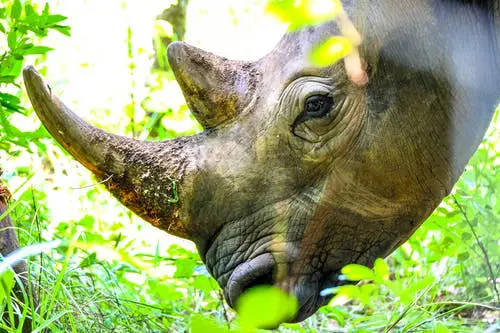
This is one of the most threatened mammal species on our planet. It is currently estimated that only 67 Javan rhinos remain in the world, and what’s worse is that all three subspecies of Rhinoceros- black, Javan, and Sumatran- are all endangered. Another subspecies of the Javan rhino was already declared extinct in Vietnam in 2011.
#2 Vaquita Dolphin
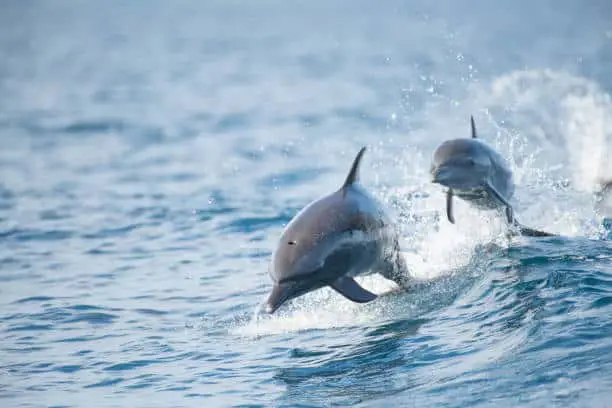
The Vaquita, with only 4-5 feet long and reaching only 100 pounds, is the smallest member of the dolphin, whale, and porpoise family. It lives only in a very small area in the extreme northern part of the Gulf of California, and it’s critically endangered mainly because of entanglement in fishing nets.
#3 Mountain Gorilla
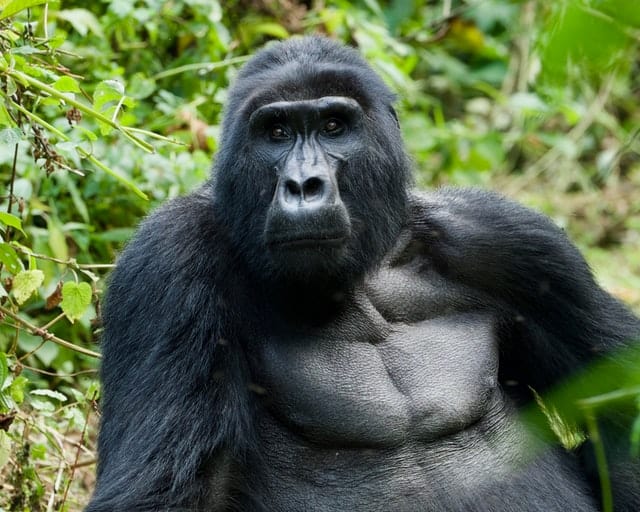
Mountain gorillas were considered critically endangered by the International Union for Conservation of Nature (IUCN) because they were seriously hunted, suffered habitat loss, and were affected by diseases. Since they are protected, their numbers have increased slightly, and they are now considered endangered.
#4 Tigers
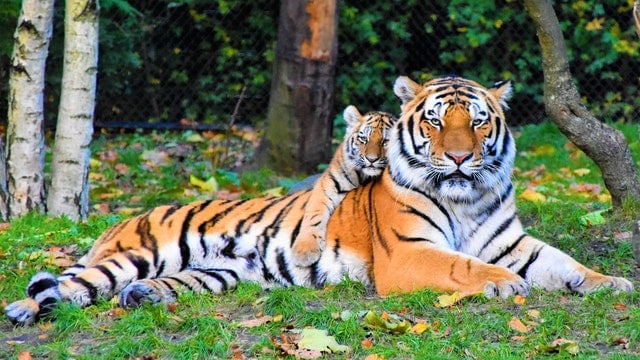
It is estimated that only 3,500 tigers remain in the wild, including all five subspecies: Bengal, Indochinese, Sumatran, Siberian, and Malayan. The International Union for Conservation of Nature (IUCN) lists them as globally endangered, but the Malayan subspecies is critically endangered.
#5 Asian Elephants
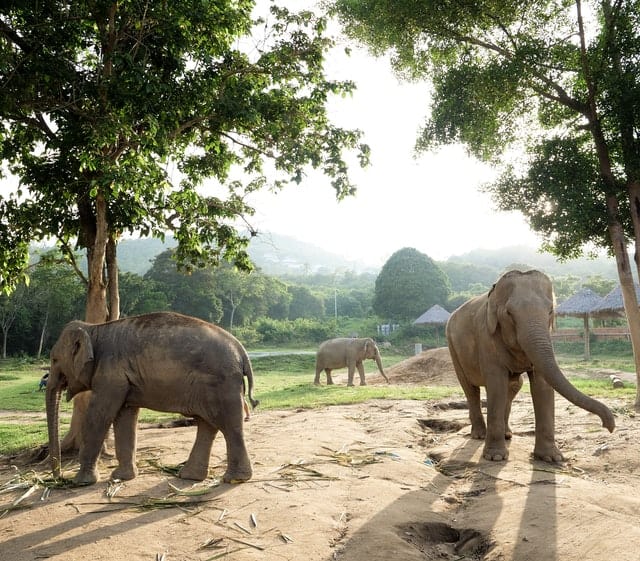
The Asian elephant has been seriously hunted for its parts and products, causing its population to decline by 50% in the past 75 years. Only an estimated 20,000 to 40,000 Asian elephants remain in the wild. That is why the International Union for Conservation of Nature (IUCN) classified this species as endangered.
#6 Orangutans
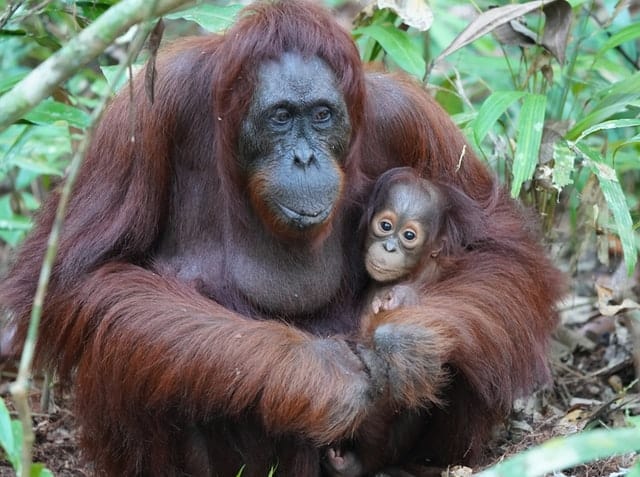
There are two species of orangutans, the Bornean and the Sumatran, and both populations have declined drastically and are threatened with extinction, mainly because their tropical rainforests are being destroyed for oil palm plantations. Only about 104,700 Bornean orangutans remain in the wild, and they are listed as endangered. The Sumatran orangutan, however, is considered critically endangered because only about 7,500 remain in the wild.
#7 Leatherback Sea Turtles
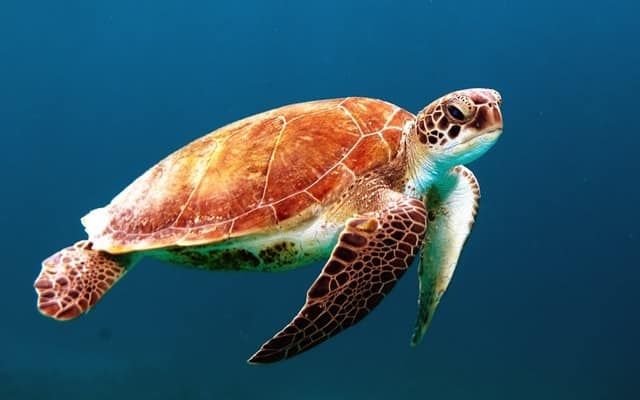
Leatherback turtles are the largest sea turtle species, and their name comes from their shell, which is more like leather than the hard shells of other turtles. They also have the largest migration range, traveling through the Atlantic, Pacific, and Indian Oceans. This species has declined tremendously, mainly due to extensive egg collection and entanglement in fishing gear, which has put it on the list of endangered species.
#8 Snow Leopards
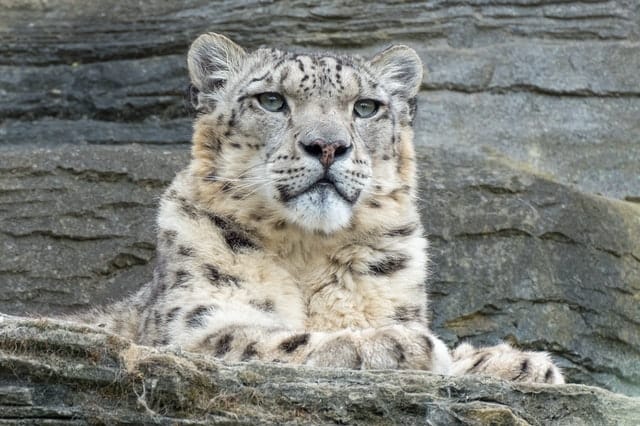
This elusive cat is considered vulnerable by the International Union for Conservation of Nature (IUCN) because scientists think there are only about 4,080-6,590 snow leopards in the wild. They live in the mountainous regions of central and southern Asia.
#9 Irrawaddy Dolphins
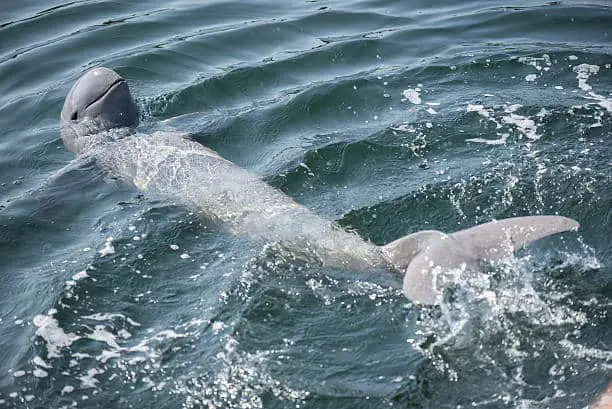
The Irrawaddy dolphin is a special species because it can move between saltwater and freshwater. Only 92 Irrawaddy dolphins are left in the Mekong River, which could mean a devastating decline in the river’s ecosystem and the extinction of this species. of this species.
#10 Atlantic Bluefin Tuna
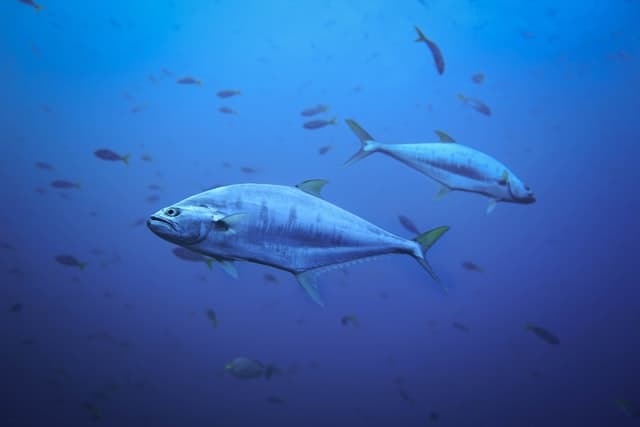
The critically endangered population of the Bluefin tuna, including the three subspecies, Atlantic bluefin tuna, Pacific bluefin tuna, and Southern bluefin tuna, has declined severely because of overfishing and illegal fishing, due to the high demand for this fish in sushi markets.
What Can We Do About It?
Many people around the world work day and night to protect species at high risk of extinction, but their efforts alone are not enough.
As parents and teachers, we are responsible for raising awareness in our children, encouraging them to become advocates and defenders of wildlife, and creating the base for our future generations’ growth and enjoyment of their company.
We, humans, have the power to make a difference, and we can choose to be destroyers or protectors. The only way we can save this planet is to work together to turn around the future of species fighting for survival and avoid their loss.
Celebrating World Animal Day
This is a special day to pay tribute to all the animals that share this planet with us, and I think it is the perfect opportunity to educate and start raising awareness about the animal issues I mentioned above.
Some ways that you can celebrate this special day with your preschoolers are:
- Start a cleaning campaign by going on a field trip to a park or beach for a trash-collection day.
- Educate yourself on how to help so you can share the information with your children.
- Do fundraising for a nonprofit organization of your choosing.
- Create a recycling station in your classroom and home.
Another way you can help is by making changes in your own life:
- Volunteer your time at an animal sanctuary or a local shelter.
- Educate yourself about where your food and the materials used in your clothes come from and avoid products that hurt animals.
- Use water and electricity wisely.
- Avoid plastic as much as you can.
- Recycle.
- Cut off the elastics on your used masks before you throw them away.
- Use regional products whenever possible.
Pin It for Later
If you are in a rush and don’t have time to read the post and download the printable but want to save it for later, pin it to one of your Pinterest boards so you can have it available when you need it.
Use this day as the start of your journey in this fight to raise awareness about this issue, if you haven’t started yet. Remind your children every day of the importance of protecting our environment and everything in it! This isn’t a matter of mentioning the problem and then forgetting it. The only way we can make a difference is by instilling this knowledge in future generations so they become wildlife defenders and advocates for life.
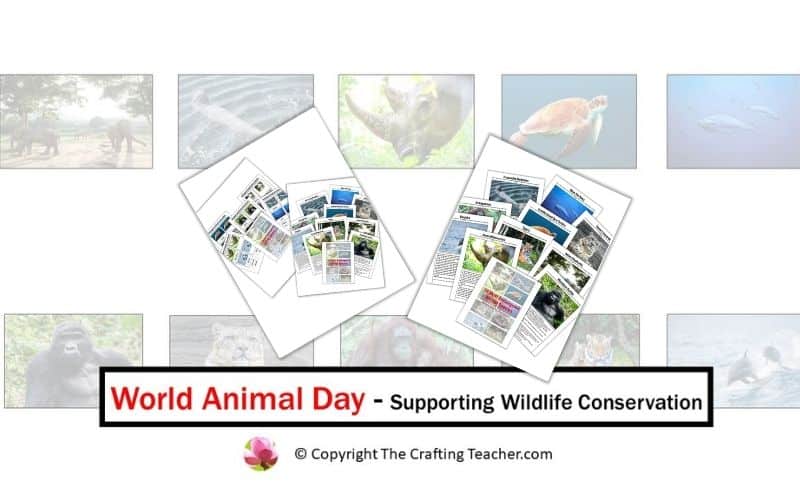
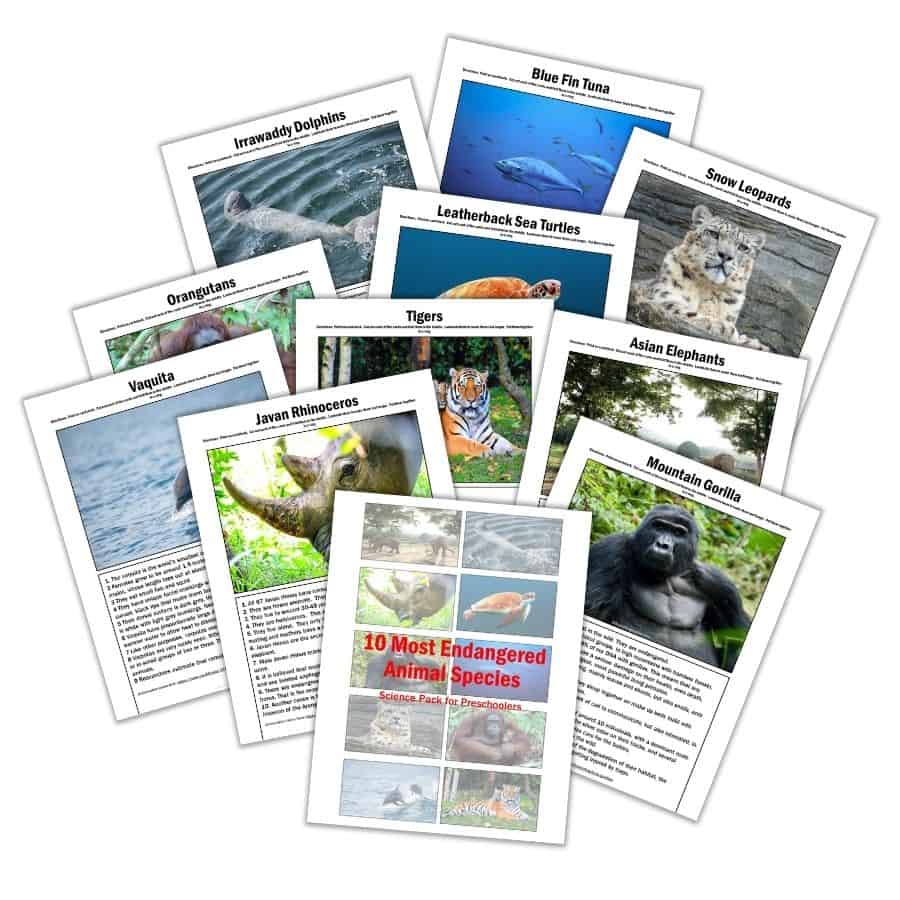
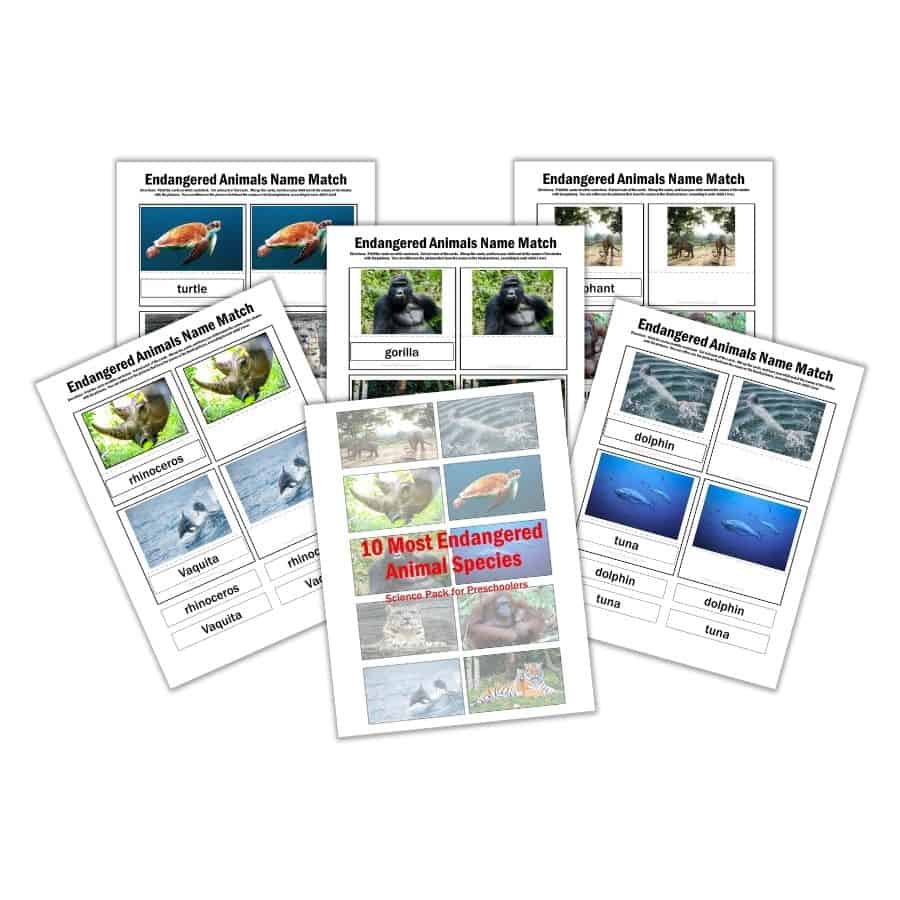
Since it is impossible to create printables for every endangered species, I chose the 10 most endangered species in 2021 and created two FREE printables to help you introduce them to your preschoolers and start raising awareness of the danger. You can get them by clicking on the link below.
Be happy, safe, and creative. I wish you well.
Love,

P.S. Please let me know if you like any of these ideas, if they worked for you, or if you think I need to add or replace something. My goal is to help you in any way I can, and I don’t like anything better than posting something you might find helpful. Also, if you have different ideas and want to share them, I would love to post them as well.
Other Posts You Might Like: