Beach Counting for Preschoolers
Affiliate Disclosure: “This post contains affiliate links, which means I receive a small commission, at no extra cost to you, if you make a purchase using those links.”
This FREE, hands-on Beach Counting activity pack will help preschoolers truly understand numbers 0 to 10 and how to use them, building their mathematical thinking.
Counting is a fundamental skill preschoolers need to learn to recognize numbers, understand their value and relationships, and build the foundation for more complex math concepts like addition, subtraction, multiplication, division, and problem-solving.
Counting is also an essential life skill for understanding time, money, and measurement.
However, preschoolers can find it challenging to recognize numbers, understand the correct sequence, or connect numerical symbols to real-life objects or quantities. That is why it is so important to offer preschoolers many different opportunities to count, in many different ways, such as this one.
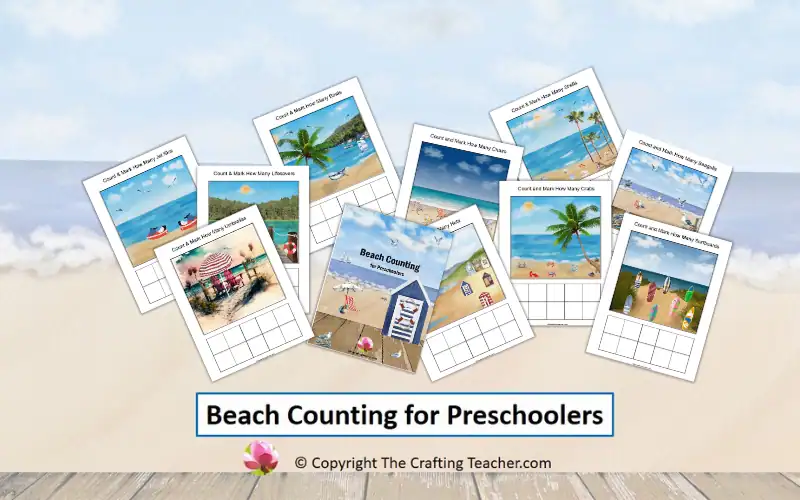
This Beach Counting set includes ten pages of counting activities. Each page includes a picture with specific objects to count, and a 10-frame grid for children to use to mark the number of objects as they count. You can find it at the end of this post.
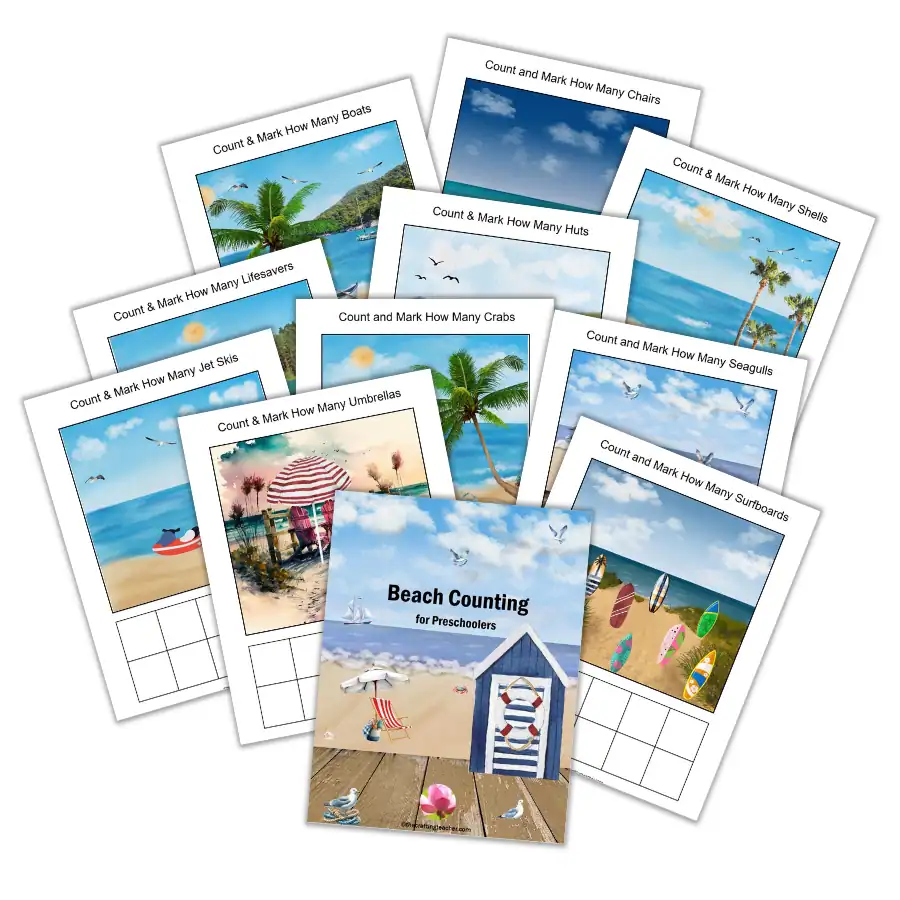
This Beach Counting set includes ten pages of counting activities. Each page includes a picture with specific objects to count, and a 10-frame grid for children to use to mark the number of objects as they count. You can find it at the end of this post.
Beach Counting Activity Pack
According to a new study on the best way preschoolers learn to count, counting physical objects or pictures is equally effective. However, counting pictures helps children better understand cardinality.
Cardinality is an important mathematical skill because it helps children understand that when they count, the last number they say represents the total number of items they counted.
This Beach Counting activity helps preschoolers build early math skills and strengthen cognitive development. These skills include:
Core Math Benefits
Core math defines what students should know and be able to do at each grade level in Math and Language Arts. These benefits include:
- One-to-One Correspondence: Preschoolers learn to point to one object while saying one number.
- Cardinality: They realize that the final number they counted represents the total amount of objects in the picture.
- Visual Subitizing: Children learn to recognize small quantities instantly just by looking at the group of objects, without counting.
- Number Word Sequence: These activities reinforce the correct order of numbers through repetition.
- Problem Solving: Encourage children to think logically and critically and understand how many objects each picture has.
Cognitive Development
Cognitive development involves how children perceive, think, and understand their world by acquiring, organizing, and refining their mental processes, including memory, attention, spatial awareness, and language. Among the benefits these activities provide, we can mention:
- Visual Discrimination: Children must look at each image and count the requested objects, separating them from background details.
- Memory: They keep track of which items they already counted and which ones are next.
- Focus and Attention: They need to concentrate and pay attention to the image to count correctly.
Motor Development
Motor development is the process of acquiring, refining, and controlling physical movements and coordination. Some of the benefits these activities provide are:
- Fine Motor Skills: Pointing to specific images and placing a counter on the grid.
- Hand-eye Coordination: Helps children improve their ability to use their eyes and hands at the same time to process visual information and guide physical movements.
Language and Literacy Development
Language development is the process by which children learn to listen, understand, and use language to communicate.
Literacy development is the process of acquiring, expanding, and refining language and communication skills.
Some of the skills developed with these activities are:
- Number names: Learning the number names like one, two, etc., expands children’s vocabulary.
- Spatial Vocabulary: Counting teaches positional words like above, under, more, less, next to, behind, before, and after.
- Descriptive Language: Children learn to describe the objects they see, building their vocabulary.
- Phonological Awareness: Teach children to recognize the distinct sounds they hear in number words.
- Print Knowledge: Connect spoken numbers to the written symbols that represent them, helping children understand that symbols have specific meanings.
- Storytelling: Counting follows the same narrative structure as telling a story.
How to Get the Activity Ready
To get these activities ready, you only need a handful of materials, which are:
- FREE Beach Counting printable (found below).
- Printer.
- White cardstock.
- Laminator and laminating sheets.
- Bingo chips, mini beach toys, or mini erasers.
Print the pages on white cardstock, and laminate them for durability. Have the children count the objects in each picture, then place a small manipulative on the grip to represent the quantity.
Beach-related and Counting Books
Fill your library and the different centers with books about counting or the beach. If you don’t have many available, you can find plenty at your local library or used bookstore. Of course, you can order them through my Amazon affiliate links by clicking the titles below.
- Clam-I-Am! All About the Beach by Tish Rabe. Combines The Cat in the Hat’s series characters, engaging rhymes, and illustrations to introduce children to non-fiction topics from the real world.
- Curious George Goes to the Beach by H. S. and Margret Rey. This storybook takes George on a sunny seaside adventure. It also features a fill-in-the-blank word activity and page-turn signals to guide early readers.
- Biscuit’s First Beach Day by Alyssa Satin Capuccini. This storybook tells about Biscuit’s first trip to the beach, and how excited he is about making sand castles, collecting seashells, and playing in the ocean.
- The Adventures of Rufus and Reggie: A Day at the Beach by Mollie Murtaugh. This heartwarming children’s picture book is about friendship, courage, and discovering that the best adventures are often shared with someone very different from you.
- Summer Is… by Barbara Pinke. This book captures what summer is about using short rhyming couplets paired with bright, full-spread illustrations.
- Ten Little Starfish: A Counting Book by Kim Ann. This book offers counting and sequencing practice and talks about ocean habitats and marine ecosystems, using language, rhythm, pattern recognition, and mindfulness and calm storytelling.
- 123 Count with Me by Tiger Tales. This unique, innovative trace-and-flip book offers an engaging new way for children to discover numbers 1 through 20 and learn to count, where children s can trace each number by following the tracks with a finger to become familiar with its shape.
- Count with Little Fish by Lucy Cousins. This author uses a fantastical celebration of color and patterns to make the counting fun and easy.
- Ten Little Sea Turtles by Kim Ann. With flowing rhyme and engaging art, this counting adventure celebrates courage, exploration, and the beauty of marine life.
- Ten Black Dots by Donald Crews. This deceptively simple, fun picture book helps children build visual learning skills, explore creativity, and practice counting numbers.
Pin It For Later
If you are in a rush and don’t have time to read the post and download the printable, pin this to one of your boards on Pinterest for later.
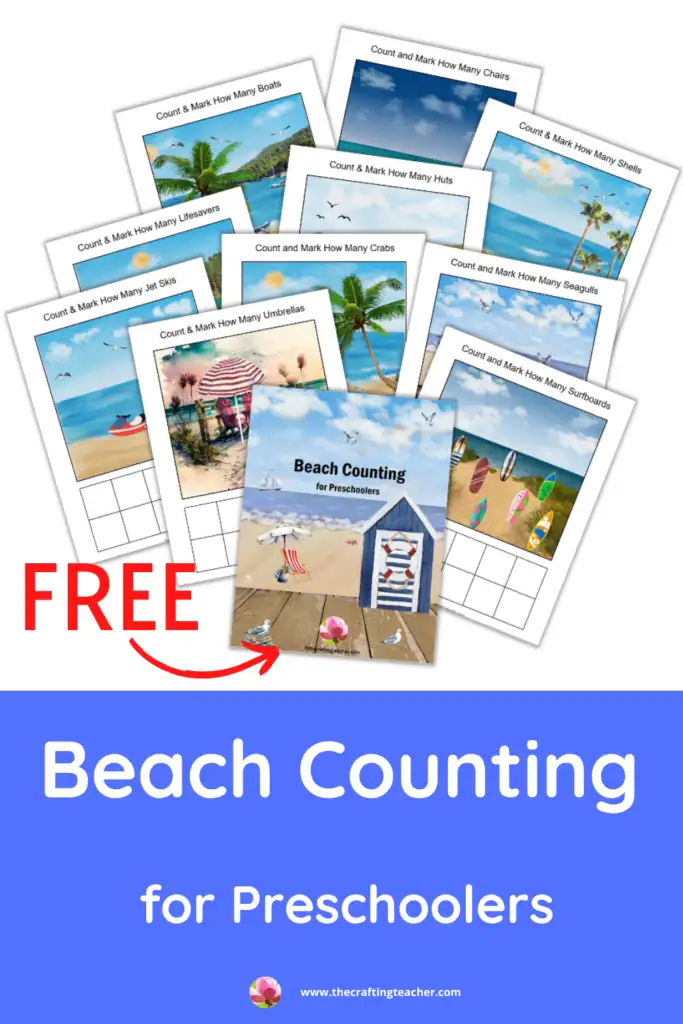
Don’t forget to grab your FREE Beach Counting activity below. Just type your email to download immediately. It will subscribe you to my weekly newsletter, where you will receive freebies every time.
I hope you and your preschoolers enjoy these activities and have tons of fun learning.
Be happy, safe, and creative. I wish you well.
Love,

P.S. Please let me know if this activity works for you. My goal is to help you in any way I can, and I don’t like anything better than posting something you might find useful.
Other Posts You Might Like: