Celebrating World Hirola Day with Preschoolers
World Hirola Day is held every year on August 12 to draw attention to the Hirola, one of the most endangered antelopes on the planet and on the brink of extinction, and to support the conservation efforts underway to save it.
The greatest importance of protecting the hirola is that this species is the sole surviving member of its genus, Beatragus, and, according to the International Union for Conservation of Nature (IUCN), “losing the hirola would represent the first extinction of a mammalian genus on mainland Africa in modern human history.”
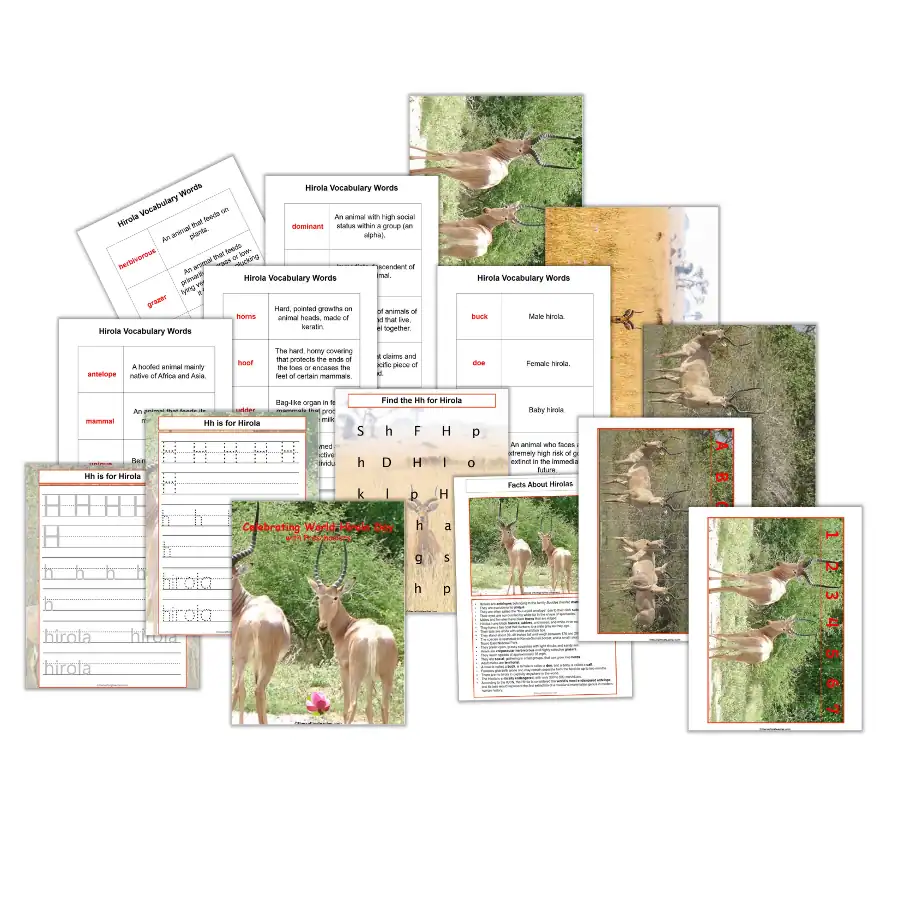
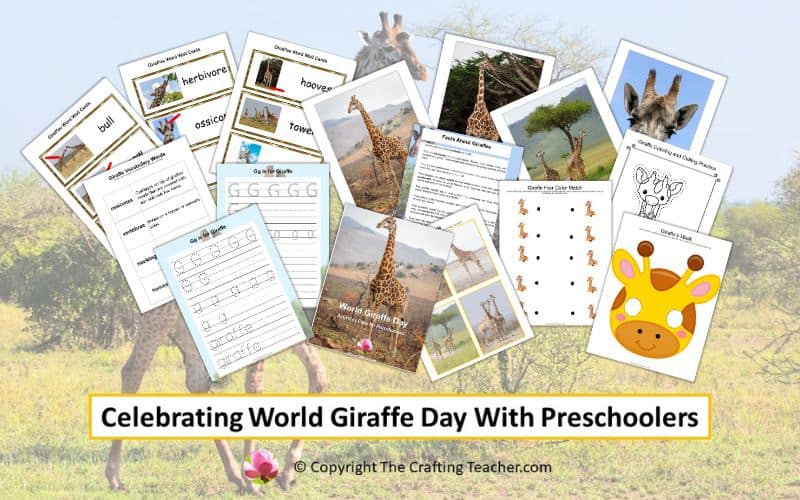
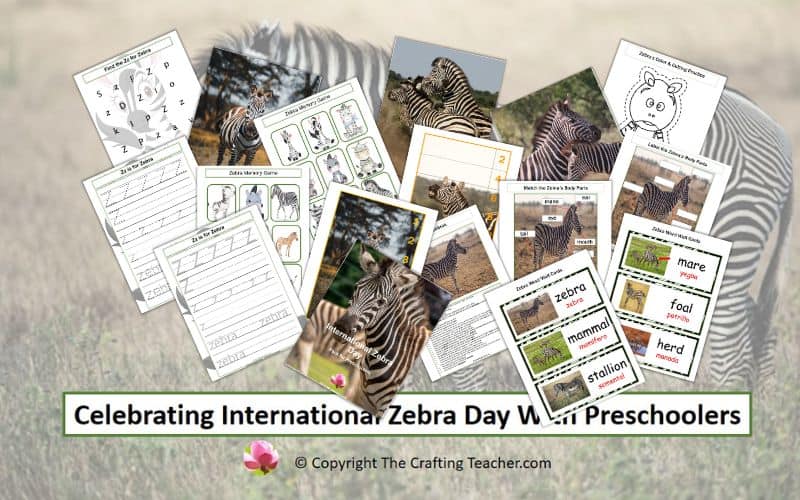
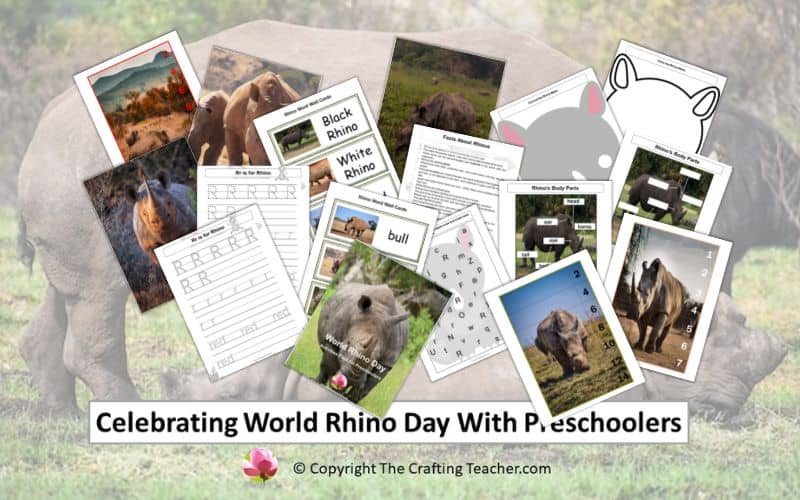
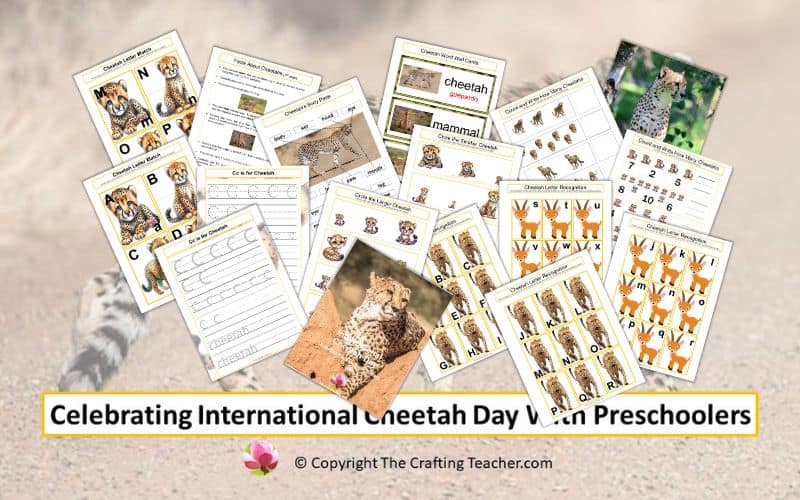
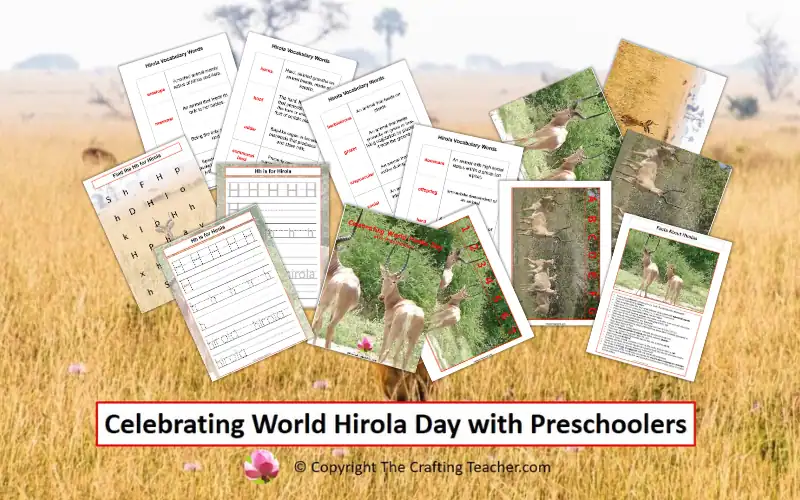
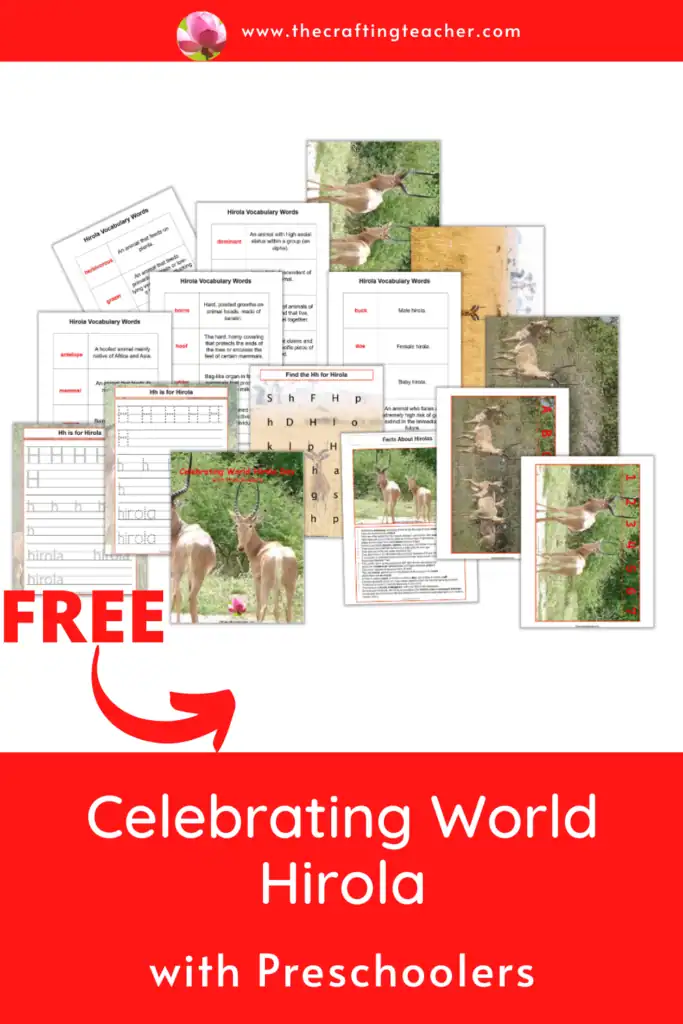
I’ve created a FREE World Hirola Day pack to help you celebrate World Hirola Day with your preschoolers. It includes 14 pages of Literacy, Math, and Math activities for your preschoolers. You can download it at the end of this post.
History of World Hirola Day
The Hirola Conservation Program launched World Hirola Day on 12 August 2015, the same day as World Elephant Day, another endangered species, to leverage the attention already given to elephants and raise awareness of both species.
Since then, this day has been used to educate people about the situation, raise funds, and involve local communities and international conservationists worldwide to strengthen efforts and help secure the hirola’s survival.
Organizations Protecting the Hirola
There are important organizations involved in the different initiatives in protecting the hirola, like the ones below:
- Hirola Conservation Program (HCP): This is the most important organization protecting the hirola. It is an indigenous non-profit organization founded by Kenyan ecologist Dr. Abdullahi Ali. They protect and monitor the remaining herds by operating anti-poaching groups, running community outreach programs, and restoring their habitat by planting native grasses.
- Northern Rangelands Trust (NRT): This membership organization unites conservationist groups across northern and eastern Kenya to manage protected animal sanctuaries and employ local communities to enforce security and anti-poaching measures.
- Tsavo Trust: They work with the Kenya Wildlife Service (KWS) to maintain and monitor the hirola population relocated within Tsavo East National Park, supporting the animals’ establishment and genetic diversity.
- Wildlife Conservation Network (WCN): This organization provides funding and administrative support to the Hirola Conservation Program (HCP), strengthening its community-based initiatives globally.
- San Diego Zoo Wildlife Alliance: This international conservation partner works with local Kenyan trusts to provide veterinary assistance by vaccinating livestock to help prevent disease transmission between domestic animals and wildlife. This alliance also works directly with Kenya’s conservationists, such as the Hirola Conservation Program and the Northern Rangelands Trust, to prevent the extinction of the hirola and restore grasslands, and with the Ishaqbini Hirola Sanctuary in Kenya to protect a vital portion of the global hirola population.
- Rainforest Trust: Partners directly with Hirola Conservation Program to fund and establish wildlife reserves specifically for hirola recovery.
- Ishaqbini Hirola Conservancy: This organization, formed by Somali tribespeople together with the Northern Rangelands Trust, Kenya Wildlife Service, and other agencies, established a 25km2 patrolled sanctuary for 48 hirola to monitor, breed them, and then reintroduce them to the wild in eastern Kenya, in an effort to increase their numbers and avoid their extinction.
- Wildlife Disease Laboratories: They work with the Northern Rangelands Trust to monitor disease outbreaks that could affect the hirola population.
- Safe (Saving Animals from Extinction) Worldwide: This organization partners with local groups, such as the Hirola Conservation Program, to save the hirola by implementing habitat restoration, anti-poaching programs, and community education.
Facts About The Hirola
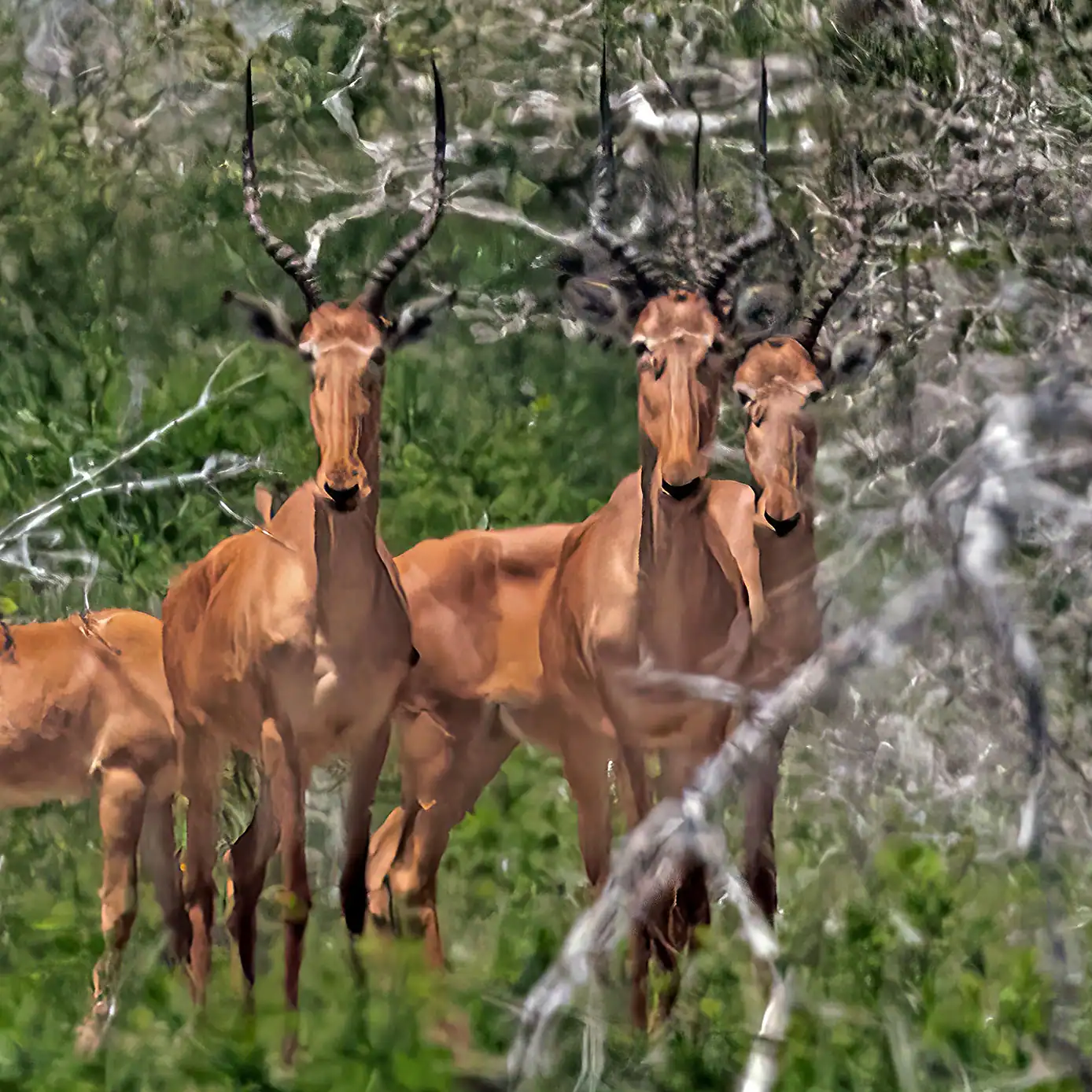
- Hirolas are antelopes in the family Bovidae (hoofed mammals), which includes buffalo, cattle, goats, and sheep, among others.
- This species is the only living member of its genus, Beatragus, making it evolutionarily unique.
- The name hirola comes from the Somali name ‘Arawla,’ which refers to their rufous-tawny coat color.
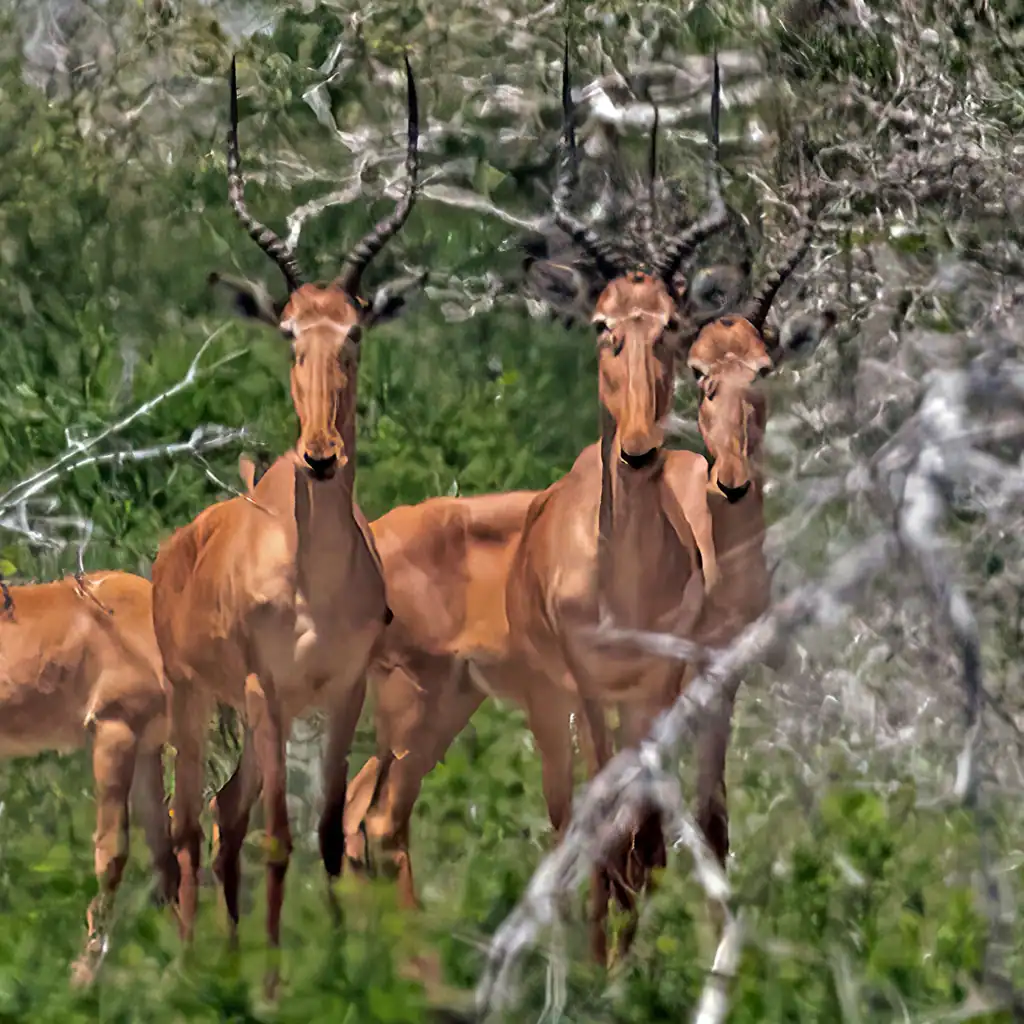
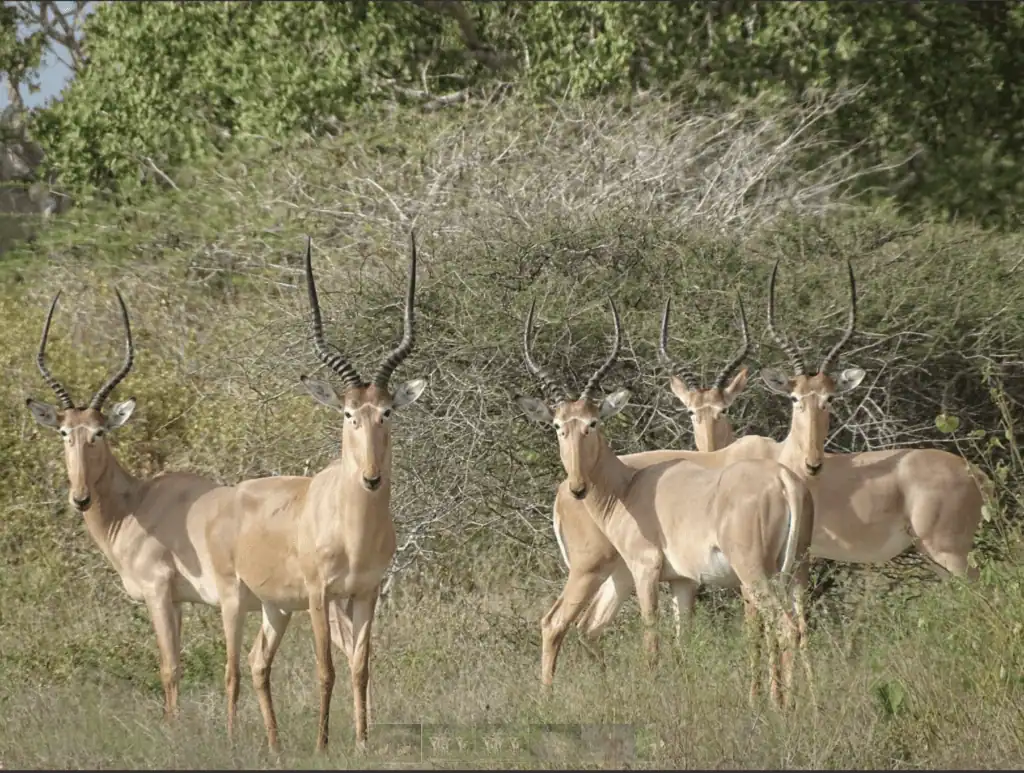
- They are often called the “four-eyed antelope” because of their dark suborbital glands, which they use to identify their territory.
- White fur around their eyes forms a spectacle-like frame, with an inverted white chevron running between them.
- Males and females have up to 27.5 inches long lyre-shaped black horns that are ridged along three-quarters of their length, and increase their ridges with age.
- Hirolas have black hooves, udders, and noses, and white inner ears with black tips.
- They have a tan coat that darkens to a slate grey as they age, with a slightly lighter belly.
- Their tails are white with white and black tips, which they keep erect when they are alert or running, making them highly visible to other members of the herd.
- The hirola is a medium-sized antelope that stands about 39–49 inches) tall at the shoulder and weighs between 176 and 265 lbs.
- Males and females look similar, though males are slightly larger, with thicker horns and darker coats.
- The species is restricted to communal lands along the southern part of the Kenya-Somali border, in eastern Africa. A small relocated population also exists in Tsavo East National Park.
- They prefer open, grassy savannas with light shrubs and sandy soil.
- Hirola are herbivorous and highly selective grazers. They like short, newly sprouted grasses with a high leaf-to-stem ratio. These grasses provide enough moisture for them to go long periods without drinking water.
- They reach speeds of approximately 35 mph.
- Their main predators are lions, leopards, spotted hyenas, cheetahs, and African wild dogs.
- Hirola are crepuscular animals and feed primarily around sunrise and just after nightfall.
- They are social, gathering in small groups of 15 to 40 individuals, each consisting of a dominant male, his females, and their offspring. Depending on the season, these groups can grow into herds of several hundred.
- Adult males are territorial. To mark their territories, they use secretions from the suborbital glands, stomp and scrape the dirt with their hooves, slash the foliage with their horns, and spread their excrement.
- A male is called a buck, a female is called a doe, and a baby is called a calf.
- Females give birth alone and may remain separate from the herd for up to two months. Newborn calves are born fully developed and can stand and run soon after birth. When calves are 1 year old, they separate from the main herd and form another herd with other juveniles.
- Hirola are commonly seen alongside oryx, Grant’s gazelles, Burchell’s zebras, and topi, but they avoid Coke’s hartebeests, buffalo, and elephants.
- No hirola are in captivity anywhere in the world, so conserving them in the wild is critical.
- The Hirola is critically endangered, with only 300 to 500 individuals remaining worldwide, due to drought, disease, poaching, hunting, predation, competition for food and water with domestic livestock, and habitat loss.
- It is the only surviving member of its ancient genus, and its potential extinction will mean the loss of an entire mammalian genus.
- According to the International Union for Conservation of Nature (IUCN), the Hirola is considered the world’s most endangered antelope, and its loss would represent the first extinction of a mainland mammalian genus in modern human history.
How to Celebrate World Hirola Day
There are many ways to support the hirola and spread the word about its plight:
- Learn and teach about the species – Read about the hirola’s biology, habitat, and the threats it faces so you can share accurate information with others.
- Donate to conservation work – Support the Hirola Conservation Program, Northern Rangelands Trust, or other organizations that fund habitat protection and community ranger teams.
- Spread awareness online – Share facts, photos, and links on social media to reach people who have never heard of the hirola.
- Support community-led conservation – Back projects that work with local pastoralist communities, whose involvement is essential to the hirola’s survival.
- Teach others – If you work in education, use the day to introduce students to endangered species and biodiversity.
- Champion habitat protection – Learn how the loss of grassland to tree encroachment has harmed the hirola and why restoring open rangeland helps.
- Connect it to World Elephant Day – Use the shared date to highlight how many African species face linked pressures from habitat loss and human activity.
- Spread the Word – Help raise awareness by sharing World Hirola Day with your friends, family, and followers. Use the hashtags #WorldHirolaDay and #WorldHirolaDay2026 on social media. The more people who know about the hirola, the bigger the impact.
Pin It For Later
If you are in a rush and don’t have time to read the post and download the printable, but want to save it for later, pin it to one of your Pinterest boards.
It is important that children better understand hirolas, and you, as teachers and parents of preschoolers, can encourage them to love, support, and protect these animals.
“You must be the change you want to see in the world” – Mahatma Gandhi
This World Hirola Day, make a vow to teach your children all of this so they can become protectors and advocates for these amazing creatures, so future generations can enjoy them, and we can all have balanced ecosystems where all species thrive.
I hope you enjoy these ideas and have fun celebrating World Hirola Day with your preschoolers. To get the FREE pack, just click the link below and enter your information to download immediately.
Love,

P.S. Please let me know if any of these ideas worked for you, or if you think I should add or replace something. My goal is to help you in any way I can, and I wouldn’t say I like anything more than posting something you might find helpful.
Other Posts You Might Like: