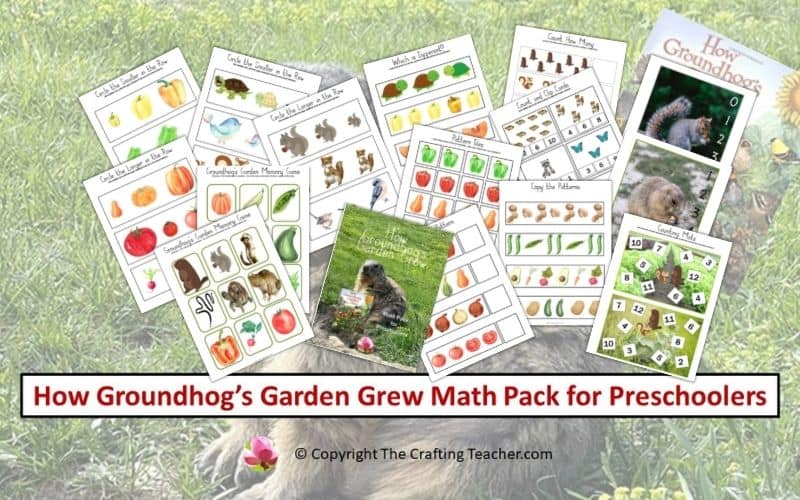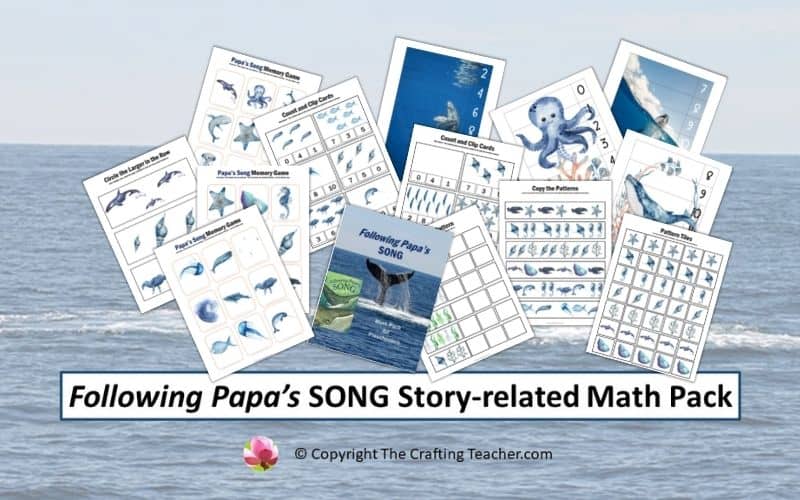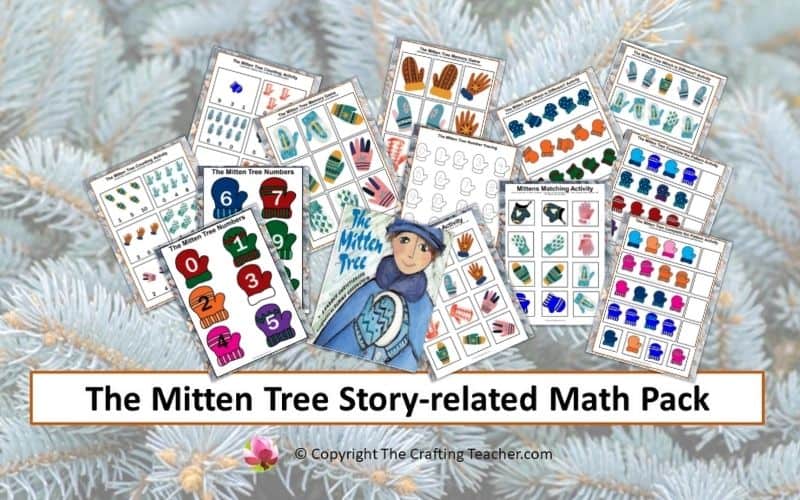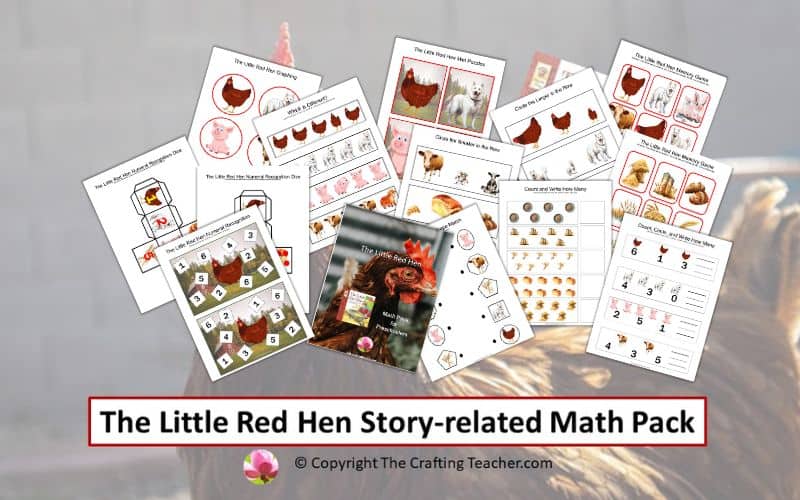
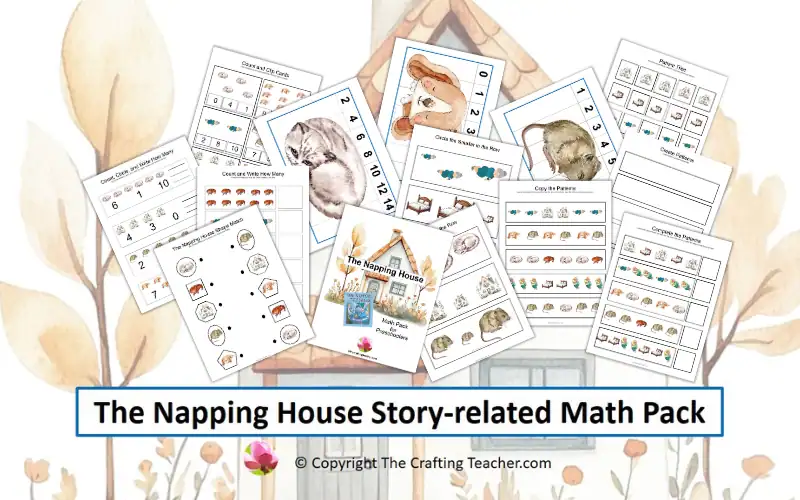
The Napping House Story-related Math Pack for Preschoolers
Affiliate Disclosure: “This post contains affiliate links, which means I receive a small commission, at no extra cost to you, if you make a purchase using those links.”
The Napping House by Audrey Wood is a classic children’s book designed to help children begin to understand patterns, using cumulative rhyme and illustrations.
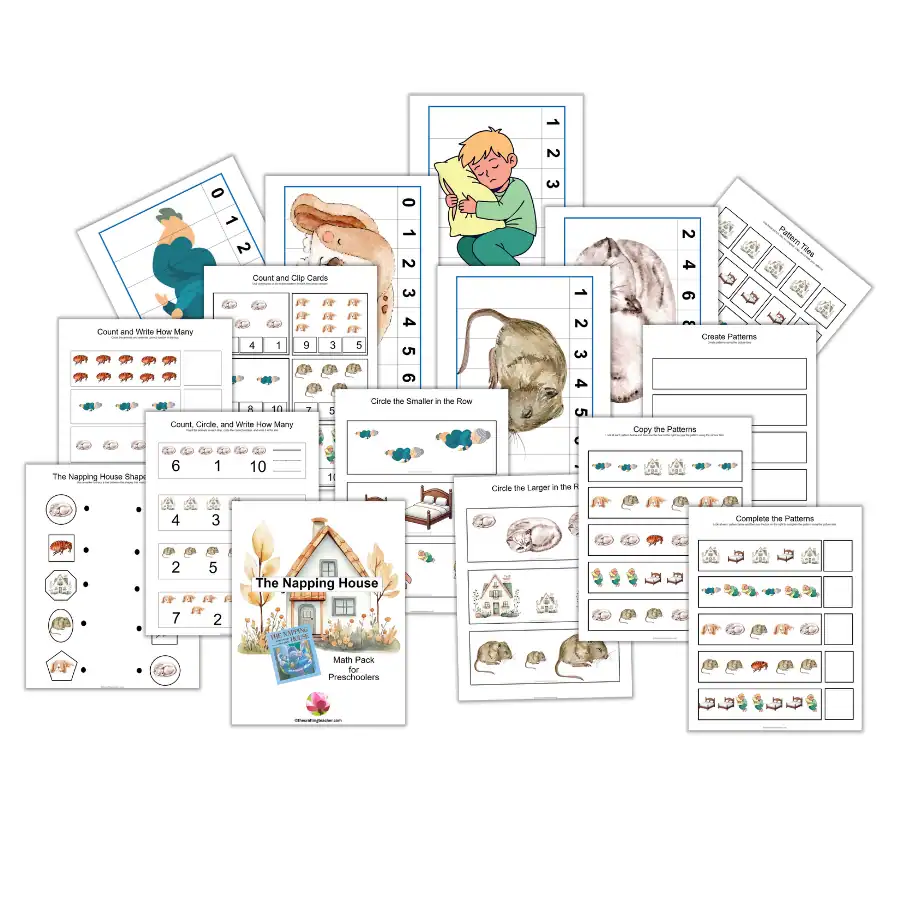
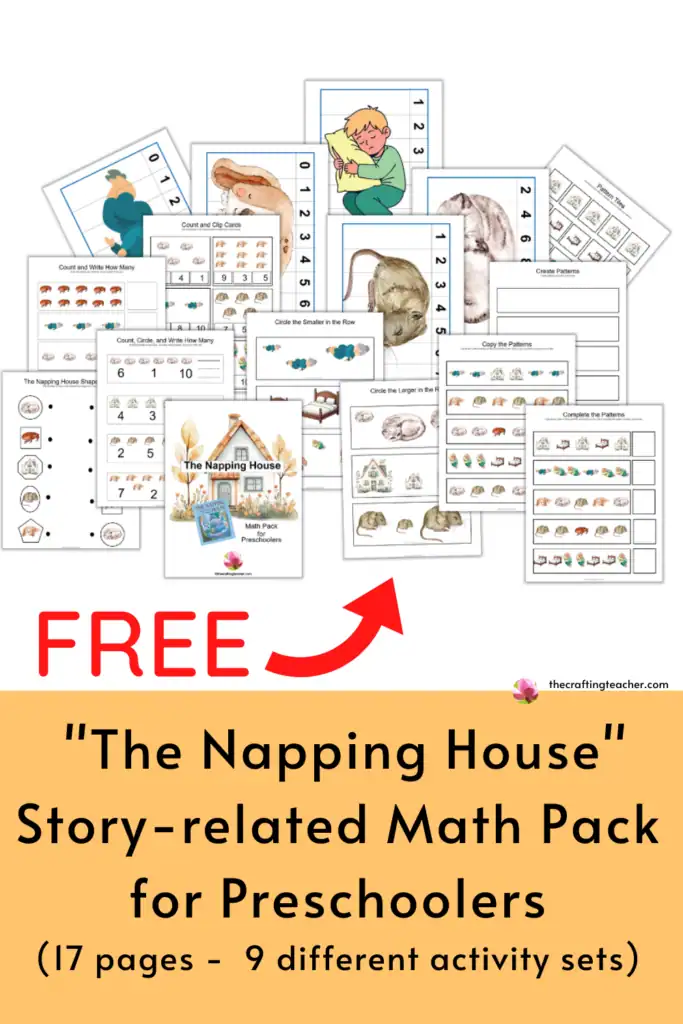
I’ve created a 17-page The Napping House Literacy Pack with nine different activity sets to accompany this book. This pack will help preschoolers develop their mathematical thinking and build the foundation for future mathematical operations. You can download it at the end of this post.
The Napping House Math Pack
There are many math activities you can do using this storybook. Below are some activities from this pack that you can use with your preschoolers in your classroom or at home for fun, educational math related to this story.
This pack will help preschoolers develop creative and critical thinking, problem-solving, communication, understanding of sizes and shapes, one-to-one correspondence, number recognition, counting, hand-eye coordination, fine motor skills, and addition skills.
If you want to reuse any activities, print them on white cardstock, laminate them, or place them in dry-erase pockets for the children to use with dry-erase markers.
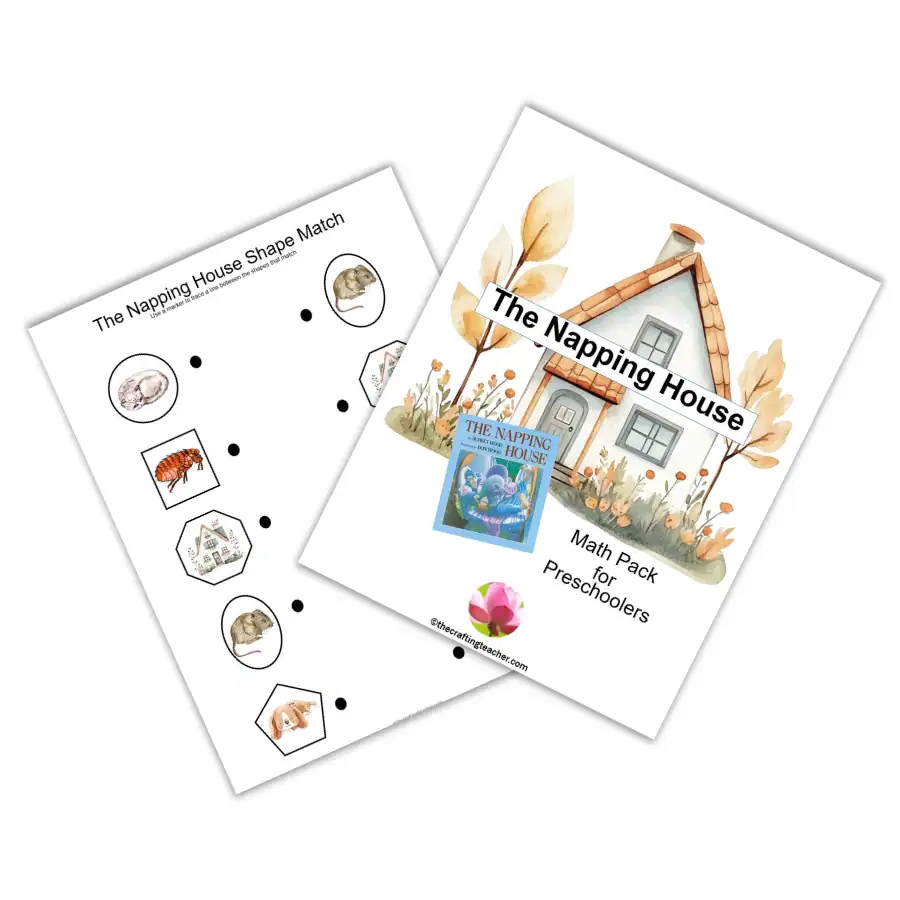
Shape Match
The Napping House pack includes one sheet featuring five different sets of shapes. Children observe the shapes and trace a line between matching ones using a pencil, crayon, or marker.
Counting
Counting is an essential skill preschoolers need to learn because it helps them understand the meaning of numbers and forms the basis for other number concepts. Give preschoolers plenty of opportunities for hands-on counting and number-related activities.
The Napping House pack includes three types of counting activities. These activities help preschoolers practice one-to-one correspondence, number recognition, counting, hand-eye coordination, fine motor skills, and adding.
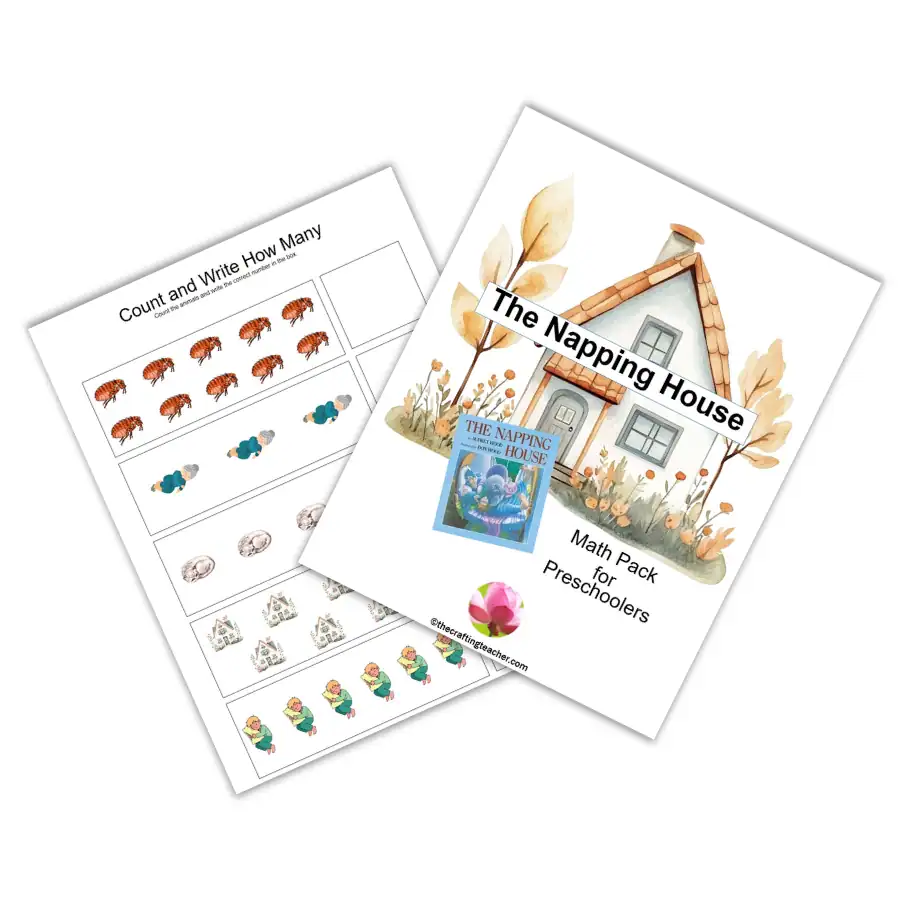
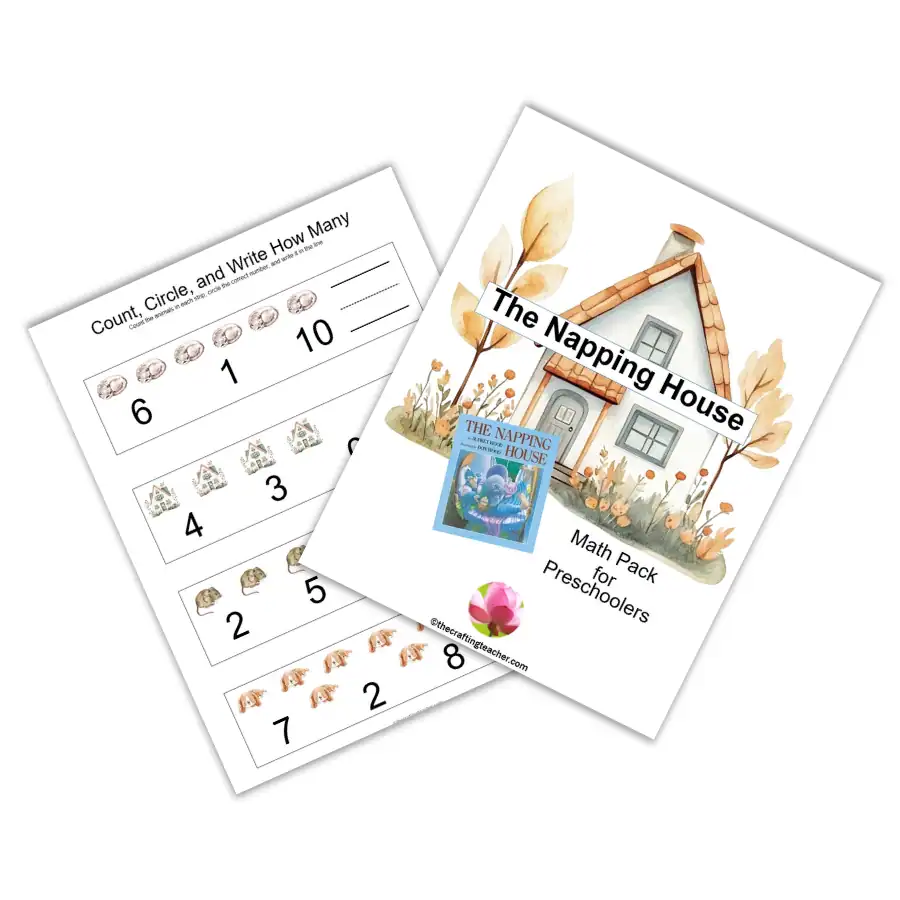
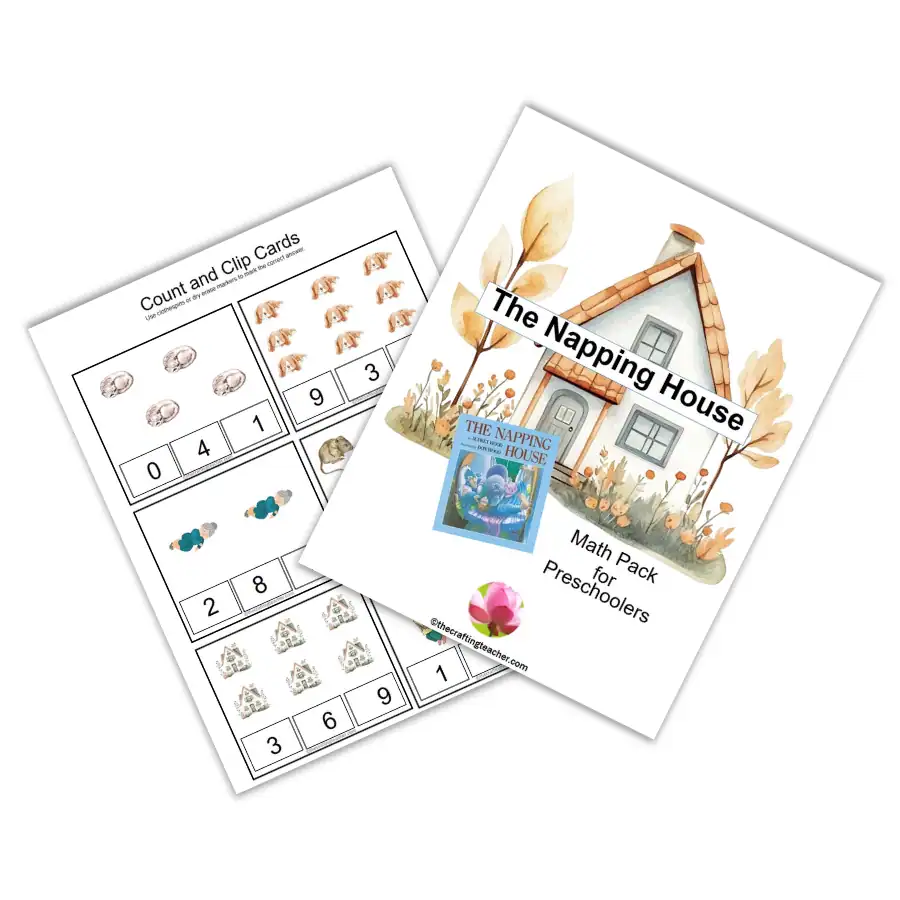
- In the first one, children count the objects, circle the correct number, and write that number in the box using a pencil, crayon, or marker.
- The second one is simpler. Children have to count and write the number in the box.
- In the last one, children count the objects in each box and use a clothespin to mark the correct number.
Circle the Larger or Smaller on the Row
Preschoolers must develop visual discrimination to identify and recognize similarities and differences in size, shape, letters, numbers, colors, and position. This essential skill will enable them to perform the necessary activities in life.
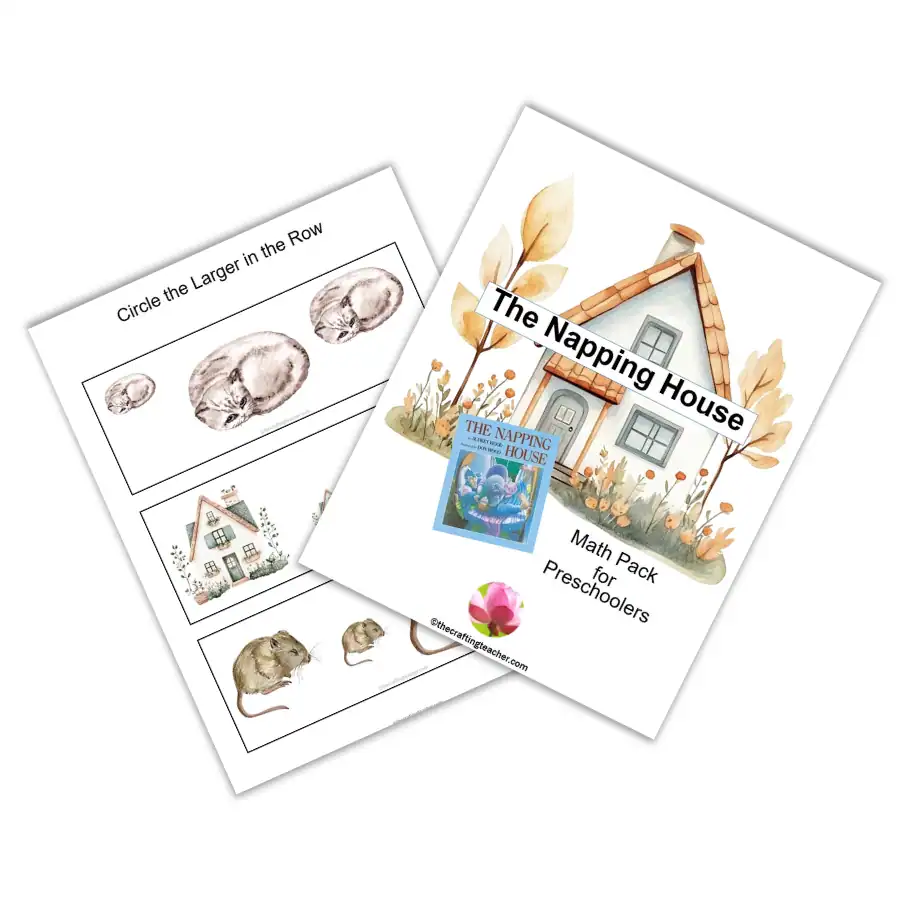
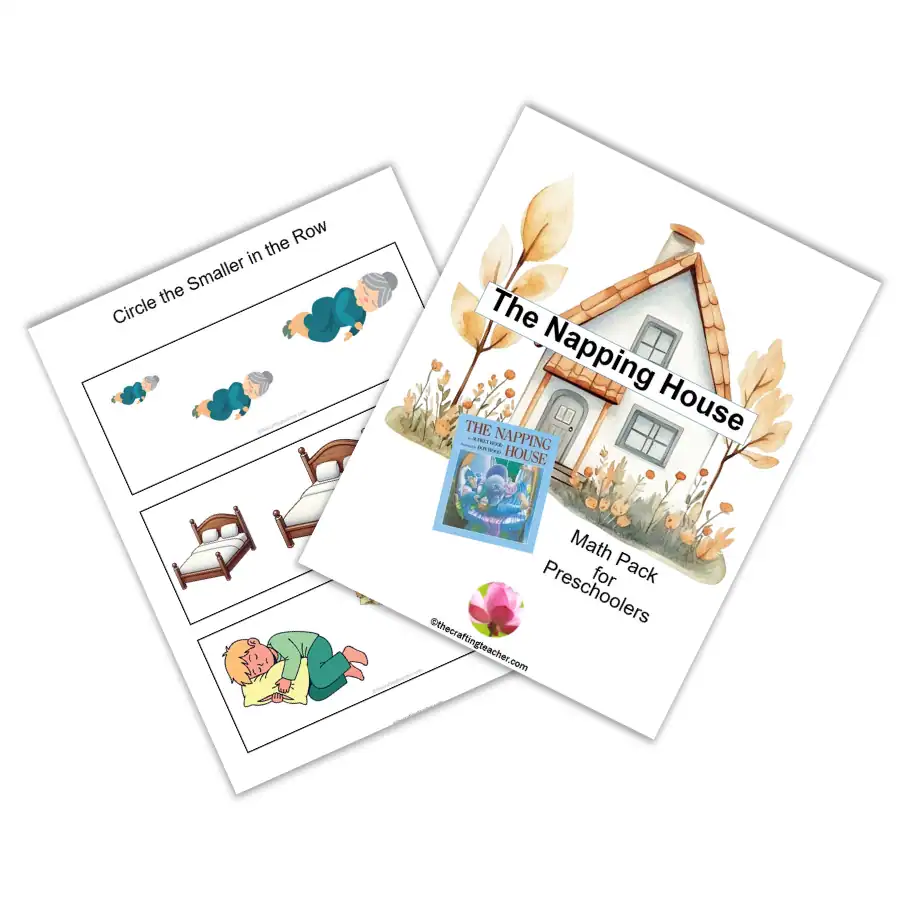
The Napping House pack includes two size-discrimination activities: one to circle the larger one in the row and the other to circle the smaller one. Each activity includes one sheet and three strips. Children should look at the pictures, determine which is bigger or smaller based on the page they are using, and circle the different ones with a pencil, crayon, or marker.
Math Puzzles
Puzzles benefit preschoolers because they help children develop multiple skills, such as fine motor skills, spatial awareness, problem-solving, logical thinking, concentration, visual perception, self-esteem, and social skills.
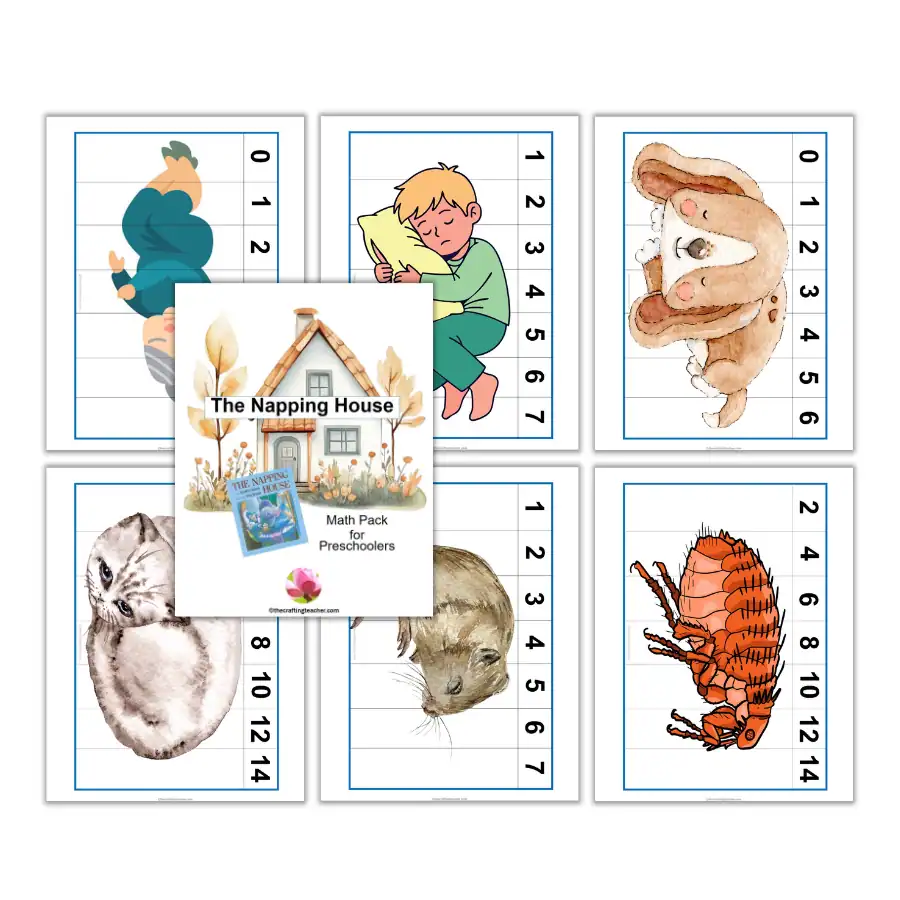
The Napping House pack includes six puzzles, one for each character in the story, using three different number-sequence pairs: one from 0 to 6, one from 1 to 7, and the last from 2 to 14 in twos.
Other Ideas
For preschoolers, don’t rely solely on these printables. You need to use many other hands-on activities related to this story. Some other activities I can suggest are:
- Have the children use mini plastic characters representing those in the story to count and take away, make sets, and divide them by size, color, and pattern.
- Use the pictures or the mini plastic characters and have the children vote for their favorite, and make a graph of their votes.
- Invite your students to look at the house in the book or the shapes on the matching shape page, and discuss the names of the different shapes and how many sizes each has. Have them find the same shapes around the classroom or home, as well as in toys.
- If you have a toy house, have your preschoolers use a ruler, a tape measure, connecting cubes, or another measuring tool to measure it. Write each child’s results on an easel pad and discuss them.
- Teach ordinal numbers (1st, 2nd, 3rd, etc.). As you read the book for the first or second time, do a recap of the order in which the characters went to bed, without reading the story.
- Use mini characters to teach positions such as under, above, inside, outside, top, and bottom. Give each child the opportunity to choose a character and follow your instructions, for example: Put the dog under the table. Put the cat on top of the chair. Put the child next to the granny.
- Explain what opposite means, and use the story to discuss some opposites as you read the story, such as: rain & sun, day & night, inside & outside, big & little, sleep & awake.
- Use the same mini characters to talk about sizes (small, medium, and large), using questions like: Which character is the smallest? Which is larger? Can you tell me the names of two animals that are bigger than a dog? Which one do you think is smaller, a cat or a mouse?
If you want additional activities and ideas related to cats and the letter Cc, covering multiple domains, my 169-page C is for Cat Unit Pack is the perfect solution. This pack is perfect for engaging your children in hands-on learning that incorporates literacy, math, science, fine motor skills, and more, making it an excellent addition to any preschool or homeschool curriculum. You can check it out HERE.
If you want additional activities and ideas related to mice and the letter Mm covering multiple domains, my 141-page M is for Mouse Unit Pack will do the trick. You can check it out HERE.
Related Books
Below are some suggestions for related stories. You can find these books at your local library, used bookstore, or on Amazon. To add them to your collection, you can use my affiliate links embedded in the titles for immediate access.
- Berlioz the Bear by Jan Brett. This book uses glorious illustrations to invite the eye to linger over exquisite details and humorous nuances that enhance the story.
- Joseph Had a Little Overcoat by Simms Taback. As children turn the pages of this book, they can use the die-cut holes to guess what Joseph will be making next from his amazing overcoat, while they laugh at the bold, cheerful artwork and learn that you can always make something, even out of nothing.
- This Is The House That Jack Built by Simms Taback. In this story, the author brings his distinctive humor and creativity to the beloved story of Jack and the house that he built.
- If I Build a House by Chris Van Dusen is a joyful, imaginative story with vibrant, retro illustrations and delightfully rhyming text that children will enjoy.
- The Turnip by Pierre Morgan tells the story of a turnip that grows so enormous that the whole family, including the dog, cat, and mouse, is needed to pull it up.
Pin It For Later
If you are in a rush and don’t have time to read the post and download the printable, but want to save it, pin this to your Math board on Pinterest for later.
You can use these ideas on their own, but I invite you to combine them with the activities I included in the Literacy Pack and Science Pack. I created for this fun story, The Napping House, to take advantage of the opportunities this book offers. You can find the links below:
To download The Napping House Math Pack, click on the link below and enter your email.
Be happy, safe, and creative. I wish you well.
Love,

P.S. Let me know if these activities work for you. If you want to see an article or a printable on how to make something specific, please let me know, and I will do my best to create it for you.
Other Posts You Might Like: