Chinese New Year – Year of the Tiger
Affiliate Disclosure: “This post contains affiliate links, which means I receive a small commission, at no extra cost to you, if you make a purchase using those links.”
This year, the Chinese New Year starts on Tuesday, February 1st, 2022, marking the beginning of the Year of the Tiger. This is a good opportunity to use it as a social studies lesson for your preschoolers, helping them learn about and appreciate Chinese culture and connect with the world.
This is the most important festival celebrated in China. It’s also known as the Lunar New Year or Spring Festival (because it marks the beginning of Spring), and it’s a very important time when families get together.
Even though it’s mainly recognized as Chinese New Year, in reality, it is the most important event celebrated in other Asian countries as well, such as Indonesia, the Philippines, Vietnam, South Korea, Malaysia, North Korea, Taiwan, Singapore, and Brunei, and in many Chinatowns in cities such as Los Angeles, San Francisco, New York, London, Paris, and others, where you can see the traditional decorations everywhere and enjoy firecrackers, colorful parades, and dragon dances.
Traditionally, people prayed to the gods during Chinese New Year to ensure an abundant harvest the next year. Nowadays, it has changed, but Chinese people still pray as they remember their ancestors. The celebrations last about two weeks and wrap up with the Lantern Festival, held on the 15th day after Chinese New Year’s Eve.
I’ve included a FREE Chinese New Year activities pack at the end of this post.
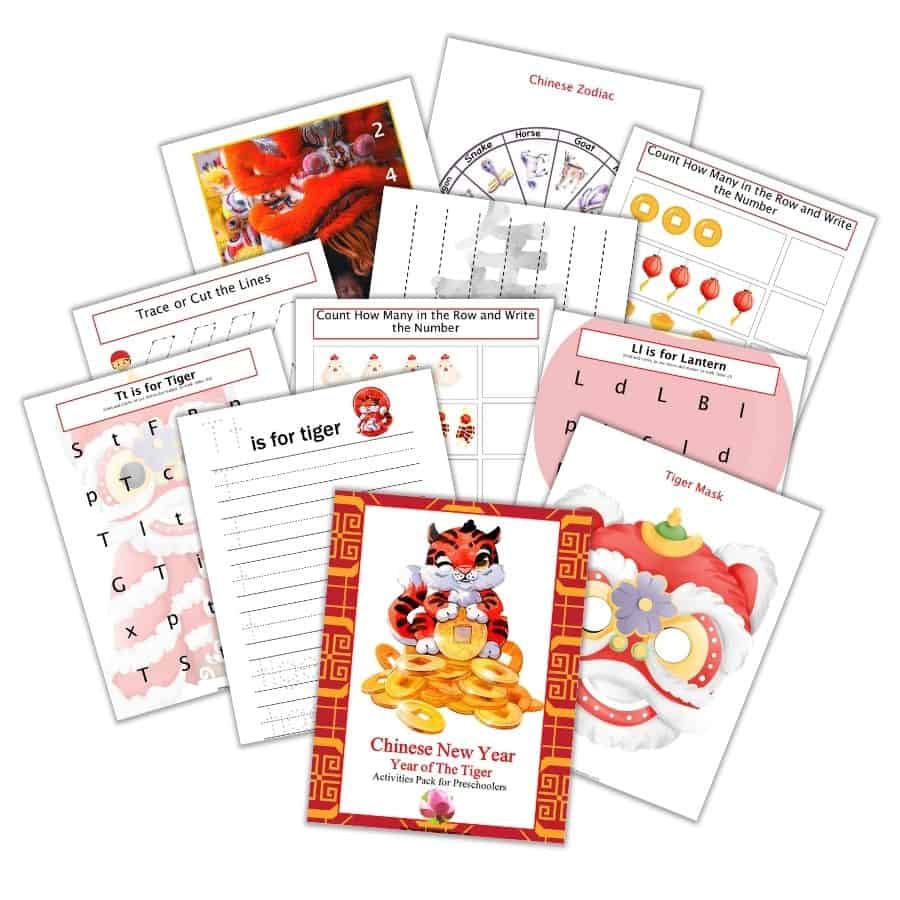
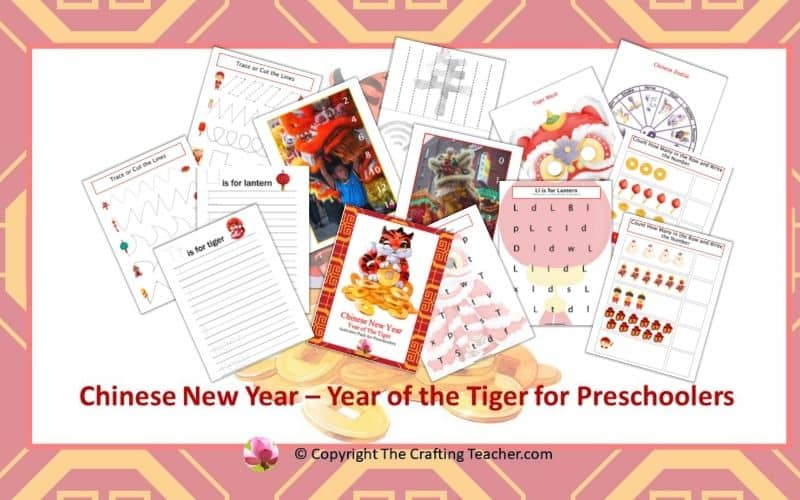
This Chinese New Year – Year of the Tiger 18-page pack includes:
- Two beginning-letter and word-tracing sheets for the words tiger and lantern.
- Two “Find and mark the Letters” activities, including Tt for Tiger and Ll for Lantern.
- Two alphabet letter mazes, one with uppercase letters and one with lowercase letters.
- Two “Count How Many and Write the Number” activities.
- Two “Trace or Cut the Lines” activities.
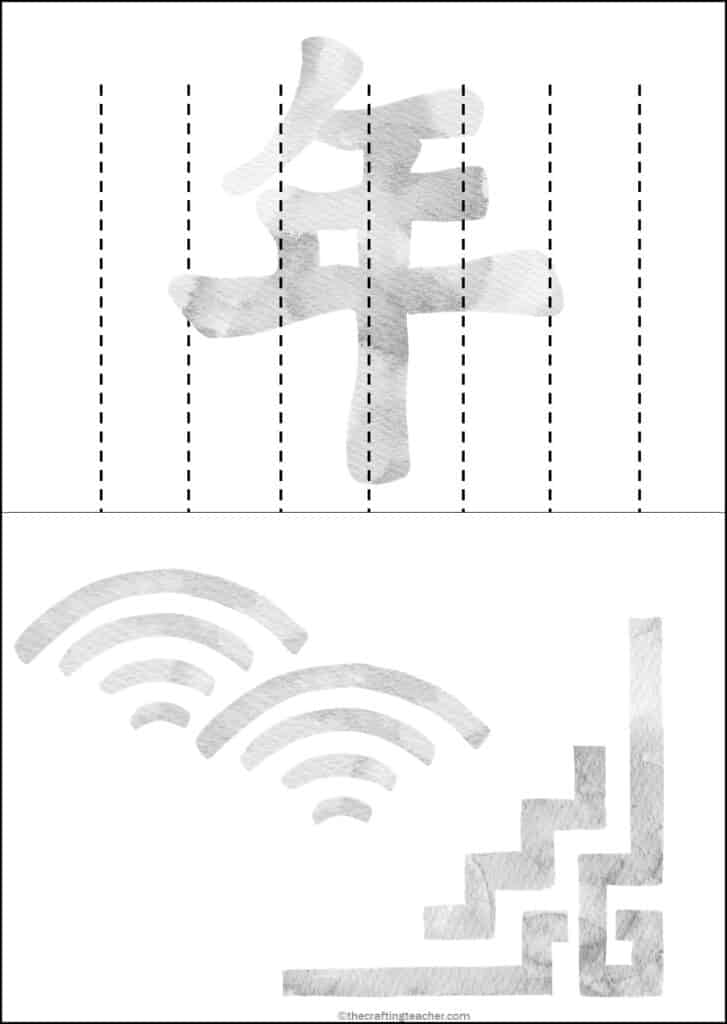
- Two number puzzles with beautiful photographs.
- One lantern template.
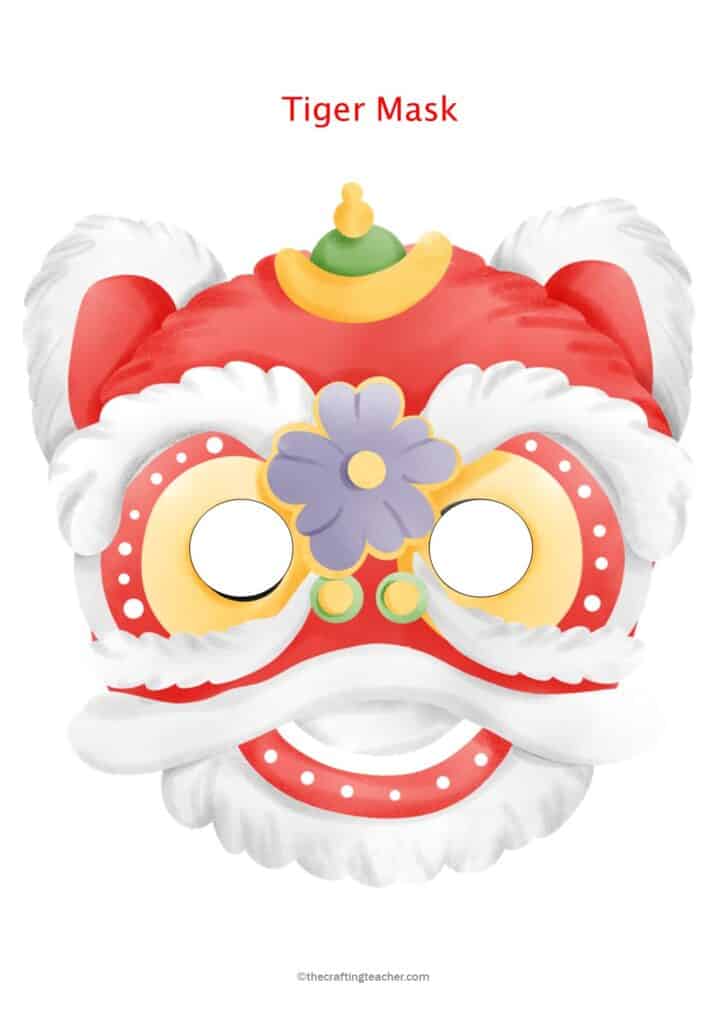
- One tiger’s mask.
- One Chinese Zodiac illustration.
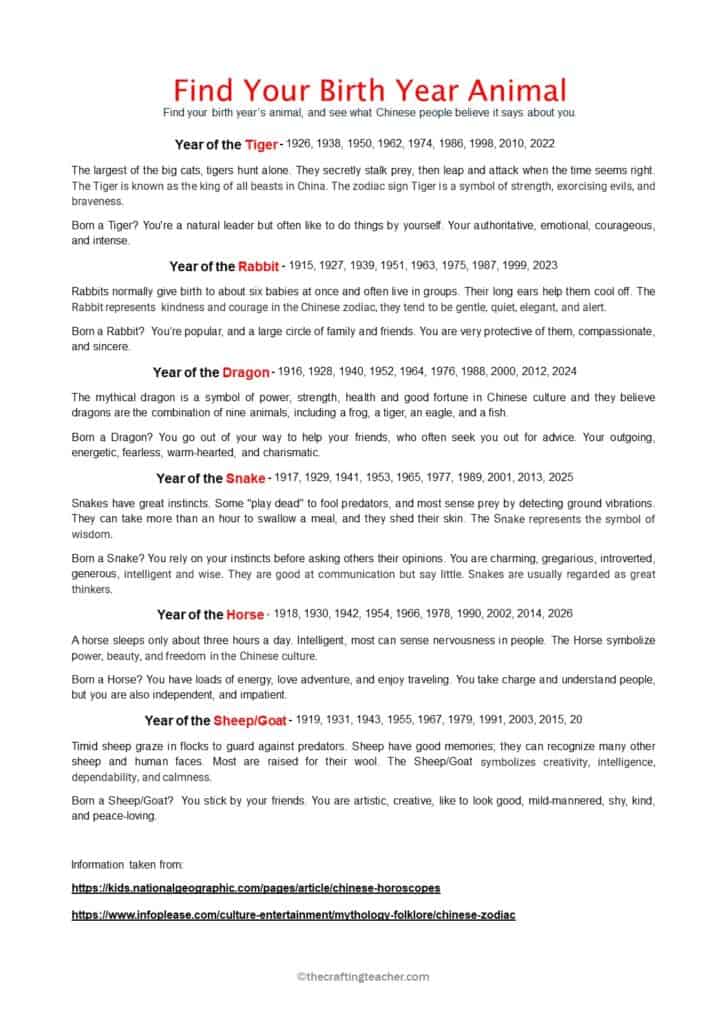
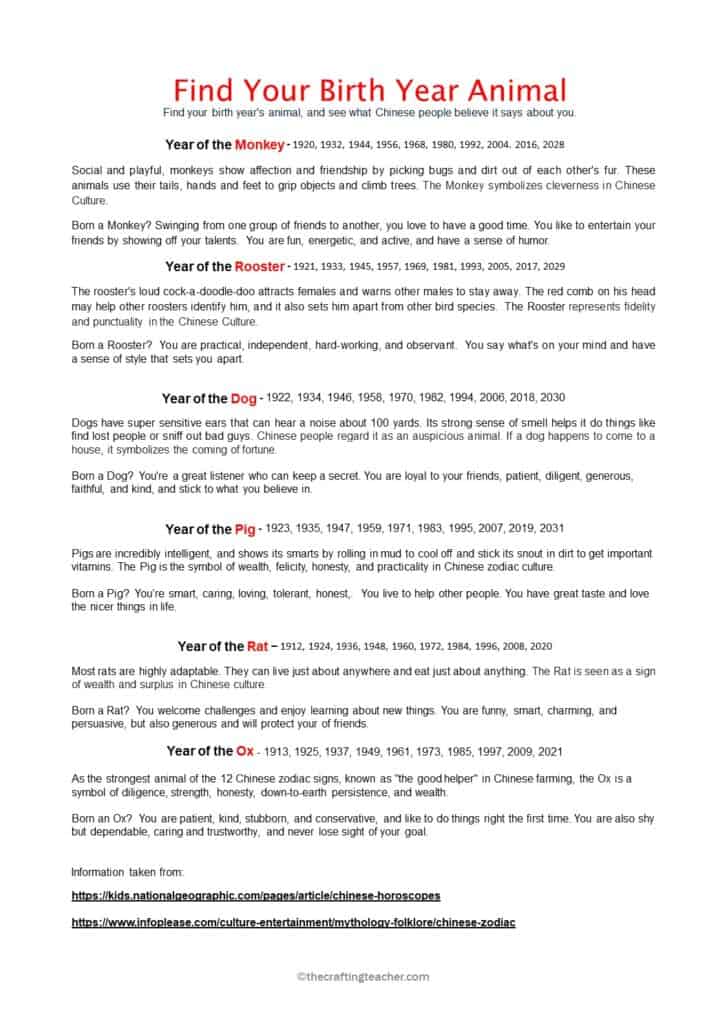
- Two sheets for the “Find Your Birth Animal” activity.
- One 2022 calendar with Chinese illustrations.
Year of the Tiger
The Chinese New Year follows the Chinese solar calendar, represented by 12 zodiac animals by year. The legend in the Chinese calendar is that “The Lord Buddha summoned all the animals to come to him before he departed from earth. Only twelve came to bid him farewell, and as a reward, he named each one a year after they arrived in the order.” The Chinese believe that the animal ruling the year a person is born profoundly influences personality, saying, “This is the animal that hides in your heart.”
This year is the Year of the Tiger, which starts on February 1st, 2022, and will end on January 21st, 2023. It is a Water Tiger year. In Chinese culture, each zodiac sign is associated with one of five elements: Gold (Metal), Wood, Water, Fire, or Earth. This means that, for the Tiger, there are five types. Each type comes once in a 60-year cycle, each with different characteristics. This year is a Water Tiger year. In Chinese culture, people born in a Water Tiger year are said to have a strong sense of self-esteem and a strong ability to learn
There is a legend about how the tiger became an animal in the Chinese zodiac, which you can read to your children HERE.
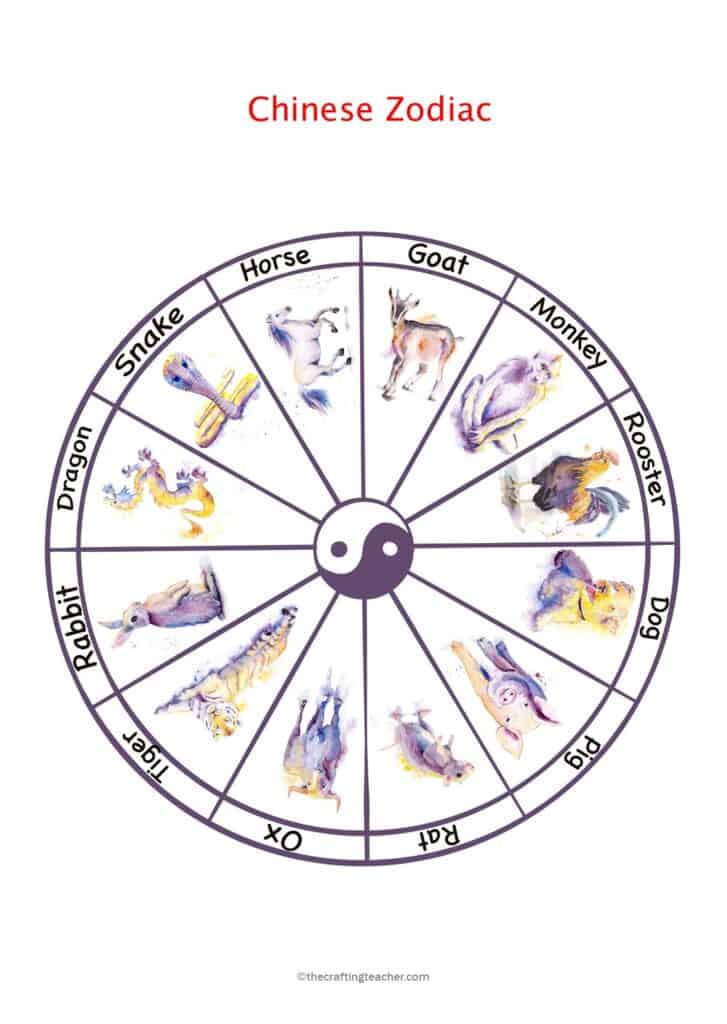
In China, the Tiger is known as the king of all beasts, a symbol of bravery and strength, and the destroyer of all evils. It is the third animal in the Chinese zodiac, which also includes the Rat, Ox, Tiger, Rabbit, Dragon, Snake, Horse, Goat, Monkey, Rooster, Dog, and Pig.
Show your children the Chinese Zodiac and play a game where they try to find out their birth-year animal and how Chinese culture sees it. This is part of the Chinese New Year’s FREE pack.
Customs and Traditions
This festival is full of regional customs and traditions, but it shares a common goal: getting rid of all the negativity and bad luck of the previous year and bringing luck and prosperity to the new one.
Foods
Chinese people eat certain foods during New Year’s celebrations, each with a symbolic meaning. Everything is important for these meals, not just the pronunciation of the food itself but also the preparation, the way it is served, and the way it is eaten, and the main purpose is to bring luck for the coming year. There are seven main dishes served. These are:
- Rice Cakes are used to achieve a higher position or income. They are made with sticky rice, sugar, chestnuts, Chinese dates, and lotus leaves.
- Good Fortune Fruits – Chinese people believe that eating and displaying round and golden fruits like tangerines and oranges brings good luck and fortune.
- Sweet Rice Balls – to keep the family together. It is also the main food item for the Lantern Festival.
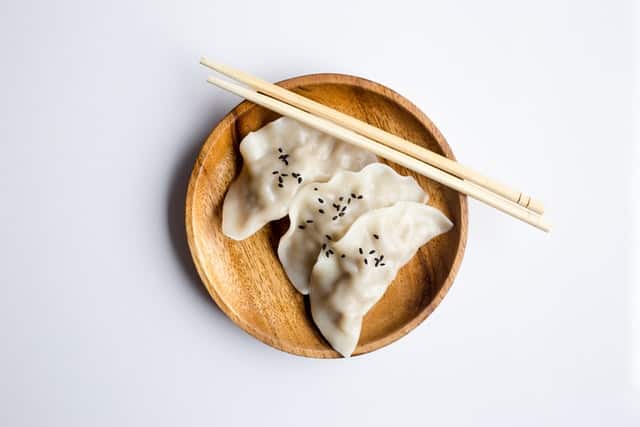
- Dumplings – to get wealth. According to Chinese legend, the more dumplings you eat during the New Year celebrations, the more money you can make in the New Year. They are usually made with minced meat (like pork, shrimp, fish, chicken, and beef) and finely chopped vegetables wrapped in a thin dough. You can cook them by boiling, steaming, frying, or baking.
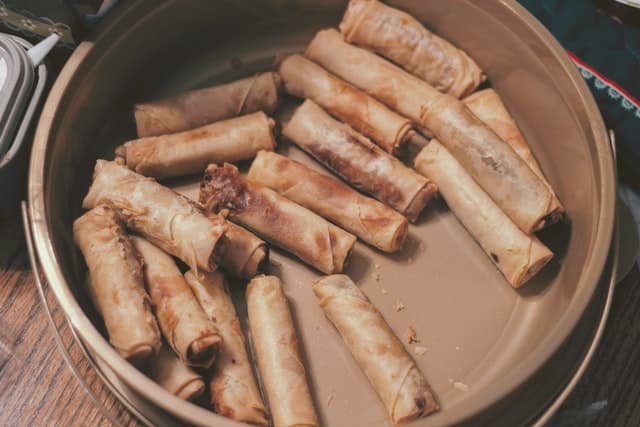
- Spring Rolls are eaten for wealth. They are cylindrical-shaped rolls filled with vegetables, meat, or something sweet, wrapped in thin dough and fried until golden.
- Longevity Noodles – symbolize happiness and longevity. They are longer than usual noodles and uncut. They are prepared by frying and served on a plate, or boiled and served in a bowl with broth.
- Fish – to increase prosperity. Traditionally, the fish should be the last dish eaten. It can be cooked by boiling, steaming, and braising.
Red Envelopes Exchange
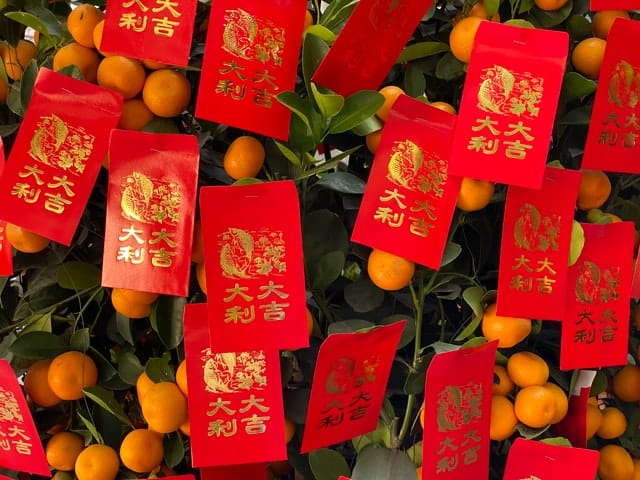
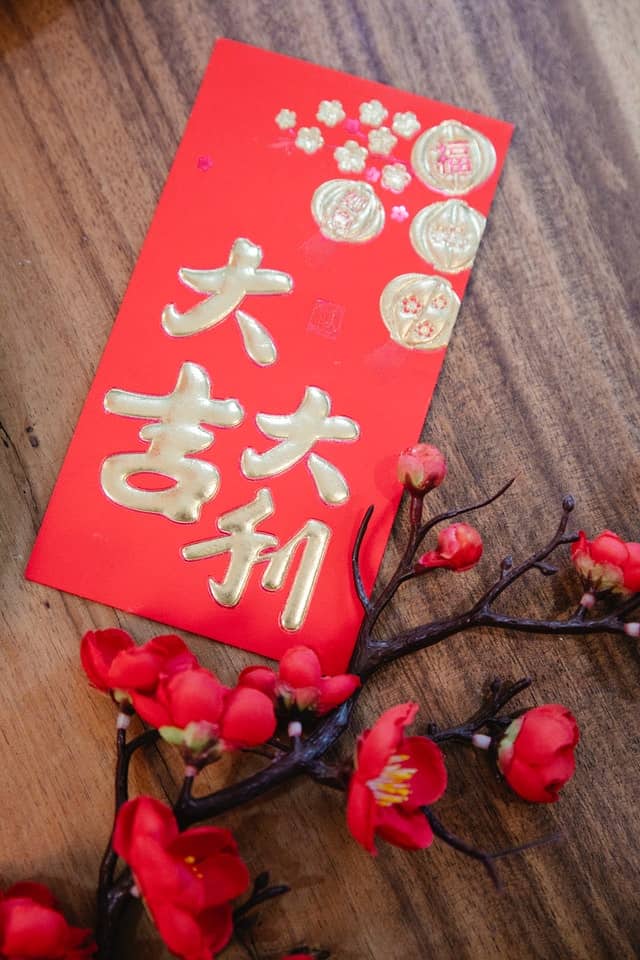
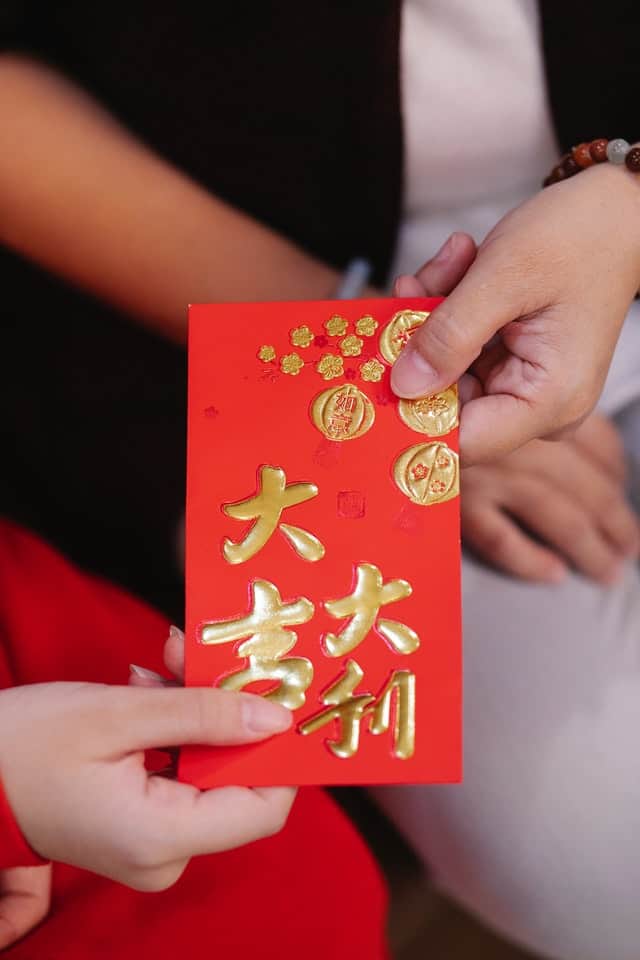
During these festivities, older people give away red envelopes to younger ones to symbolize sending good wishes and luck (as well as money). Bosses or leaders also give these as a special bonus to employees or people under their command.
Red Envelope Craft
Provide red construction paper, glue, and gold glitter. Have the children trace designs on their paper and sprinkle gold glitter. Let the envelopes dry. Have the children exchange their envelopes or ask them to give them to somebody special.
Special Decorations
Since red is the Chinese favorite color, they use it everywhere and in every decoration. This color represents positive things such as happiness, good luck, success, good fortune, and vitality. Most decorations represent the animal of the year. This year, they will represent the Tiger. Some of the most common decorations are:
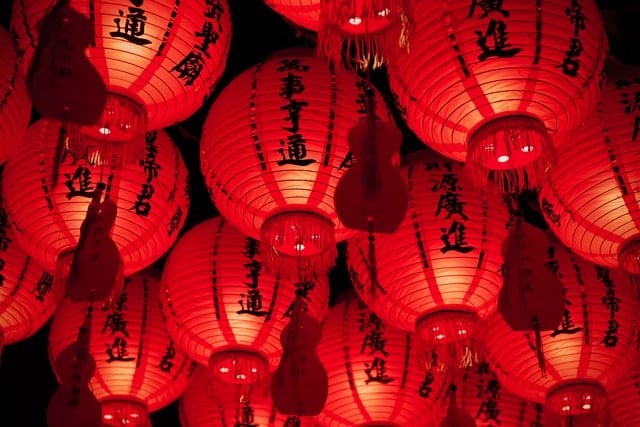
- Lanterns are used to get rid of bad luck. During Chinese New Year, lanterns are hung everywhere, in buildings, trees, and houses.
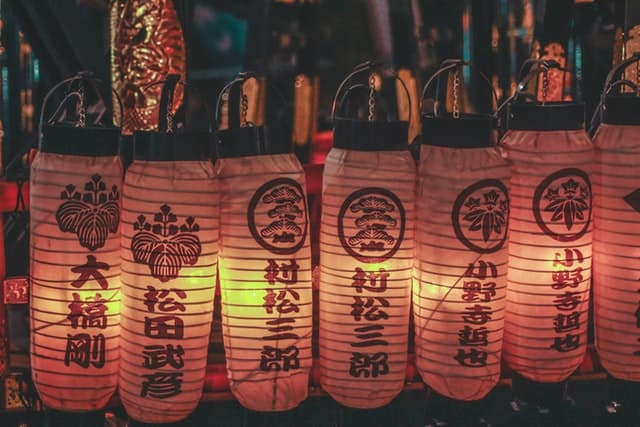
- Door Couplets – representing best wishes for the coming year. These couplets look like long banners and are posted in pairs, especially because even numbers are associated with good luck for Chinese people. They feature beautiful Chinese calligraphy in black ink on red paper.
- Paper Cuttings represent luck and happiness. Beautiful Chinese art involves cutting designs out of paper and gluing them to a contrasting backing or a transparent surface, such as doors and windows.
- Blooming Flowers – to wish you a prosperous new year. Traditionally, people use orchids, peonies, plum blossoms, and peach blossoms.
Wearing New Clothes
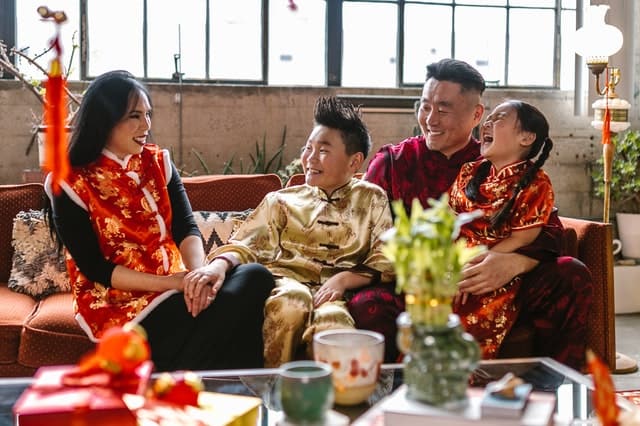
During Chinese New Year, parents customarily buy new clothes for their children to wear at the reunion dinner on New Year’s Eve. In Chinese culture, wearing new clothes is believed to bring fortune and health.
Displaying Fireworks
The Chinese invented fireworks thousands of years ago. Red symbolizes fire, which, according to legend, can drive away bad luck. The fireworks that shower the festivities are rooted in a similar ancient custom. Long ago, people in China lit bamboo stalks, believing that the crackling flames would frighten evil spirits.


Due to overpopulation and city growth, personal fireworks are forbidden today for safety reasons. Still, the government continues to set off millions of fireworks and firecrackers at midnight during Chinese New Year’s Eve. Fireworks are the most widely used in the world.
The following video shows a beautiful display of those fireworks:
Fireworks Craft
Have the children create their own Chinese New Year firework pictures and use them to decorate your classroom or home during the Chinese New Year. You will need black construction paper, glitter, white glue, old newspapers, and straws.
Place old newspapers on the table. Dilute the glue slightly with a tiny amount of water. Have the children put a small blob of glue on the paper, then blow air through a straw to spread it into interesting shapes. Sprinkle glitter onto the glue. Slide the excess glitter off your picture and back into the glitter container, and let it dry.
Family Dinner
One of the most important traditions during Chinese New Year’s Eve is a big family dinner, where multiple generations sit around tables and enjoy a special feast that includes many lucky foods. For Chinese people, this reunion is so important that everyone is expected to attend, and a huge migration of Chinese people occurs. This celebration is believed to ensure good fortune for the coming year.
Lion and Dragon Dances
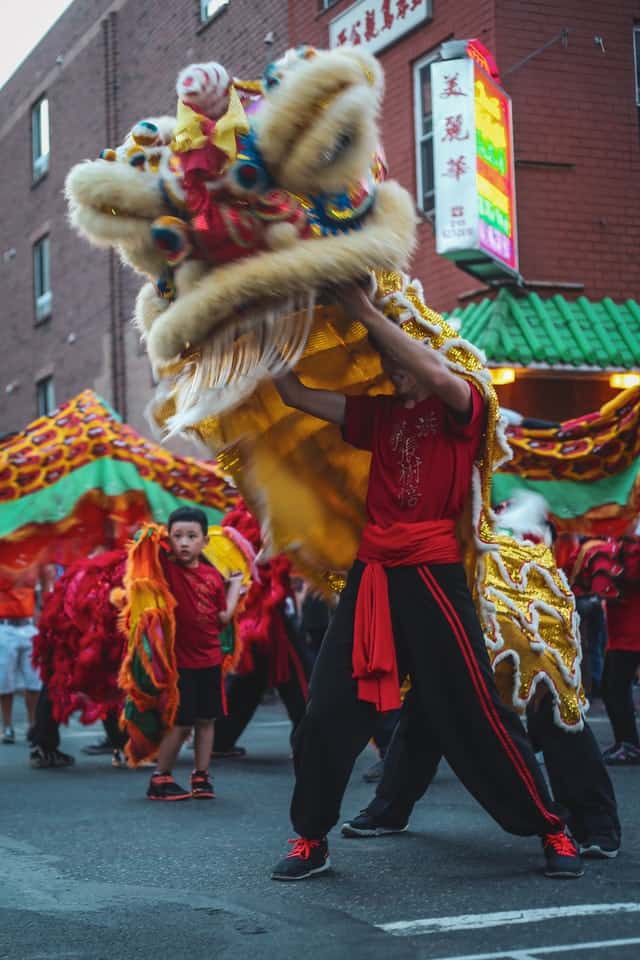
One tradition Chinese people have during their New Year’s celebration is watching Lion and Dragon Dances. You can even see these dances in Chinatowns in Western countries. The purpose of these dances is to bring prosperity and good luck for the new year.
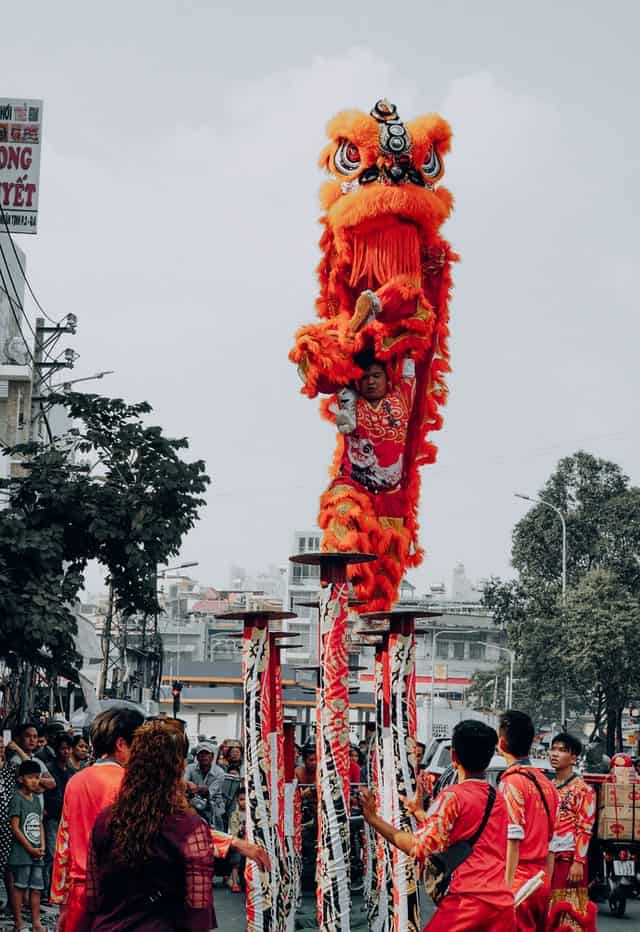
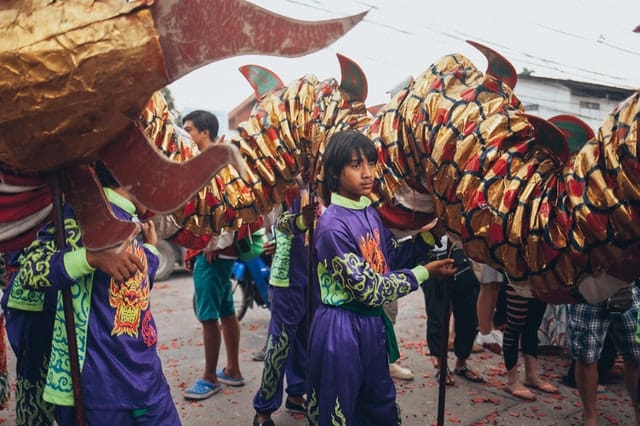
I found two videos that you can show your children. The first is a sample of the Lion Dance, and the second is the Dragon Dance.
Tiger Mask Craft
Have the children cut out the mask included in the FREE pack. Staple a rubber band or construction paper to the back. Have them imitate the Lion Dance or dance to Chinese music while wearing their masks.
Dragon Craft
The Dragon is typically made of silk, paper, and bamboo and could be up to 100 feet long. Young men held the dragon and made it dance as they guided the beautiful creation through the streets.
Cut a long sheet of roll paper to give your children a hands-on experience. Provide crayons, markers, Chinese stickers, pieces of tissue paper, glue, glitter, and other materials you have handy, and have the children decorate the paper. When dry, have the children hold each end and the sides of their dragon and recreate the dragon dance in the playground.
Taboos or Superstitions
In Chinese culture, it is believed that the beginning of the year, including what something looks like (color and shape) and what its name sounds like, will affect whether the following year will be successful or bad; therefore, this season is full of taboos and superstitions.
Because of that, there are several activities Chinese people don’t do during the Chinese New Year celebration since it’s believed to bring bad luck. Some of those are:
- Sweeping up and taking out the garbage – because they will remove the good luck from the house.
- Not eating porridge for breakfast – because they will become poor in the upcoming year.
- Washing hair or clothes on the first day of the lunar year – because it will wash the fortune away.
- Giving away pears – because they represent leaving or parting.
- Give away mirrors as gifts – because they are considered a bad omen and an attraction for malicious ghosts.
The Lantern Festival
Traditionally, on the evening of the 15th day of the first lunar month (February 15, 2022), on the night of the full moon, families get together for a big dinner and go out to see fireworks and light lanterns. Some of these lanterns are works of art painted with birds, zodiac signs, animals, flowers, and scenes from legend and history.
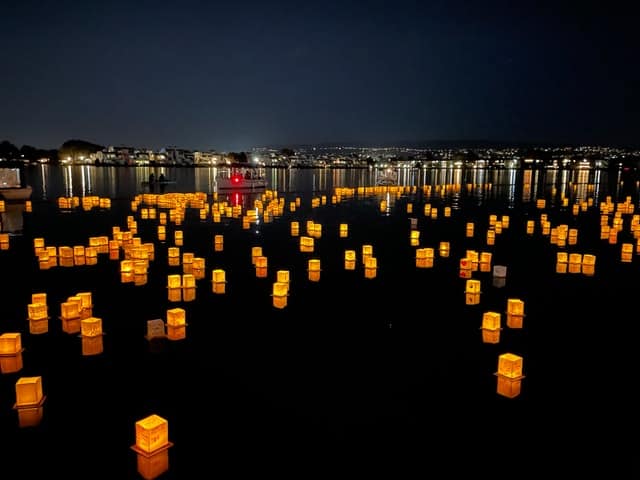
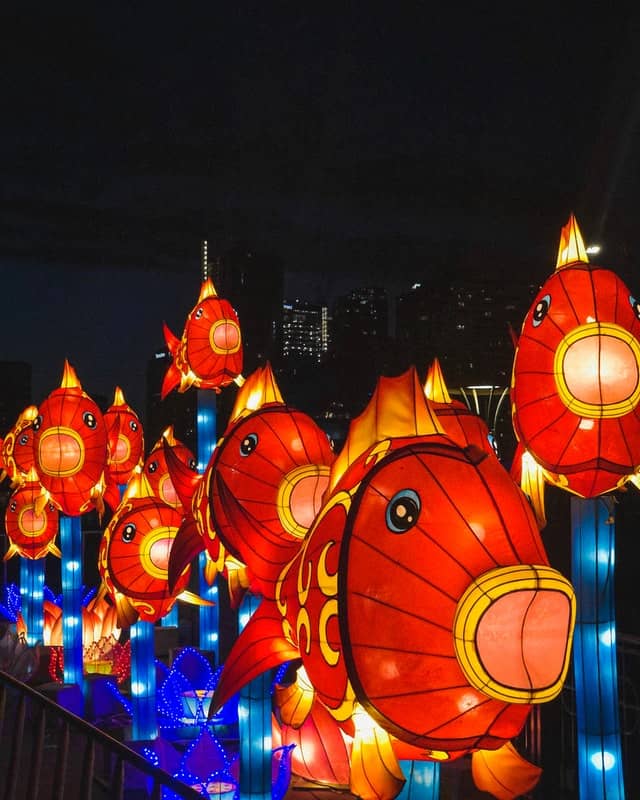
Lanterns are put up for decoration, hung glowing in temples, and carried to an evening parade during the full moon. Then, they let loose hundreds of lanterns flying and float in rivers. It is a beautiful celebration. The video below will show your children what the Lantern Festival looks like.
Lantern Craft
Have the children make their lanterns with just a handful of materials. They will need red construction paper, tape, a stapler or glue, a ruler, scissors, and gold glitter.
- Fold a rectangular piece of paper in half to make a long, thin rectangle.
- Have the children make designs on top with glue, then sprinkle gold glitter on the glue. Let it dry.
- Make several cuts along the fold line. Don’t cut to the edge of the paper. Unfold the paper.
- Glue or staple the short edges together.
- Cut a strip of paper 6 inches long and 1/2 inch wide. Glue or staple this strip of paper across one end of the lantern—this will be the handle.
I’ve included a lantern template in the Chinese New Year’s FREE pack for your convenience.
Other Activities You Can Do:
I’m sure you can develop multiple activities for this celebration, but I want to share some ideas I have used successfully. These are:
- Invite a Chinese person to your classroom to talk about this festival.
- Have them use chopsticks to transfer small objects like marshmallows, Starburst candies, or cotton balls from one container to another (excellent fine motor activity).
- Serve Chinese finger food for lunch or snacks, like egg rolls and wontons.
- Have a parade using tiger masks.
Books About Chinese Culture
It is essential to help children understand that they are in other cultures, such as the Chinese Culture, where things are done differently, and traditions, beliefs, and costumes might not be the same as the ones they know. Books are a great way to do this.
As usual, I recommend filling out your library, centers, and book baskets to support this theme and help children embrace Chinese Culture. Below, you can find a large selection of books related to the Chinese New Year. You can find these books at your local library, used bookstores, and Amazon. I also added my affiliate links to every book in the list below to make it easier for you to get the ones you want.
- Chinese New Year for Kids by Cindy Roberts.
- Dim Sum for Everyone by Grace Lin.
- Celebrating Chinese New Year: History, Traditions, and Activities by Eugenia Chu.
- Dragon Dance – A Chinese New Year by Joan Holub.
- Fortune Cookie Fortunes by Grace Lin.
- Holidays Around the World: Celebrate Chinese New Year: With Fireworks, Dragons, and Lanterns by Caroline Otto.
- Grandfather Tang’s Story by Ann Tompert.
- Happy, Happy Chinese New Year by Demi Hitz.
- My First Chinese New Year by Karen Katz.
- Lanterns and Firecrackers – A Chinese New Year Story by Jonny Zucker.
- Lion Dancer by Kate Waters.
- Bringing In the New Year by Grace Lin.
- Moonbeams, Dumplings, and Dragon Boats by Nina Simonds.
- One Is a Drummer: A Book of Numbers by Roseanne Thong.
- Round Is a Mooncake: A Book of Shapes by Roseanne Thong.
- Ruby’s Wish by Shirin Yim Bridges.
- Sam and the Lucky Money by Karen Chinn.
- The Dancing Dragon by Marcia K. Vaughan.
- Celebrating Chinese New Year: Nick’s New Year by Rosa Drew.
- The Five Chinese Brothers by Claire Huchet Bishop.
- The Runaway Rice Cake by Ying Chang Compestine.
- This Next New Year by Janet S. Wong.
- Tikki Tikki Tembo by Arlene Mosel.
Pin It For Later
If you are in a rush and don’t have time to read the post and download the printable, pin this to one of your Pinterest boards to save for later.
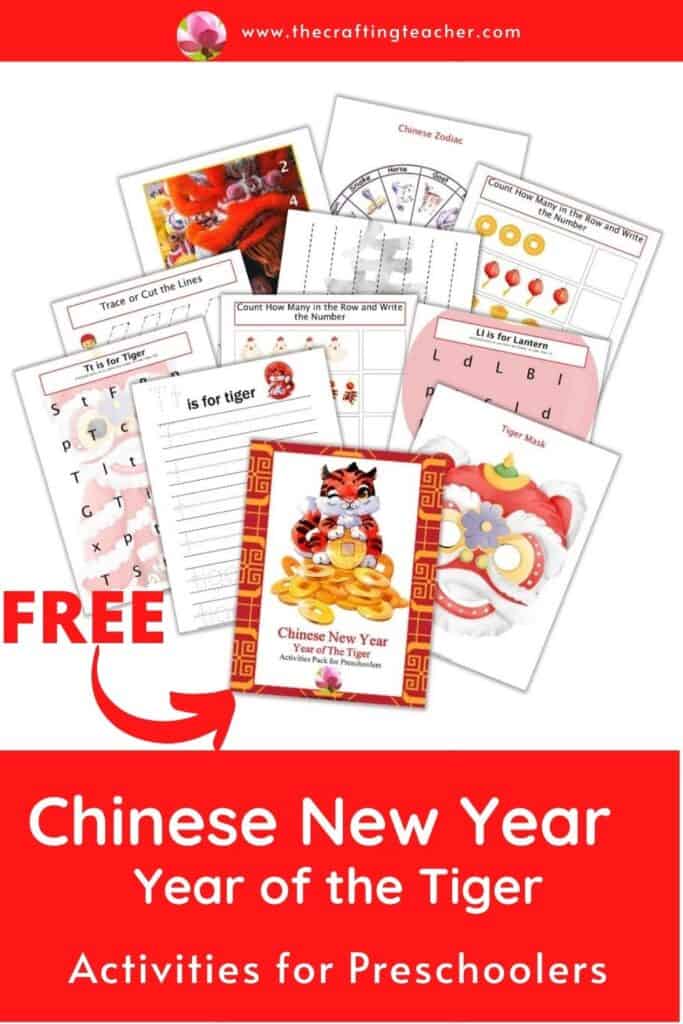
I hope you enjoy these ideas and have fun celebrating Chinese New Year with your preschoolers. To get the FREE pack, click on the link below and enter your information for an immediate download.
Be happy, safe, and creative. I wish you well.
Love,

P.S. Please let me know if any of these ideas work for you, or if you think I should add or replace anything. My goal is to help you in any way I can, and I’m not too fond of anything better than posting something that you might find useful. Also, if you have different ideas and want to share them, I would love to post them.
Other Posts You Might Like: