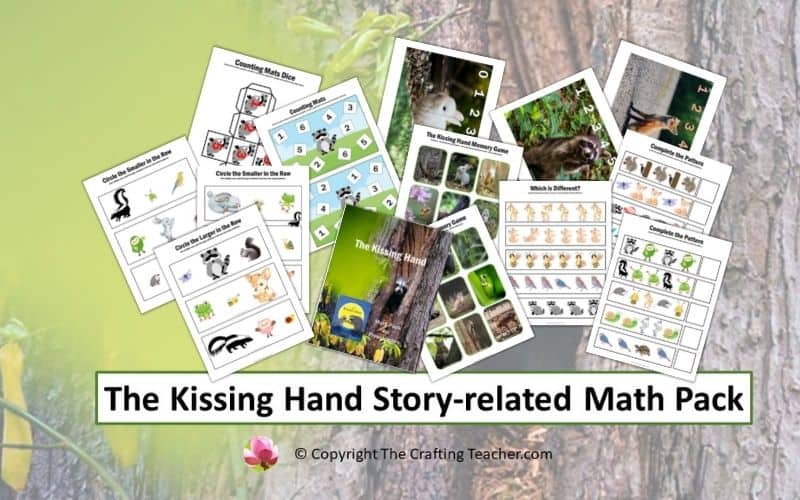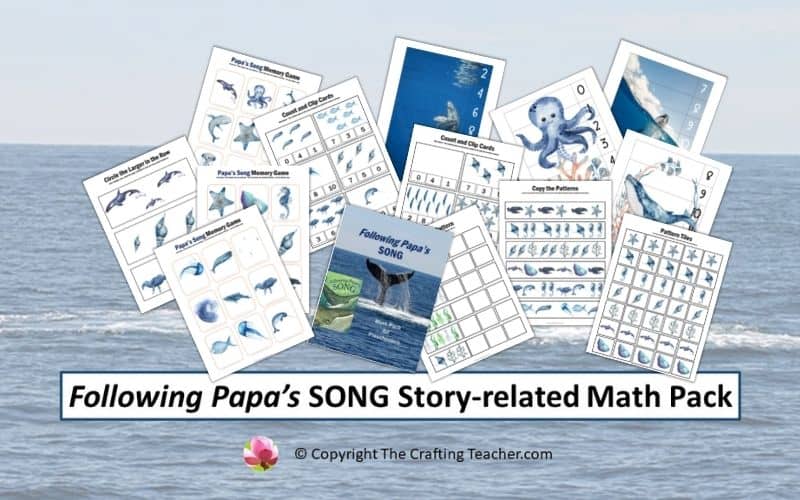
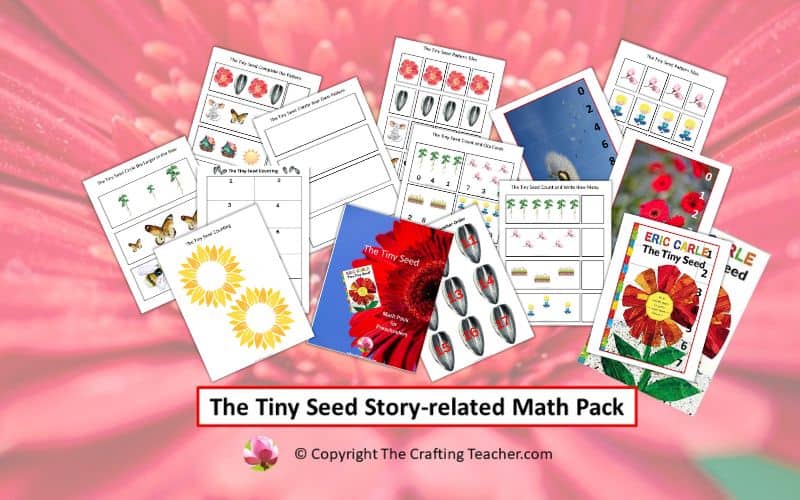
The Tiny Seed Story-related Math Pack for Preschoolers
Affiliate Disclosure: “This post contains affiliate links, which means I receive a small commission, at no extra cost to you, if you make a purchase using those links.”
The Tiny Seed by Eric Carle is one of my favorite stories, not only for Spring but for the entire year, and the message of resilience and perseverance that is behind its words is powerful and inspiring.
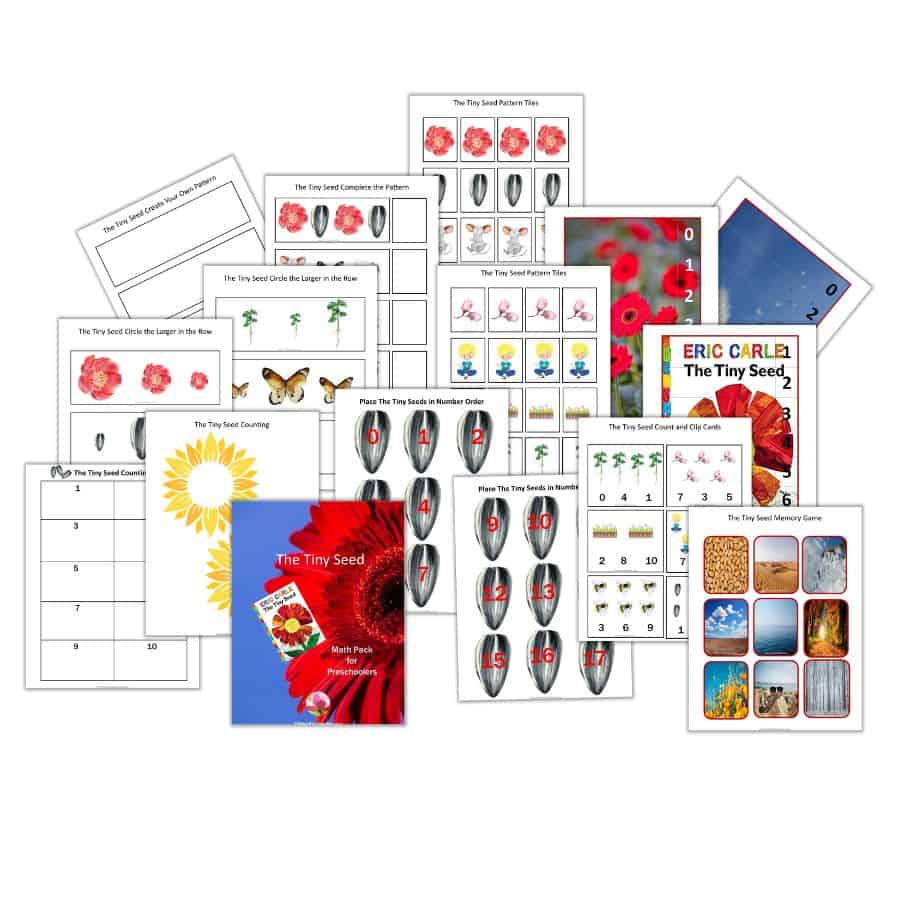
Since I believe that every story gives you the opportunity to create all kinds of activities for your preschoolers, I’ve created a FREE 29-page-long The Tiny Seed Math Pack with multiple activities to go along with this wonderful story, which you can download at the end of this post.
Importance of Teaching Math to Preschoolers
Everywhere children go, they can see different patterns, shapes, sizes, and amounts, which they begin to explore when they are one year old. Math helps children make sense of the world around them and solve problems, even while playing.
It is crucial that preschool teachers and parents provide opportunities for children to do meaningful, fun, and positive mathematical activities to set up the foundation for their future because learning Math helps children develop important skills such as:
- Creative and critical thinking skills.
- Problem-solving.
- Communication.
- Understanding of patterns, sizes, and shapes.
- Ability to understand the world around them.
The Tiny Seed Math Pack
There are many hands-on math activities you can do using this storybook. Here are some ideas you can use with your preschoolers in your classroom or at home for fun, educational math activities related to this beautiful story.
The Tiny Seed Counting
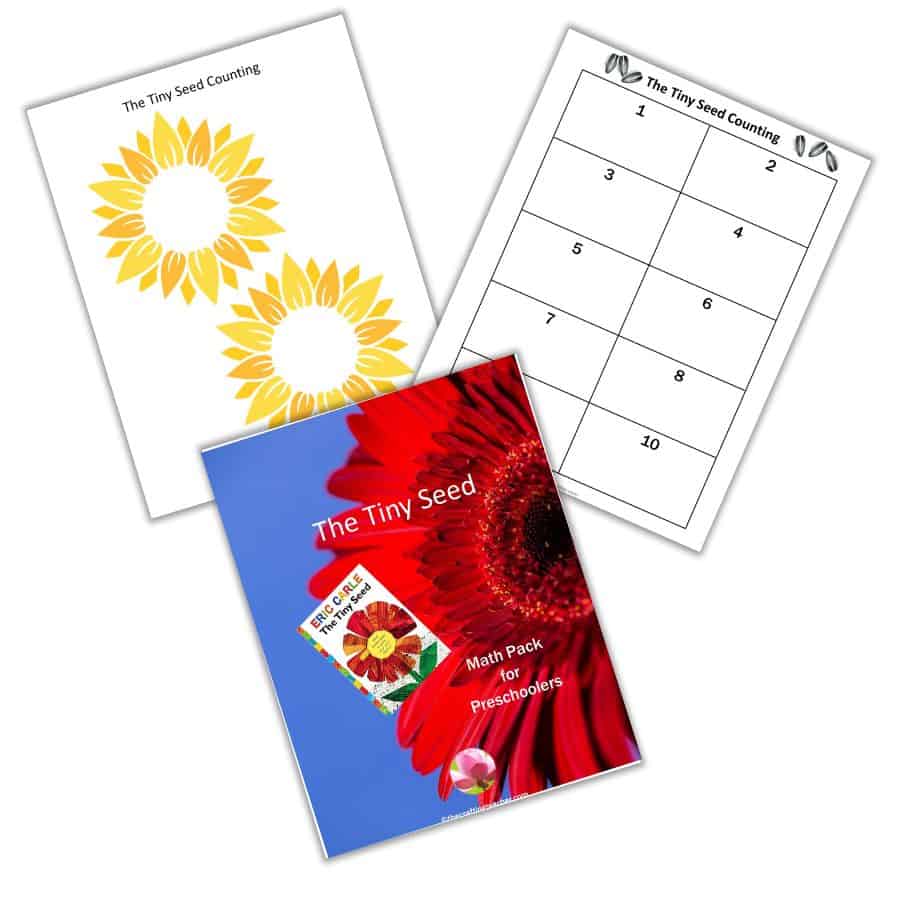
Print the sunflower mat and graph sheets on white cardstock; keep it whole, or cut out the sunflowers and laminate them for durability.
Provide real sunflower seeds and have the children count the seeds as they place them inside the sunflower.
For a twist on the activity, you can take out some of the seeds the children place inside the sunflower to practice subtraction, or have them take out any number of seeds you want.
For the second counting activity, children identify each number in the chart and place the correct number of seeds inside each rectangle.
The Tiny Seed Number Order
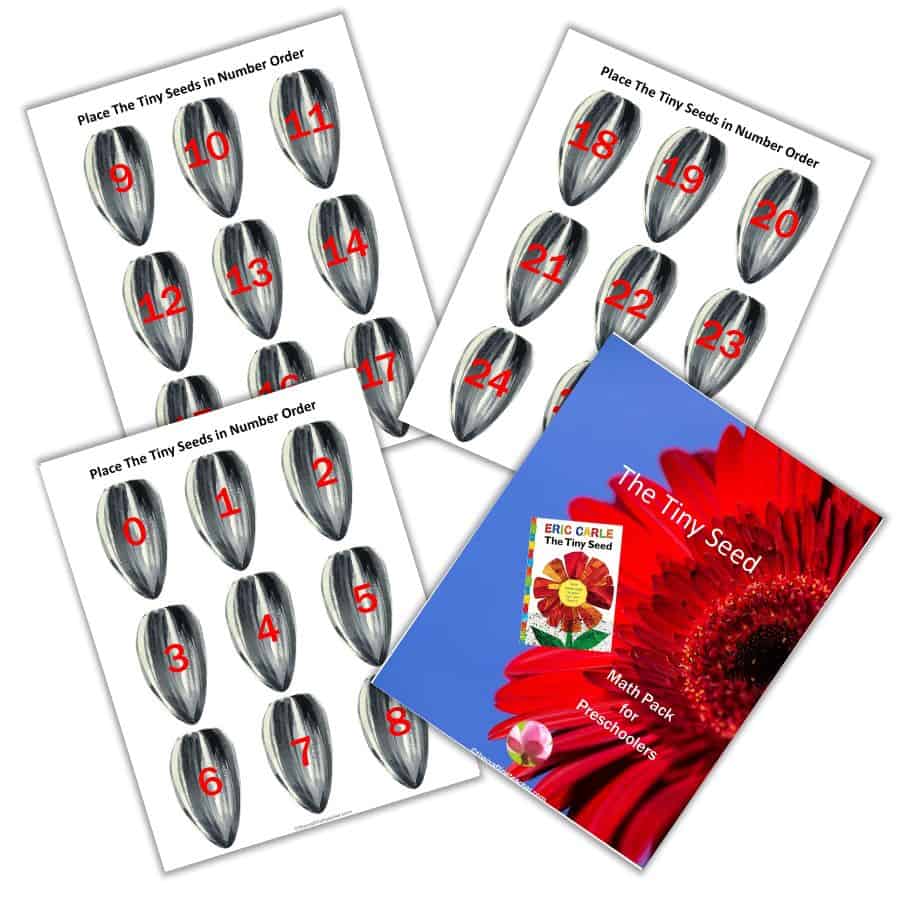
This printable includes three pages with seeds numbered 0 to 25. Print them on white cardstock, cut out the seeds, and laminate them.
Have the children place the seeds in number order, according to their developmental stage. Use your discretion with each child and decide how many seeds to give each child at a time.
If some children are ready, ask them to place the seeds in numeric order from 0 to 25 (or vice versa), in twos, in threes, in fives, etc.
Listen to their counting to make sure they arrive at the same number, no matter how they count the seeds.
The Tiny Seed Memory Game
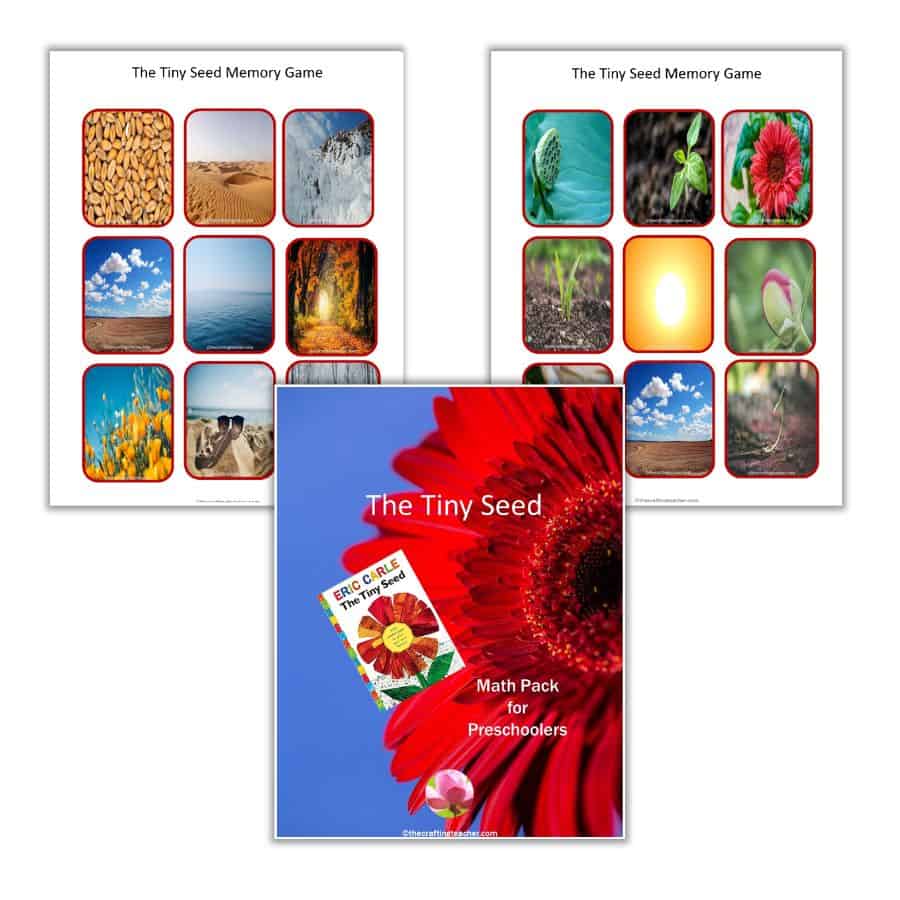
This game strengthens children’s concentration and memory, and supports one-to-one correspondence and set creation.
This pack includes two sheets with 9 cards each, with some of the places and things mentioned in the story. Print each page twice for each set of the game, using white cardstock. Cut out and laminate the cards to make them last longer.
This game can be played individually or with a partner. Keep it simple: have the children place the cards face down. Each child selects a card at random and tries to match it with its double. The child who matches the most cards wins.
The Tiny Seed Visual Discrimination Activities
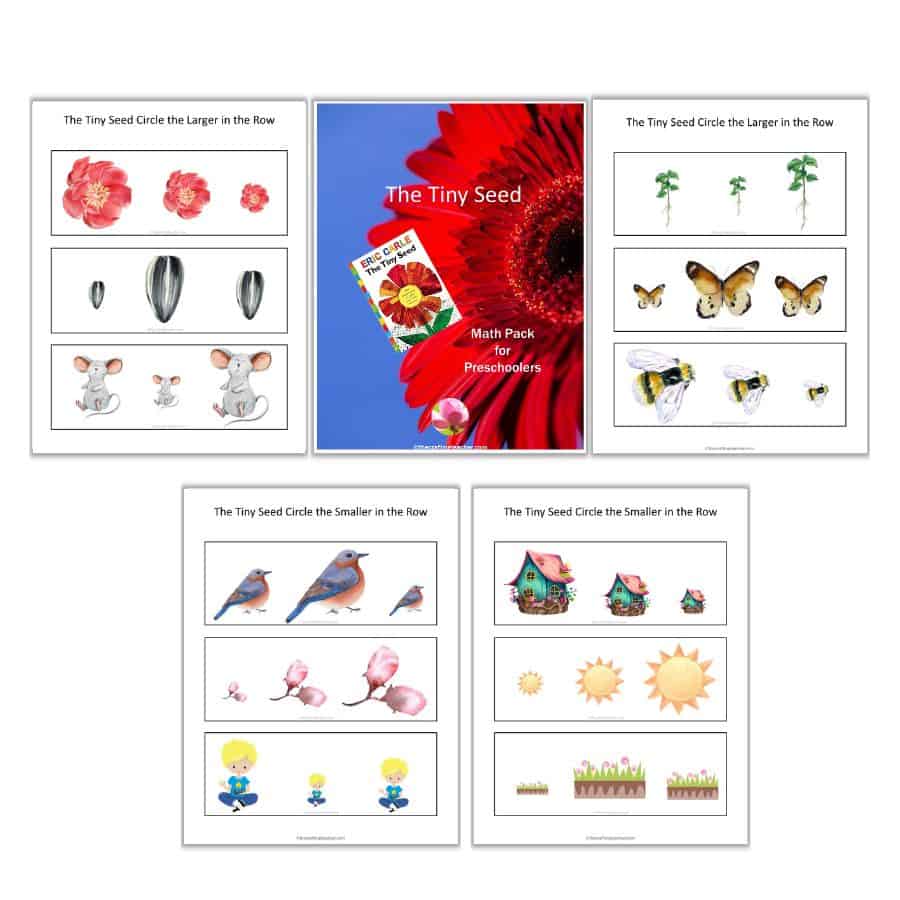
Preschoolers need to develop visual discrimination to identify and recognize similarities and differences not only in size, but also in shapes, letters, numbers, colors, and positions.
This pack includes two size discrimination activities: one to circle the larger item in the row and another to circle the smaller item. Both activities come with two sheets with 3 strips each, featuring different objects from the story. You can either keep the sheets together or divide the strips.
The Tiny Seed Pattern Activities
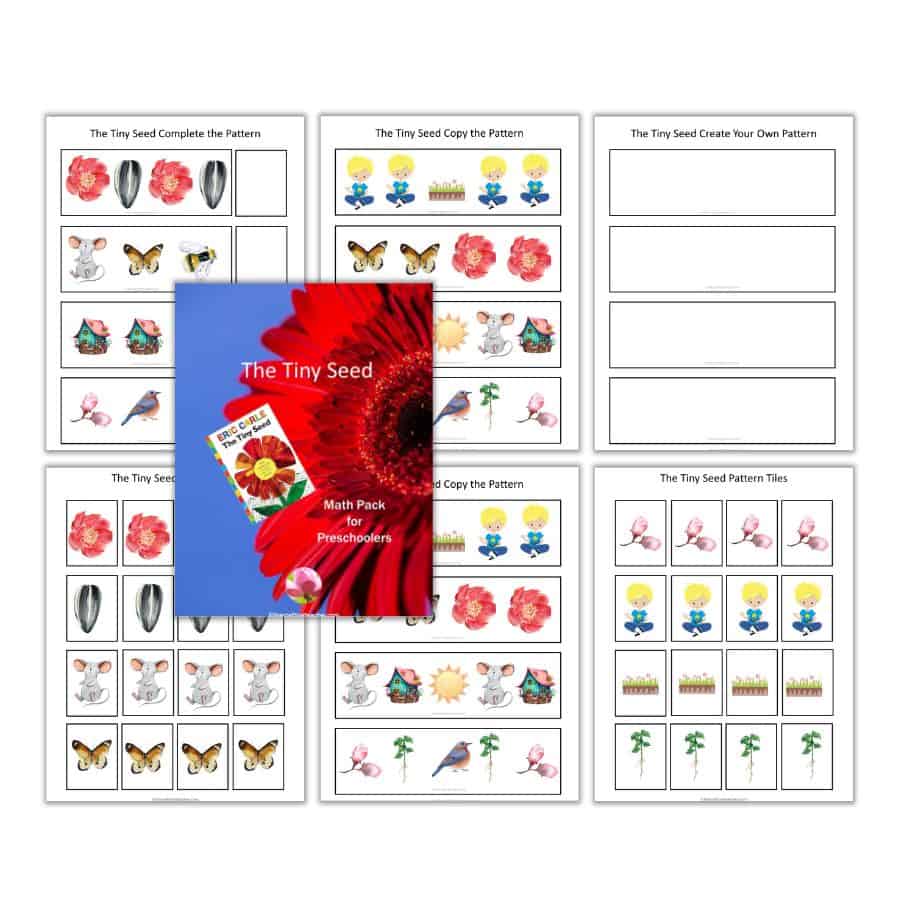
Patterns are everywhere, and it is important that children learn to identify them so they can make predictions, understand what comes next, make logical connections, and develop their reasoning skills. Pattern activities also help preschoolers develop their visual discrimination and fine motor skills.
I included three different pattern activities in the pack. One to complete the pattern, another one to copy the pattern, and the last one to create their own pattern. I also included three sheets of tiles with 12 different designs to use with these activities.
The Tiny Seed Count and Clip Cards
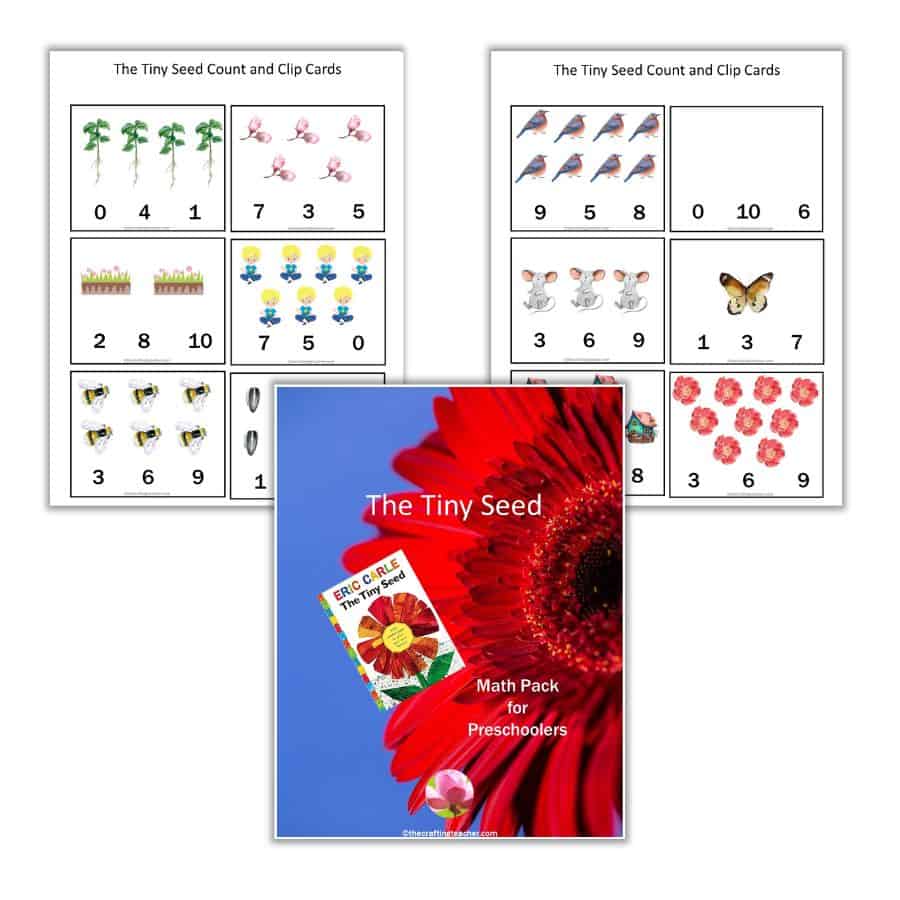
This pack includes two sheets with six clip cards each. Children count the objects on each card and place a clothespin over the correct number. For children who have difficulty opening a clothespin, you can have them use a dry-erase marker or a small manipulative to mark the correct number.
The Tiny Seed Count How Many Activities
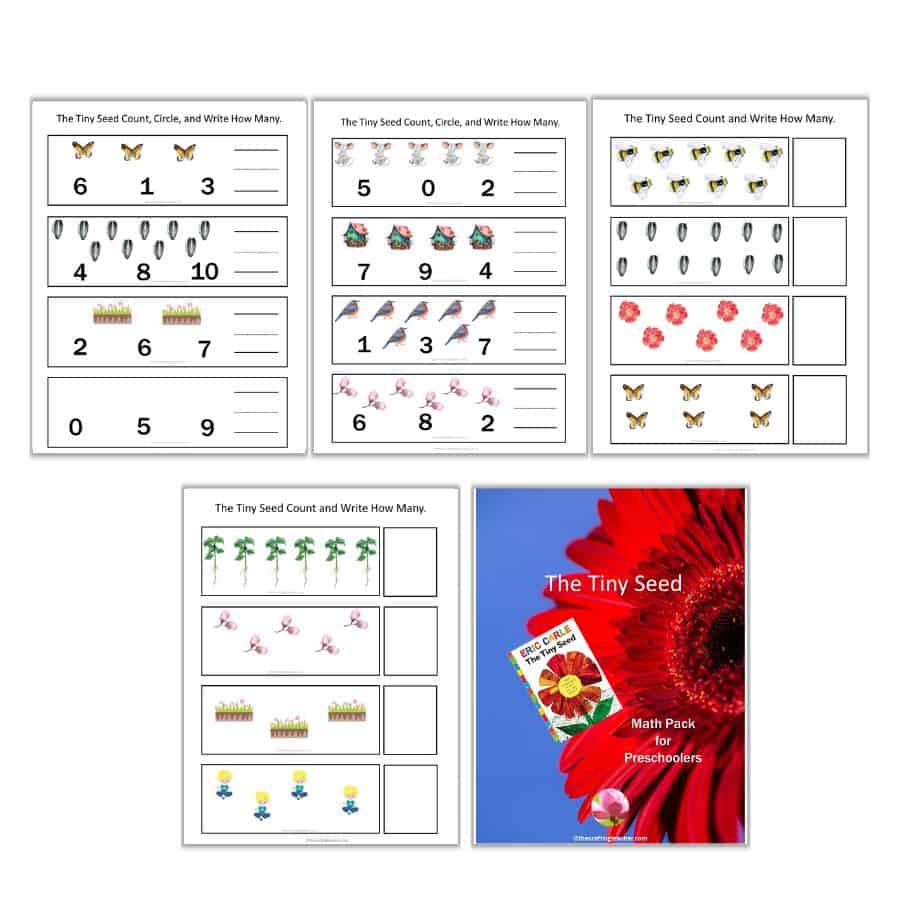
I’ve included four sheets with two different yet similar activities. The first one is simpler. Children just have to count and write the number in the square.
In the second one, children count the objects, circle the correct number, and write that number on the line using a crayon, marker, or pencil.
The Tiny Seed Math Puzzles
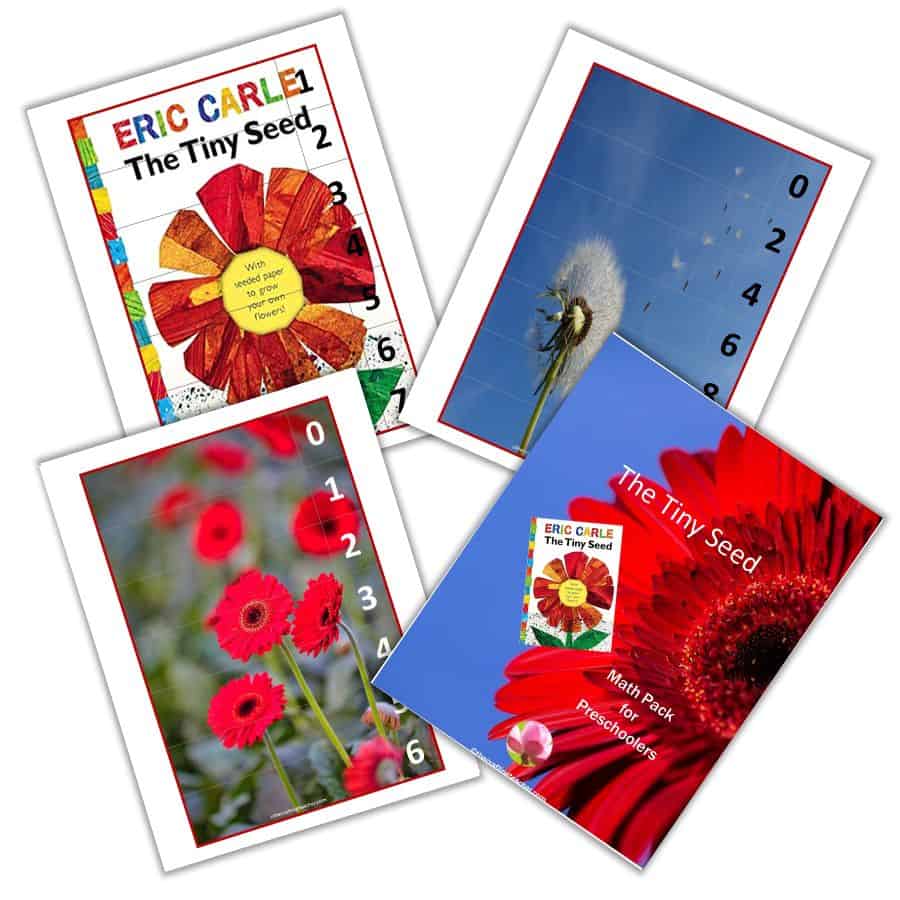
This FREE pack contains three puzzle sheets with real pictures and different number combinations.
Estimation Jar
- Get a transparent plastic jar and fill it with seeds. Show the children the jar and ask them to guess/estimate how many seeds might be there.
- Record their answers on chart paper.
- Open the jar and count the seeds together.
- Show them their estimates on the chart paper and ask whether their estimates were the same as, more than, or less than the actual number of seeds.
- Ask them to find the difference between their estimate and the actual number of seeds.
- Explain.
- Use the opportunity to create simple addition and subtraction problems.
Grouping and Sorting
- Give each child a mixture of different types of seeds. Have them group the seeds in equal sets (twos, threes, etc.)
- Have them sort the seeds using different attributes (color, size, type, texture, etc.).
- Have them count how many seeds of each type they have.
- In the end, give them a piece of construction paper and have them make a collage by gluing their seeds onto it.
To reuse these activities, print them out on white cardstock and laminate them, or protect them with a dry-erase pocket. After you introduce the activities, keep them available to encourage your preschoolers to continue working on them.
Other Books About Seeds
Remember that there is no such thing as too much reading or too many books. Include different books in your library or book baskets related to the theme or season you are using at the moment, so children have a wide learning experience and variety to choose from.
Here are some book suggestions you can find at your local library, used bookstore, or on Amazon. If you want to add them to your collection, you can use my affiliate link embedded on the titles for immediate access.
- A Seed Grows by Antoinette Portis. Leading up to a striking fold-out spread of a full-grown sunflower, the lively, bold illustrations offer a close-up view of each step of the growth cycle, explain the science of plant life cycles, and go into more detail on how flowers and seeds depend on other creatures.
- One Little Seed by Kali Quarles. This delightful book follows the journey of a seed dropped by a bird as it takes root, sprouts, and grows into a brilliant yellow sunflower.
- How A Seed Grows by Helene J. Jordan. This clear, appealing environmental science book features child-centered topics, answers, and engaging illustrations, simple charts, and graphics to build visual literacy skills, along with hands-on activities to engage young scientists.
- GROW: How We Get Food From Our Garden by Karl Beckstrand. This book tells the story of a child and grandfather who till, plant, and harvest fruits, vegetables, flowers, and grains in a tongue-twisting picture book.
- The Vegetables We Eat by Gail Gibbons. This nonfiction book lays out the basics of veggies with colorful watercolors and straightforward text, teaching how they grow, how they get to stores, and how many kinds there are.
- Oh, The Seeds You Can Sow by Jessica Lisk. This story is about hope, compassion, courage, and even second chances, offering a timeless moral and helping foster an invaluable culture of kindness.
Pin It For Later
If you are in a rush and don’t have time to read the post and download the printable but want to save it for later, pin this to your Math board on Pinterest.
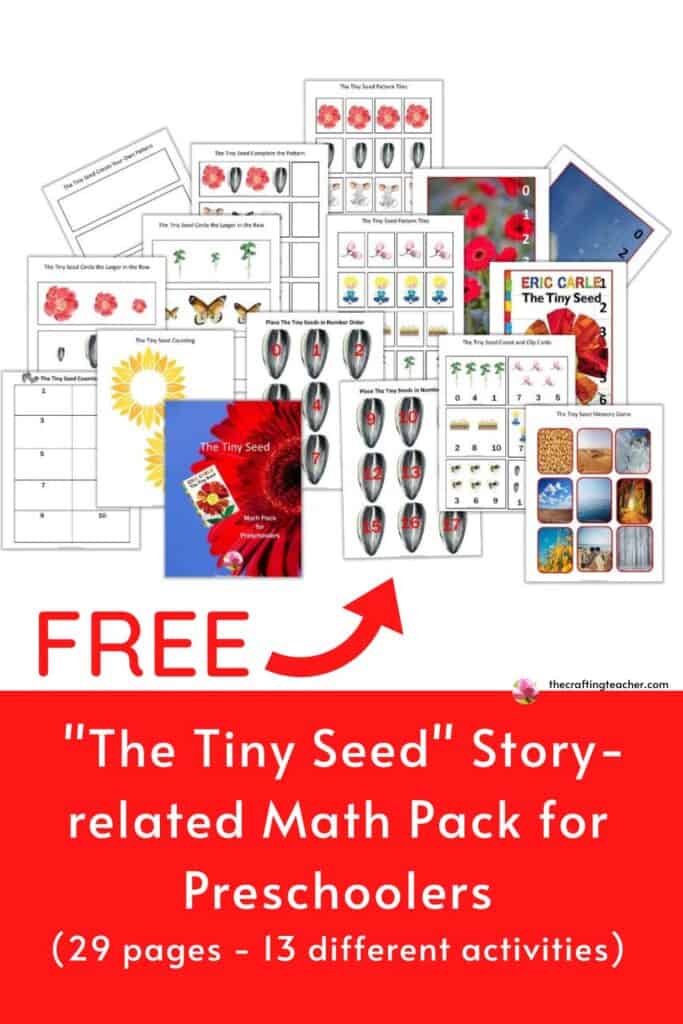
You can use these ideas on their own, but I invite you to combine them with the FREE literacy and science activity packs I created for this beautiful story to take advantage of the opportunity this book offers. Remember that for a more comprehensive and complete educational process, you should not divorce literacy from math, science, or any other domain. They intermingle together and complement each other.
Don’t forget to download your FREE The Tiny Seed Math Pack. Click the link below and type your email for an immediate download.
Be happy, safe, and creative. I wish you well.
Love,

P.S. Please let me know if you like any of these ideas, if they worked for you, or if you think I need to add or replace something. My goal is to help you in any way I can, and I don’t like anything better than posting something you might find helpful.
Other Posts You Might Like: