Content Areas and How to Tie Them Together
Affiliate Disclosure: “This post contains affiliate links, which means I receive a small commission, at no extra cost to you, if you make a purchase using those links.”
Content areas in preschool are the different subject areas of development that form the basis of learning and are designed to provide educational experiences that prepare children for school.
These areas are integrated into the curriculum to provide a holistic approach to learning, ensuring children develop in all aspects of their growth and understanding of the world.
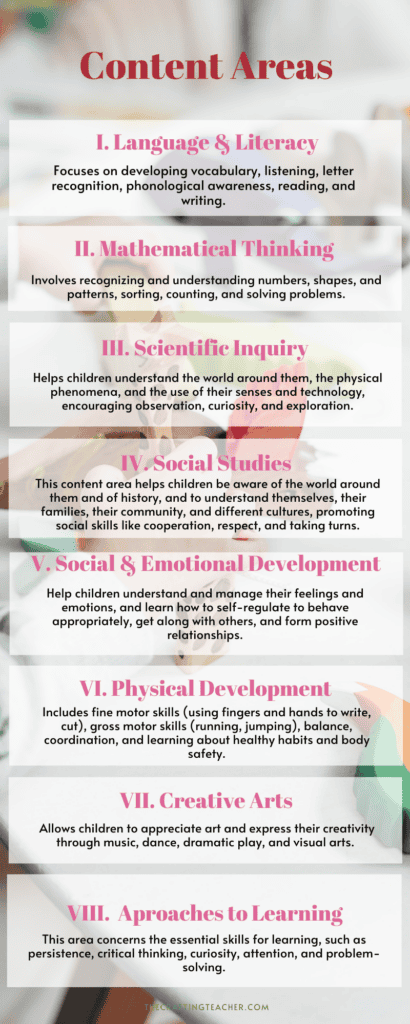
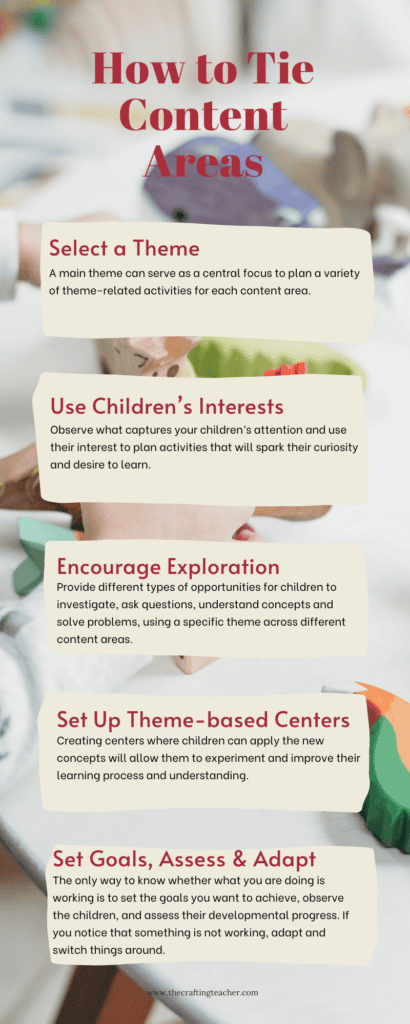
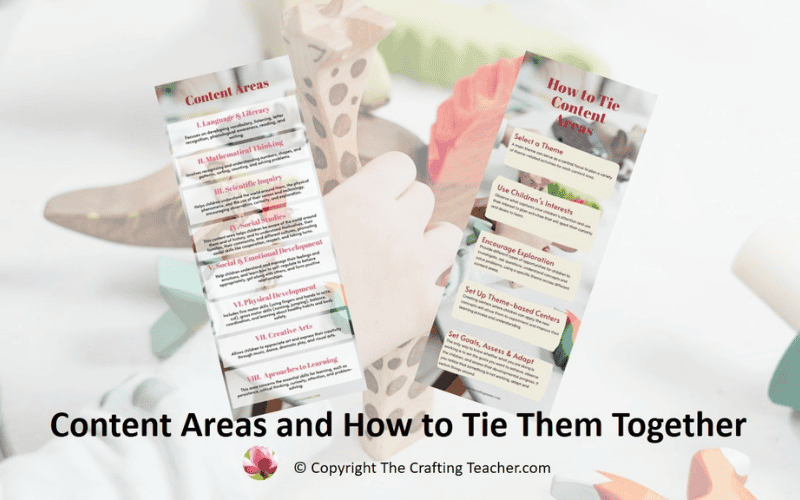
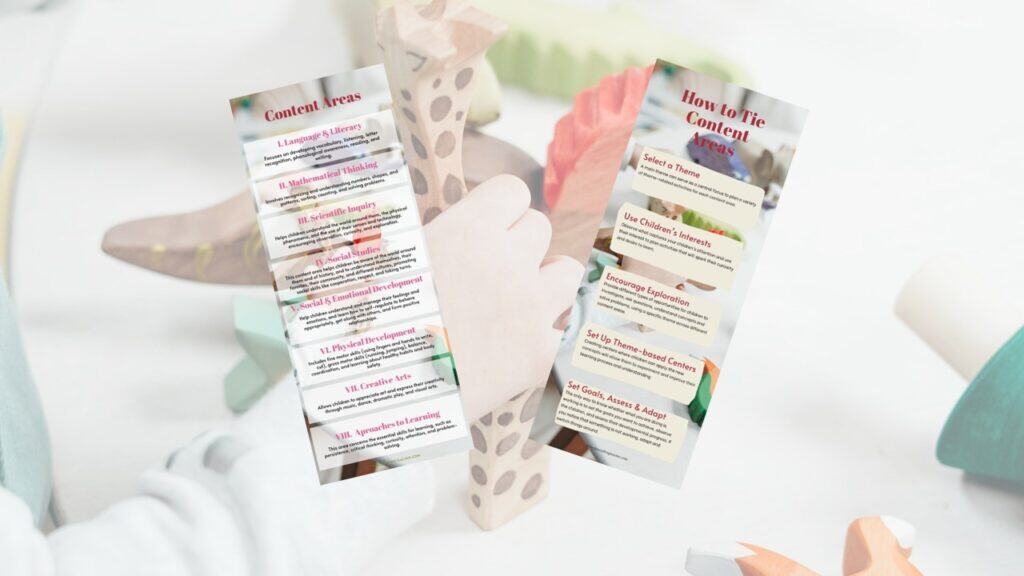
I’ve included a pack with these two infographics, and an example of how to tie the content areas using the zoo animals theme. You can get them at the end of this post.
Which are the Content Areas
These content areas are:
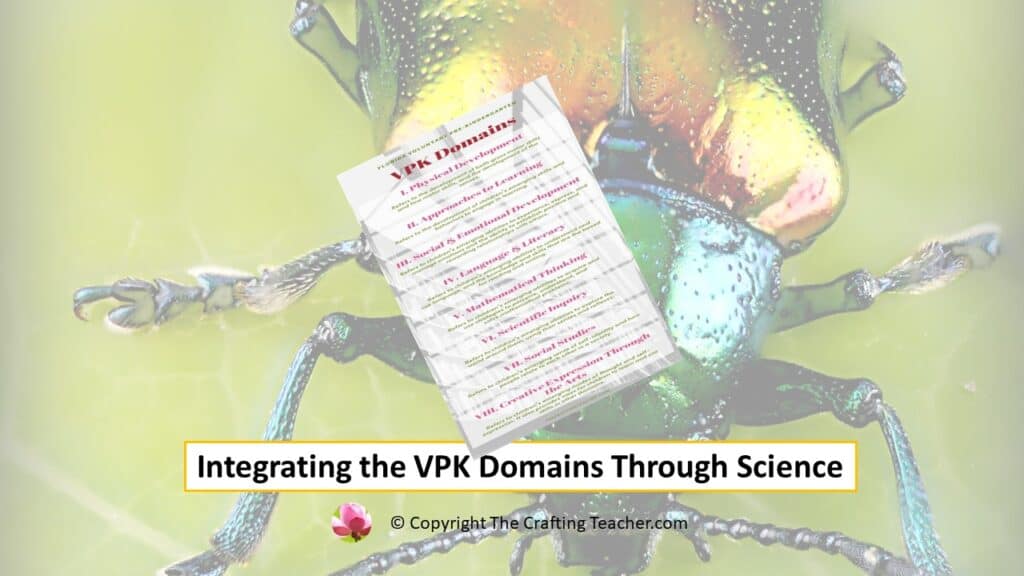
- Language & Literacy: Focuses on developing vocabulary, listening, letter recognition, phonological awareness, reading, and writing.
- Mathematical Thinking: Involves recognizing and understanding numbers, shapes, and patterns, sorting, counting, and solving problems.
- Scientific Inquiry: Helps children understand the world around them, the physical phenomena, and the use of their senses and technology, encouraging observation, curiosity, and exploration.
- Social Studies: This content area helps children be aware of the world around them and of history, and to understand themselves, their families, their community, and different cultures, promoting social skills like cooperation, respect, and taking turns.
- Social & Emotional Development: Help children understand and manage their feelings, and learn to self-regulate to behave appropriately, get along with others, and form positive relationships.
- Physical Development: Includes fine motor skills (using fingers and hands to write, cut), gross motor skills (running, jumping), balance, coordination, and learning about healthy habits and body safety.
- Approaches to Learning: This area concerns the essential skills for learning, such as persistence, critical thinking, curiosity, attention, and problem-solving.
- Creative Arts: Allows children to appreciate art and express their creativity through music, dance, dramatic play, and visual arts.
Importance of Content Areas
Content areas are vital in early childhood because they build a strong foundation to develop important math, literacy, science, and social-emotional skills, providing the children with the tools to support their well-rounded academic success in the future, by helping children understand the world, develop language and vocabulary, and making the learning process engaging and meaningful.
Among the benefits provided in content areas, we can mention:
- Promote Language and Vocabulary: As children are exposed to different topics through books and discussions, they learn new vocabulary and develop their language skills, which are essential for communication.
- Develop Critical Thinking and Problem-Solving Skills: When the learning process is integrated across subjects, it encourages children to think, communicate their ideas, and solve problems, thereby building their executive function skills.
- Improves Literacy and Reading Comprehension: When children learn about different subjects, they build background knowledge that helps them decode words and comprehend texts later.
- Fosters Understanding: Content areas allow children to learn new concepts, building a deeper understanding of how information is organized and interconnected.
- Improves Interest and Desire to Learn: Exploring different areas sparks children’s natural curiosity, boosting their desire to learn as the experience becomes more engaging and memorable.
- Set Up the Foundation for Future Learning: Exposure to different content areas ensures that children receive a comprehensive learning experience, allowing them to build on new information and improve their educational process.
How to Tie Content Areas
The process to tie the content areas is not as difficult as some teachers might think, since these areas interconnect naturally, but it is essential that preschool teachers take a conscious decision to use the children’s natural interest to plan meaningful activities integrating these content areas, connecting goals, and allowing children to explore ideas in different ways.
In my opinion, it is easier to tie these areas using theme-based and project-based learning, which integrates different subject areas around a central concept. These are some suggestions about how to do it:
- Select a Theme: A main theme can serve as a central focus for planning a variety of theme-related activities in each content area.
- Use Children’s Interests: Observe what captures your children’s attention, and plan activities that spark their curiosity and desire to learn.
- Encourage Exploration: Provide diverse opportunities for children to investigate, ask questions, understand concepts, and solve problems, using a specific theme across different content areas.
- Set Up Theme-based Centers: Creating centers where children can apply the new concepts will allow them to experiment and improve their learning process and understanding.
- Use Circle and Story Time as Support: Books are powerful tools for integrating different concepts and introducing new vocabulary, promoting vocabulary and communication, helping children develop social-emotional skills, and sparking their curiosity and desire to learn in a fun, joyful way.
- Set Goals, Assess, and Adapt: The only way to know whether what you are doing is working is to set the goals you want to achieve, observe the children, and assess their developmental progress. If you notice something isn’t working, adapt and switch things around.
Example of How to Tie the Content Areas Using a Theme
To give you an idea of how to tie different content areas using a theme, let’s take one of the themes that children love the most, zoo animals, to plan activities. You can download the lesson plan below.
Language & Literacy
- Read books about zoo animals and use language to explain their observations. At the end of this post are some good suggestions.
- Introduce vocabulary words: giraffe, elephant, lion, lioness, cub, rhinoceros, and Do
- Encourage the children to look for the same words in books.
- Review those words’ beginning sounds.
- Have discussions about different zoo animals, for example: “Do you know which is the tallest animal on Earth? What animal has a long trunk? Do you know what animal is called “King of the Jungle”?
- Use figures or pictures of zoo animals and invite the children to create a class story. Type it to create a book and have the authors illustrate it. Distribute copies among the authors and keep the original in the library area.
- Use the Zoo Letters Matching Game and the Zoo Find the Letter activities.
Mathematical Thinking
- Measure a giraffe’s neck using linking cubes or blocks.
- Sort zoo animal figures into categories (by type of animal, color, number of legs, body coverage, and habitats (desert, jungle, arctic, or ocean).
- Do zoo animal puzzles.
- Use the Zoo Faces Matching Mirror, the Lion Shapes Match, the Zoo Train Number Puzzles, and the Zoo Counting Book activities.
Scientific Inquiry
- Show them videos of different zoo animals, so children can see how they look, move, eat, etc.
- Discuss the characteristics of different zoo animals.
- Organize a field trip to the zoo to see the animals in person.
- Explain where zoo animals get their food from in the wild (prey and hunters). Create a graphic that matches animals to their food sources to explain food chains.
- Have your children match the words to zoo animal figurines and talk to them about each animal’s characteristics.
- Listen to the sounds of zoo animals or watch YouTube videos about them.
Social Studies
- Talk about which animals are in danger of extinction and the preservation efforts of some organizations to save them.
- Explore the needs of zoo animals and how different cultures view or use them.
- Research animals from a specific continent (e.g., Africa) and use pictures of their natural habitats to explain why they live there.
Social & Emotional Development
- Explain what extinction means and why it’s important to protect them, to promote empathy.
- Use cards to match animal faces with different emotions, promoting social-emotional learning.
- Set up a pretend zoo where students pretend to be keepers, learning about animal needs (food, shelter, social grouping) and responsibilities.
- Work with children to develop a group activity in which each child contributes their artwork to create a mural of a zoo animal.
Physical Development
Music and Movement:
Some of the songs you can use to sing and dance are:
- “Move Like Animals Do and Freeze” by Jack Hartmann.
- “Animals in Action” by Jack Hartmann.
- “Hakuna Matata” (The Lion King).
- “I Just Can’t Wait to Be a King” (The Lion King).
- “Penguin Dance” by Jack Hartmann.
- “Going to the Zoo” by Katie Kraft’s Tots with Tempo.
- “Let’s Go to the Zoo” by Super Simple Songs.
Outdoor Experiences:
- Play “Zookeeper Says” like you would “Simon Says”.
- Play “Zoo Animal Roundup”. Choose two volunteers to be zookeepers who will round up the zoo animals (the other children).
- Do a “Zookeeper Relay”. Children will have a race moving as different zoo animals.
- Create an Animal Obstacle Course. Children will go through the course moving like zoo animals.
- Use zoo animal pictures or figurines, hide them in the playground, and invite the children to go on a zoo scavenger hunt.
- Play “Follow the Elephant”, like you would “Follow the Leader”.
Creative Arts
Block Area:
- Set up a zoo in the block area, where children can pretend to be zookeepers.
- Invite children to make enclosures for zoo animal figurines using blocks.
Art:
- Draw zoo animals.
- Color the giraffe template and glue brown paper pieces for spots.
- Paint the stripes on a zebra template using black paint.
- Ask the children to make sculptures of zoo animals using playdough.
Dramatic Play:
- Provide masks of different zoo animals for children to decorate and use while pretending to be those animals.
- Invite the children to act out animals to understand their movements, sounds, and characteristics, improving non-verbal communication.
- Provide zoo animal puppets and invite the children to create stories.
- Have a zoo animal dress-up day and have a parade.
Sensory:
- Set up the sensory table with water, zoo animals, and sponges, and invite the children to give the animal a bath.
- Put mud or shredded paper on the sensory table, and invite the children to use tongs to “rescue” the animals.
- Provide fake grass, mini zoo animals, branches, dry moss, pebbles, mini trees, and so on, and invite the children to create a habitat for the animals.
Approaches to Learning
This content focuses on how children learn and develop skills like curiosity, persistence, and self-regulation. Therefore, all the activities mentioned above also belong to the approaches-to-learning content areas.
Don’t forget to continuously observe and assess children’s developmental progress to determine whether the goals you set have been met, or if you need to adjust to reach them and meet children’s learning needs.
By integrating these content areas, the children’s learning process becomes more meaningful, engaging, and relevant to the child’s world, fostering deeper understanding and development.
Books About Zoo Animals
Here are some examples of good books about zoo animals. You can find these books at your local library, used bookstore, and on Amazon. If you want to purchase some, my direct affiliate links embedded in the titles will take you to the right Amazon page in seconds.
Fiction books:
- “Giraffes Can’t Dance” by Giles Andreae.
- “How Do Giraffes Take Naps?“ by Diane Muldrow.
- “Baby Elephant’s Big Idea” by Litto Hippo Books.
- “Stand Back”, said the elephant, “I’m Going to Sneeze!” by Patricia Thomas.
- “The Lion’s Roar” by A. R. Whitetower.
- “How Do Lions Say I Love You?” by Diane Muldrow.
- “Remi the Rhino Learns Patience” by Andy McGuire.
- “Lou the Big Horned Rhino” by Papa Moose.
- “How the Zebra Got Its Stripes” by Justine Fontes.
- “Finding Ed” by Ginny Hooves.
- “Who’s the Beast?” by Keith Baker.
- “The View at the Zoo” by Kathleen Long Bostrom.
- “Bedtime at the Zoo” by Dorie Wallace.
- “Mealtime at the Zoo” by James Williamsome.
- “Curious George Goes to the Zoo” by H. A. Rey.
- “Amazing Stories About Animals for Kids” by Finn Manning.
Non-fiction books:
- “My First Book of Wild Animals” by Wonder House Books.
- “Little Kids First Big Books of Animals” by National Geographic.
- “Giraffes” by Laura Marsh.
- “All Things Elephants” by Animal Reads.
- “Elephants” by Avery Hunt.
- “All Things Lions” by Animal Reads.
- “Lions” by Laura Marsh.
- “The Whispers of the Rhino” by Belinda Jackson.
- “Rhinos!” by Hope Aicher.
- “The Ultimate Rhino Book for Kids” by Jenny Kellett.
- “Hippos” by Maya Myers.
- “Roar!” by Stephanie Warren Drimmer.
- “A Zebra’s Day” by Aubre Andrews.
- “Zebras!” by Hope Acher.
Pin It for Later
If you are in a rush and don’t have time to read the post and download the printable but want to save it for later, pin it to one of your Pinterest boards, so you can have it available when you need it.
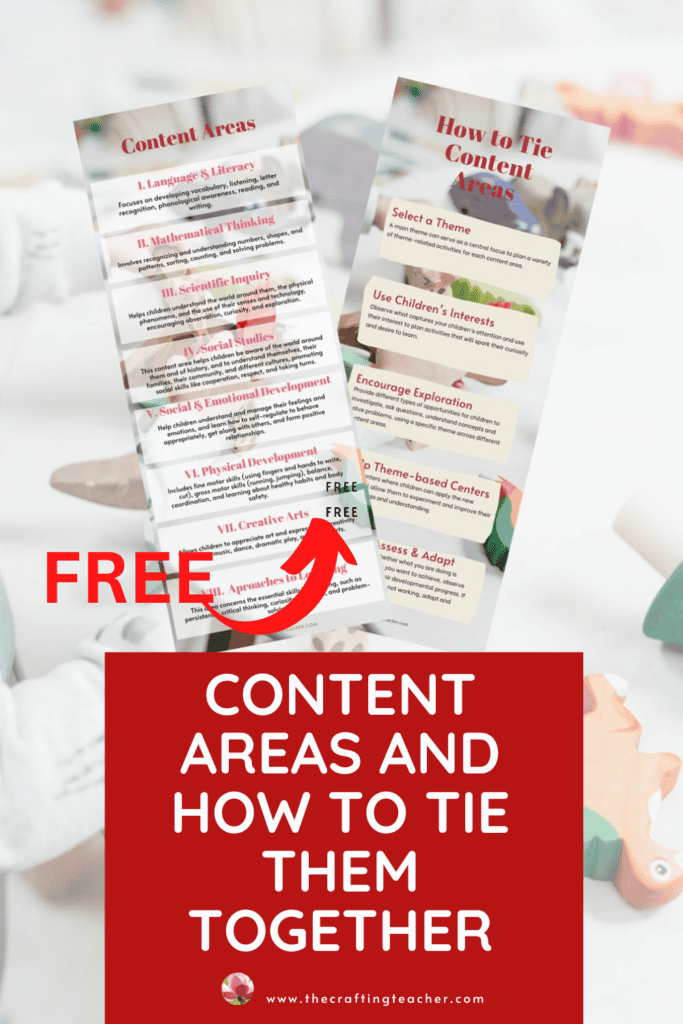
Get your Content Areas printable below by using the link provided. You will not be subscribed again if you already are.
Be happy, safe, and creative. I wish you well.
Love,

P.D. Please let me know if you find the ideas useful, and if I can help you with anything else.