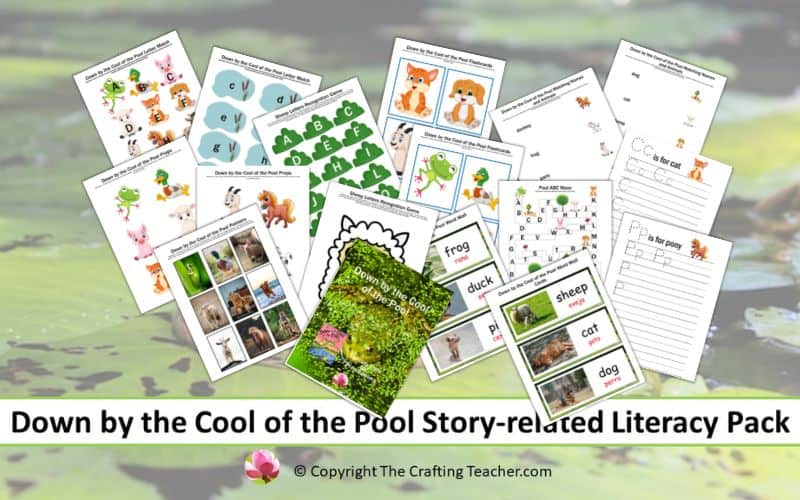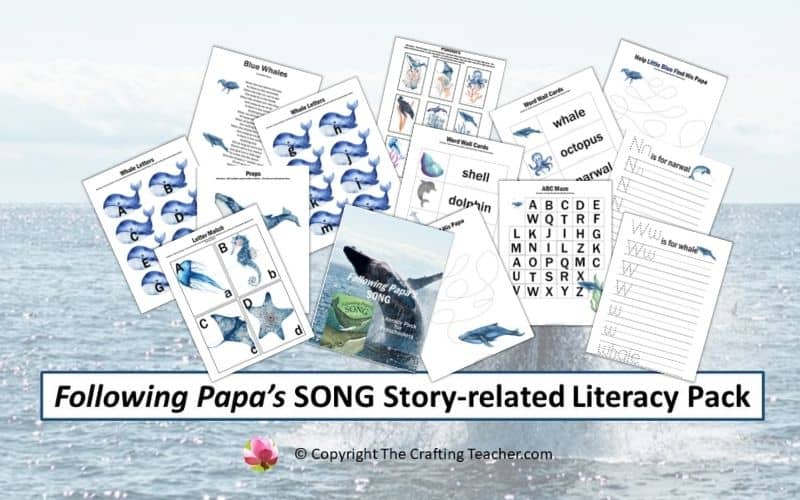

The Mitten Story-related Literacy Pack for Preschoolers
Affiliate Disclosure: “This post contains affiliate links, which means I receive a small commission, at no extra cost to you, if you make a purchase using those links”.
The Mitten, one of my favorite books, is a beautiful Ukrainian folk story rewriting by Jan Brett version which tells the story of Nicki who asks for white mittens from his Baba (grandmother), and promptly loses one, which is explored and stretched by several forest animals as they try to find shelter on a cold winter day, using beautiful illustrations, clever descriptive adjectives, and many visual details.
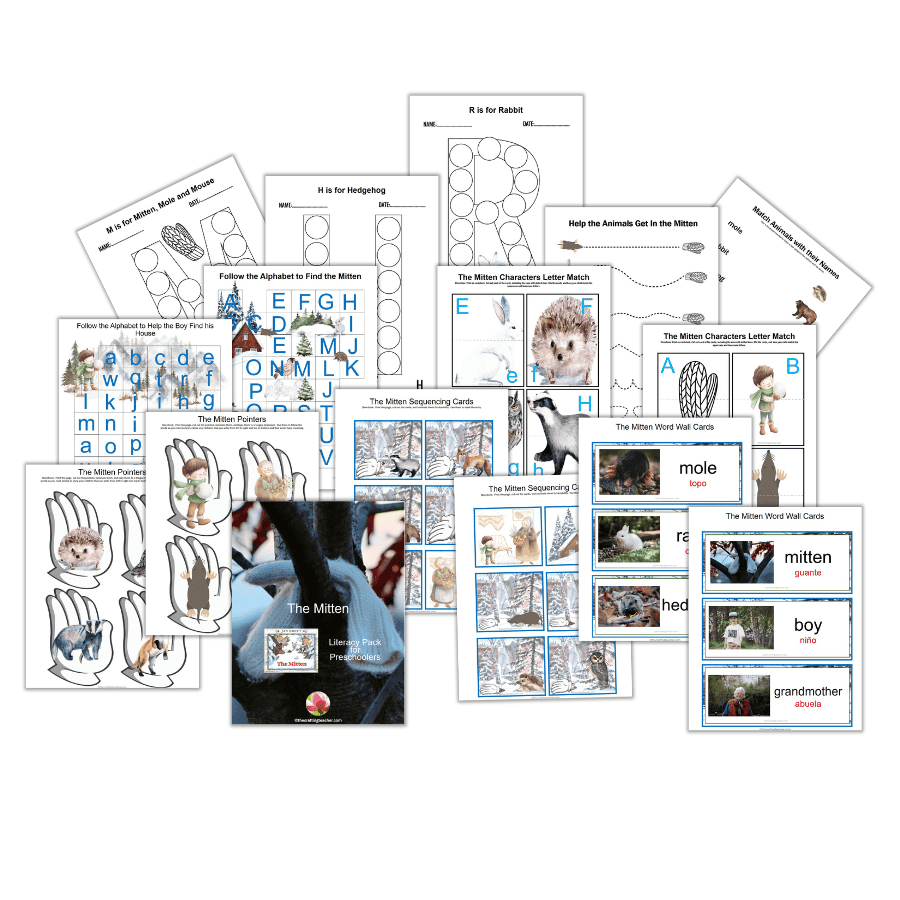
I have created a FREE 35-page The Mitten Literacy Pack with ten activity sets to accompany this book. You can download it at the end of this post.
The Mitten Literacy Pack
The Mitten Literacy Pack is a comprehensive resource that effectively reinforces preschoolers’ literacy skills and vocabulary development. It is designed to be used in conjunction with the story, providing activities that solidify students’ learning and enhance their understanding of the text through hands-on experiences.
Before reading The Mitten, review the parts of the book: the cover, title, author, illustrator, spine, and back. Introduce the story, inviting your preschoolers to make predictions about what may happen.
Ask them to observe the illustrations and share their thoughts and observations about the details, fostering a dynamic, interactive learning environment that keeps the children engaged and excited about learning.
Point out some of the animals in the story, focusing on the new vocabulary such as hedgehog and badger. Explain that the people and animals that appear in the story are called the characters of the story.
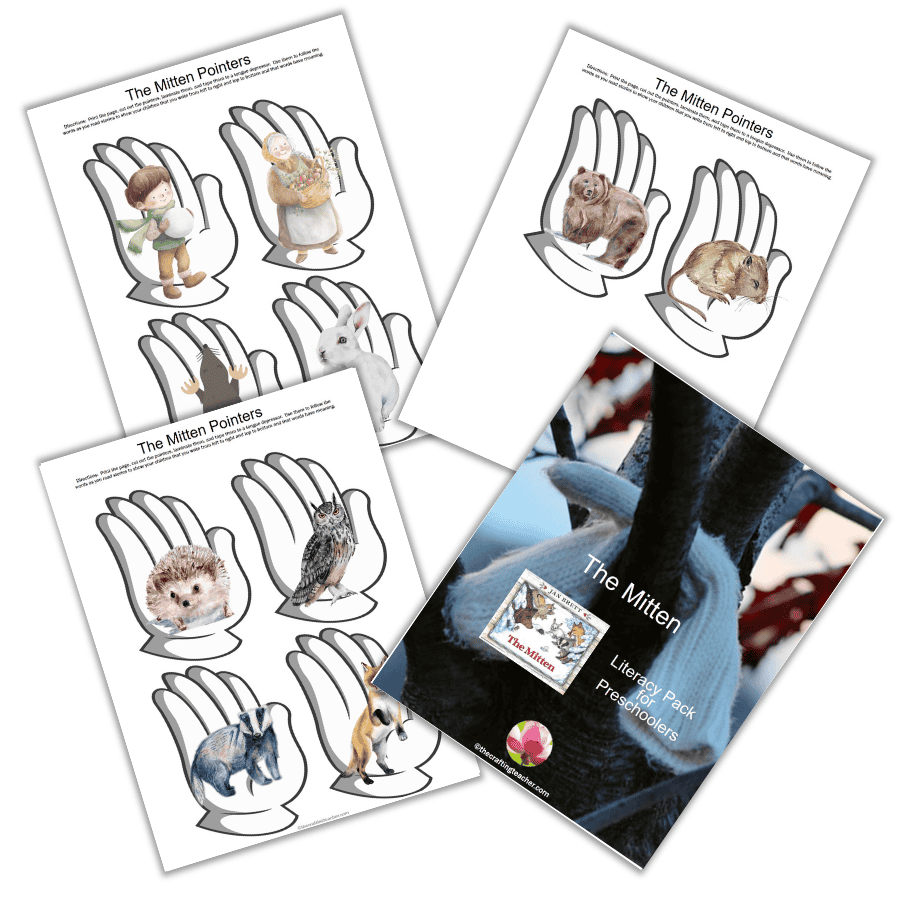
Begin reading using the pointers to guide the preschoolers’ eyes across the page. This simple technique reinforces the concept of reading from left to right and top to bottom, as well as the meaning of words.
I will suggest printing the pointers on white cardstock, laminating them, and gluing them to a tongue depressor. That way, they will last longer, and preschoolers can use them to interact with the book by themselves.
During reading, ask who, what, where, when, and why questions, such as:
- Who are the main characters of the story?
- Where is the story taking place?
- Why is it not a good idea to have white mittens?
- Who went inside the mitten first?
- How do you think the animals feel inside the mitten?
Also, open-ended questions, such as those about the student’s life experiences, can be asked, and they may elicit multiple answers.
After reading questions about the story, such as:
- Do you remember the order in which the animals went inside the mitten?
- Why do you think the mitten stretched so much?
- Do you think this might have happened in real life? Why? Why not?
- What happened at the end of the story?
- What do you think Baba thought when she saw the stretched mitten?
Retelling the Story
Retelling the story can help preschoolers understand what happened first, then, next, last, etc. Pulling out sequencing cards is especially helpful for teaching cause-and-effect concepts and helping them understand what is happening in the story.
Retelling stories also provides preschoolers with essential benefits such as:
- Boosts Cognitive Abilities: Improving children’s understanding of a story and remembering details.
- Language Development: It helps children learn new words, build their vocabulary, understand and practice sentence structure, and learn to use articles and verbs.
- Improves Memory: Retelling helps children remember the sequence of events, the characters, and special details about the story.
- Strengthens comprehension of story elements: Children learn to identify and understand the parts of a story, such as characters, setting, problem, and solution.
- Develop Pre-writing Skills: Retelling helps children organize their thoughts and express their ideas in a logical sequence, which builds their skills for future writing.
- Enhances Social Skills: Retelling stories helps children learn to be respectful, take turns, pay attention to what others are saying, and put themselves in the character’s position to understand and empathize with what they might be feeling.
- Fosters Creativity and Imagination: This activity encourages children to consider which words to use to express their ideas and to create their own stories.
- Learn Scientific and Social Studies Concepts: Stories can teach children scientific facts and expose them to other cultures, providing a deeper understanding of the world.
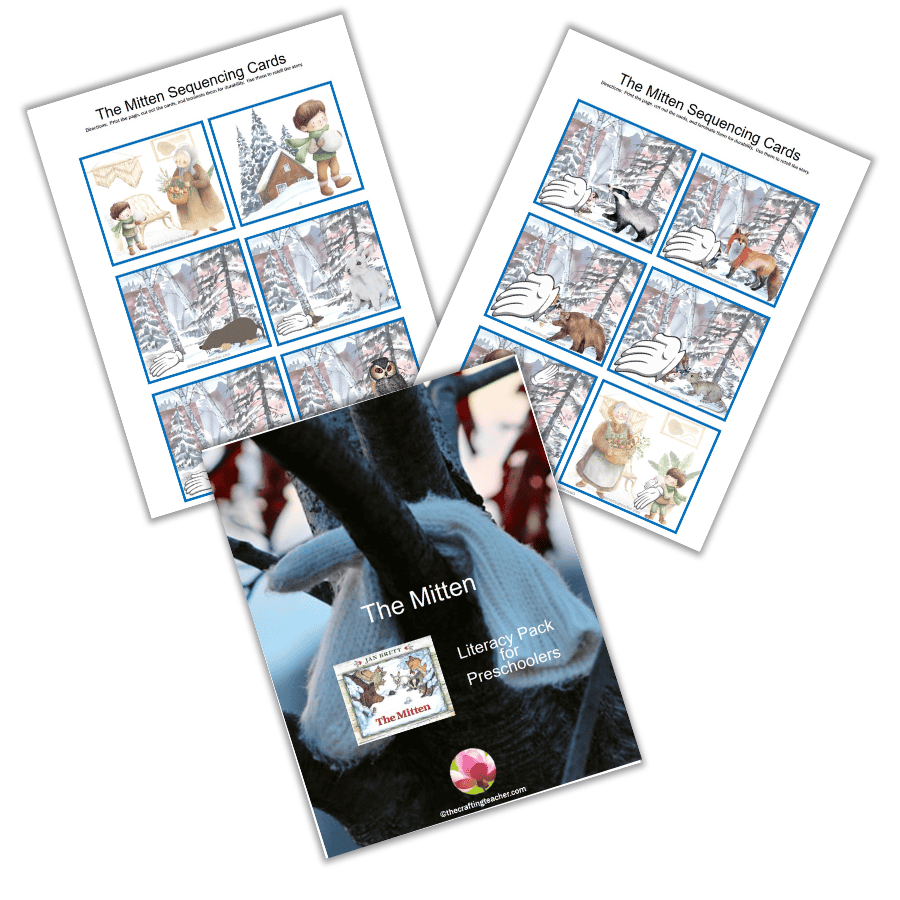
The Mitten literacy pack includes twelve sequencing cards to retell the story. Print two or three sets of the sequencing cards on white cardstock and laminate them for durability. Then gather the children in a circle on the floor or around a table.
Distribute the story sequencing cards provided in the pack among the children, and encourage them to examine the cards and decide who gets the first one. They should place the cards on the floor, board, or table in the correct order to retell the story.
When the activity is complete, place a set of sequencing cards in the Listening Center and another set in the Library Center to invite the children to retell the story independently.
Oral Language and Vocabulary Development
I like to use word wall cards because they are a vital literacy tool that helps your children learn the alphabet, letter sounds, and words related to the theme you use that week or month.
Word wall cards can be used to plan various pre-reading and pre-writing activities that help your students develop early literacy skills by associating pictures with words and recognizing patterns.
The Mitten literacy pack includes 11 word wall cards in English and Spanish featuring the words mitten, boy, grandmother, mole, rabbit, hedgehog, owl, badger, fox, bear, and mouse.
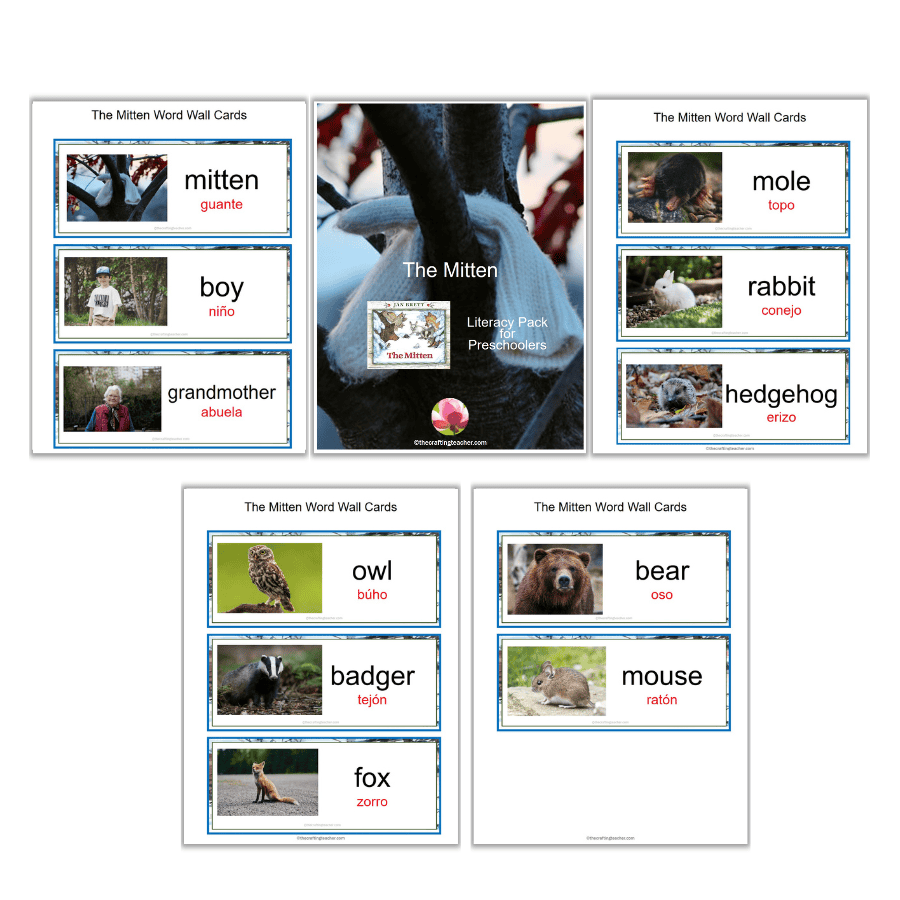
Print two or three sets of the word wall cards on white cardstock and laminate them for durability. Then place one set on your wall word, another in a pocket chart, and the third in a container so children can take them to their tables to copy the words.
You can use these word cards for an interactive learning in different writing and literacy centers through a variety of activities, such as:
- Introduce new vocabulary.
- Organize them in alphabetical order.
- Learn, review, and recognize the name and sound of the beginning letter of each word.
- Find other words that start with the same beginning letter.
- Identify words that begin with the same beginning sound.
- Practice word recognition.
- Use them as a guide to copy and spell using magnetic, wooden, or foam letters.
- Trace the words using dry-erase markers.
- Copy the words using a pencil, crayon, or marker.
- “Read” the word wall using a pointer.
- Clap the syllables on each word.
- Pair the words with pictures or objects.
- Sort the word cards that start with the same letter.
- Find other words that start with the same sound.
- Using the words in a short sentence.
Tracing Letters and Words
The Mitten literacy pack includes six letter and word sheets: Mm for Mitten, Mole and Mouse; Rr for Rabbit; Hh for Hedgehog; Oo for Owl; Bb for Badger and Bear, and Ff for Fox.
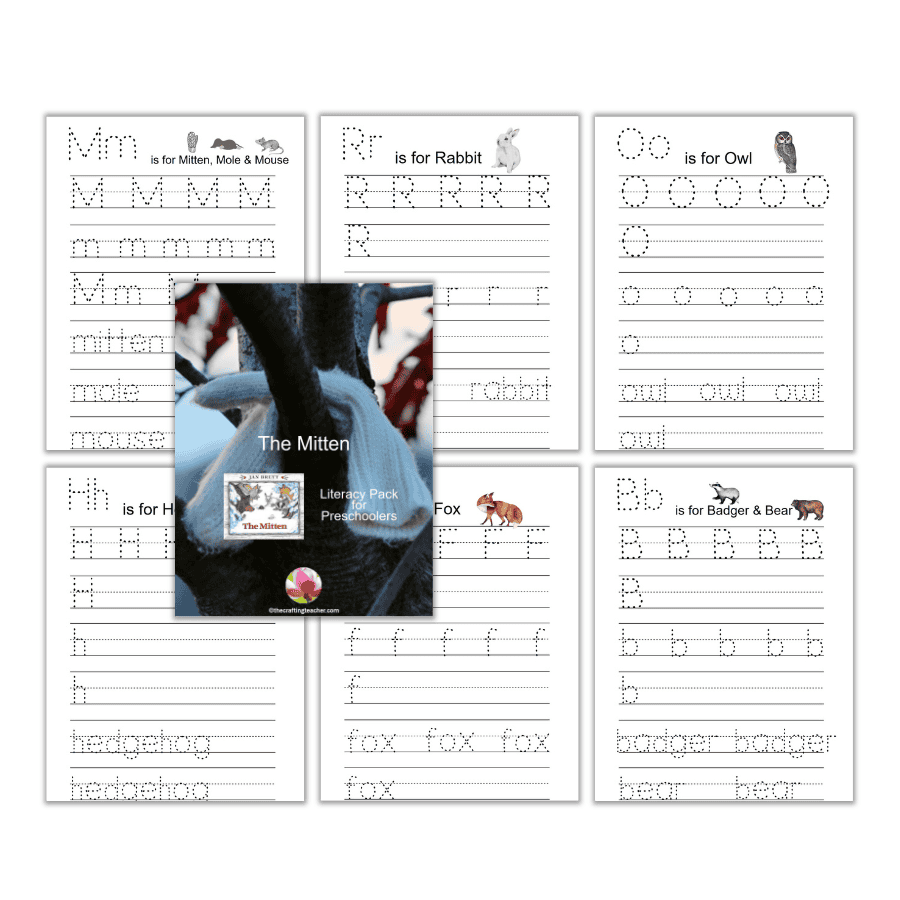
If you want to use them multiple times, print each page on white cardstock and laminate it, or place it in a dry-erase pocket to extend its lifespan. Invite the children to trace the letters using a dry-erase marker.
If you want to use them one time, print each page on white paper and have the children trace the letters and words with a pencil, crayon, or marker.
This activity dramatically strengthens the children’s language, letter recognition, pre-writing, and fine motor skills. To extend the activity, you can use them to:
- Write the letter and words on a separate sheet of paper with a pencil, crayon, or marker.
- Match each letter and word with magnetic, wooden, or foam letters.
- Shape the letters with playdough.
The Mitten Letter Match
This type of activity helps preschoolers build crucial early literacy skills, supports cognitive development, and enhances fine motor skills.
The Mitten literacy pack includes all the letters of the alphabet. To prepare for this activity, print the pages on white cardstock, cut out the cards, divide them in half along the dotted lines, and laminate them for durability. You can have the children work alone or in pairs to match The Mitten‘s uppercase letters halves with the lowercase letters halves to put the story characters together. Invite them to say the name and sound of the letter they match. Use all or part of the letters according to your children’s developmental stage.
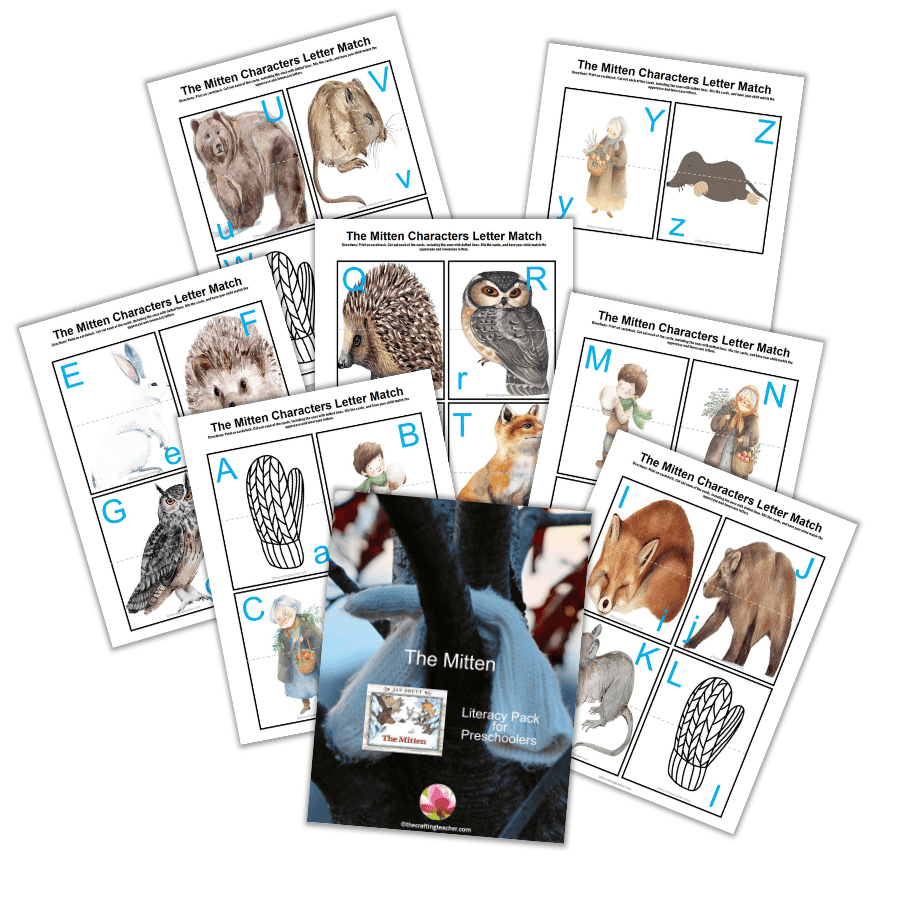
The benefits that this activity brings to preschoolers are:
- Cognitive Development: Children can process information to make learning more efficient by understanding both cases, an essential component for phonemic awareness, decoding words, and spelling.
- Enhanced Letter Recognition and Visual Discrimination: By helping children identify that uppercase and lowercase letters are the same regardless of their size, learning to differentiate between the different letters’ shapes.
- Fine Motor Development: Helping them strengthen the small muscles of their fingers and hands needed for handwriting as they manipulate the card pieces to match the letters.
- Problem-Solving and Memory Development: Children need to use critical thinking to identify and match letters, thereby strengthening their memory.
The Mitten ABC Mazes
ABC mazes are a fun hands-on activity to help preschoolers develop essential cognitive and fine motor skills by using their problem-solving and visual discrimination abilities to recognize and follow the letters in alphabetical order. It also boosts their confidence and improves their patience.
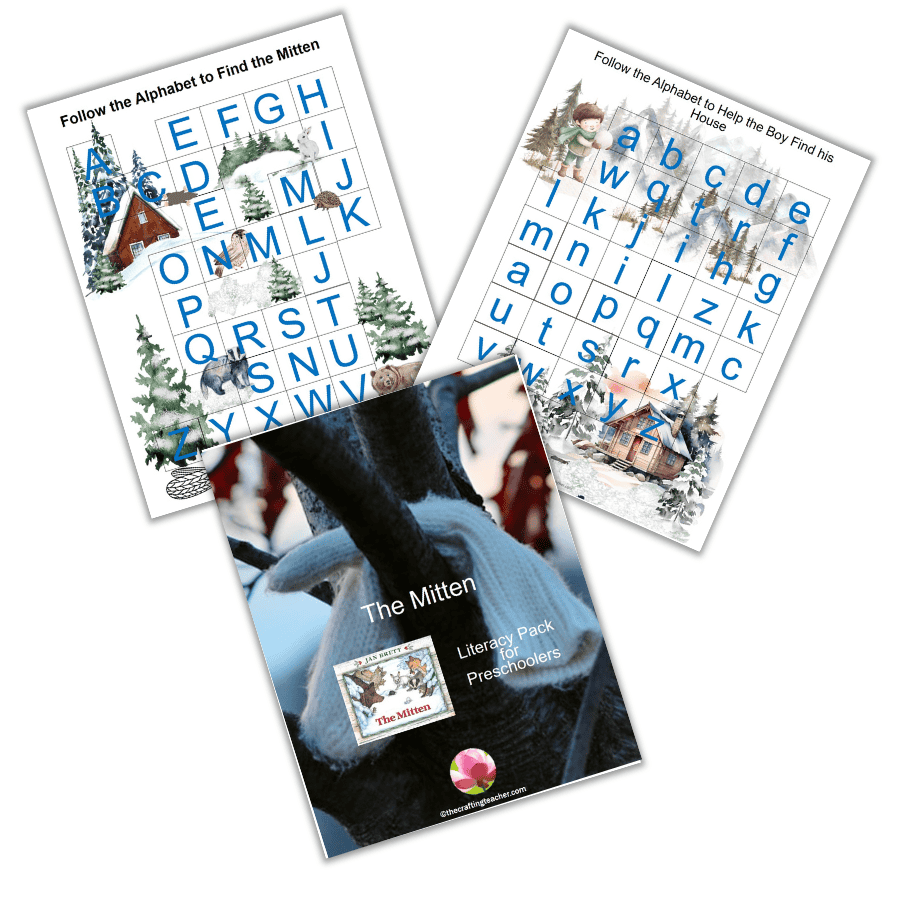
I’ve included two ABC mazes on The Mittenpack, one with uppercase letters and another with lowercase letters. Have the children review the alphabet in order, using a dot-to-dot marker to mark each letter correctly. If you want to use the activity multiple times, print the pages on white cardstock, laminate them, or place them in a dry-erase pocket, and have your children use small manipulatives such as bingo chips, mini erasers, buttons, or mini pom-poms to mark the alphabet letters. Please encourage them to say the names of the letters as they go.
Dot-to-Dot Letters
Dot-to-dot activities have several benefits for preschoolers. Among them, we can mention:
- Letter Identification – children learn to identify letters represented in different ways.
- Fine motor skills development – they learn to grip a pencil, which helps them develop pencil control.
- Pre-writing skills – they learn to put pressure on the paper with the markers and create a circular print on their paper.
- Spatial awareness – they develop an understanding of each letter’s size, direction, and orientation.
- Concentration – they learn to focus on what they are doing.
I have included six The Mitten story-related dot-to-dot letters on the pack: Mm for Mitten, Mole, and Mouse; Rr for Rabbit; Hh for Hedgehog; Oo for Owl; Bb for Badger and Bear, and Ff for Fox.
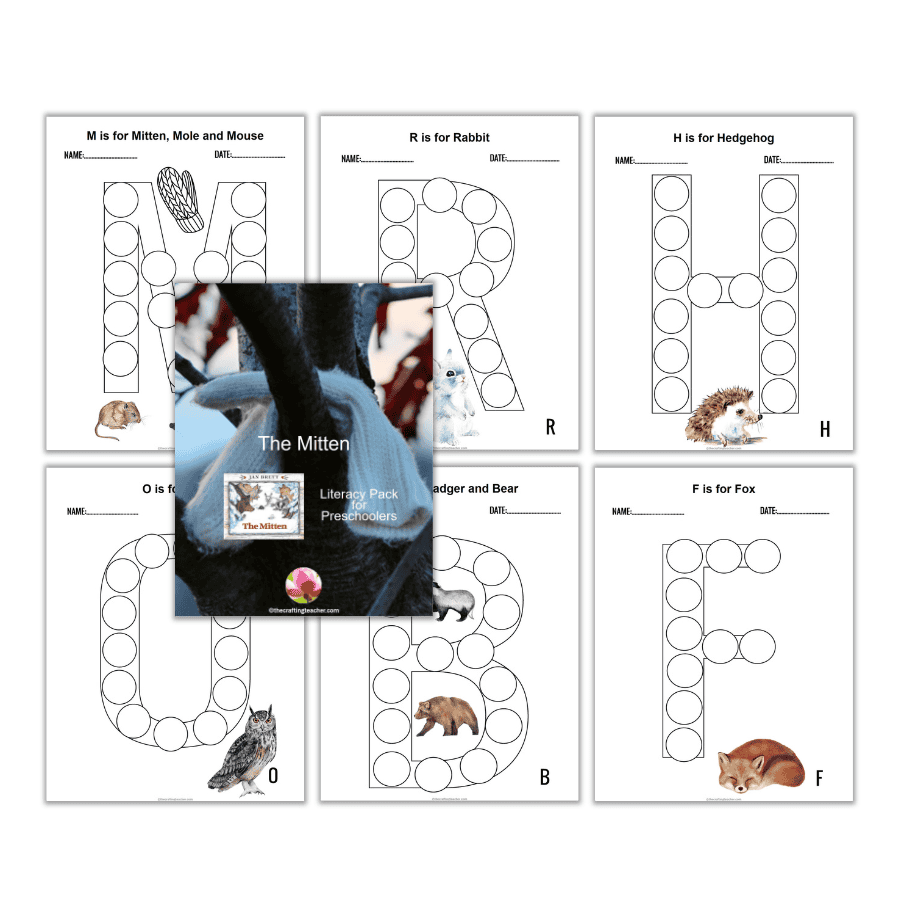
If you want to use them multiple times, print each page on white cardstock and laminate it, or place it in a dry-erase pocket to extend its lifespan. Invite the children to use a dot-to-dot marker to mark each dot.
If you want to use them once, print one page for each letter on regular paper and provide dot-to-dot markers for them to fill in the dots.
The Mitten Animal Name Matching
Recognizing and matching the animal names with their pictures will help preschoolers not only boost their cognitive and literacy skills, such as language, visual discrimination, and problem-solving, but also their math skills, like sorting and letter recognition, through a hands-on, fun activity.

If you want to use them multiple times, print each page on white cardstock and laminate it, or place it in a dry-erase pocket to extend its lifespan. Invite the children to trace the letters using a dry-erase marker.
If you want to use them one time, print each page on white paper and have the children trace the letters and words with a pencil, crayon, or marker.
The Mitten Tracing
Preschoolers must engage in line-tracing activities to develop fine motor, hand-eye coordination, and pencil grip skills, which form the foundation for writing. This type of activity also improves their letter shape recognition, concentration, and confidence.
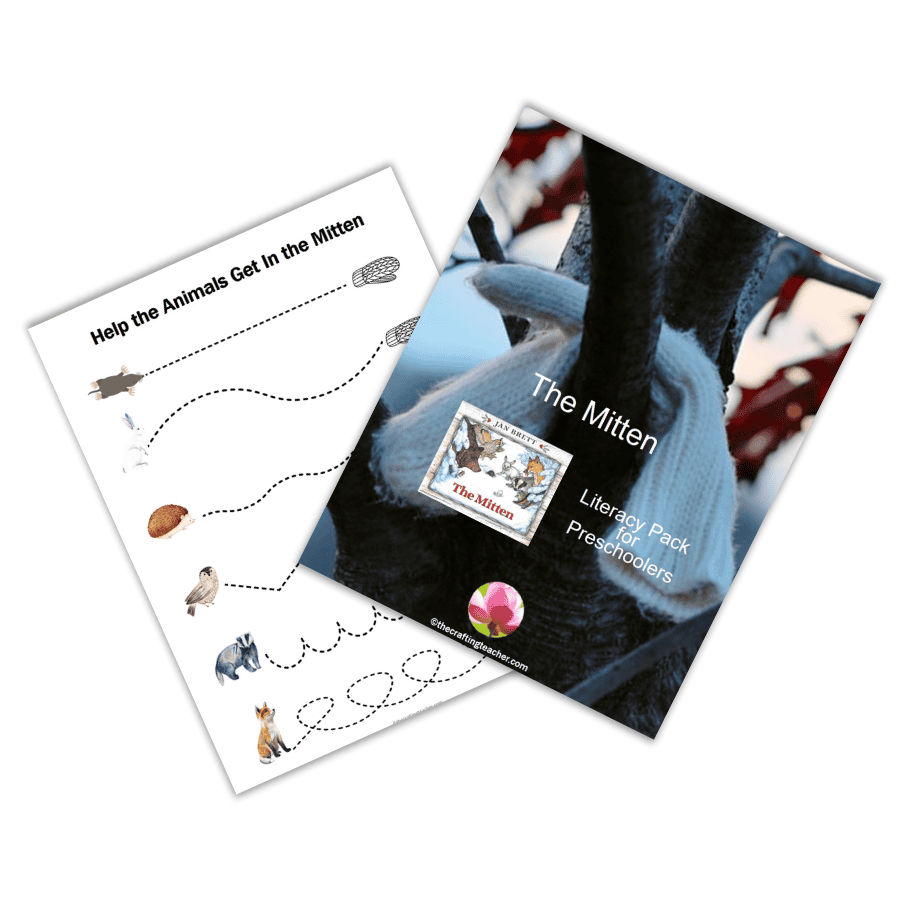
If you want to use them multiple times, print each page on white cardstock and laminate it, or place it in a dry-erase pocket to extend its lifespan. Invite the children to trace the letters using a dry-erase marker.
If you want to use them one time, print each page on white paper and have the children trace the letters and words with a pencil, crayon, or marker.
Additional Activities:
Write a Class Story to Make a Book: During circle time, invite your children to create a story, reminding them it must have a beginning, middle, and end. Use chart paper to take dictation.
You can encourage them by starting with “If I were a forest animal…. ” or “If I had a white mitten…” Print the story and have the students illustrate it when it is finished. Then, put it together as a book for the library and make a copy for each author.
Sing Related Songs: Singing is an excellent literacy activity; we all know children love it. I found a cute song for The Mitten story on First Grade Window on the Wonder website that you can print and use.
Include The Mitten-Related Books: You can add other versions of The Mitten and related books about the story’s characters to different centers to give children a comprehensive learning experience and variety.
Below are some suggestions. These books can be found at your local library, used bookstore, or on Amazon. To add them to your collection, you can use my affiliate links embedded in the titles for immediate access.
- The Mitten: An Old Ukrainian Folktale by Alvin R. Tresselt.
- The Farmer and the Mole by Hemanth Manokaran.
- The Little Snow Mole by Andrea M. Peterson.
- All Things Rabbits for Kids by Animal Reads.
- Bunnies: A Wild Wonder Book by Mary Sivertsen.
- All Things Hedgehogs for Kids by Animal Reads.
- Pickly But Cute: A Kids Guide to Hedgehogs by Brian Thomas.
- Owls by Laura Marsh.
- A Little Owl by Rosalee Wren.
- Badgers! by Hope Aicher.
- Facts About the Badger by Lisa Strattin.
- All Things Foxes for Kids by Animal Reads.
- Foxes by Laura Marsh.
- All Things Bears for Kids by Animal Reads.
- All About Bears by National Geographic Kids.
- Little Mouse’s Sweet Treat by Shana Hollowell.
- Mouse Paint by Ellen Stoll Walsh.
Pin It For Later
If you are in a rush and don’t have time to read the post and download the printable, but want to save it for later, pin this to your Literacy board on Pinterest.
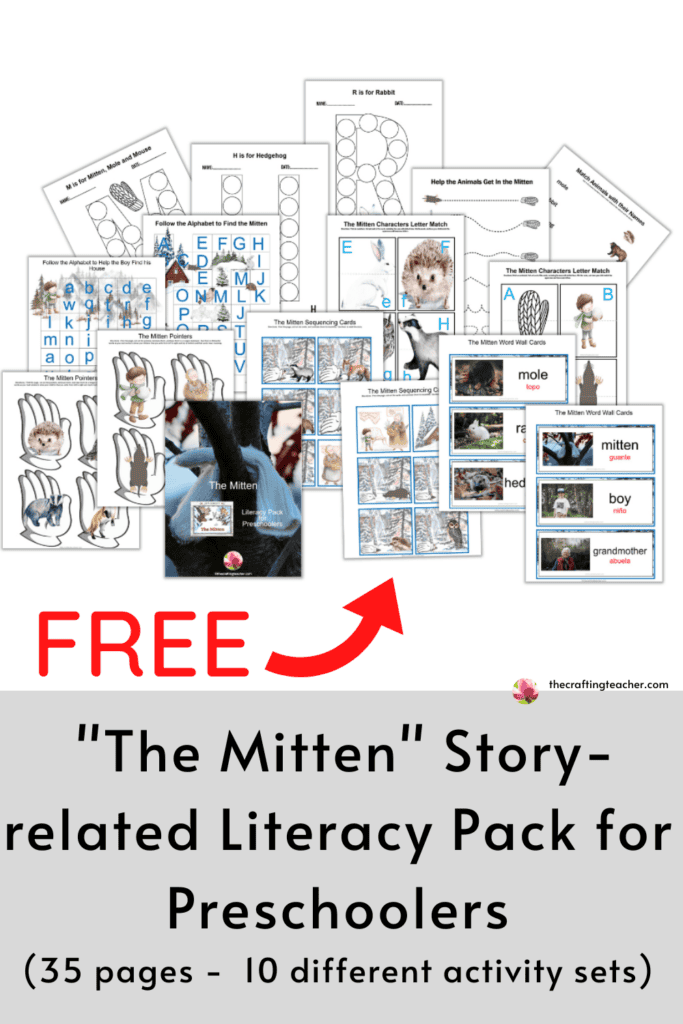
Don’t forget to download your FREE The Mitten Literacy pack. Click the link below and enter your email to download immediately.
Be happy, safe, and creative. I wish you well.
Love,

P.S. Let me know if these activities work for you. If you want to see an article or a printable on how to make something specific, please let me know, and I will try my best to create it for you.