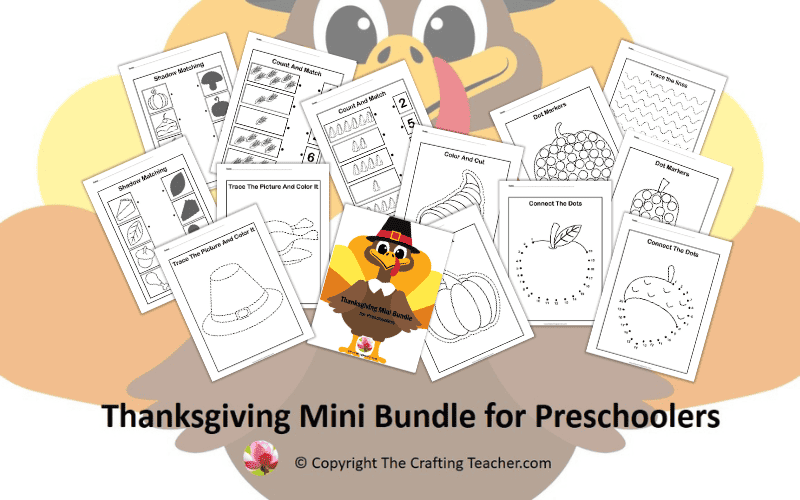
Thanksgiving Mini Bundle For Preschoolers
Affiliate Disclosure: “This post contains affiliate links, which means I receive a small commission, at no extra cost to you, if you make a purchase using those links.”
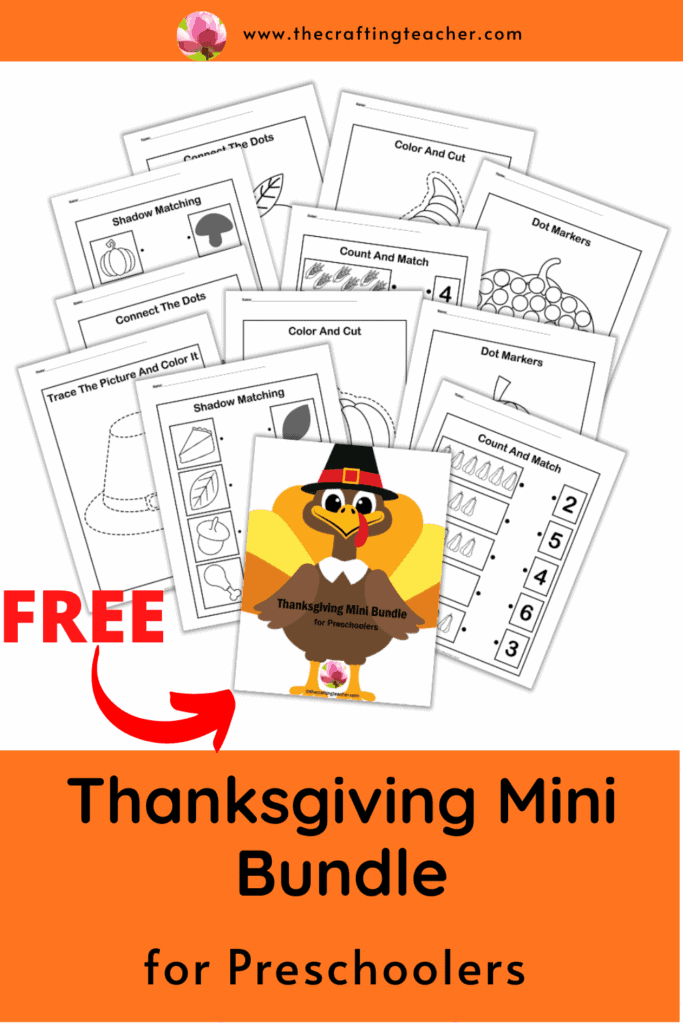
Thanksgiving is coming in fast, and you might want to use this FREE Thanksgiving Mini Bundle to keep your preschoolers busy, to plan new lessons, and maybe even introduce your children to new activities.
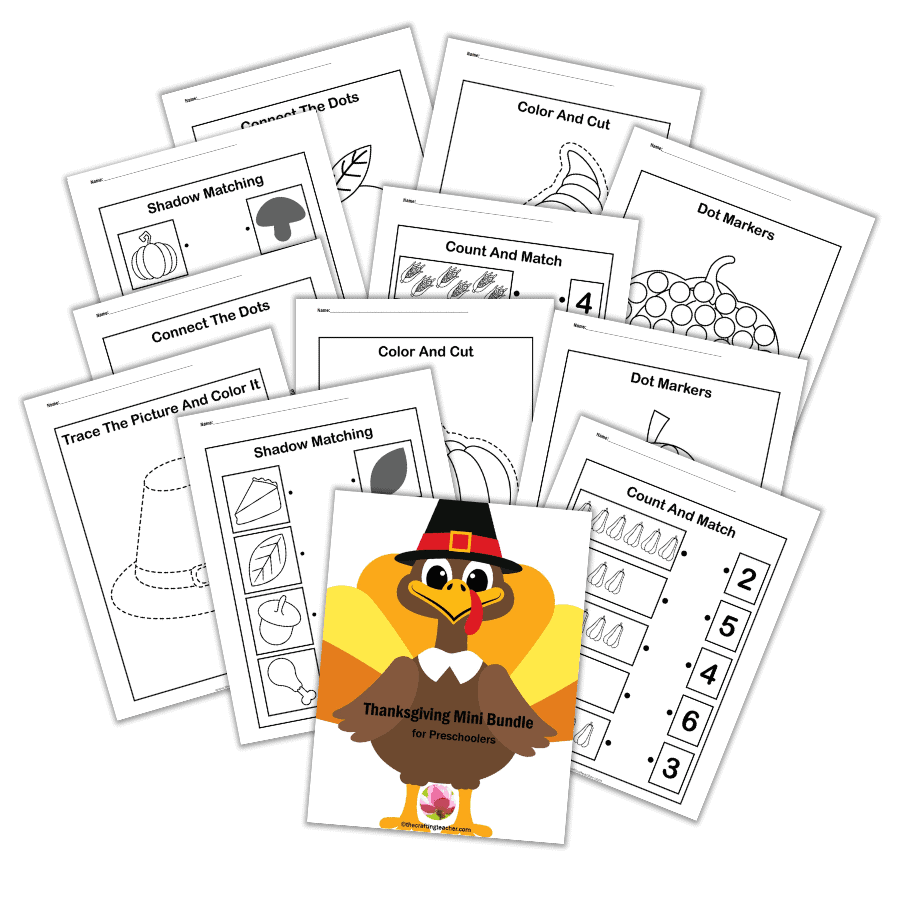
This Thanksgiving Mini Bundle includes fourteen pages with seven different activities. You can grab it at the end of this post.
Thanksgiving Mini Bundle
The best way to teach anything to your preschoolers is through fun, hands-on activities that keep them engaged and interested. These easy-to-prep activities require a handful of materials and can be used in different ways, such as:
- Small group activity.
- Literacy center option.
- Writing center activity.
- Math center.
- Take-home activity.
- Quiet area option.
Materials Needed:
- Thanksgiving Mini Bundle (FREE at the end of this post).
- Printer.
- White cardstock and regular paper.
- Laminator.
- Laminator pouches.
- Dot-to-Dot, dry-erase, or regular markers.
- Pencils, colored pencils, and crayons.
The activities included in this mini bundle to help your preschoolers develop multiple skills are:
Trace and Color
Tracing and coloring activities are also crucial to prepare preschoolers for more complex tasks like reading and writing by improving their:
- Fine Motor and Pre-writing Development, strengthening fingers and small hand muscles.
- Hand-eye Coordination to control a pencil or crayon and follow the lines.
- Cognitive Development, learning how to solve problems.
- Language and Vocabulary, by talking about the images.
- Hand-eye Coordination, by observing the images and tracing the lines to complete them.
- Confidence and Self-awareness, by feeling successful in completing the task and building independent learning skills.
- Concentration and Focus: paying attention to details, which helps improve their attention span.
- Creativity and Self-expression, by choosing different colors.
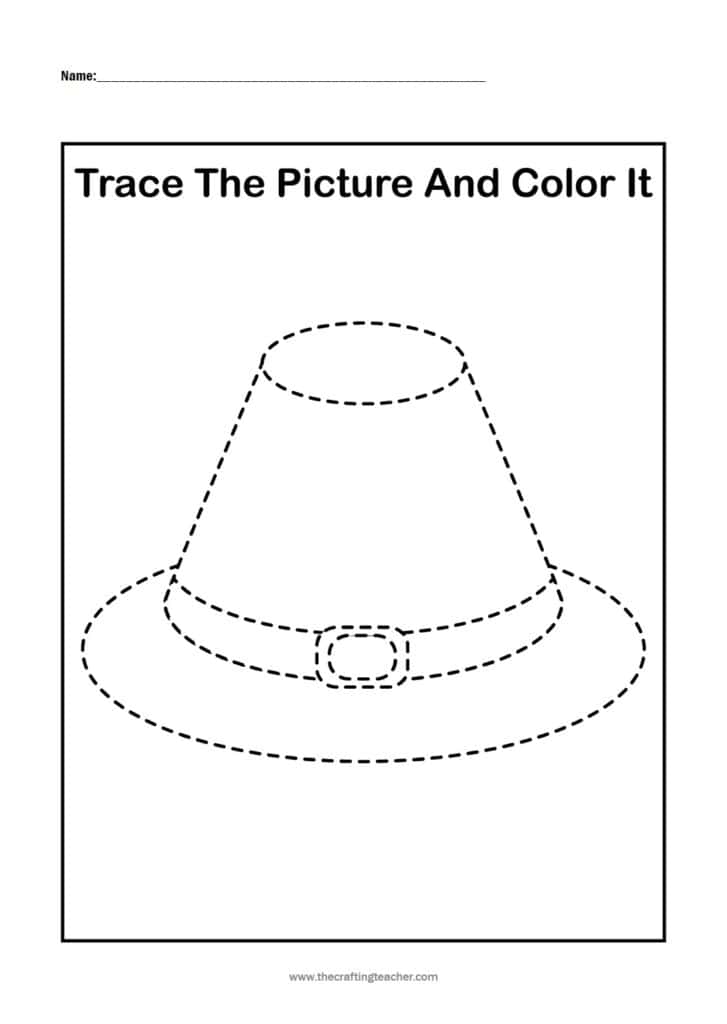
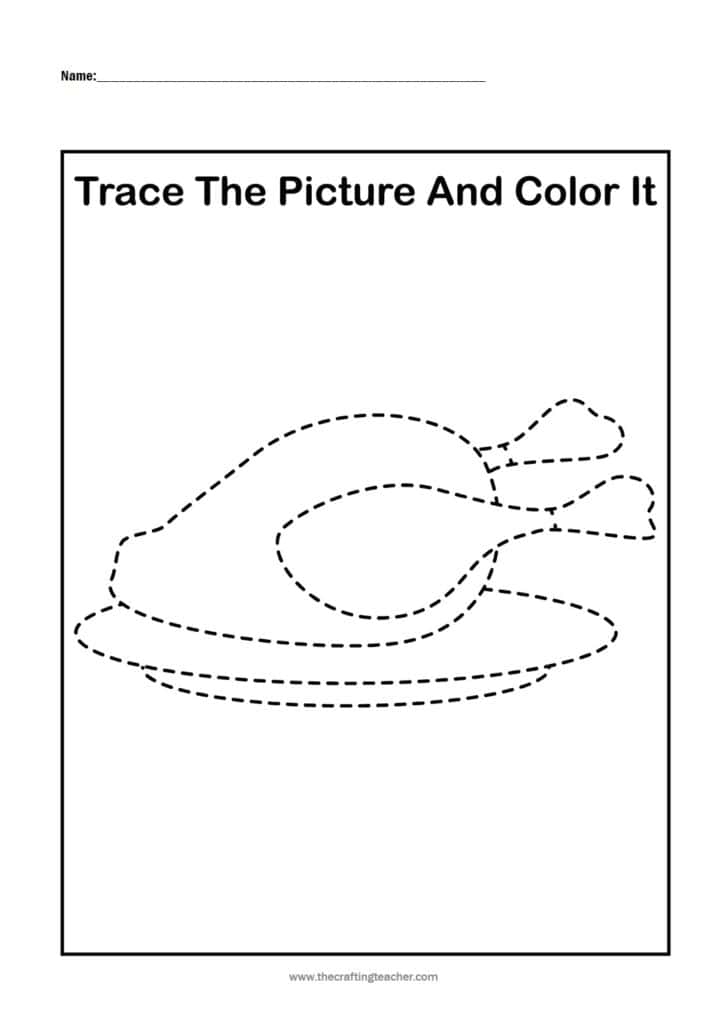
Print one copy for each child on regular white paper. Introduce the activity by talking about the image. Start by asking your children if they can tell what it is, and ask what colors they think each image should have. Then, invite your preschoolers to use a pencil to complete the picture, and then crayons or regular markers to color.
Shadow Matching
Shadow matching activities benefit preschoolers by developing multiple essential skills that are essential to building reading and writing skills, including:
- Visual Discrimination, teaching them how to recognize and compare similarities and differences using complete and outlined images or black images.
- Fine Motor and Pre-writing Development, strengthening fingers and small hand muscles.
- Cognitive Development, by learning how to solve problems.
- Concentration and Focus, paying attention to details, which helps improve their attention span.
- Spatial Awareness: Understanding connections between objects and the space around them.
- Early Mathematical Skills: Understanding shapes and spatial relationships lays the foundation for future geometry learning.
- Vocabulary: Talking about the similarities and differences between images.
- Hand-eye Coordination, by observing the images and matching them to their corresponding shadows using their hand to trace the lines.
- Confidence and Self-awareness: Feeling successful in completing the task and building independent learning skills.
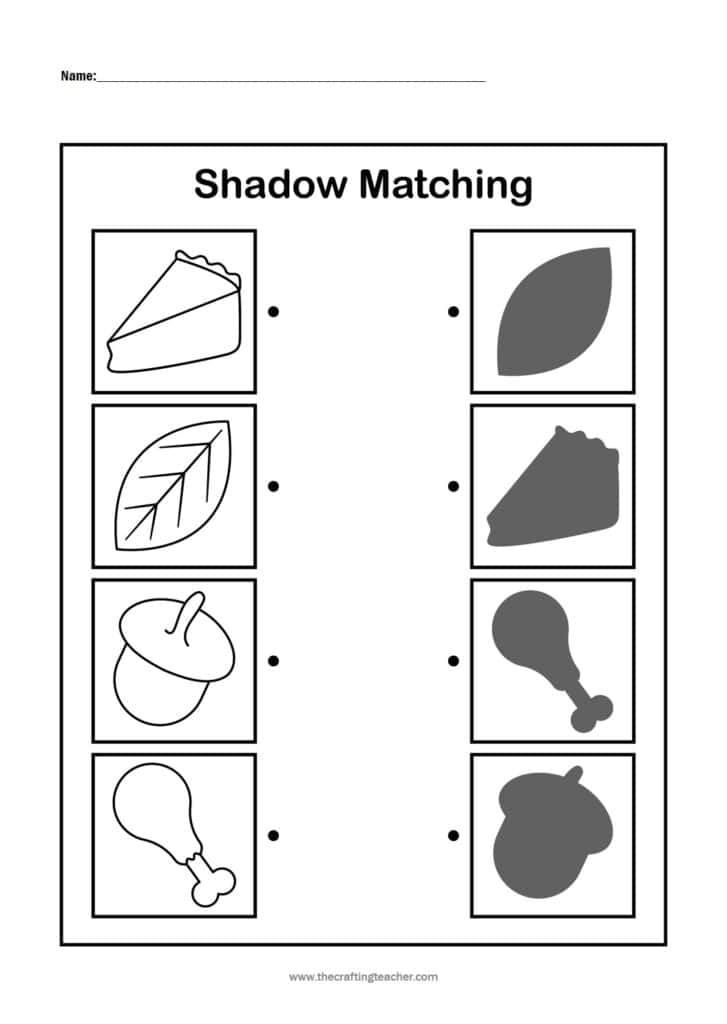
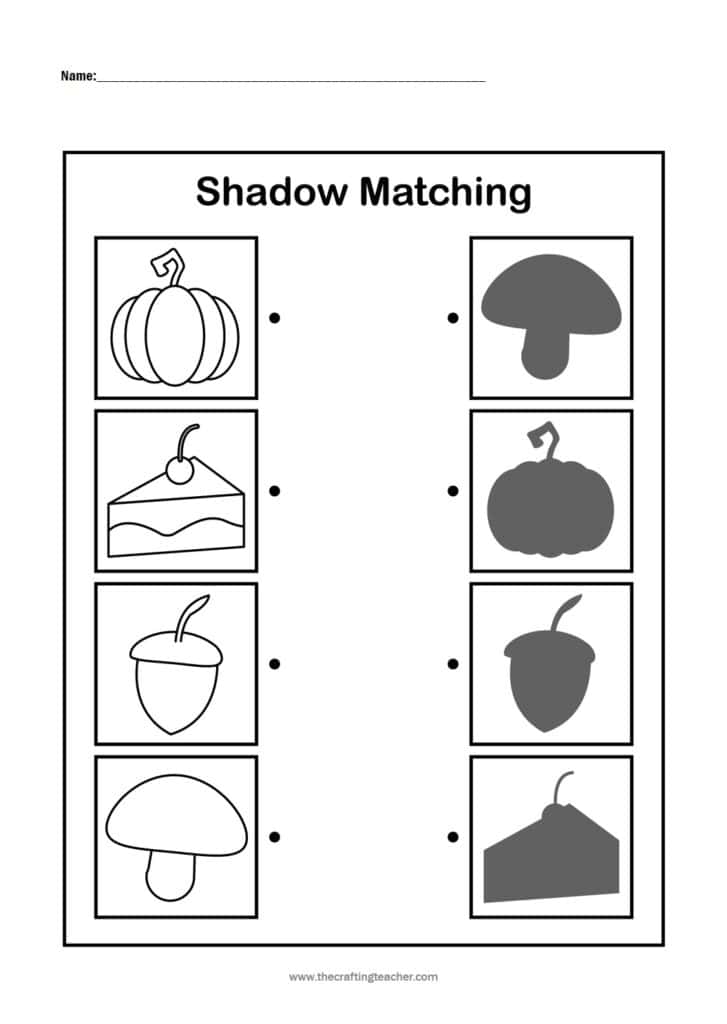
If you want to use them multiple times, print some copies on white cardstock and laminate them. Preschoolers can use a dry-erase marker to trace the lines if the page is laminated, or a regular marker, crayon, or pencil if it’s not.
To extend the activity, talk about what each image is, whether it’s edible, and which colors it should be, then ask them to color the images with markers or crayons.
Trace the Lines
As I mentioned above, tracing is crucial to prepare preschoolers for more complex tasks like reading and writing by improving their:
- Fine Motor and Pre-writing Development, strengthening fingers and small hand muscles.
- Hand-eye Coordination to control a pencil or crayon and follow the lines.
- Cognitive Development, learning how to solve problems.
- Language and Vocabulary, by talking about the images.
- Hand-eye Coordination, by observing the images and tracing the lines to complete them.
- Confidence and Self-awareness, by feeling successful in completing the task and building independent learning skills.
- Concentration and Focus, by paying attention to details, which helps improve their attention span.
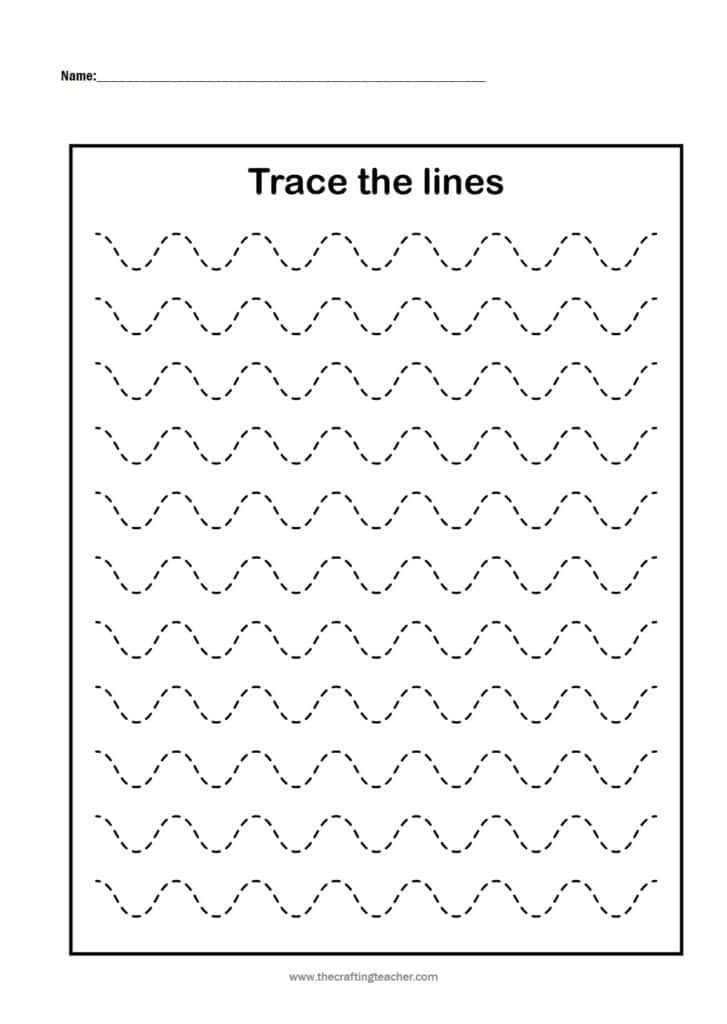
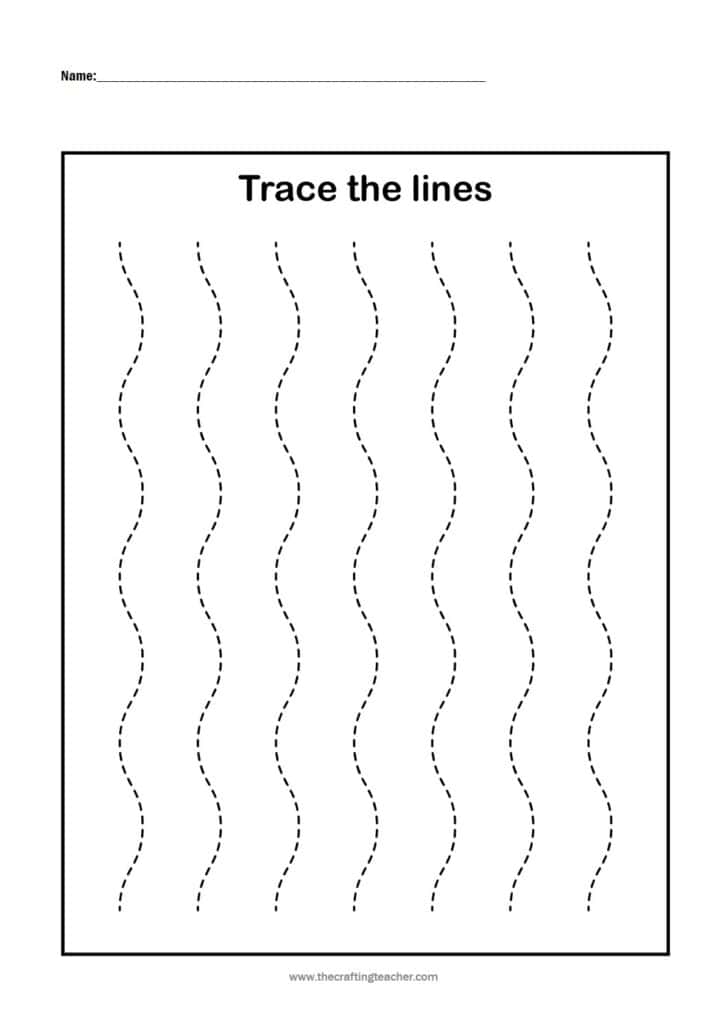
Print one copy for each child on regular white paper or, to reuse them, print on white cardstock and laminate.
Have your preschoolers trace the lines with their fingers. That will give them a sense of how the lines go. Then they can use a dry-erase marker to trace the lines if the page is laminated, or a regular marker, crayon, or pencil if it’s not.
Dot Markers
Dot marker activities can be used to teach essential math and literacy skills, providing many benefits to preschoolers by improving:
- Fine Motor and Pre-writing Development, strengthening fingers and small hand muscles.
- Hand-eye Coordination, required to control a pencil or crayon to coordinate their hand movements with what they see on the page.
- Cognitive Development, learning how to solve problems.
- Vocabulary, by talking about the images.
- Hand-eye Coordination, by observing the images and tracing the lines to complete them.
- Confidence and Self-awareness, by feeling successful in completing the task and developing their independent learning abilities.
- Concentration and Focus, by paying attention to where they place their dots and which color marker to use, which helps improve their attention span.
- Creativity and Self-expression, by choosing different colors and patterns, reflect their feelings and ideas.
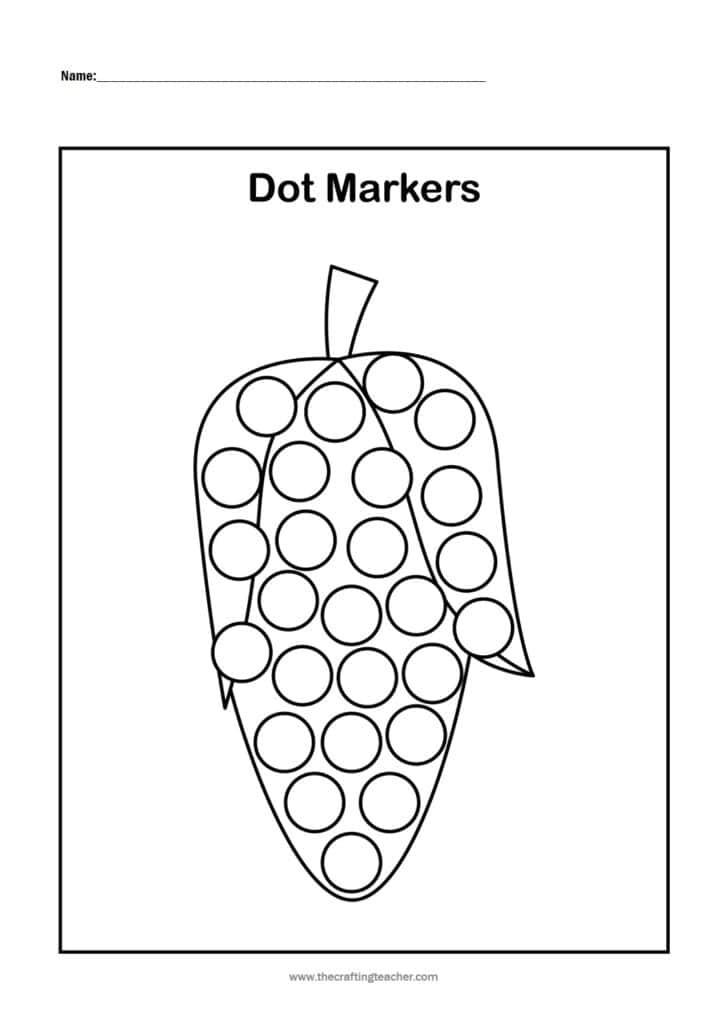
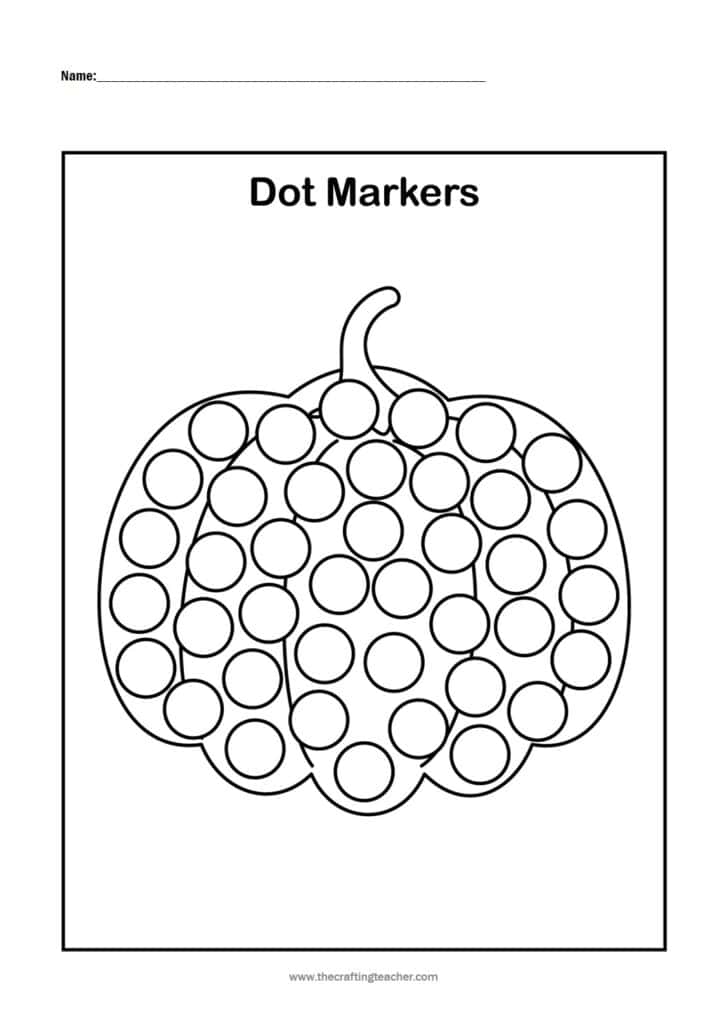
Print one copy for each child on regular white paper. Introduce the activity by discussing what the image depicts and which colors each should have. Then invite your preschoolers to use dot-to-dot markers to color the dots, and maybe colored pencils and crayons to color the spaces between the dots.
Count and Match
Count and match activities provide multiple mathematical, cognitive, language, and social-emotional benefits to preschoolers by building a strong foundation to learn more advanced mathematical and literacy skills, by developing:
- Numeracy Skills, by learning how to count, recognize numbers, and understand quantities.
- Cognitive Development and Critical Thinking, by learning how to solve problems and count, prepares them for more complex problem-solving in the future.
- Concentration, Memory, and Focus, by counting and having to retain information to match the number of objects with the correct number.
- Language and Vocabulary Development, discussing objects and quantities aloud to develop vocabulary and communication skills.
- Fine Motor and Pre-writing Development, strengthening fingers and small hand muscles.
- Hand-eye Coordination, required to control a pencil or crayon to coordinate their hand movements with what they see on the page.
- Confidence and Self-awareness, by feeling successful in completing the task and building independent learning skills.
- Creativity and Self-expression, by choosing different colors and patterns, reflect their feelings and ideas.
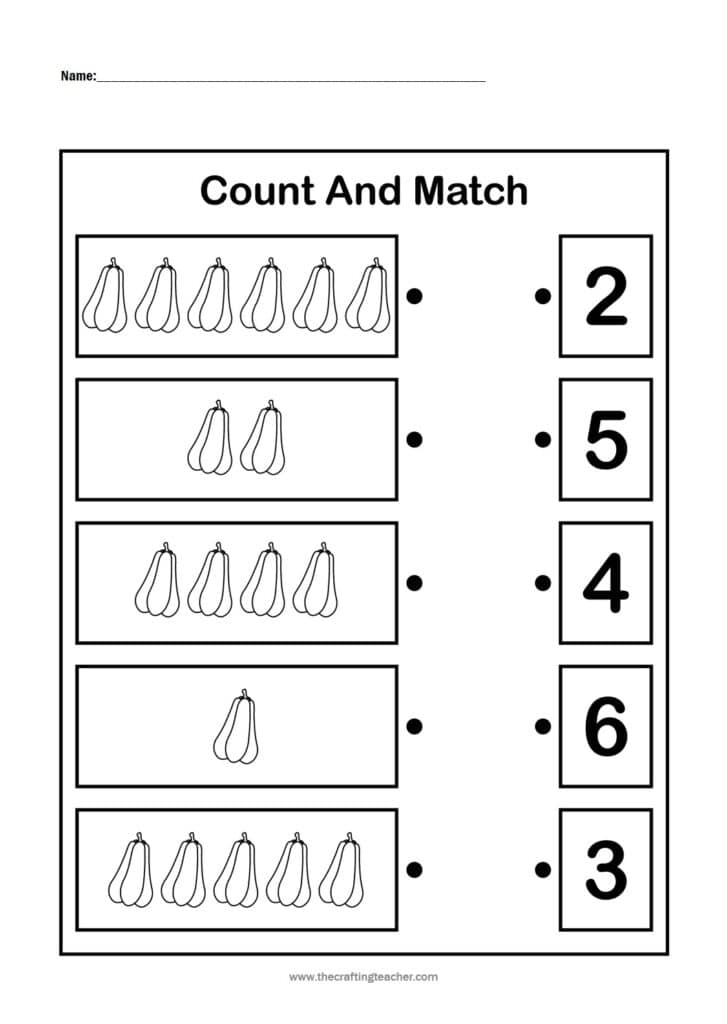
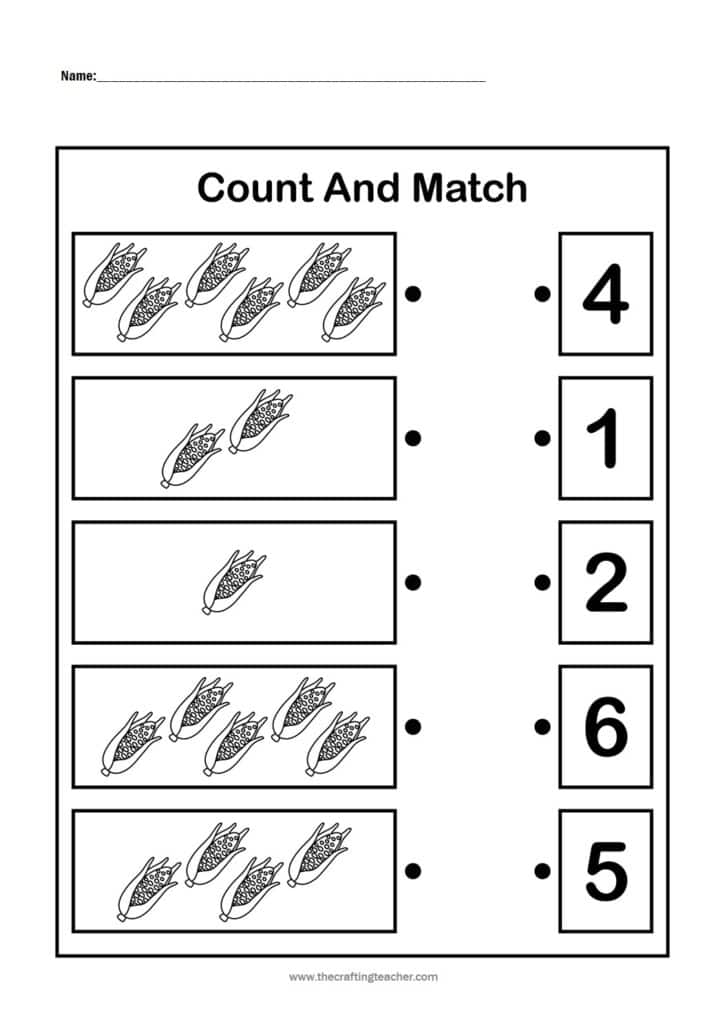
Print one copy for each child on regular white paper or, to reuse them, print them on white cardstock and laminate them.
Preschoolers can use a dry-erase marker to trace the lines if the page is laminated, or a regular marker, crayon, or pencil if it’s not; you can also extend the activity by asking them to color the images with colored pencils, regular markers, or crayons.
Color and Cut
Color and cut activities benefit preschoolers by building essential skills needed for writing, while boosting many other cognitive abilities, such as:
- Fine Motor Development, by strengthening fingers and small hand muscles while coloring and cutting.
- Cognitive Development and Critical Thinking, by learning how to solve problems.
- Hand-eye Coordination, Focus, and Patience, required to control the hands to guide what their eyes see, to try to color within the lines, and cut with precision.
- Confidence, Self-awareness, and Calmness, by feeling successful in completing the task, developing their independent learning abilities, and relieving stress through the calming nature of the activity.
- Creativity and Self-expression, by choosing different colors, reflecting their feelings and ideas.
- Language Development, by discussing what they color, the colors they chose, and why they did it, building their vocabulary, and expressing their thoughts and ideas.
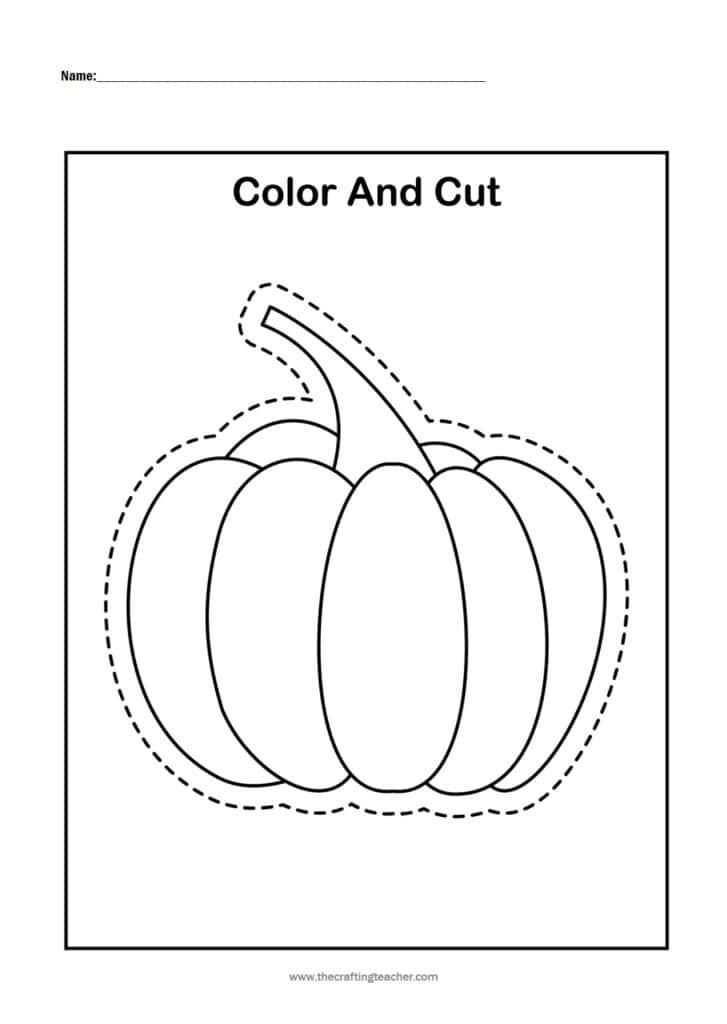
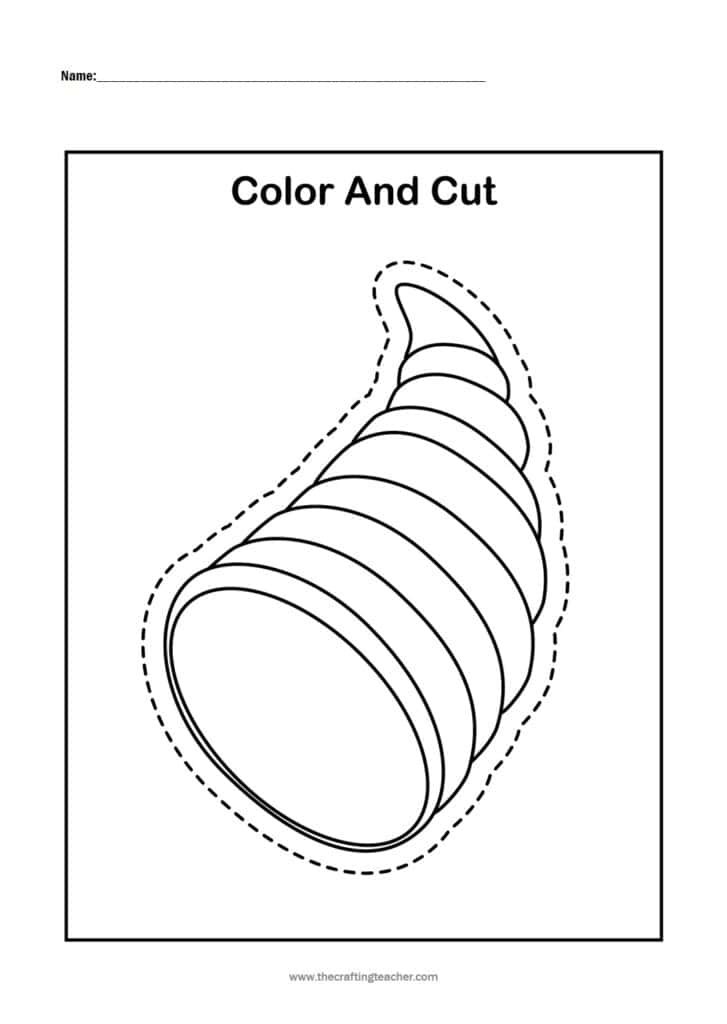
Print one copy for each child on regular white paper, invite them to use regular markers or crayons to color the images, and finally, cut them out. To extend the activity, ask them to glue the pictures onto construction paper and cut out fruits and veggies from supermarket ads to glue to complete the cornucopia.
Connect the Dots
Connect the dots for preschoolers helps develop multiple pre-writing, pre-math, and cognitive skills, such as:
- Number Recognition, when they identify the numbers and their correct sequence to complete the picture.
- Cognitive Development and Critical Thinking, by figuring out the correct order of numbers to trace the image and developing problem-solving abilities.
- Concentration, Memory, and Focus, by paying attention to connect the numbers in the correct order.
- Language and Vocabulary Development, by discussing images and the correct order and names of the numbers, develops vocabulary and communication skills.
- Fine Motor and Pre-writing Development, by strengthening fingers and small hand muscles as they connect the dots.
- Hand-eye Coordination, required to control a pencil or crayon to coordinate their hand movements with what they see on the page.
- Confidence and Self-awareness, as they feel successful in completing the task and build independent learning skills.
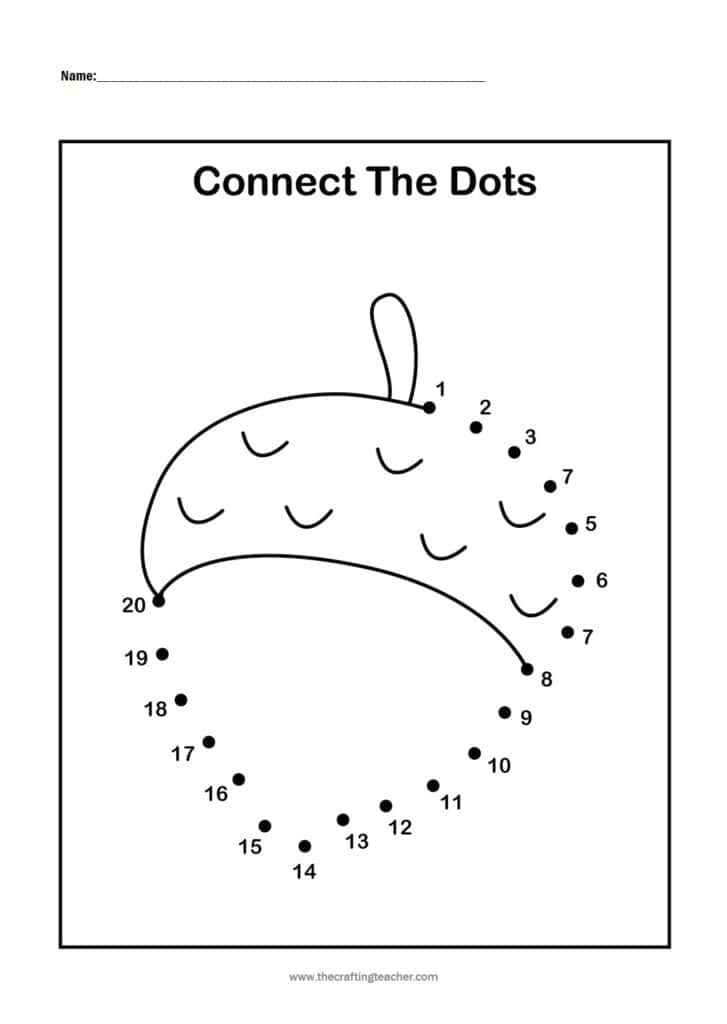
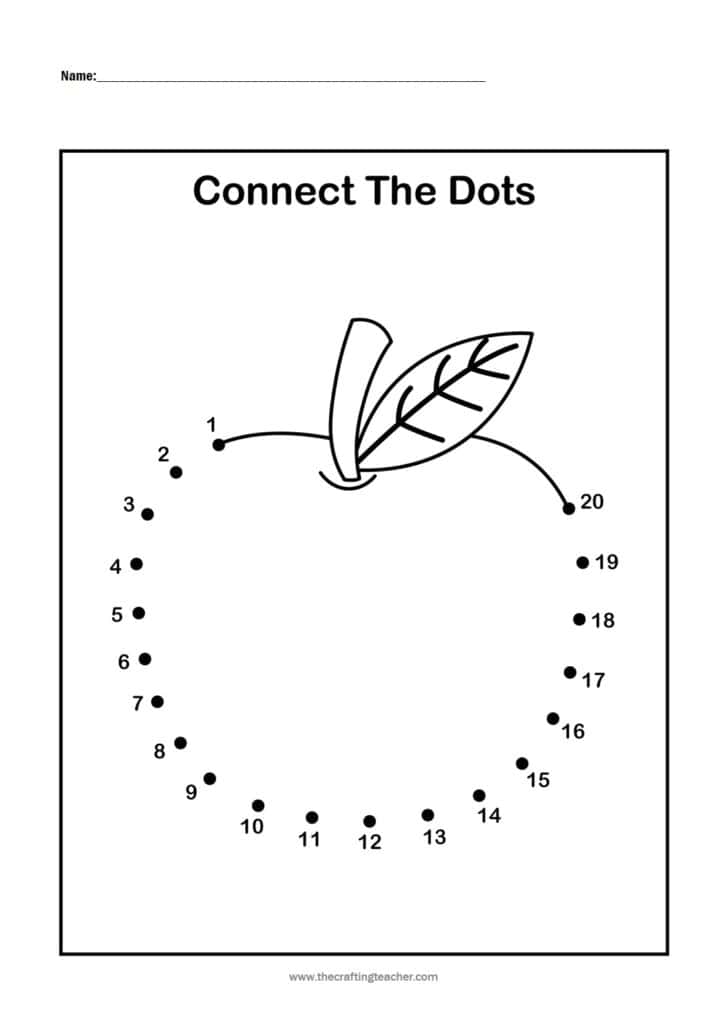
Print one copy for each child on regular white paper and invite them to use a pencil to trace the numbers in the correct order, starting with number one. To extend the activity, ask them what object they think they will uncover before they start tracing, and then ask them to color the images with color pencils, regular markers, or crayons when they finish.
Thanksgiving Storybooks
If you have been on my site before, you may know how important I consider books. Reading is one of my favorite things, not just for myself, but also for my kiddos.
These are some fun books you can use during Thanksgiving month. You can find them at your local library, used bookstore, or on Amazon. Clicking each title takes you directly to Amazon via my affiliate links, saving you time searching for them.
- The Story of the Pilgrims by Katharine Ross. This exciting book retells the pilgrims’ voyage across the Atlantic to the first Thanksgiving feast, with colorful, beautiful illustrations that will surely delight your young historians.
- Thanksgiving Is for Giving Thanks! by Sutherland. This book uses simple text and colorful illustrations to introduce preschoolers to the joy of celebrating Thanksgiving with family and friends and to be thankful for everything and every day.
- Little Critter: Just a Special Thanksgiving by Mercer Mayer. Little Critter, a lovely character, brings the Thanksgiving celebration to life with his family as they give thanks.
- Bear Says Thanks by Karma Wilson. This book offers beautiful illustrations and playful text to tell the story of a Bear who has planned a big dinner to celebrate family and friendship.
- The Night Before Thanksgiving by Natasha Wing. This fun book tells the story of families coming together to prepare and enjoy a Thanksgiving feast.
- Thanks for Thanksgiving by Julie Markes. This book uses simple text and striking illustrations to remind kids and adults alike about the little details that make each day enjoyable, and to share the true Thanksgiving spirit in a warm, genuine way.
Pin It For Later
If you are in a rush and don’t have time to read the post and download the printable, but want to save it, pin this to one of your Pinterest boards for later.
I hope you enjoy this mini bundle and that it helps your preschoolers have fun during Thanksgiving week while learning.
Don’t forget to grab your FREE Thanksgiving Mini Bundle by clicking on the link below!
Be happy, safe, and creative. I wish you well.
Love,

P.S. Please let me know if you and your preschoolers like these activities or if you’d like me to add others.
Other Posts You Might Like: