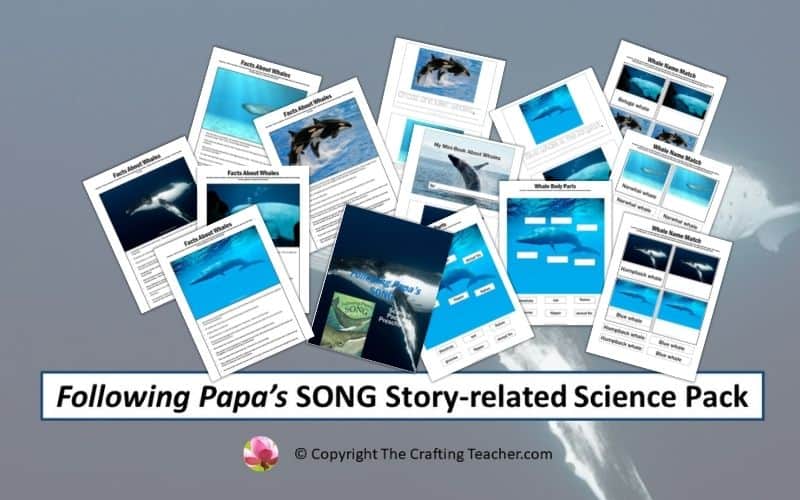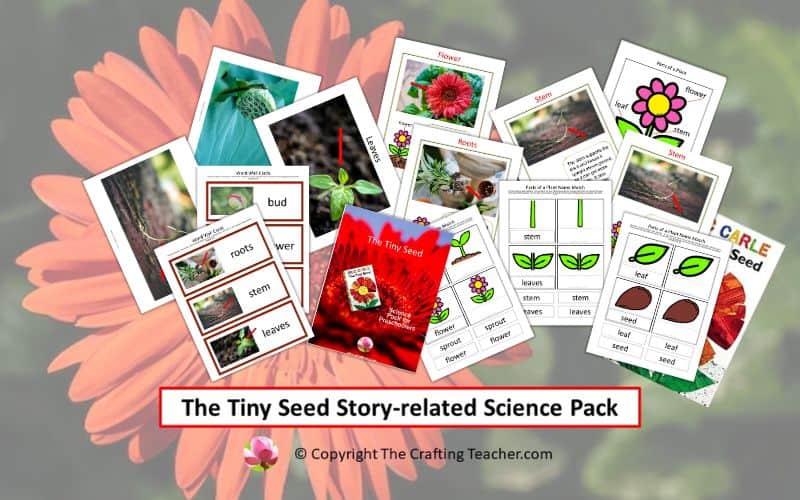
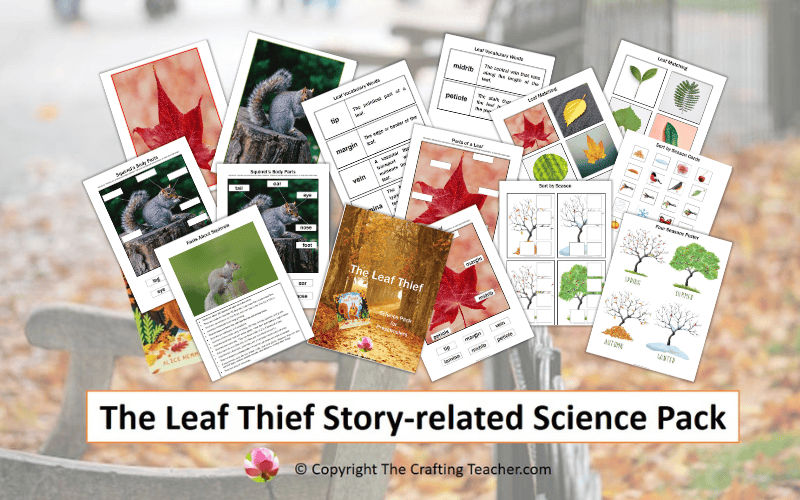
The Leaf Thief Story-Related Science Pack For Preschoolers
Affiliate Disclosure: “This post contains affiliate links, which means I receive a small commission, at no extra cost to you, if you make a purchase using those links.”
Preschoolers are naturally curious about their world, so it’s a great idea to engage them in science activities early on. The secret is to engage in hands-on activities, answer their questions, let them explore and experiment, and take advantage of opportunities like the one this book offers.
The Leaf Thief by Alice Hemming tells the story of a squirrel that becomes very distressed when it notices a leaf is missing from its tree, until its friend Bird finally helps it understand that leaves falling is a natural process that happens during the autumn season.
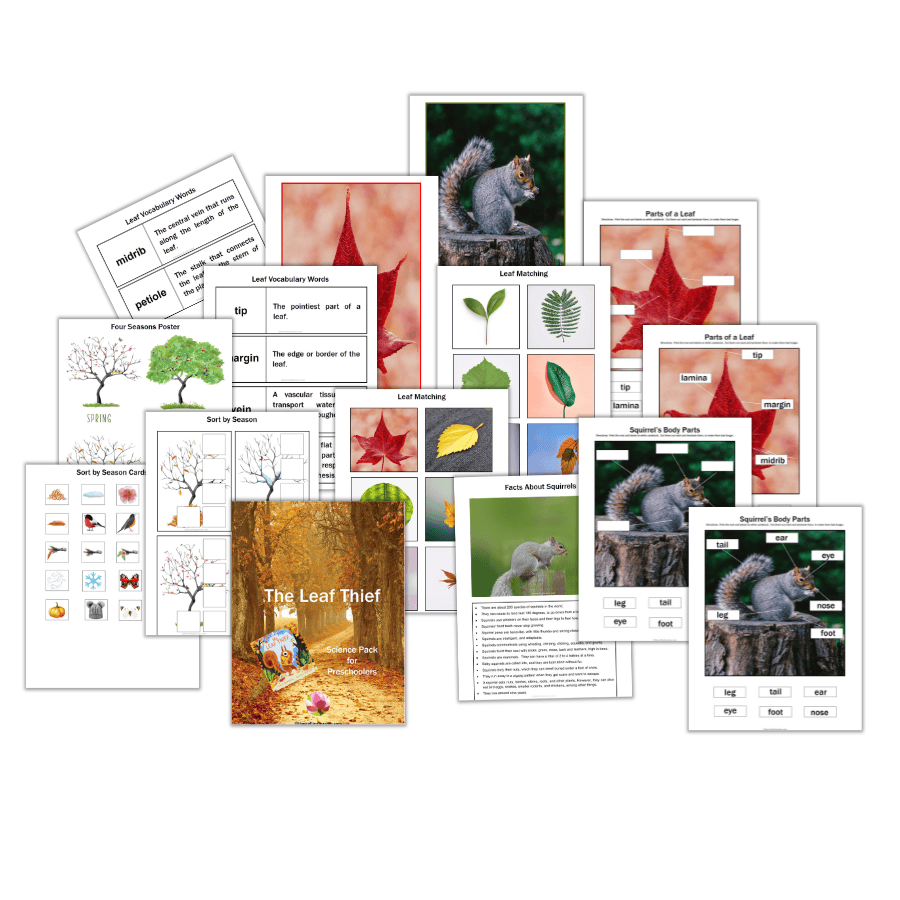
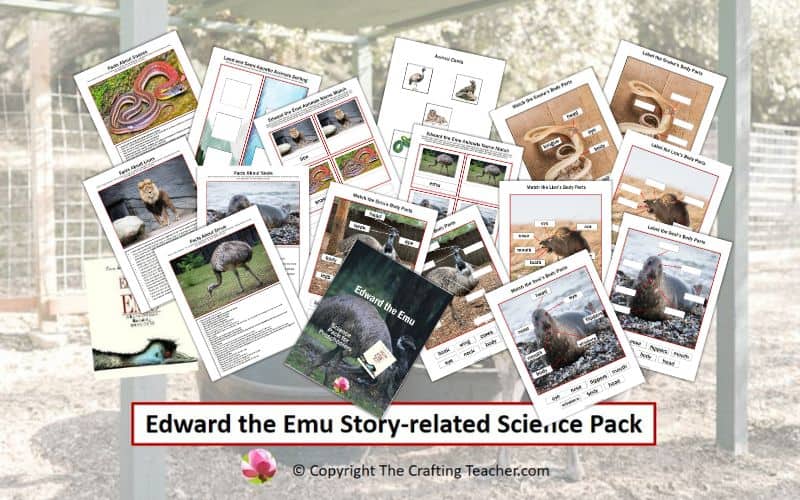
The Leaf Thief: FREE 17-page Science Pack, with six different activity sets to accompany the story, available for download at the end of this post.
The Leaf Thief Science Pack
You can do many science activities using this story as a base. I’m sure you can come up with many, but I wanted to give you some of the activities I like to use.
I suggest printing the pages on white cardstock and laminating them so they last longer and can be reused.
Facts About Squirrels and Leaves
Show them the real pictures. Ask them what they see and create a KWL chart for each (K = what they know; W = what they want to know, and L = what they learn). Write down everything they know about the squirrels and leaves in the K column, and everything they want to know under the W column. At the end of the theme, when you review what they learned, write down the information in the L column. Keep it up so they can come back, discuss the information, and ask questions.
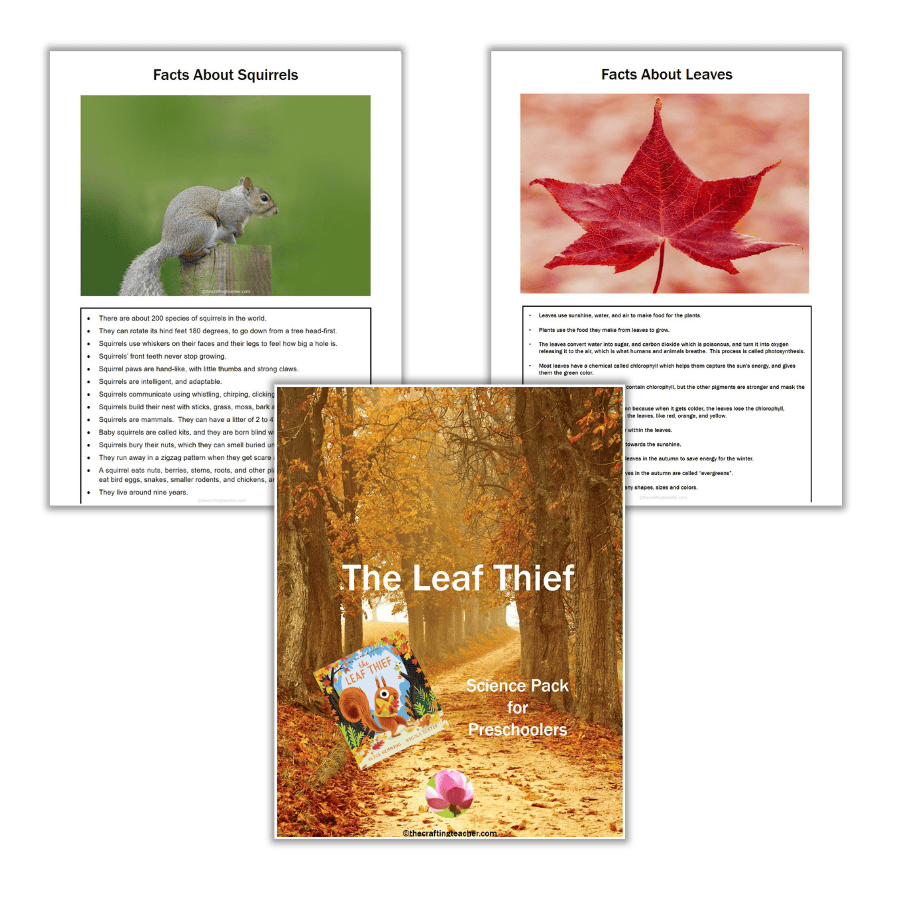
Squirrels
- There are about 200 species of squirrels worldwide.
- They can rotate their hind feet 180 degrees to go down from a tree head-first.
- Squirrels use whiskers on their faces and their legs to feel how big a hole is.
- Squirrels’ front teeth never stop growing.
- Squirrel paws are hand-like, with little thumbs and strong claws.
- Squirrels are intelligent and adaptable.
- Squirrels communicate using a variety of sounds, including whistling, chirping, clicking, squeaking, and grunting.
- Squirrels build their nests high in trees with sticks, grass, moss, bark, and feathers.
- Squirrels are mammals. They can have a litter of 2 to 4 babies at a time.
- Baby squirrels are called kits, and they are born blind without fur.
- Squirrels bury their nuts, which they can smell buried under a foot of snow.
- When they get scared and want to escape, they run away in a zigzag pattern.
- A squirrel eats nuts, berries, stems, roots, and other plants. However, they can also eat bird eggs, snakes, smaller rodents, and chickens, among other things.
- They live for around nine years.
Leaves
- Leaves use sunshine, water, and air to make food for the plants.
- Plants use the food they make from leaves to grow.
- Leaves convert water and carbon dioxide (which is poisonous) into sugar and oxygen, releasing oxygen into the air for humans and animals to breathe. This process is called photosynthesis.
- Most leaves contain a chemical called chlorophyll, which helps them capture the sun’s energy and gives them the green color.
- Red, yellow, or orange leaves also contain chlorophyll, but the other pigments are stronger and mask the green color.
- Leaves change colors in the autumn because, as the temperature drops, the leaves lose their chlorophyll, revealing the other colors that were present in the leaves, such as red, orange, and yellow.
- The veins in the leaves carry water within the leaves.
- The leaves’ stalks hold the leaves towards the sunshine.
- Only “deciduous” trees shed their leaves in the autumn to save energy for the winter.
- The trees that don’t shed their leaves in the autumn are called “evergreens”.
- Leaves provide shade and come in various thicknesses, shapes, sizes, and colors, allowing them to adapt to their environment and help different plant species survive better in their specific habitats.
Parts of a Squirrel and a Leaf
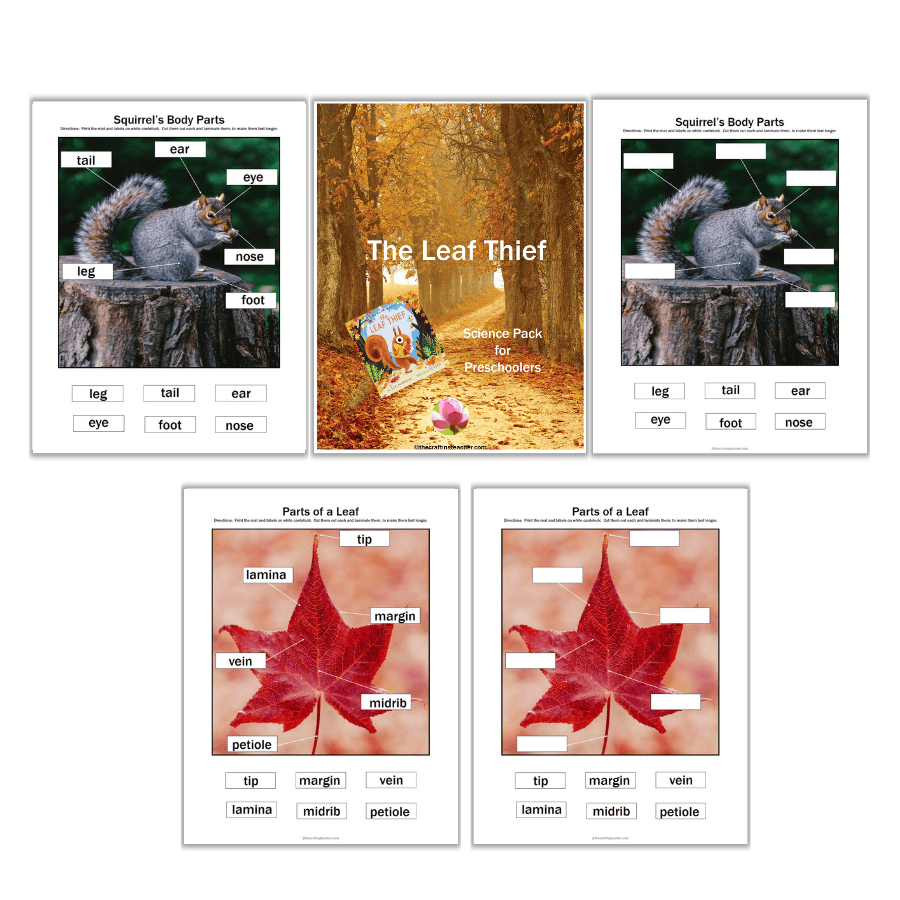
Teach the children the names of the parts of a squirrel and a leaf, and explain their functions. Then, introduce the two types of activities: matching and labeling the parts of the squirrel and the leaf, using the provided tags.
Since the functions for each of the squirrel’s body parts are common knowledge, I only included the vocabulary words for the parts of the leaf.
Four Seasons Poster
To explain seasons to preschoolers, use simple language, describing seasons as parts of the year with different weather, and what type of activities are most common if you live in a place where the children can observe and experiment with visible changes in the weather, nature, and clothing. Focus on these changes instead of scientific facts.
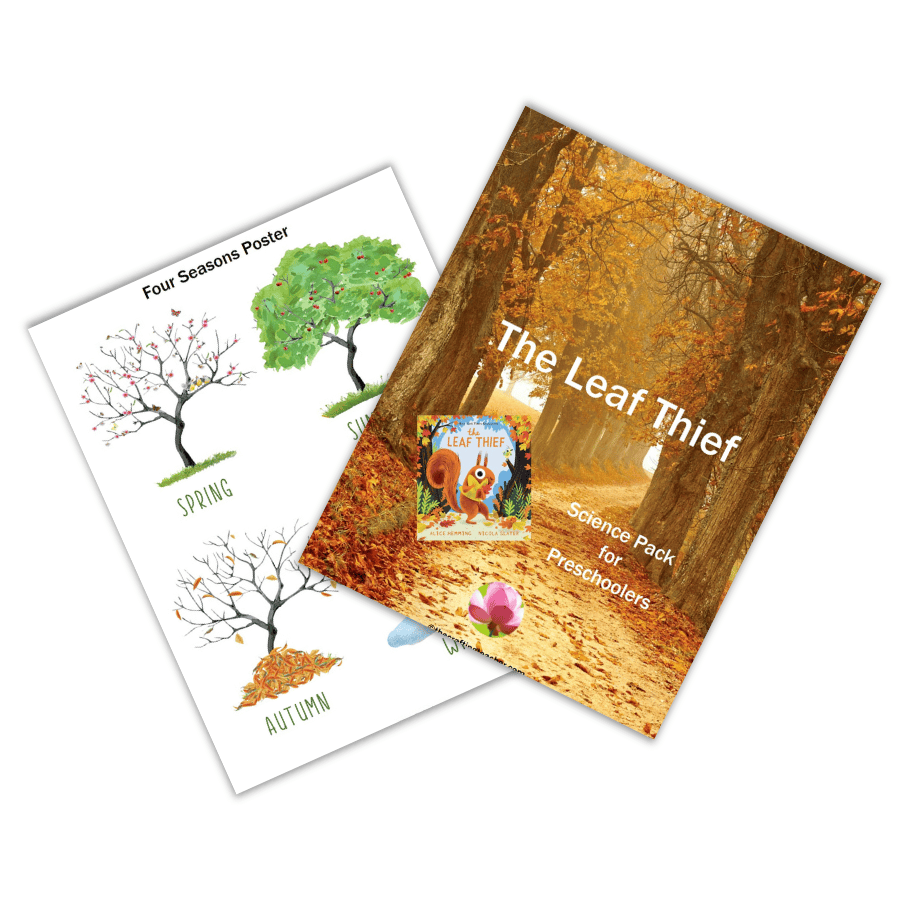
Use the season poster provided to teach about the four seasons and explain some of their characteristics.
Engage preschoolers with hands-on activities such as making crafts, singing, taking nature walks, and reading books to help them notice those changes.
Autumn (Fall)
- Autumn is the season that comes before winter.
- The temperature gets cooler.
- Leaves change colors and fall from the trees.
- Some animals go into hibernation.
- Other animals grow a thicker coat.
- Days start getting shorter and nights longer.
- Common fruits include pumpkins and apples.
- People start wearing jackets and long pants.
- The most common holidays celebrated during Autumn are Halloween and Thanksgiving.
Winter
- Winter follows autumn and precedes spring.
- Temperatures drop significantly, and in some areas, it becomes so cold that snow falls and ice forms.
- Deciduous trees lose their leaves.
- Most plants grow very little or not at all, entering a dormant state.
- Days are short and nights are long.
- People need to wear warm clothes, including coats, hats, gloves, winter boots, and scarves.
- It’s the perfect time to enjoy winter sports like skiing, ice hockey, and snowboarding.
- The most common holidays celebrated during Winter are Christmas and New Year’s.
Spring
- Spring comes after winter and before summer.
- Temperatures tend to be warmer most of the time but can be slightly chilly, especially at night.
- The rain and wind increase.
- Animals that hibernate start waking up.
- Many types of baby animals are born.
- Trees begin to produce new leaves, and flowers start to bloom.
- Plants start to grow.
- People use lighter clothes, raincoats, and boots.
- The days grow longer and nights shorter.
- The most common holiday celebrated during Spring is Easter.
Summer
- Summer comes after spring and before autumn (fall).
- The temperature gets hot.
- The days are sunny and warm.
- Trees are full of green leaves, and many types of fruits grow.
- The days are long and the nights short.
- People often wear light clothing, such as shorts and tank tops, along with flip-flops.
- It’s the perfect season for outdoor activities and sports, such as visiting parks, swimming, playing football and baseball, running, tennis, kayaking, and soccer.
- The most common holiday celebrated during the Summer in the United States is Independence Day, also known as the Fourth of July.
Sort by Seasons
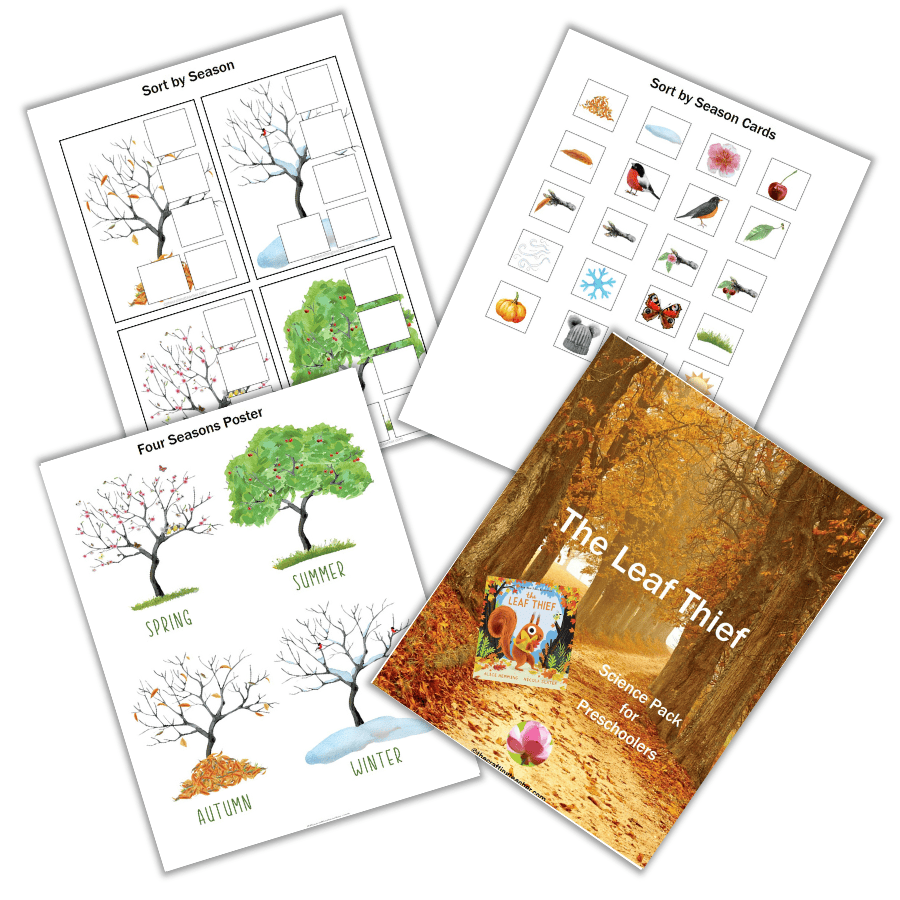
Present the sort by season page. Invite the students to discuss the pictures and decide which belong to each season.
If you are confident in their cutting skills, let them cut out the little squares with the pictures, or cut them out yourself. Then have the children glue the images to the correct season, and ask them to explain their thinking.
Leaf Matching
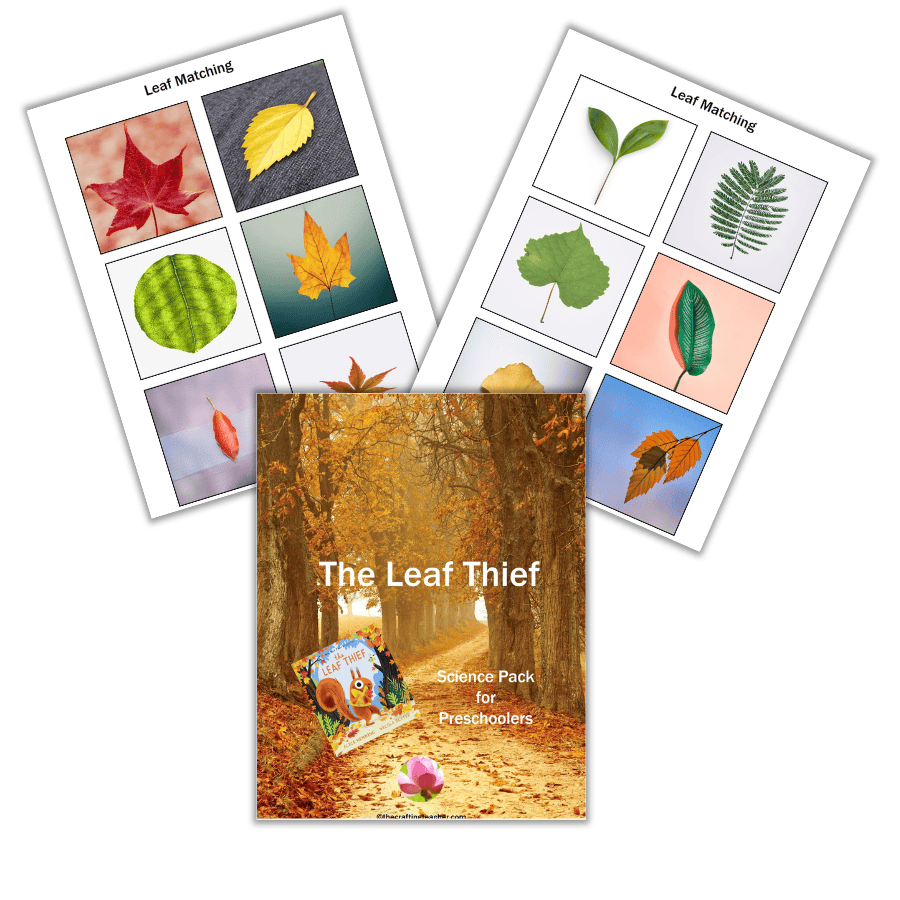
Go on a nature walk with your preschoolers, or collect many different types of leaves if that’s not possible. Present the leaves to the children, have them observe, and try to match the real leaves with the pictures. When they finish, discuss why they noticed the features on the leaves that helped them do the activity.
Extension Activities:
- Take a nature walk with the children to collect various leaves and observe the changes in the environment.
- Invite them to observe the leaves with magnifying glasses.
- Have a group discussion about which leaves are smooth or rough, whether they smell or not, whether they have stalks or not, whether the veins are visible or not, and what colors they are.
- Collect green leaves and dry them. When they turn brown, explain why the leaves changed colors and lost the chlorophyll.
- Invite an expert to talk about the changes observed during the different seasons.
- Prepare a sensory bin with fresh, dry, and previously frozen leaves, along with other suitable items. Also, include a container with warm water to thaw the leaves and magnifying glasses for the children to use for exploration.
- Have them draw their favorite season, and take dictation about their drawings.
Related Books
As usual, I like to include books in all my activities. These are some good books about Autumn and leaves. You can find them at your local library, used bookstore, and on Amazon. For fast access, click on the titles, and my links will take you directly to the book on Amazon.
- Crunchy Leaves, Cozy Sweaters by Essie Bell is an enjoyable rhyming book. It showcases various activities that everyone can enjoy every day throughout the fall.
- What is Fall? by Random House introduces children to the wonders of fall with illustrations, holes to peek through, an autumnal color palette, and simple, rhyming text.
- There Was an Old Lady Who Swallowed Some Leaves by Lucille Colandro tells the story of an old lady who swallows some leaves, clothes, a pumpkin, and a rope to welcome the Fall season with humorous illustrations and a spin on a classic rhyme.
- Pete the Cat Falling for Autumn by James Dean explores how Pete realizes there’s so much to enjoy and be thankful for about autumn when he discovers corn mazes, hayrides, and apple picking.
- A Very Big Fall by Emmy Kastner is a humorous, heartwarming story about three adorable autumn leaves, surprised by their changing colors and the promise of fall to come, making it perfect for any child who struggles with change.
- The Very Hungry Caterpillar’s First Fall by Eric Carle teaches children about seasonal sensory experiences, such as watching leaves change color, listening to the whooshing wind, feeling the warmth of a cozy sweater, and more.
- We’re Going on a Leaf Hunt by Steve Metzger utilizes accessible rhyming text and engaging sound effects to tell the story of three friends embarking on a big adventure as they hike over a mountain and through a forest to collect leaves of all kinds and colors.
- Fletcher and the Falling Leaves by Julia Rawlinson encourages children to share feelings of wonder and empathy as they listen to the story of Fletcher the fox, who cares about nature and wants to understand the changing seasons.
Pin It For Later
If you are in a rush and don’t have time to read the post and download the printable, but want to save it for later, pin this to your science or another board on Pinterest.
You can use these ideas on their own, but I invite you to combine this pack with The Leaf Thief Literacy Pack and The Leaf Thief Math Pack that I created for this story, to take advantage of the opportunities this book offers. Remember that for a more comprehensive and complete educational process, you should not divorce literacy from math, science, or any other domain. They intermingle and complement each other.
Don’t forget to download your FREE The Leaf Thief Science activities pack. Click the link below and enter your email address to receive the download immediately.
Be happy, safe, and creative. I wish you well.
Love,

P.S. Please let me know if these activities work for you. If you would like an article or printable on how to make something specific, please let me know, and I will do my best to create it for you.
Other Posts You Might Like: